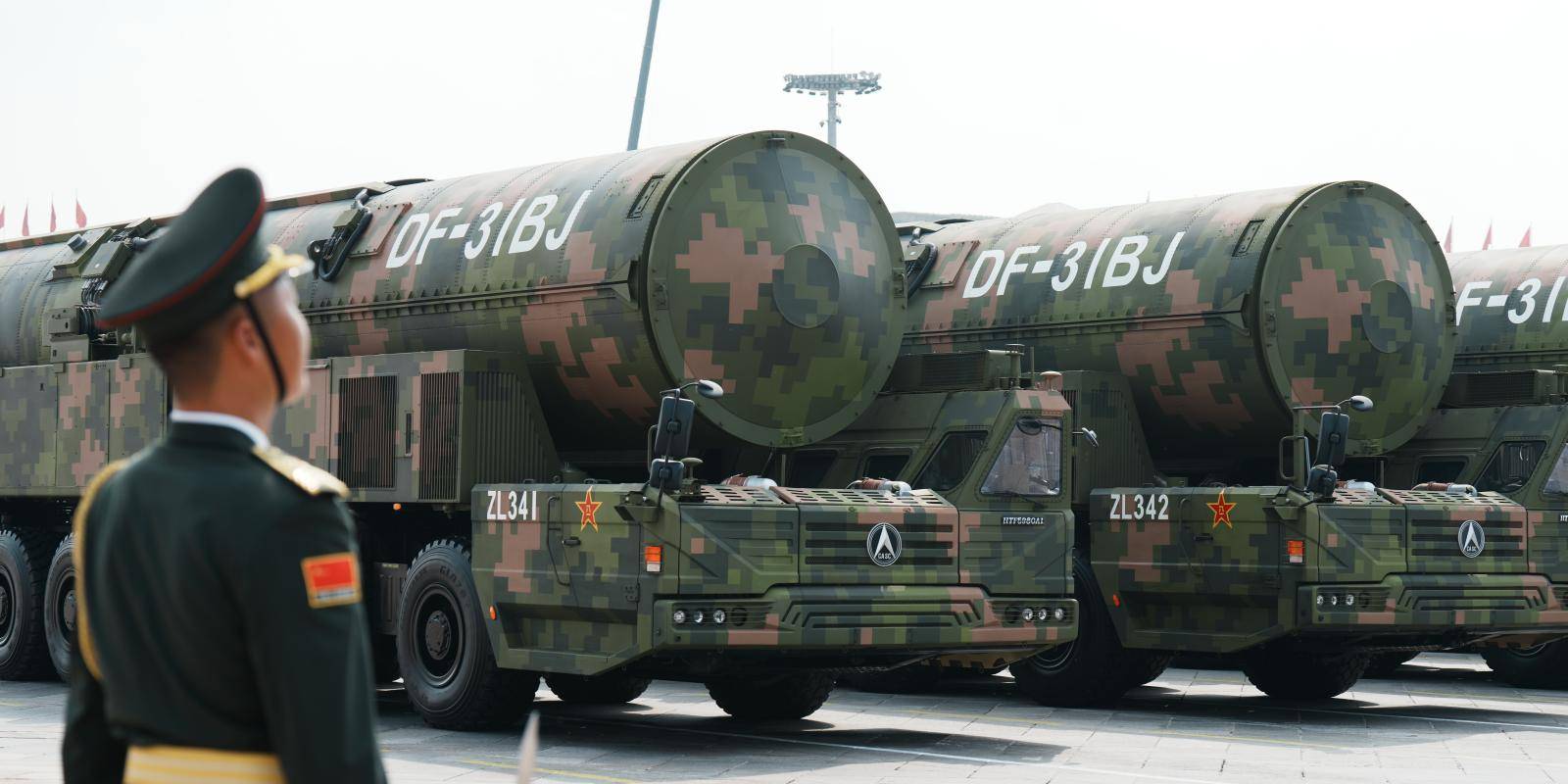
The US and Russia
The US and Russia share the most well-established arms control relationship among all the nuclear-armed states. As the two nuclear superpowers during the Cold War, they were connected via several treaties that contributed to reducing the numbers of nuclear warheads and delivery systems, or to increasing predictability and understanding between their officials. While this kind of collaboration might feel counter-productive for an intense geopolitical rivalry, it highlights the important role arms control can play in creating strategic stability. Leaders from both states recognized that unfettered competition was not in their interest, as it was likely to be economically devastating and to increase risks to an unacceptable level, making unintended escalation more likely.
Ever since the 2002 decision of US president George W. Bush to leave the Anti-Ballistic Missile (ABM) treaty, nuclear arms control between the US and Russia has been in decline. In the years since, the US and Russia have either suspended or withdrawn from several other treaties. In 2018, the US suspended its participation in the INF treaty after years of concern that Russia was violating the treaty’s terms. Russia suspended New START in 2023 as it no longer wanted US inspectors to visit its facilities. New START expired altogether in February 2026. The US and Russia were originally expected to negotiate a follow-on treaty – as had happened with the Strategic Offensive Reductions Treaty (SORT) and its predecessor agreements – but negotiations have yet to commence. The expiry of New START means that, for the first time in over 50 years, there will be no agreed limits on the development or deployment of strategic nuclear weapons between the US and Russia.
Russian president Vladimir Putin suggested in September 2025 that the two countries continue to uphold the central quantitative limits in the treaty. But the US has yet to respond to this proposal. During US president Donald Trump’s first administration (2016–20), several members of his Republican Party were on the record expressing a view that, unless China also faced a limit, the US should let New START expire rather than engage in another treaty limiting the US strategic arsenal. The Trump administration expressed a preference for a trilateral agreement between the US, Russia and China.
Putin’s offer is likely motivated primarily by cost. The Kremlin is keen to avoid an expensive arms race, as its focus is on winning its war against Ukraine and maintaining its conventional arsenal for the war effort. Russia has also been developing strategic nuclear options that fall outside of New START limits. It has previously refused to discuss these systems with the US and has not offered to place them under a moratorium. The offer also does not include some of the most valuable elements of the treaty, such as the in-person inspections and data exchanges.
This context raises questions as to the authenticity of Putin’s offer on New START, but provides an opportunity to maintain a baseline of mutual restraint while Russia is preoccupied with domestic challenges and the ongoing war on Ukraine. In addition, Russian government officials have repeatedly said that they would expect France and the UK to be part of any new comprehensive arms control agreements with the US, given that, from Russia’s perspective, all three countries are part of a de facto nuclear alliance in NATO.
Many of the states parties to the NPT are dissatisfied with what they perceive to be recent steps away from nuclear weapons reductions and an increased salience of nuclear weapons in general.
The US and Russia are under significant pressure to deliver something tangible at the NPT Review Conference in April–May 2026. Many of the states parties to the NPT are dissatisfied with what they perceive to be recent steps away from nuclear weapons reductions and an increased salience of nuclear weapons in general.
Agreeing to a one-year moratorium would allow the US and Russia to contribute something positive to the conference, and would likely be interpreted as a sign of goodwill and intent regarding nuclear proliferation. Experts consulted for this paper also highlighted the importance of supplementing a moratorium with additional confidence-building measures to increase the likelihood of a follow-on agreement. However, those experts thought such measures were unlikely to succeed.
Beyond the role it could play at the review conference, a one-year moratorium is insufficient for maintaining strategic arms control between the US and Russia. It is equally important to find a way of retaining the knowledge generated through the data exchanges and verification inspections. The US has reduced its capacity for participating in follow-on negotiations with layoffs and restructuring in the State Department. But much of the required knowledge is retained among experts outside of government and in the wider civil society. An expert-level dialogue (often referred to as ‘track 2’) effort on strategic arms control could therefore allow experts to share their knowledge and ensure some of it is passed on to the next generation of practitioners.
There are significant barriers to achieving new, legally binding arms control treaties. These barriers make even a more sustainable moratorium on strategic nuclear weapons unlikely to hold. The overall level of trust between the US and Russia is lower than had previously been the case. Both states updated their nuclear postures in 2024, with a greater emphasis placed on the role of nuclear weapons in deterrence. Significant parts of the strategic community in both countries see arms control as restraining rather than clarifying.
In the US, the strategic community is engaged in a debate about the future of US nuclear strategy. There is significant disagreement among experts, between those that support expanding the number of US warheads to counter both Russia and China, and others who think that nuclear deterrence can be maintained at the current levels. Until there is more internal clarity, the US is unlikely to be able to engage in arms control negotiations to decrease the numbers of deployed nuclear weapons.
Meanwhile, similar dynamics are at play among Russian experts. Kremlin sanctions on certain foreign think-tanks and experts have made it harder for Russian experts to engage in dialogue with peers. Discussions on how to strengthen deterrence and the circumstances under which limited use of nuclear weapons might be considered also indicate the extent to which the expert community in Russia has moved away from arms control.
Despite these challenges, arms control dialogues that work to maintain expert engagement and improve mutual understanding of doctrines and new technologies are important in creating greater clarity and reducing escalation risks at a dangerous time, and could still play a role.
Opportunities for progress on US–Russia arms control
Given the inauspicious context outlined above, our expert group estimated that arms control was most likely to emerge from a crisis of some kind. Pointing to how the 1961 Cuban Missile Crisis showed Presidents Kennedy and Khrushchev how quickly a nuclear crisis could escalate, most experts in our study argued that low levels of political will in both governments to work out risk-reduction measures, and the apparent belief on both sides that building up military capabilities and strengthening deterrence will be sufficient for preventing a crisis, meant it would likely require a crisis to relearn the Cold War lesson that deterrence without mutual reassurance was not sufficient for stability.
Russia’s war on Ukraine – and, specifically, the possibility of an end to that conflict – is another factor that could significantly affect the likelihood of arms control negotiations taking place, as well as the type of arms control that might emerge.
Not every type of peace agreement would be conducive to follow-on arms control.Since the start of the invasion in 2022, Russia has started to link Western support for Ukraine with Russia’s inability to maintain existing arms control agreements, claiming that arms control was a Western attempt to weaken Russia and no longer in Russia’s strategic interest. This hardening of Russia’s stance means that the only way that a peace agreement could lead to more arms control is if it leads to a changed assessment in the Kremlin. In such a scenario, Russia would need to recognize again that it cannot solve its security policy issues by military means. A change of position like this seems far-fetched, especially if Russia gets what it wants from a peace deal and perceives its invasion of Ukraine to have been a success.
If Russia’s international relationships were to deteriorate further, the Kremlin might be motivated to re-engage in arms control. For example, if a deterioration of the Russia–China relationship led to Russian concern about China’s nuclear build-up, Russia and the US might then be more amenable to working together on constraining China. Similarly, if Russia was interested in rebuilding its international legitimacy, it could engage in arms control to show willingness to re-engage with the international legal system or multilateral processes.
Finally, for both the US and Russia, benefits could be derived from technical dialogues aimed at improving mutual understanding of the role that the cyber and space domains and systems play in their strategic thinking. These domains are of growing importance in supporting military operations, and unintended escalation could take place in either domain as investments increase.
Dialogue could be a useful foundation for improving mutual understanding and leading to future agreements in those and related areas. A destabilizing technological breakthrough – whether that is in the development of new offensive military capabilities or in missile defence – could provide the incentive required to get the parties to re-engage on risk reduction and arms control.
European NATO members are not unquestionably supportive of arms control between the US and Russia. While those countries have welcomed initiatives that limited weapons primarily aimed at Western Europe, or that would have found particular use on European territory (such as in the case of the INF), they have been wary that arms control agreements between the US and Russia could make them vulnerable to Russian coercion. Apparent alignment between Putin and Trump on international relations suggests the possibility of an arms control agreement that might be a win for them in terms of normalizing the strategic relationship between the US and Russia, but that would decrease European security.
A quid-pro-quo agreement could also suit a more transactional US administration whose senior members have repeatedly indicated that they would like to be less involved in European security arrangements.
A US–Russia negotiation over NATO nuclear-sharing agreements is not implausible. The US practice of stationing nuclear weapons in NATO member states has long been criticized by the Kremlin. In 2014, at the NPT Preparatory Committee meeting, Russia accused the US of being in violation of the NPT, with the Russian NPT delegation claiming that the NATO nuclear-sharing agreement constituted a transfer of nuclear weapons to the states that host them. The US and the NATO countries that host US nuclear weapons continue to maintain that the arrangement is covered by the NPT, as it was already in place when the treaty was negotiated. Moreover, the US and the Soviet Union had agreed on language that accommodated this practice. But, in 2023, Russia took steps to position Russian nuclear weapons on the territory of Belarus to mirror the US deployments in Europe.
Even if unlikely, a scenario in which Russia proposes removing Russian nuclear weapons from Belarus in return for the US agreeing to remove its nuclear weapons from Europe is conceivable. This type of quid-pro-quo agreement could also suit a more transactional US administration whose senior members have repeatedly indicated that they would like to be less involved in European security arrangements.
For European governments, a proposal like this would be particularly disconcerting. Nuclear sharing was originally devised as a way to express the US commitment to NATO and protect Europe against Russian aggression. Any removal of US nuclear weapons from Europe could be interpreted as a political signal that the US is no longer committed to nuclear deterrence and is willing to cede Europe to Russia in a spheres-of-influence-based foreign policy arrangement. These concerns have been intensified by US threats against Greenland, part of the territory of NATO ally Denmark, in January 2026.
The political environments in both the US and Russia make sweeping progress on arms control unlikely in the short term. But the above concerns show that it is important to find ways to maintain technical knowledge and arms control expertise in their expert and official government communities. Without the regular engagement and knowledge exchange that has been enabled through strategic stability dialogues, other technical exchanges, verification visits and formal treaty exchanges, it will be far harder to re-engage in arms control if the respective political environments become more amenable.
If the US and Russia do not invest in their expert communities, decades of knowledge and practical experience risk being lost as officials retire or leave government roles. These expert communities have suffered from the increased tensions between the two states in recent years, as information exchanges have become far more difficult due to visa restrictions and sanctions placed on think-tanks and individual experts. Measures should therefore be taken to remove or mitigate these barriers.
The US and China
Relations between the US and China are shaped much less by arms control than those between the US and Russia, with trade instead being the most significant element of the former. But after over a decade of deterioration in their strategic relationship, the US and China risk becoming locked in a downward spiral when it comes to security, in which each state might interpret the other’s actions as having the most hostile intent imaginable and respond accordingly.
The US and China are only connected formally at the multilateral level. Both countries are states parties to the NPT, in which they are both recognized as official nuclear weapons states under the terms of the treaty. The US and China have worked together in the past to prevent proliferation – for example, when negotiating the Joint Comprehensive Plan of Action (JCPOA) on Iran’s nuclear programme. But there is no existing bilateral US–China arms control agreement, and no history of close, direct engagement on arms control for government officials or experts draw on.
Amid concerns about China’s nuclear modernization and expansion programme in recent years, the US has expressed an interest in strategic arms control with China since the first Trump presidency. However, in response, China tends to point out the large discrepancies in their respective nuclear arsenals as justification for a lack of engagement.
China is still in the process of expanding and modernizing its nuclear arsenal. This expansion is happening at a fast pace. In 2025, China was estimated to have a stockpile of around 600 nuclear warheads, compared with around 300 in 2020. China has the fastest growing nuclear arsenal among the N5 countries (see section below), but this arsenal still does not compare in size to that of the US, which totalled around 3,700 warheads in 2025.
The opacity of the Chinese nuclear programme is causing concern, as well as the numbers involved and the speed of development. Beijing maintains that it has a ‘no first use’ (NFU) policy – meaning it would not use nuclear weapons first in the event of conflict. However, the growing diversity of Chinese nuclear weapons delivery systems and the vulnerability of China’s missile silo sites cast doubt on whether this apparent NFU policy will continue to hold. As Cold War strategy demonstrates, missile siloes’ visibility and fixed location can lead to a ‘use it or lose it’ dynamic, in which states might be tempted to use nuclear weapons if there is a risk that an adversary might target their siloes first.
Chinese officials have used references to their NFU policy as a reason not to engage in US requests for strategic stability talks, claiming that the NFU policy was clear enough in expressing China’s peaceful intent and no extra clarity was needed. Nonetheless, China has expressed some willingness to consider arms control dialogue. For example, it has previously proposed a ‘no first use of nuclear weapons’ treaty to the four other nuclear weapons states in the N5, and uses this broader proposal to signal willingness to engage in arms control to the rest of the world.
The US framing of nuclear competition as a ‘two-peer problem’ – casting both Russia and China as nuclear competitors with similar-sized nuclear arsenals to that of the US – is premature while the Chinese arsenal remains so much smaller.
China is concerned about being treated as a copy of the Soviet Union or Russia, and is not interested in repeating the dynamics of the Cold War. The US framing of nuclear competition as a ‘two-peer problem’ – casting both Russia and China as nuclear competitors with similar-sized nuclear arsenals to that of the US – is premature while the Chinese arsenal remains so much smaller. More importantly, the framing risks playing into China’s unwillingness to engage in dialogue until it has reached parity with the US and Russia.
At the same time, the US counterforce strategy means that the US assures its deterrence through an ability to target an adversary’s nuclear systems. It is theoretically impossible, therefore, for China to reach parity, as any substantial increase on the part of China would trigger a build-up on the US side. Given the high levels of concern in the US strategic community about China’s nuclear expansion, it would be in Beijing’s interest to engage on strategic stability talks, rather than risk being drawn into an unwinnable and destabilizing arms race.
Opportunities for progress on US–China arms control
As US strategists are engaged in an intense discussion as to whether the US needs to build up its own nuclear arsenal to maintain a counterforce strategy on Russia and China, it would be a good time for China to engage in dialogue explaining the reasoning behind its investment in nuclear weapons and delivery systems.
If those strategists in Washington advocating for a nuclear build-up win the argument, China might find itself in a three-sided insecurity spiral with the US and Russia, with each country attempting to achieve superiority over the other two and therefore triggering further expansion on all sides. Dialogue could provide stability and reassurance, allowing the states to avoid becoming locked into a new, multi-party nuclear arms race.
There are some areas where dialogue might be possible. For example, in 2024, presidents Joe Biden and Xi Jinping issued a joint statement on keeping AI out of nuclear decision-making processes. This statement could serve as a basis for dialogue on a reliable ‘human-in-the-loop’ failsafe and how that would work, aspects of AI that can be mutually beneficial in a nuclear context, and aspects that both countries can agree are harmful or destabilizing.
As well as AI, there is an opportunity to discuss space as a changing domain. The US and China have been engaging intermittently in an official (or ‘track 1’) space dialogue. Given both states’ investment in their space capabilities and likely growing presence, a reinvigoration of this process could lead to a development of new behavioural norms in space. As space systems have high strategic relevance for nuclear deterrence due to their role in command and control systems, intelligence and reconnaissance, and targeting, finding a better way of co-existing – or perhaps even cooperating – in space could help de-escalate tensions and could provide a foundation for future arms control agreements.
Missile-launch notifications are another promising area. Both the US and China already have their own ballistic missile launch notification agreements with Russia. China also provided one-off notifications to the US and Pacific regional states for a missile test in 2024, showing an appreciation of notices as a tool for de-escalation. There may be an opportunity to formalize the process around notification, reducing the risk of unintended escalation from missile tests and building trust for future risk-reduction steps.
However, all these measures would require Chinese officials and track 2 experts to engage fully in dialogue, not simply rely on previous government statements and positions, as has been the case when Chinese government officials have deflected attempts at engagement by referring to China’s NFU policy. In 2019, China played a core role reinvesting in and revitalizing the P5 process – a dialogue format for the five nuclear-armed states in the NPT aimed at providing a confidential space in which they can have sensitive discussions to build confidence and increase strategic stability. The relatively closed nature of that process could allow for more frank and constructive engagement.
Equally importantly, the US and others must demonstrate the value of arms control to China for dialogue to succeed. The Chinese government appears unconvinced that arms control can provide sufficient reassurance. Investment in track 2 engagement between experts can play an important role in providing it.
The N5 nuclear-armed states
The N5 grouping of recognized nuclear-armed states (including China, France, Russia, the UK and the US) is important in the context of the NPT. However, there appears little in the way of progress on an agreement over the future of multilateral nuclear arms control.
There are significant differences between the five nuclear arsenals. The US and Russia are at one end of the spectrum as the two largest nuclear powers globally. France and the UK are at the lower end, with minimum deterrence postures. China is currently in the middle, actively modernizing and growing its arsenal as described in the previous section.
Under the terms of the NPT, the N5 powers are committed to engage in genuine dialogue towards the eventual disarmament and irreversible dismantlement of their nuclear weapons programmes.
However, the US insistence that strategic nuclear arms control would only be possible in the future if China was also a part of such agreements, and Russia’s insistence that further nuclear reductions only make sense if the British and French arsenals are considered alongside that of the US, mean that there is some possibility to explore multilateral arms control as a group.
Under the terms of the NPT, the N5 powers are committed to engage in genuine dialogue towards the eventual disarmament and irreversible dismantlement of their nuclear weapons programmes. Engaging in arms control efforts is one way to signal ongoing commitment and progress towards this goal.
Ahead of the 2022 NPT Review Conference, the five countries issued a joint statement ‘on preventing nuclear war and avoiding arms races’. In this statement, they repeated the famous Reagan–Gorbachev formulation that ‘a nuclear war cannot be won and must never be fought’. They also recommitted to the NPT, to their disarmament obligations under the treaty, and to working with ‘all states to create a security environment more conducive to progress on disarmament’.
Joint statements like this can be helpful to set a direction of travel, particularly at times in which action is more difficult. However, the January 2022 statement was undermined only a month later, after Russia launched its full-scale invasion of Ukraine. The severe loss of trust in Russia as a result of its actions against Ukraine makes it difficult for the P5 to issue further statements or to take joint action. The idea that Russia is working towards an environment that facilitates future disarmament is not credible while it is engaging in a war of aggression against another state.
For the 2026 NPT Review Conference, there is an expectation from the majority of non-nuclear weapons states parties that the N5 will, at the least, find another, more credible formula that the group can agree on. If the five countries cannot even get to this minimal level, the overall credibility of the treaty commitments may be called into question. The future of the NPT itself could even be in jeopardy.
The P5 process does continue, but meetings are reported to be increasingly unproductive, as the five states cannot address some of the main challenges. The kind of collaboration previously possible, such as P5 action on the JCPOA to constrain Iran’s nuclear programme, does not currently seem feasible as Russia in particular prioritizes other relationships, such as that with Iran, over closer P5 ties. After the JCPOA’s success, joint action on North Korea’s nuclear weapons programme was expected to follow. But that seems less likely than ever, not least because of Moscow’s pivot towards closer cooperation with Pyongyang since 2022.
Opportunities for progress on P5 arms control
As nuclear diplomacy dynamics are increasingly interconnected and multilateral instead of bilateral, a functioning P5 platform is vital. It allows the five states to clarify signalling and confirm intent regarding nuclear arsenals, development and use. Without strong contacts between the nuclear-armed states, the risk of unintended escalation becomes far greater.
The Institute for Science and Technology (IST), a California-based think-tank, is developing a prototype for a crisis communication hotline between the N5 powers. This initiative is one of the first intentional attempts to multilateralize a traditionally bilateral tool of diplomacy. A P5 hotline would allow both bilateral and multilateral contact, with the aim of encouraging a greater level of transparency between the five states. So far, this idea has not been adopted by the N5, despite having been under discussion since 2019. But the IST project proves that options are available for the five nuclear weapons states to take joint action – if the political will exists.
Joint N5 action on arms control is most likely when all five countries share a common concern. An example could be if all five needed to safeguard the NPT against a threat of collapse, or if they became concerned that nuclear risks were becoming too great to manage. This type of concern may arise particularly in those strategic areas where new technologies are changing the risk calculus, such as space security or the role of AI in nuclear decision-making. Individual countries are still working out their positions on those matters, perhaps allowing room for dialogue as positions are not yet fully formed. However, even this relatively low bar might be tricky to reach, as Russia has shown a lack of interest in focusing on emerging and disruptive technology challenges in a P5 context.
Another possibility for generating engagement on arms control is to view it through the lens of differentiated responsibilities. Nuclear responsibilities emerged as a dialogue principle to help states articulate how they see their own, and others’, responsibilities for the management of nuclear risks and safe nuclear stewardship.
Identifying and clarifying responsibilities can help depoliticize a dialogue and lead to agreement on areas that can be tackled jointly. The UK has been a champion of an approach based on differentiated responsibilities, similar to its pursuit of understandings on responsible behaviour in cyberspace and outer space.
Such an approach could provide the starting point for an exploratory dialogue that leads to improved mutual understanding, and could act as a foundation for agreement on responsible behaviour – perhaps even leading to a code of conduct or a similar codification of behaviour. One contemporary challenge where a definition of nuclear responsibilities could be useful is in exploring the P5 commitment to not testing nuclear weapons. Nuclear weapons states could seek to discuss the additional data they might hope to gain from tests, whether it is possible to acquire that data in other ways, what risks might arise from restarting testing and how to recommit to the moratorium.
The experts who engaged with the horizon-scan survey disagreed over the extent to which a perception or self-identity as a responsible nuclear weapons state would influence Chinese policy decisions. Some thought that China might be persuaded to engage in order to maintain its image as a Global South leader on nuclear issues. However, others warned against overestimating the value that China places on being seen as a responsible nuclear weapons state. China is significantly expanding its nuclear arsenal at the same time as many Global South states are arguing for tangible progress on disarmament. It appears likely therefore that focusing on areas of strategic interest for China will provide a more reliable route to dialogue than appealing to China’s desire to be seen as a ‘responsible’ nuclear state.
Progress might also be possible if a smaller number of the P5 states see an opportunity to cooperate. At present, the Chinese nuclear arsenal is still closer in number to those of France and the UK than to those of Russia or the US. China, France and the UK could potentially seek to work together as a minilateral grouping, given their apparent shared desire for increased nuclear stability. Space security and the impact of new technologies on strategic stability may also be useful areas of convergence between the three.
China, France and the UK could potentially seek to work together as a minilateral grouping, given their apparent shared desire for increased nuclear stability.
Another opportunity lies in the risk-reduction measures that currently exist bilaterally or informally, such as missile-launch notification agreements (as discussed above). Russia already has bilateral ballistic missile-launch notification agreements in place with China and the US. These agreements ensure that there can be no misunderstanding over missile tests or scientific missile launches.
The P5 process could dedicate a meeting to discussing how these existing missile-launch agreement could be expanded to cover all five states. As three of those states already have bilateral notification agreements, and China has previously notified the US and other Pacific states of planned missile tests voluntarily, a notification agreement that works for all five states ought to be achievable.
The N5 relationship lends itself more towards exploratory strategic stability dialogue and potentially setting up new behavioural norms or codes of conduct. Over time, legally binding multilateral arms control agreements could emerge. But given the difficulties in getting five states with a wide range of warhead numbers and types of delivery systems to agree on further cuts, focusing on escalatory or overly ambiguous behaviours, and how to reduce them, is the best option for now.
The most obvious first steps for the N5 ought to be strengthening the NPT and ensuring a successful outcome to the conference. These small initial steps should then lead to further steps on risk reduction, responsible behaviours and re-establishing productive dialogue in the P5 process.
India and Pakistan
After an escalation of violence along the Line of Contact in the disputed territories of Kashmir in May 2025, tensions between India and Pakistan have reached their highest point in decades. Since India became a nuclear-armed state in 1974 and Pakistan in 1998, there has been global concern that a future conventional war between the two states could escalate all the way to the nuclear level.
Over the last decade, conflict has escalated a little further each time, with the governments of both states taking longer to de-escalate, and political and media discourse continuing to stoke grievances, even when there is no active conflict. As Chiara Cervasio and Nicholas Wheeler point out, ‘[…] each bilateral crisis has set a new and more dangerous threshold for military action on both sides.’ Amid such volatility, arms control mechanisms are essential to stabilize the relationship and make options available to ensure that conflict does not reach the nuclear level.
Measures are in place that reduce risk and increase predictability. These measures include a 1971 military-to-military hotline, a 1988 mutual non-attack agreement covering civilian nuclear facilities and infrastructure, a 1991 agreement on prior notifications of military exercises, a 2005 agreement on ballistic-missile test notifications, and a 2007 agreement on nuclear accidents. The Indian and Pakistani governments were at one point negotiating additional confidence-building measures, but formal dialogue has been suspended since 2012. Engagement continues at the track 2 level, including among retired government officials on both sides, who use their connections to brief current officials on their discussions. But this level of contact is insufficient to support any agreement on more comprehensive confidence-building measures.
Although the military-to-military hotline helped the two countries reach a ceasefire in May 2025, other similar initiatives have been less effective. India and Pakistan have tried to establish a hotline between their respective prime ministers, similar to that between Washington and Moscow. But after two official launches, it remains rarely used. This also appears to be true of the direct hotline between the Indian and Pakistani foreign ministers.
Low levels of trust and insufficient communication infrastructure mean that India and Pakistan tend to rely on outside interventions to de-escalate and mediate conflict. In 2025, for example, the US tried to stay out of the conflict until tensions reached such a dangerous pitch that the Trump administration felt it could no longer stand by.
Third-party intervention is not a sufficient or reliable conflict-resolution mechanism. More robust confidence-building mechanisms and communication tools will therefore play an important role in increasing predictability and transparency. While hotlines exist, they are not used as systematically during a crisis as would be expected. Additional mechanisms – such as dialogue formats for officials who would be expected to use the hotlines in an emergency – could help to build the foundational trust required.
Increased trust is essential to reduce the chance of violent conflict, and would help control escalation if a conflict did break out. In the long term, confidence-building mechanisms could lead to further mutual non-targeting agreements.
One of the biggest barriers to developing stronger guardrails for the India–Pakistan relationship, and one of the most significant drivers of conflict, is the growth of nationalist sentiment in both countries. Experts consulted for our study concluded that reducing this tendency might enable a breakthrough in the countries’ nuclear relationship. A different government outlook in India and greater government stability in Pakistan could help, as both states are currently locked in a security dilemma that is made worse by their respective governments’ tendencies to scapegoat the other for a range of domestic challenges.
The governments of India and Pakistan seem to be locked into a situation in which ‘tough’ rhetoric and robust action are deemed necessary for public approval. This dynamic encourages the authorities to inflame a crisis with negative rhetoric and brinksmanship, rather than seek to de-escalate. The two governments must develop a better sense of the escalation risk and realize that ‘it is in their best mutual interest to build on their existing bilateral agreements’.
Another significant barrier is the conflict over Kashmir. This long-running conflict is increasingly linked to everything else in the relationship. Combining this with the regular incidents of terrorism that have led to border conflict in the past, it is easy to imagine a scenario in which dialogue resumes, but is halted again as soon as another attack takes place.
Meanwhile, the relationship between India and Pakistan cannot be isolated from their wider regional interactions. The state of India–China relations, in particular, could have a significant impact on a successful stabilization of India’s relationship with Pakistan. Concerns about China’s growing nuclear arsenal, or a rapid deterioration in India’s relationship with China, may compel the Indian government to increase its stockpile of warheads or invest in new nuclear capabilities. If the India–Pakistan relationship is not sufficiently stable at that point, Pakistan would likely interpret any changes in the size or capability of India’s nuclear arsenal as a threat to national security. Pakistan may also be compelled to deepen its own relationship with China to safeguard against any aggression from India.
Opportunities for progress on India–Pakistan arms control
The US and India have become closer partners in their attempts to counter China in the Pacific, significantly expanding their cooperation on defence technology. This cooperation between the US and India has been a concerning development for Pakistan. The issues of growing Chinese influence in the Pacific and US–India cooperation on defence technology should be addressed as part of any future dialogue formats to increase the chances of agreement on new confidence-building measures between India and Pakistan.
The most likely route to engagement starts with bilateral discussions on the sidelines of other meetings that Indian and Pakistani officials were already attending, such as meetings of the Shanghai Cooperation Organization (SCO). Track 2 dialogues on nuclear risk reduction between Indian and Pakistani experts have continued uninterrupted, even while official government relations have been at a low point. Both governments can therefore draw on a pool of well-connected experts who have a good understanding of perceptions across the border, and can advise on which proposals would be best received.
Once sufficient trust exists for the governments to begin negotiating expanded confidence-building measures, discussion should focus on measures to reduce the risk of misunderstanding and inadvertent escalation in a crisis.
Once sufficient trust exists for the governments to begin negotiating expanded confidence-building measures, discussion should focus on measures to reduce the risk of misunderstanding and inadvertent escalation in a crisis. In particular, these measures should include ways to increase mutual understanding of national nuclear doctrines, as well as improvements to crisis communication and incident response.
One such measure would be the creation of a technical dialogue, likely at the ‘track 1.5’ level, to include working-level officials and experts. This track can be used to explore how certain capabilities and deployments are understood across the border. Another dialogue track should be established to discuss actions that are seen as particularly escalatory, and the conditions under which both countries would consider nuclear use.
A third priority ought to be a discussion on accident and escalation risks at sea, as both countries have recently been expanding their naval capabilities. This track could eventually lead to the negotiation of a formal incidents at sea (IncSea) agreement. During the 1960s and 1970s, several European states were able to successfully negotiate IncSea agreements with the Soviet Union, because all parties recognized the potential for unintended escalation over maritime incidents. These agreements are a model that can work even when inter-state relationships are tense, as long as states parties acknowledge that there is an escalation risk to be managed.