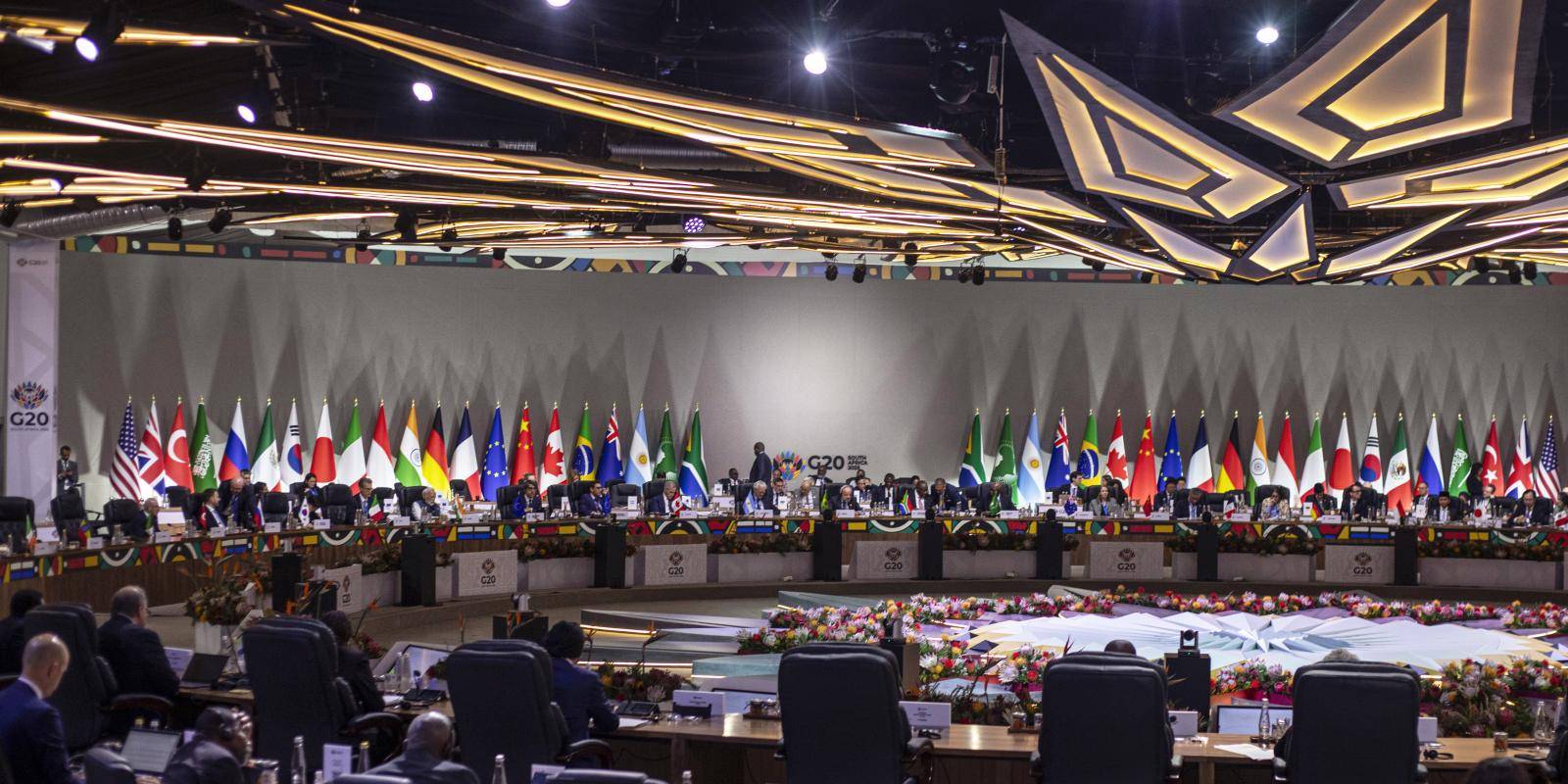
Building on the trade and investment dialogue between the EU and the CPTPP is likely to be the quickest and most practical way to establish a third pole with the right membership.
Global economic groupings have previously continued and even thrived after a key member has left. These have included: the Comprehensive and Progressive Agreement for Trans-Pacific Partnership (CPTPP), which emerged in 2018 from the negotiations to establish the Trans-Pacific Partnership (TPP) after Trump’s withdrawal of the US from that proposed grouping; the G7, which took over from the G8 after Russia was suspended following its invasion of Crimea and eastern Ukraine in 2014; and the EU, which continued without the UK (its second largest economy, accounting for 16 per cent of EU GDP in 2016) following Brexit.
But the challenge of constructing an effective third pole for the global economy without the US or China is arguably greater than adapting to new political circumstances was in the case of these precedents. There are no existing negotiations, nor an agreed framework and set of objectives, to draw on. The prospective composition of the group is uncertain, while the most likely potential members have limited political, analytical and policymaking bandwidth given the wide range of global challenges they face. Nor is a dominant hegemonic economy or pair of economies available to lead the process. And in contrast to the three cases cited above, the new grouping is likely to face hostility and deliberate disruption from the US and possibly China.
A practical and tightly focused approach is therefore essential if these challenges are to be addressed. The most important factor to get right at the outset is the role of the EU.
6.1 The role of the EU
The need for the new grouping to have an economic weight at least comparable to that of the US or China makes the EU an essential member. However, a third pole would not work as a simple extension of existing EU trade policies, standards and regulatory approaches. Nor can the EU act as an economic hegemon within the new alliance. The EU itself is not united enough internally to do so, nor would other countries accept it in that role.
It is important that any economic security measures adopted are the minimum necessary given the threat, are justified on clear national security grounds or as a response to demonstrably unfair competition, and follow clear legal processes.
It is also vital, if a third pole in the global economy is to be created, that the EU does not turn inwards, abandoning its current economic openness in favour of a broadly protectionist mindset in response to intense competition from Chinese manufacturing and fear of US technology dominance. The eventual shape of the European Commission’s proposed Industrial Accelerator Act, which will focus EU public procurement and government subsidies in certain strategic industrial sectors on products made in the European Economic Area (or possibly a broader grouping), will be a key determinant of the future direction of EU policies and whether a third pole is viable.
The same is true with respect to implementation of the EU’s 2023 Economic Security Strategy, which sets out tools to mitigate risks to EU economic security. It is also true of the EU’s 2026 Economic Security Doctrine, which (among other things) identifies approaches the EU can take, if necessary, to exert leverage on other countries that are threatening its economic security. Both new policies are justifiable in principle given the pressure the EU is now under from both the US and China, but it is essential that in the course of their implementation the EU does not copy these two countries and become just another coercive economic power. It is therefore important that any economic security measures adopted are the minimum necessary given the threat, are justified on clear national security grounds or as a response to demonstrably unfair competition, and follow clear legal processes. It is also important that the EU’s strategy recognizes the benefit to the EU of being part of the largest possible rules-based economic space by allowing for preferential treatment both of trusted partners and of other countries sharing the ‘third pole beliefs’ set out above (see Chapter 5).
This approach will be important in newly drafted policies, but it should also be reflected in the implementation of some established policies where the EU may need to make interim adjustments to build consensus among members of the third pole. One example is the EU’s Carbon Border Adjustment Mechanism (CBAM), implementation of which started at the beginning of 2026. The widespread deployment of similar mechanisms over time is likely to be essential to the viability of the third pole if it is to cover the pursuit of net zero, and if members inside the group are to be protected from unfair competition by non-members that have renounced climate-related policies. The UK plans to introduce its own CBAM from the start of 2027, and similar policies are being considered by other advanced economies. But such moves could also, if applied inflexibly at the outset, prevent several key EMDEs from aligning with the EU and developing a common response to US tariffs. Another example is the EU’s Deforestation Directive, which has been criticized by supplier countries (among others) for its cost, complexity of compliance and potential unfairness to small farmers.
Most fundamentally, however, the EU will only be able to play a full role in a third pole if the EU establishes security and defence independence from the US. This is not just an issue for the EU, and in some respects it is easier to see a route by which the EU can surmount this challenge than is the case for some other traditional US allies. This is discussed further in Section 6.3.
A final concern is the possibility that populist political parties may win power in leading EU nations in the coming few years. There is some evidence of the EU being able to manage populist governments while maintaining its core values and approaches. The UK’s negative economic experience of Brexit and the unpopularity of several of President Trump’s external policies in Europe may also make populist governments in the EU cautious about either leaving the EU or aligning themselves too closely with the US. Nonetheless, the challenge posed by the potential formation of a government dominated by the extreme right in either France or Germany would be the greatest to date, and it might make the EU’s full participation in a third pole very hard to deliver, either because of internal instability or because a significant minority of member states might switch to preferring closer alignment with the US and its policies.
Other prospective members of the rules group, such as the UK, also face the threat of populist government.
However, other prospective members of the rules group, such as the UK, also face the threat of populist government. And the creation of such an alliance should help its members to strengthen their relative economic performance, and to maintain their ability to regulate against false information and other forms of political interference online. It would also be likely to provide a strong alternative international vision to that of the US administration. This should help governments in the EU and other prospective participants push back against populist ideas, making the establishment of a third pole in the global economy an attractive strategy for existing leaders.
6.2 Composition of the core group
The larger and more diverse the formal membership of the third pole, the greater will be its legitimacy in seeking to influence global economic governance and institutions. But that will also make agreeing common positions harder, and the group will be slower-moving in response to further shocks. There is therefore a balance to be struck in devising participation. The EU is the only essential member, but inclusion of certain other participants (for instance, the UK and some emerging economies) would be highly desirable.
In practice, it is very hard to establish a new economic grouping from scratch, particularly where there is no dominant country to propose goals or criteria for participation, or to adjudicate on disputes over whether a given country should be a member or not. Relying on self-selection is also problematic, as one cannot then control the size of the group; some countries may claim that they fit the membership criteria when in fact this is far from being so.
A more practical solution, therefore, is to start with an existing country grouping or combination of groups where membership is already determined. This is what happened with the G20 in 2008–09, when the leaders’ group used as its basis a previous grouping established by finance ministers and central bank governors in 1999 following a series of financial crises. Once a starting group has been identified that has about the right composition, it should then be possible to invite other countries as ‘permanent guests’ (as was the case with Spain in the G20). It is much harder to exclude a country that may feel it has a legitimate right to participate given the initial basis used to set up the grouping.
One option is to begin with the G6 (i.e., the G7 members minus the US) and then invite additional countries on the basis of a consensus within the G6. This would have the advantage that the government currently holding the presidency of the G7, France, is also a member of the EU and would have the opportunity to convene the G6 in the margins of G7 preparations. The structure of the French government also, in principle, gives the French president more time than some other leaders to focus on foreign affairs. But starting with the G6, which accounts for 18 per cent of global GDP, would require the addition of a lot of individual members to reach an economic weight comparable to the US’s 26 per cent share. It would also look like an explicit exclusion of the US from an established grouping. And France would have to take on the burden of organizing a summit for the new alliance in the same year as a G7 summit and in the run-up to a highly contentious French presidential election in 2027.
Another option – and the one advocated by this author – is to start with a grouping comprising the EU plus the members of the CPTPP. This has a number of advantages that could make it a better choice than a ‘G6 plus’ approach:
- Accounting for 32 cent of global GDP, an EU-plus-CPTPP group would be larger than either the US (26 per cent) or China (17 per cent). In terms of world trade, the EU and CPTPP combined would be even more dominant, accounting for nearly 50 per cent of total exports plus imports of goods.
- An EU-plus-CPTPP alliance would not include China, the US or India. While China has applied to join the CPTPP, it does not meet the technical criteria and is unlikely to be admitted for the foreseeable future. Nor does the combined group include any countries seriously questioning the need for action on climate change (even though it does include some major hydrocarbon producers).
- Within the combined group, the EU and CPTPP are fairly equally balanced, with the EU accounting for 55 per cent of GDP and 43 per cent of the population.
- An EU-plus-CPTPP group would already include all members of the G6, while the EU and 11 out of 12 members of the CPTPP (not Brunei Darussalam) are members of the Multi-Party Interim Appeal Arbitration Arrangement (MPIA), an alternative dispute settlement mechanism developed to substitute for the WTO’s Appellate Body. Such a grouping would also account for nearly 50 per cent of current IMF quotas, although these votes are split across a number of different constituencies.
- Such a grouping would be viable as a third pole with just the EU and CPTPP’s current membership, but a number of additions could be made, including Brazil, South Africa and South Korea (which is in any case considering membership of the CPTPP). These countries appear to share the proposed goals of the pole and would significantly increase its impact. In addition, starting with a membership consisting of the EU plus the CPTPP helpfully leaves open in the short term the questions of whether to invite India to join, and whether India would wish to be a member.
- The focus of the CPTPP on trade and investment would fit with the need for a third pole initially to focus on these areas. However, a combination of the EU and the CPTPP would also be a viable forum for addressing other key issues such as the net zero transition, energy security, monetary and financial stability, and poverty reduction.
- The new grouping would include both advanced and EMDE members with a range of political systems, but the driving force would be liberal market economies.
The main disadvantages of the proposal above are the number of countries involved – 39 at a minimum – assuming one includes the individual member states in the EU as well as the EU institutions. An EU-plus-CPTPP format would also mean the inclusion of some very small states with populations of less than 1 million (Brunei Darussalam, Luxembourg and Malta).
Using a combination of the EU and the CPTPP as the basis for the third pole would not require that the EU itself join the CPTPP. That would be very time-consuming, and would delay or divert attention from many of the key discussions that are urgently needed. Instead, the group should be mainly outward-facing, with the members acting together to achieve the common objectives set out in Chapter 5.
However, the effectiveness of an EU–CPTPP partnership will be strengthened if the two constituent groups accelerate their internal reform efforts.
In the case of the EU, this author argues, the priority should be implementing key elements of the 2024 reports by Mario Draghi (a former Italian prime minister and former president of the ECB) and Enrico Letta (also a former Italian prime minister) on European competitiveness and the European single market respectively. Of particular note are these reviews’ recommendations on the need for single markets in financial services, energy and defence procurement, and on the importance of lightening the burden of regulation where this can be done without compromising the underlying purpose. The European Commission’s president, Ursula von der Leyen, has set out a single market roadmap to 2028 and more controversially is using ‘omnibus’ legislation to accelerate regulatory reforms.
Within the CPTPP, the priorities should be to update certain chapters in the partnership’s founding agreement and to establish a permanent secretariat or commission. There is also likely to be a need to respond to continuing membership requests – including from Costa Rica, Indonesia, the Philippines and the UAE. None of these additions would compromise the viability of the EU-plus-CPTPP format as the basis for the third pole, although two other applications – from China and Taiwan – would be problematic and are best deferred indefinitely.
On balance, the author believes that starting with this combined EU–CPTPP grouping is the best available route to establishing a third pole in the global economy. It is not perfect, but can be begun immediately and has a viable diplomatic path. However, three key risks will need to be managed from the outset:
First and most important is the risk that members of the new grouping will be diverted into dealing with other demands, particularly given the pressures arising from the Gulf war and the limited policy bandwidth in many trade and economic ministries. It is therefore critical that a sufficient number of member states (along with EU institutions) commit to prioritizing work on the new grouping over other forums – whether the G7, G20 or BRICS. This will require a change of mindset under which members of the third pole see it as one of the primary forums for developing their international economic policy agenda (free from constraint by either the US or China) and then use other groups of which they are members as force multipliers. Negotiation of new FTAs by members of the new alliance may consume time and bandwidth, but will also help spread its influence.
The second risk is that either the US or China, or both countries, will retaliate against the new group, seeing it as a threat to their view of how global economic governance should evolve.
The third risk is that some initial members, or prospective new members, turn out to be blockers on key policy areas.
These risks are best managed by articulating a strong high-level vision at the outset. This vision would require: (a) commitment to the beliefs set out in Chapter 5 of this report; (b) openness to membership by other countries that demonstrate a genuine commitment to similar values; (c) recognition that establishment of a third economic pole would be distinct from, but complementary to, any possible reshaping of security relationships; and (d) a desire for constructive, though not subservient, relationships with the US and China.
6.3 Addressing security dependence on the US
Starting the third pole with a CPTPP-plus-EU alliance would, through its economic size, begin to limit the ability of the US and China to exert economic leverage on participants. However, as an economic rather than security construct, the group would not in itself limit the US’s ability to exert leverage through military alliances.
Under President Trump, the US has pulled back from the provision of global security as a public good. The US is now deploying military force more or less exclusively to serve what it perceives to be direct US security interests. At the same time, it is using the military support it does provide to its allies more explicitly to extract economic advantage (as well as to deliver security benefits to the US). Concerns over US reliability as an ally are being reinforced by the US’s current inability to supply anti-missile defences to allies following the rapid depletion of its own stocks in the war with Iran.
If the third economic pole is to thrive and play a full role in global economic and financial governance, the US and/or China must be prevented from using leverage linked to security relationships or direct military pressure to undermine the new group’s effectiveness. This is likely to be most acutely an issue for the US’s traditional allies – i.e. Australia, Canada, the EU members of NATO, Japan, South Korea and the UK. However, the options facing individual countries will vary considerably according to the source of the principal security threat, their existing military capabilities and military potential, and the availability of potential allies – the latter of which is also linked to geography.
The commitment by NATO members to spend 5 per cent of GDP on defence by 2035 (3.5 per cent on core military needs and 1.5 per cent on defence-related security and resilience) could be sufficient over the period to enable Europe (broadly defined to include the UK, EU member states and regional partners such as Ukraine) to be militarily independent, if it so chooses, of the US. But for this to be the case, the spending targets would need to be fully implemented. Europe would need to build a much more cost-effective military procurement infrastructure, prioritize R&D and spending on technically advanced weapons and surveillance systems, and maximize the benefits from security cooperation between the EU, the UK and Ukraine. Europe would also need to build a military alliance/command infrastructure that does not place the US at its core. The French and UK nuclear weapons capabilities already provide a partially effective deterrent against attacks on the European space as a whole, but further action will be needed to ensure the UK deterrent is made fully independent from the US. Wider cooperation is also needed between France, the UK and other European countries on funding, technical development and protocols for nuclear use, to ensure the combined effect of the deterrents keeps pace with the capabilities of other nuclear powers. Overall, the European goal would not be to compete with the US (or China) for global military dominance, but rather to reach a point as quickly as possible where Europe would not be dependent on US cooperation for effective defence against Russia. The cost is likely to be substantially greater than during the period of full US–Europe military cooperation.
If Europe puts itself on the track described above, it is still unclear how quickly it will be able to establish sufficient military independence from the US to remove security from the calculus in bilateral trade and economic negotiations. This will depend in part on whether Trump chooses to retaliate (e.g. against a European switch away from US equipment suppliers, or against plans for the creation of a fully independent European nuclear deterrent) and whether he is constrained by Congress. Retaliation could take the form of renewed tariff pressure (once Trump has perfected a new tariff tool following the recent Supreme Court ruling) or the US siding with Russia on key aspects of Ukraine policy (although the more the US disengages from providing military and economic support for Ukraine, the smaller its leverage vis-à-vis Europe will become).
Retaliation by the US in response to European efforts to become militarily independent would add to existing fundamental questions about the value of US security alliances.
But retaliation by the US in response to European efforts to become militarily independent would add to existing fundamental questions about the value of US security alliances. If the latter increasingly take the form of ‘protection rackets’ (in which countries receiving support have to pay the US in economic, political or military terms) rather than a mutual defence effort with each party contributing as much as they can, or if the EU has to threaten economic retaliation (e.g. tariffs, restrictions on big tech operating in the EU market, or selling holdings of US Treasury securities) to prevent the US from occupying Danish territory, it is not clear what US security guarantees are worth. The US and Europe have had previous trade conflicts (e.g. over Airbus and Boeing subsidies) even while maintaining a strong military alliance. Germany, Japan and South Korea have long contributed to the costs of maintaining US military bases on their territory. But the context has now completely changed. Nonetheless, if Trump chooses suddenly to withdraw all security cooperation (and is able to persuade Congress to agree), it is likely that Europe would be able to respond sufficiently quickly to fill the gap – through a new military alliance architecture, new spending commitments and military redeployments. Indeed, it could be argued that precisely this kind of shock is needed to galvanize the actions Europe must take over the long term. It is also possible that such a shock by the US would accelerate the integration of Ukraine and Canada into a European-led mutual defence system.
In contrast to the above, Japan and South Korea do not, at least in the short term, have a viable alternative to their military alliances with the US in dealing with the threats from China and North Korea. Japan and South Korea do not have existing nuclear deterrents, and establishing these would be extremely difficult politically, both domestically and internationally. Historic bilateral tensions make it very unlikely that Japan and South Korea would be able to agree a mutual defence pact as a substitute for their bilateral alliances with the US. In contrast to the war in Ukraine, which may conceivably be frozen within the next year, the best that can be hoped for in East Asia is that tensions associated with North Korean belligerence and China’s threat to Taiwanese autonomy may be adequately managed and conflict avoided. Distance means that Europe cannot serve as an alternative security partner for Japan and South Korea to the extent that it might conceivably be able to do with Canada. But given the threat that the US perceives from China, and the benefit to the US from maintaining military bases on the territory of its two allies, it could be argued that both Japan and South Korea have more leverage over the US than they have deployed so far in economic negotiations. If Japan and South Korea deploy their existing leverage more effectively in future, it may be enough to enable them to play a full role in a third economic pole while retaining necessary defence partnerships with the US.
6.4 Implementation
European Commission President von der Leyen’s outreach to the CPTPP in June 2025 provides a good starting point to develop the CPTPP-plus-EU grouping further as a potential third pole in the global economy.
The EU proposed to deepen trade and investment cooperation between the two blocs, potentially laying the groundwork to reform the WTO from within. The CPTPP responded positively, and this was followed by the first EU–CPTPP ministerial meeting, held in Australia in November 2025, under a new trade and investment dialogue. The ministerial meeting set out a broad shared agenda on international trade, including support for a transparent, predictable and rules-based trading system. It also identified four tangible areas for cooperation (trade diversification, digital trade, trade and investment facilitation, and supply-chain resilience) and commissioned officials to prepare cooperation work plans on these topics ahead of the next dialogue, to be held in 2026. EU and CPTPP trade ministers made a further declaration at the WTO Ministerial Conference in March 2026, reiterating this agenda and in particular highlighting their support for WTO reform and their willingness to work with other like-minded countries.
In addition, following his January 2026 Davos speech on the role of middle powers, Canada’s Prime Minister Carney has promoted the idea of an EU–CPTPP agreement on rules of origin. This form of trade facilitation would allow manufacturers throughout the two blocs to trade goods and components more seamlessly under a process of ‘cumulation’.
Leaders’ process
While these initial steps are promising, a lot more will be needed to turn a dialogue on trade and investment among trade ministers into a broad-based process for establishing a third pole for the global economy. Most important is the organization of an inaugural leaders’ summit and the preparatory process leading up to it.
A possible timetable would be to organize a summit for the leaders of all countries in the two blocs, plus proposed ‘guest’ countries, during the leaders’ week of the UN General Assembly meetings starting on 22 September 2026. This would need to be prepared through meetings of leaders’ senior personal representatives (‘sherpas’); such meetings could take place in the margins of other ad hoc or regular events. A preliminary discussion among some of the leaders in the proposed grouping could also be organized in the margins of the French G7 summit in Evian on 14–16 June, as several guest countries other than just G7 members are expected to attend.
Sherpas would need to prepare a short public declaration setting out the beliefs and goals of the new grouping, and a supporting agreement on the detailed scope and initial process to be followed. Key elements that would need to be covered in the two documents include:
- A visionary statement of the goals of the new alliance, drawing on the values set out in Chapter 5 of this report.
- A list of any other countries and international organizations, aside from the CPTPP and EU member states, that would participate in the new group from the outset.
- The priority work strands targeting areas most affected by the Trump shock. In addition to trade and investment, these work strands should include the net zero transition, energy security, international monetary and financial stability, and international development. Cooperation with non-member developing countries and assessment of the impact of new technologies (particularly AI) should be treated as cross-cutting themes for the four priority work strands.
- The appointment of two senior envoys (one from the CPTPP and one from the EU) to lead the initiative. This would be similar to the way the EU and UK appointed two envoys to oversee negotiations on the UK’s withdrawal from the EU. The envoys would need to have the vision, diplomatic skills and international political status to carry the initiative forward (they are likely to be former leaders, or current/former foreign or finance ministers).
- An outline of governance arrangements. This should specify that the group would meet at leaders’ level every one or two years in one of the participating countries, and would identify the host country for a first summit in 2027. This material should state that the leaders’ process would be supported by four essential ministerial work streams (trade and investment; energy and climate; finance ministries/central banks; foreign affairs and development) and that meeting agendas would be prepared by the two envoys. The process should also be supported by a rotating secretariat drawn from the host country for the upcoming leaders’ summit, the European Commission/Council secretariat, and the chair of the CPTPP (currently Vietnam) or a CPTPP commission if one is created. These arrangements should emphasize that decisions by the new grouping would be made by consensus.
- A statement on the (constructive) relationship that the group wishes to have with non-members, particularly the US, China and countries in the developing world.
- An initial work plan for the combined group, including priority themes/potential quick wins. This would incorporate the themes already identified by the EU–CPTPP trade and investment dialogue. Other possible topics are discussed further below.
Role of the UK
At the core of the new alliance would be the idea that it should be a collective effort by all participants to preserve a rules-based international economic system and improve it over time. The goal is to achieve this without an economic hegemon, and indeed the grouping would be formed precisely because the systems on offer from the world’s two current hegemons are unacceptable to a great many other economies.
However, the grouping will still need champions if it is to become a reality. So far, the European Commission and Canada’s Prime Minister Carney have been the leading champions. However, another country that in many respects is well placed to take a leading role in the development of the new grouping is the UK.
The UK is the third largest trading partner of the EU (after the US and China), and is seeking to develop a closer economic partnership with the bloc as the tensions over Brexit have subsided. It is also the EU’s most important security partner in a world in which the US is reducing its European role. At the same time, the UK is the second largest economy in the CPTPP and its first non-Pacific member. Historically, the UK has one of the closest economic and security relationships with the US, and has a history of good economic relations with China (epitomized by the so-called ‘golden era’ of 2010–20). It is also a long-standing proponent of the global system of economic and financial governance, having been one of the two leading founder members of the Bretton Woods system.
Perhaps most importantly, the UK is looking for a new role in the world economy following the country’s exit from the EU, and is likely to be among the economies most damaged if the current weakening of the open international trade and investment system develops into full-scale fragmentation into multiple blocs. Playing a leading role in the development of an EU-plus-CPTPP alliance is also likely to have more impact in the current context than efforts to influence the US or China directly.
But whether the UK will take up the opportunity is unclear. The current Labour government is unpopular domestically, facing a potential leadership contest, and may be reluctant to take on risks internationally as it tries to restore support at home. The UK may also be constrained by a continuing desire to stay close to the US and by a reluctance to provoke President Trump. The UK will also hold the presidency of the G20 in 2027 and of the G7 in 2028, which may reduce its diplomatic and policy bandwidth and ability to prioritize development of a third economic pole. But each of these factors has an opposite side. A successful role in establishing such a pole could help the Labour government domestically, and might appeal to many Labour Party members. The UK’s historic relationship with the US may help it manage the broader US reaction to the formation of a third pole (despite potential hostility from President Trump). And there are likely to be many synergies between the agendas of the G20, the G7 and an EU–CPTPP alliance.
Perhaps the most important development that is needed for the UK to play a leading role in establishing a third pole in the global economy is a shift in mindset among UK politicians and civil servants.
Perhaps the most important development that is needed for the UK to play a leading role in establishing a third pole in the global economy is a shift in mindset among UK politicians and civil servants in three respects. First, they would need to agree that the best way to strengthen global economic and financial governance in the long term is to move quickly to build a strong third pole in the global economy rather than trying to bridge the current divides with the US and China. Second, they would need to share the view that the UK needs, over the long term, to reduce its economic and security dependence on the US (rather than simply survive until Trump leaves office). And third, they would need to agree that the CPTPP has the potential to be more than just a trade and investment grouping or multiplier for ideas developed in other groupings such as the G7.
Initial priorities
The initial agenda to be agreed at a leader-level EU-plus-CPTPP summit should be organized under two main headings addressing the major features (see also Section 4.3) of the Trump shock:
The first should be trade and investment. In addition to the agenda set out at the EU–CPTPP ministerial dialogue in November 2025, the group could address immediate and practical issues such as: how countries should respond to current US attempts to rework the trade and investment agreements put in place following Trump’s reciprocal-tariffs move; what might be done to raise the profile and authority of the MPIA dispute settlement mechanism; how to update and clarify the national security exemption in the WTO; how to limit the ‘demonstration effect’ of Trump’s tariffs and the risk that other countries will face public pressure to follow a similar path; and how, as far as possible, to safeguard the MFN principle, in particular the benefits it brings to low-income and developing economies. Three further possible action areas include cooperation on critical minerals, on developing common responses to US and Chinese AI technology dominance, and on optimizing investment screening procedures and export controls.
The second heading should be global public goods. One possible theme would be to develop a response to the US administration’s undermining of global standards on financial stability, anti-corruption action, sustainability and online safety – such a response should address, in particular, the risk that looser rules in any or all of these four areas will give US firms a competitive advantage, creating pressure for businesses outside the US to follow suit. Another theme could be to look at the impact on global energy security of US actions in Venezuela and Iran, and to assess how EU and CPTPP members should respond in their economic policies. A third theme should be to renew and strengthen efforts to address the climate finance gap facing EMDEs, and to ensure EMDEs have access to vital green technologies. A fourth theme might be to reach a common position on the range of pressures facing the IFIs (namely the IMF, MDBs and FSB) from the Trump administration, including the pressure to reduce their focus on climate action and global health.
A supplemental third agenda heading should be a discussion of concrete institutional initiatives that the EU-plus-CPTPP group might undertake to complement the policy discussions under the first two headings. One possibility would be to create a new forum to discuss the role of industrial strategies and their international dimensions. This might focus on lessons learnt from the rapid development in industrial strategies over the past five years, on their relationship with economic security strategies, on the opportunities for international coordination, and on the role of industrial strategies in promoting global objectives such as the net zero transition, the expansion of high-quality service sector jobs and the integration of AI into national economic growth models.
Linked to the above, the new group should consider designing and launching a concrete joint project, where collective funding by all members (based on a GDP ‘key’) could deliver more than the sum of the parts and would complement existing national efforts. Possible topics include: space science; the provision of data as a global public good (notably in the area of climate change, but also human health and governance/anti-corruption); and R&D on specific aspects of AI (such as its use in education). An advantage of an R&D- or data-focused project is that it would not depend on regional proximity to be successful, and could more easily complement and reinforce efforts on the same themes at the national level.
Relations with non-members
One of the most important areas the new grouping will need to get right at the outset is its relationship with non-member countries, particular the US, China and developing economies.
It is hard to predict how the US will respond to a move to develop a third pole in the global economy. A core aim of the alliance would be to strengthen the ability of its participants to resist unreasonable demands by either the US or China. There is therefore a risk that the US president will react negatively and attempt to derail the initiative, including through retaliatory tariffs or other economic or political measures (although the US Supreme Court’s recent ruling will at least in the short term reduce the president’s ability to respond quickly or target a subset of countries).
The new group’s members will need to prepare for this and accept that there could be a significant short-term cost to achieving the long-term benefits the third pole would offer. At the same time, they can reduce the risk of retaliation, in part by appealing directly to the wider US political establishment and public. First, they should emphasize that the goal of a third pole is not to be anti-US or anti-China, but rather to maintain and develop an economic space governed by rules, transparency, the pursuit of mutual benefit and lack of coercion. Second, they should state that the group is open to membership by any country willing to adhere to its core principles. Third, they should manage the development of the group and time key announcements to minimize the likelihood of retaliation from the US administration. Thus, while it will be important to have an initial leaders’ summit as soon as possible to agree the vision, goals and initial steps for formation of a third pole, a high-profile launch can be delayed until the first summit in 2027. At that point, the US president’s scope for retaliatory action may have been reduced by Republican losses in the mid-term congressional elections.
In contrast to the US, China has in recent years deepened its involvement in international governance rather than withdrawn from it. It also claims to share the goals of many potential participants in the third pole in relation to achieving mutual benefits, respecting a rules-based system and supporting provision of global public goods. For the reasons set out in Chapter 5, it does not make sense to include China in the third pole; however, there is currently more scope for cooperation with China than with the US. Therefore, an early objective should be to establish a flexible cooperation framework with China on a range of issues where there is potential for common ground – e.g. the net zero transition, dispute settlement in the WTO, maintaining financial stability and addressing global imbalances.
As discussed earlier, adopting a positive and proactive approach to the aspirations and needs of low-income countries (LICs) and lower-middle-income countries (LMICs) should be a defining feature of the new EU-plus-CPTPP grouping even though currently only one prospective member – Vietnam – is an LMIC and no prospective members are LICs. Taking this approach will help secure the alliance’s future expansion. It should also have considerable immediate benefits for LICs and LMICs, as it will reinforce the ability of such countries not to have to choose between the US and China. It will provide a large, stable export market, which these countries can serve as an alternative to exporting to either the US or China. And it could have particular benefits for LICs and LMICs in helping them capitalize on the AI revolution (see Chapter 7).
In line with this, members of the third pole should make an early and clear-cut offer of support to LICs and LMICs by stating that they will:
- Maintain trade preferences for LICs;
- Minimize negative spillovers from their responses to Trump’s tariffs (e.g. do as little damage to the MFN system as possible);
- Continue to uphold international good governance standards (as in the OECD Anti-Bribery Convention);
- Offer a more attractive partnership model than either the US or China for collaboration on AI or the development of critical minerals;
- Re-energize the OECD agenda on global tax harmonization following the US’s withdrawal from the OECD global tax deal;
- Support the net zero transition in developing countries (e.g. by ensuring that MDBs maintain, and ideally expand, their climate finance commitments); and
- Maintain open standards for technology and support developing-country access to new technologies.