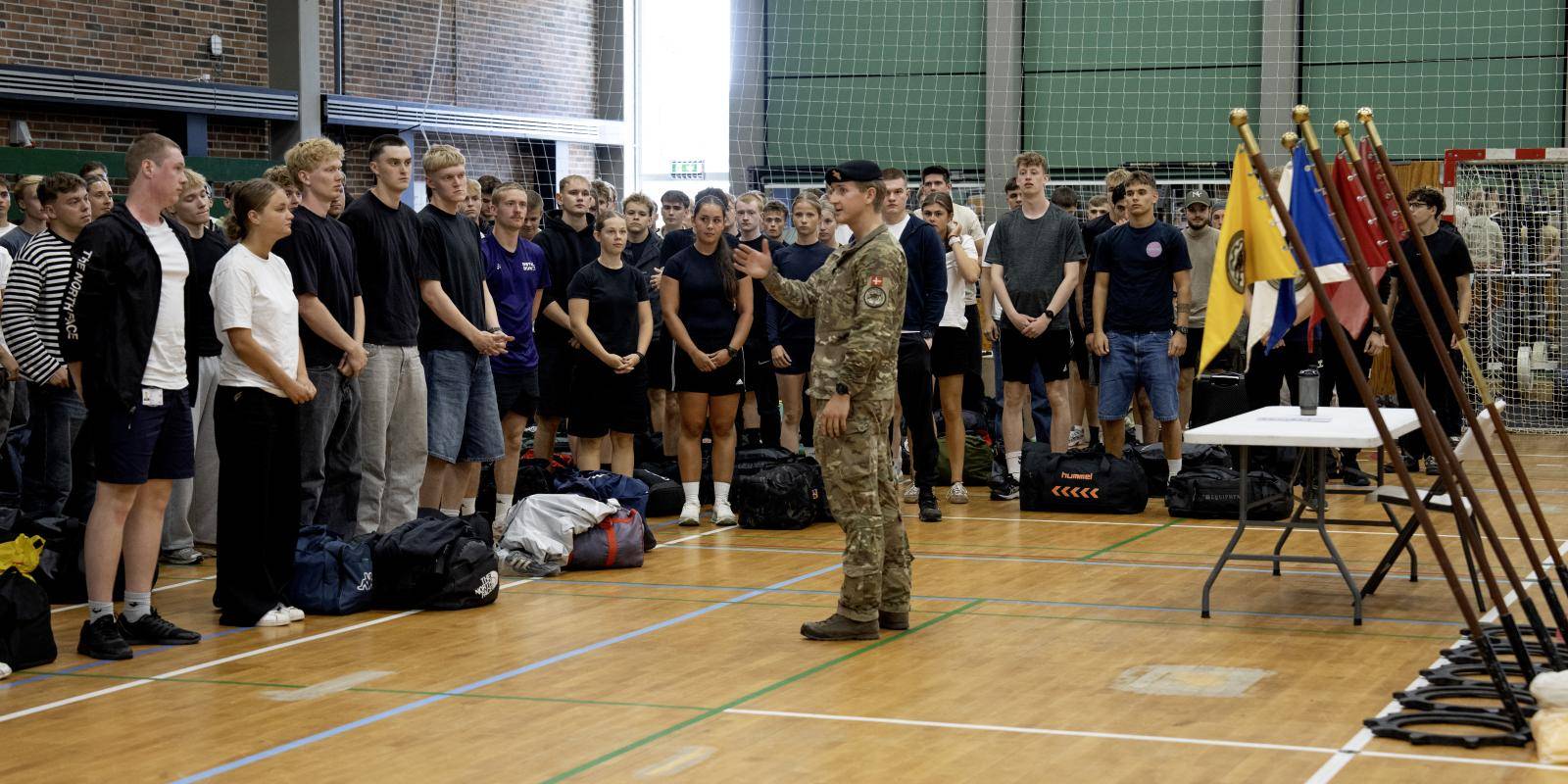
1. Establish a compulsory European national service scheme built around cross-border exchanges – an ‘Erasmus for defence’, as it were – among willing states.
Participating governments should introduce compulsory service for a defined age cohort, or – where conscription already exists – modify or extend schemes to fit the cross-border cooperation model proposed here. The service obligation would remain national, with a mandatory foreign-experience component built into the programme. A practical pilot scheme could begin with a common period of basic military and civil-defence training for all medically eligible participants, followed by a specialized military or civilian service track and a three- to four-month placement in another participating country. The placement should provide genuine immersion in another security environment and provide exposure to that country’s approach to preparedness.
Those undertaking military service could spend several months training alongside the armed forces of another participating country. Civilian participants would undertake placements with civil-protection agencies, municipalities, ports, hospitals and other key strategic operators.
The service obligation should include, at a minimum, the following options: service in the armed forces, civil protection, emergency medicine, cyber resilience, infrastructure security, energy supply continuity, food security, telecommunications, logistics, transport, local crisis management and strategic communication. The cross-border element should be clearly operational, not merely symbolic: in other words, participants should be placed in real institutions. Those undertaking military service could spend several months training alongside the armed forces of another participating country (though it is important to note that these military placements would be supervised training attachments rather than operational deployments). As for civilian participants, they would undertake placements with institutions spanning, at the very least, civil-protection agencies, municipalities, transportation hubs (ports, airports, etc.), hospitals and other key strategic operators (energy suppliers and logistics providers in particular).
Completion of the period of service should normally be followed by a subsequent obligation to remain on standby as a member of a national reserve. Those completing a military track would enter the relevant national military reserve; participants in the civilian track would join the civilian preparedness reserve described below.
2. Create a European civilian reserve network.
The civilian track of the compulsory national service scheme should feed into a European civilian reserve network, organized nationally but with interoperable functions across participating states. The network should combine national service participants with other citizens who possess crisis-relevant professional expertise, so that anyone with the necessary skills can be called upon for refresher training, exercises or mobilization.
The network should be built around the professions required to maintain essential services and support crisis response. Relevant personnel should include medical professionals, engineers, energy specialists, cyber experts, logistics managers, food-sector operators, telecoms technicians, transport planners, water and waste specialists, local government officials, emergency communicators and civil society coordinators. A digital register, protected against cyberattacks, should record members’ training status, verified expertise and availability. The wider framework should include rules on periodic refresher training, employment protections for people who are called up, and clear procedures for activating the reserve in a crisis.
3. Develop a common European ‘preparedness curriculum’.
Participating states should agree on common training curriculums for both the military and civilian components of compulsory national service. Basic military training would remain a national-level responsibility, but participating governments should agree on minimum training objectives and standards, in cooperation with their armed forces. Civilian modules should cover basic defence awareness, civil protection, first aid, cyber hygiene, media literacy, crisis communication, emergency logistics, infrastructure resilience, household preparedness and local-government crisis response.
4. Create ‘local resilience compacts’ with local governments and essential-service operators.
Participating governments should designate pilot regions for the establishment of ‘local resilience compacts’ that would bring together municipal and regional authorities with civil-protection bodies, universities, NGOs, and private enterprises responsible for essential services.
The compacts should focus primarily on services whose disruption would have the greatest immediate impact on society and crisis response. Priority sectors should include energy, water, food distribution, transport hubs, data infrastructure, telecommunications, hospitals, waste management, logistics and payment systems.
5. Launch the scheme with a coalition of willing states, with the UK invited from the outset.
The initiative should be established by a coalition of willing European governments rather than as an EU-wide or EU-exclusive programme. A credible founding group would combine eastern front-line states (e.g. Poland, Ukraine), countries with established traditions of total or comprehensive defence (e.g. Finland, Sweden), major military powers (France, Germany, the UK), and states with significant civilian resilience capabilities (Switzerland, the Baltic states). The UK should be involved from the initial design stage. EU institutions could provide funding and technical support where appropriate. Service obligations, mobilization and national preparedness would remain the responsibilities of national governments. The proposed 2028–34 MFF offers an immediate opportunity to finance the common European layer of the initiative, particularly in relation to cross-border mobility, shared training infrastructure and reserve interoperability.