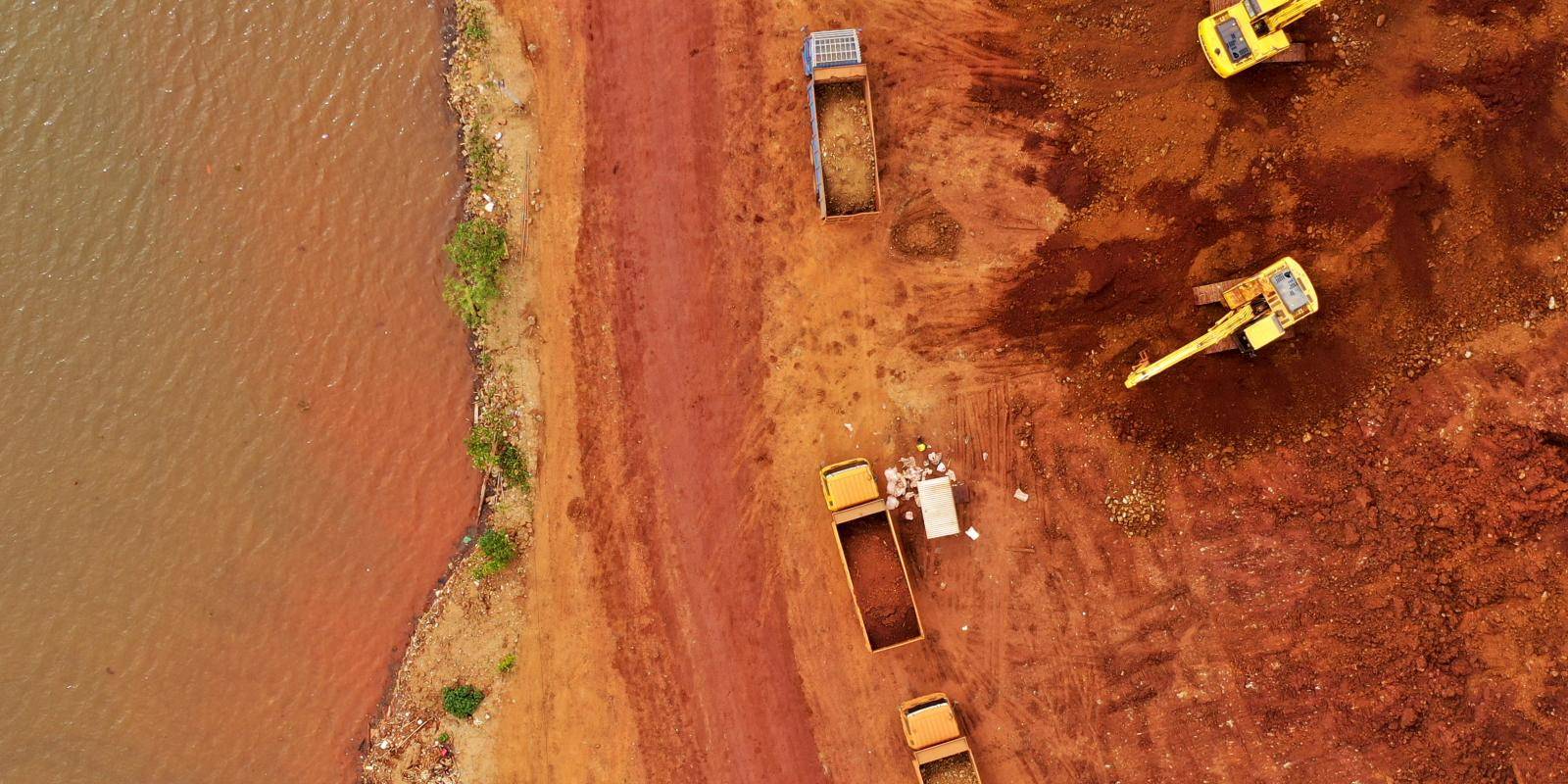
Mining and processing of minerals can consume and pollute vast quantities of water. Improving the sustainability, efficiency and equitability of water use should be a priority for governments, the private sector and civil society in order to protect local communities, the environment and global supply chains.
Minerals are essential building blocks for the technologies and energy systems that power the global economy. These raw materials are the primary inputs for consumer digital products, such as smartphones and laptops, and communication networks. Electrical transmission, critical infrastructure, and national security and defence also depend on these minerals. Crucially for the energy transition, these commodities are fundamental in low-emissions technology, such as wind turbines, solar panels and electric vehicle (EV) batteries (Figure 1). The rise in demand for minerals will require global expansion of mining and likely entail increased pressure on water resources. Governments and corporate actors alike should urgently consider and adopt more sustainable, efficient and equitable practices to mitigate water risks to operations and raw material supply, while protecting local communities and the environment.
Mining and processing of minerals can cause severe environmental damage, not least to fresh water, a vital resource affected by rising consumption, contamination and climate change worldwide. The mining sector consumes and pollutes vast amounts of water globally. Environmental, social and governance (ESG) data show that global water withdrawals by major mining companies increased by about 10 per cent between 2021 and 2024. This is a concerning rise, particularly when mining activity is set to grow and expand into water-scarce and environmentally fragile regions, such as the Cajamarca region in Peru, where gold and copper are mined, and the Pilbara region in Australia, known for iron ore. Pollutive waste streams can occur due to the leaching of toxic chemicals and heavy metals, which can be released into surface water and groundwater through untreated highly saline or acidified wastewater and leaching from heaps of ore and tailings (the leftover waste material once ores have been removed). Furthermore, higher-temperature water from mining activities and processing operations, including material removal and processing (e.g. cooling), can impact downstream aquatic ecosystems.
Water is embedded as ‘virtual water’ in raw materials through the fresh water consumed and polluted in the extraction and processing of minerals. Pressures on water sources from overexploitation, pollution and changes in climate and hydrological systems mean that addressing water scarcity is emerging as a critical social, economic and environmental concern. This presents challenges for water security, environmental sustainability and global trade of minerals and manufactured products (see Preface for background on the concept of ‘fair water footprints’). Accounting for the virtual water hidden in traded products (see Box 2 for definitions), as well as understanding the impacts of water footprints on local communities and producers, exporters and importers, is vital for improving the sustainability of water use and to secure resource supplies. This embedded water connects producers of metals and minerals to the downstream supply chain and consumers, who may not be aware of the impact their purchases have in other parts of the world.
An unsustainable water footprint from the mining sector (see Box 2) can severely impact the water security of Indigenous peoples and local communities, which in turn can affect a mining company’s social licence to operate. Excessive water footprints can have negative impacts on local access to clean water for household uses, which would particularly impact women, girls, the elderly and other marginalized groups who tend to be responsible for the collection and use of water for domestic purposes. This strain on water can also affect livelihoods dependent on access to fresh water such as fishing, aquaculture or agriculture. Leakage from tailings dams (structures built to store waste materials) can contaminate water for both human and ecosystem uses while deforestation can reduce flood resilience.
Resulting changes to hydrological patterns can lead to the degradation of rivers, lakes, wetlands, aquifers and coastal waters that are crucial for maintaining the health of entire ecosystems – impacting aquatic biodiversity, wildlife and plant species – and ecosystem services that are central to local communities and Indigenous ways of life. Mismanaged and overexploited water resources, which breach ecological limits and exceed the sustainable use of local resources, can compromise the water security of populations who already live on the frontlines of intensifying environmental degradation and climate change.
This paper discusses the production of minerals and metals and their dependence on local water resources. Fossil fuel extraction, cleaning, processing, refining and combustion account for the largest impacts on water from mined commodities. This type of mining and extraction is deserving of separate treatment and falls outside the scope of this analysis. The focus in this paper is on industrial mining for metal ores and minerals that are used in the production of traded inputs for technology, energy and defence sectors, where demand is expected to increase significantly. This research includes case studies of three water-vulnerable countries – Indonesia, South Africa and Chile – and explores the water security of each as well as the social and environmental impacts mining has on local water resources. The paper discusses several mandatory and voluntary measures that can address gaps in the management of local water resources and virtual water trade. It also identifies places where mining sector policy (in exporting and importing regions) is attempting to address water-related risks.