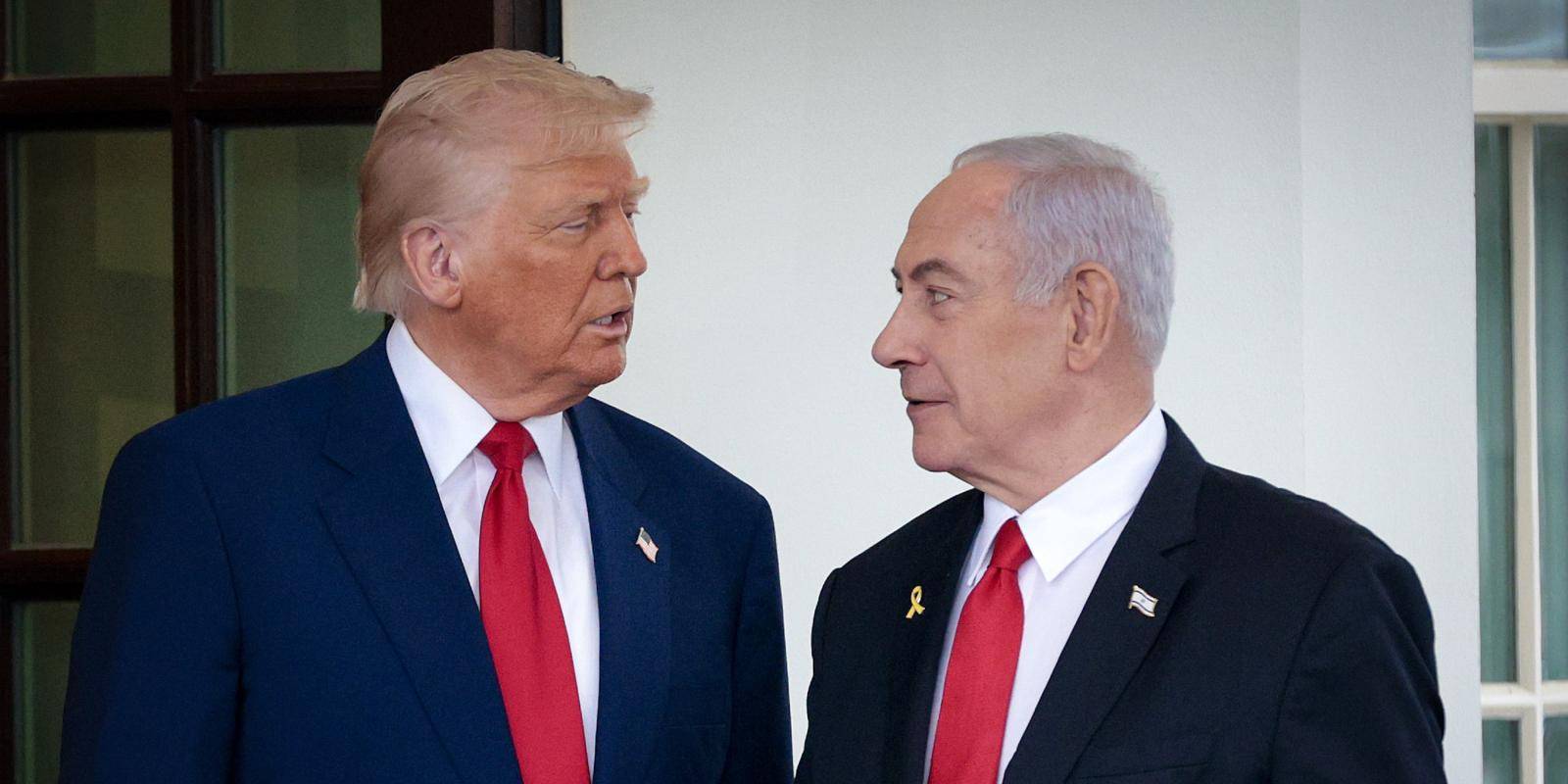

Israel’s Prime Minister Benjamin Netanyahu finds himself in an increasingly precarious position as US President Donald Trump’s tour of the Gulf States unfolded in a direction diametrically opposed to Israel’s current stance.
While Arab states and Trump’s aides are increasingly vocal about ending the Gaza conflict and incorporating Syria into the Abraham Accords framework, the long-time Israeli leader continues to vow expanded military operations in Gaza and maintains a belligerent posture towards Syria.
Political constraints, domestic resentment
The war in Gaza has lasted for nearly 600 days, and it is unclear when Israel plans to end its operations. While Strategic Affairs Minister Ron Dermer recently said the war would be over within a year, a security official told Israeli media it would take ‘at least two years of intense fighting.’
Netanyahu’s reluctance to end the conflict stems primarily from domestic political considerations. As head of a fragile coalition which includes far-right parties that are committed to continuing the war, any significant policy shift towards peace risks toppling his government. Yet this stance increasingly places him at odds with both Israeli public opinion and regional diplomatic realities.
The Israeli public has grown weary of prolonged conflict. Reservist mobilization remains relatively high – around 75 per cent of reservists who were called to duty reportedly showed up (although a highly polarized debate about this figure is ongoing). But any long-term military control over Gaza, like that advocated by Netanyahu’s far-right coalition members, will likely require an increase in reservists being called up – a contentious political issue that threatens the government’s stability.
Moreover, polls consistently show almost 70 per cent of Israelis prioritize the release of the hostages over continued military operations. Additionally, approximately 61 per cent support normalization with Saudi Arabia. This adds to the striking disconnect between government policy and public sentiment, given that Riyadh has insisted on the end of the war and the creation of a Palestinian state as conditions to normalize relations.
US and Israel: separate agendas?
Trump, despite his historically strong relationship with Netanyahu, appears to be charting an independent and distinct course. After initially entertaining controversial proposals about Palestinian population transfers and commercial development in Gaza – ideas that resonated with Israel’s far-right parties – Trump has pivoted towards other approaches.
The US president now appears to have shifted away from blanket support for Israel’s military operations. Trump recently said he was finding the current situation in Gaza challenging, reportedly telling donors that finding a solution was hard because ‘they’d been fighting for a thousand years.’ This is a departure from his previous threat that ‘all hell is going to break out’ if Hamas did not release ‘all of the hostages’ within 24 hours.
This shift places Netanyahu in a difficult position. The Israeli leader must navigate between his coalition partners’ maximalist demands for the reoccupation of Gaza and the regional reality of strong objection to these measures.
Regional recalibration
Regional dynamics further complicate Netanyahu’s position. The dream of normalization with Saudi Arabia – once the crown jewel of Israel’s diplomatic strategy – appears increasingly remote while Gaza remains a warzone. Normalization is now intertwined with the end of the war, steps towards which Trump reportedly discussed with Saudi Arabia’s de facto leader Crown Prince Mohammed bin Salman during his visit.

During Trump’s trip, Gulf leaders, backed by Egypt, Jordan and Morocco, likely used their private conversations with him to advocate for an end to the Gaza conflict – a position that directly contradicts Netanyahu’s current strategy. The Arab leaders are concerned about the humanitarian crisis in Gaza that has worsened since 2 March, when Israel blocked the delivery of humanitarian aid to the strip. Their access to Trump creates a multilateral pressure point that Netanyahu cannot easily dismiss, particularly given the US president’s demonstrated willingness to act independently on regional issues.
The lifting of sanctions against Syria despite Netanyahu’s reported objections illustrates this new dynamic. Trump appears prepared to pursue his regional agenda with less deference to Israeli concerns than during his previous term. The transition from Biden to Trump has not yielded the blank cheque for Israeli military operations that some in Netanyahu’s coalition may have anticipated. Indeed, Israel’s recent planned military operation to send large numbers of troops to seize areas of Gaza was postponed until after Trump’s visit to the region, and probably for a few days beyond that.