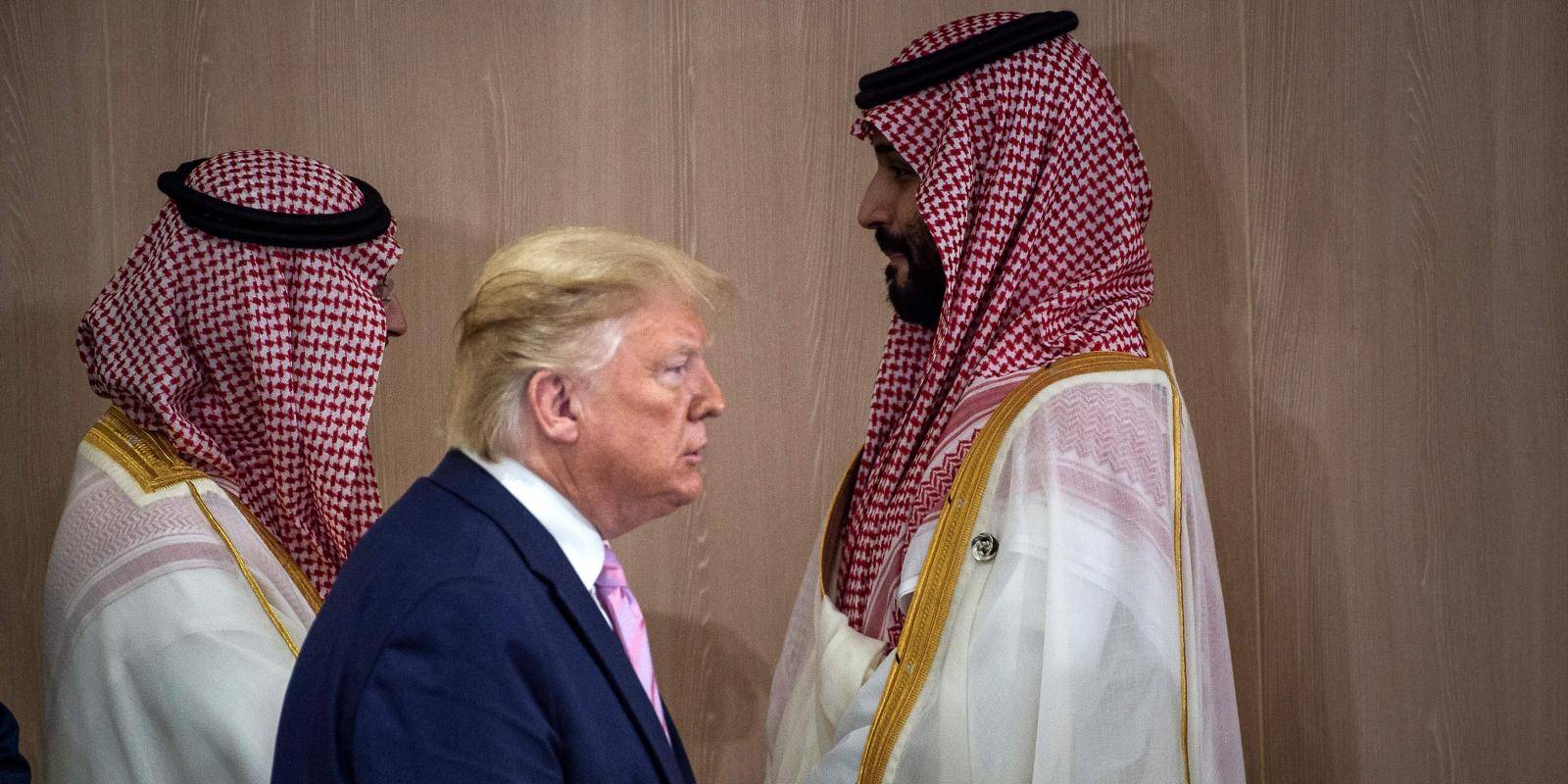

Eight years to the day from his memorable 2017 state visit to Saudi Arabia, US President Donald Trump is again returning to the Gulf region this week. This broader tour is designed to foster economic partnerships, defence cooperation and regional diplomacy in Riyadh, Abu Dhabi and Doha.
Trump is returning to a very different Middle East. Regional approaches to urgent issues have changed: Gulf leaders have entered a new era of pragmatic diplomacy and de-escalation, asserting greater autonomy and maturity in foreign policy decisions. They ultimately seek to present themselves as strong regional partners for the US while they navigate a shifting multi-aligned world.
Meanwhile, hanging over all discussions will be the war in Gaza. Any kind of significant progress on that issue looks unlikely, as Israel presses its military operations – but nothing can be entirely ruled out with a president whose sudden policy shifts have continued to surprise the region.
Gaza and a Gulf summit
Since the 7 October attacks, and throughout the war in Gaza that followed, Gulf states that have long sidestepped the Palestinian issue have been in an uncomfortable position.
Gulf societies are angered by perceived Western double standards in the response to the Ukraine and Gaza wars and are re-politicized on the issue of Palestine. Trump, who some initially hoped might help bring about a lasting ceasefire in Gaza, has become associated with his outlandish proposal to ‘redevelop’ the Strip – while his administration appears unable to restrain Israel’s Prime Minister Benjamin Netanyahu.
A statement from the prime minister’s office said on 12 May that preparations are underway for ‘an intensification of the fighting’. That could be delayed due to Trump’s trip to the region. But so long as that remains Israel’s position, it is unlikely any country in the region can work with Trump to build on the 2020 Abraham Accords and normalize relations with Israel.
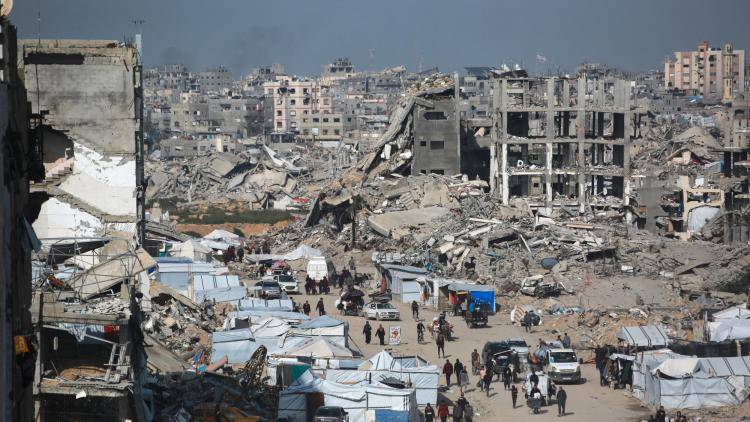
Saudi Arabia cannot support any normalization unless it is tied to a political horizon for Palestinian statehood. A big diplomatic breakthrough on one of the region’s defining conflicts therefore seems unlikely under current conditions – even following Hamas’s release of the last US hostage. (This was likely a direct appeal to the president and his negotiating team, hoping to sidestep Trump’s Israeli interlocutors and work directly with the president).
Instead, the president will attend a Gulf wide summit that could host Arab leaders from Lebanon and Syria. Trump will need to listen to Gulf partners who have been carrying the heavy burden of negotiations and ‘day after’ planning on Gaza – and are also expected by Washington to finance reconstruction.
Besides the humanitarian crisis in Gaza, Gulf leaders will likely press the president on the need to support the new government in Lebanon, provide urgent sanctions relief for Syria, and offer reassurances on US commitments to regional stability.
Today, unlike eight years ago, Gulf leaders have entered a new era of pragmatic diplomacy and de-escalation particularly with Iran but also with Turkey. The blockade of Qatar – clumsily imposed by the UAE, Saudi and Bahrain on their neighbour – was resolved in 2021 but is still too recent to be forgotten. For the US, Qatar has continued to play a critical mediation role in ending the war in Gaza while also attracting a barrage of Israeli criticism.
Iran
Gulf states championed Trump’s withdrawal from the Iran nuclear agreement in 2018 and his policy of maximum pressure sanctions on Tehran. But they were disappointed by the president’s unwillingness to use military force against Iran when it targeted ships in the Persian Gulf and hit Saudi oil facilities in 2019.
Almost immediately, UAE began a pivot to normalize ties with Tehran. This strategy, gradually embraced by Saudi Arabia, has prevailed despite the Gaza war and two direct Israeli-Iranian military exchanges in 2024. Keen to stave off any Israeli military attacks on Iran that could further destabilize the region and dampen the economic environment, Gulf states now strongly support Trump’s nuclear negotiations with Tehran towards a new nuclear deal.
Trust with Tehran is still limited, but there is a clear opportunity to take advantage of Iran’s regional setbacks, including a weakening of Hezbollah and Assad’s departure from Syria, to rebalance and fortify the region.
Against this backdrop, Gulf states were surprised by the US’s Omani mediated de-escalation with the Houthis. This agreement will see the Houthis cease attacks in the Red Sea in exchange for a cessation of American and UK airstrikes. Should it hold, it could pave the way for a return to a political roadmap to stabilize the decade long conflict in Yemen.
The substance of the trip
It’s probable that human rights will not be part of Trump’s agenda: troubling cases like that of UK citizen Ahmed Al-Doush, reportedly sentenced to ten years in a Saudi prison, will almost certainly not be raised by the US delegation.
The real substance to Trump’s trip will come from bilateral economic and defence deals. Trump will be joined by senior members of his cabinet including Secretary of State and National Security Advisor Marco Rubio and Secretary of Defense Pete Hegseth and many American CEOs. Riyadh has already committed $600 billion of investment in the US. The UAE has superseded its Gulf neighbour with a $1.4 trillion decade-long investment plan.
The details of the deals will be unveiled over the coming days and will likely include partnerships in AI and tech sectors, semiconductors, energy cooperation, critical minerals and manufacturing investments. (The Trump family’s longstanding investment ties in the Gulf region have raised some conflict of interest concerns).
