

For the first time in recent memory, Iraq has found itself on the margins of a major Middle Eastern conflict rather than at its epicentre. Open conflict between Iran and Israel arrived during a rare window of relative stability and developmental progress. Yet, this moment of fragile calm is unlikely to endure. Iraq is on the brink of being drawn into what appears to be a transformative upheaval in the regional order.
The 2003 US-led invasion of Iraq reshaped the geopolitical landscape and ushered in a new era – one in which Iran rose as a dominant regional power. The foundations of that order are now being disturbed in the wake of the 7 October Hamas attacks, Israel’s onslaught on Gaza, and the regional conflict that has followed. The full trajectory of this transition remains unclear. But it is almost certain to be tumultuous and violent.

This shift is occurring at a time when Iraq has begun to emerge from years of conflict, underscoring the vulnerability felt across the Iraqi political spectrum. Iraq’s political elite, regardless of ideological or ethno-sectarian alignment, remain wary of being drawn into regional conflict.
Even factions with historically close ties to Iran, such as the Popular Mobilization Forces (PMF), have largely exercised restraint since 7 October.
As leaders within the governing Shia Coordination Framework in Baghdad, they are not only beneficiaries of the state, but its stewards.
The previous history of conflict
This marks a significant departure from their earlier posture. Iraqi factions fought on the same side as US forces to defeat the Islamic State from 2014-2017. But then relations between the two deteriorated, and they ultimately turned their weapons on each other.
The first Trump administration launched a ‘maximum pressure’ campaign against Iran and its Iraqi allies. Iraqi factions targeted US facilities, launching rocket attacks on bases such as Al Asad. Iraqi territory also served as a launchpad for Axis of Resistance attacks on Israel and the Gulf.
In 2021 and 2022, for instance, PMF linked groups and allies launched drones into Saudi territory and the United Arab Emirates from southern Iraq. Last year, PMF-linked Kataib Hezbollah (KH) killed three US service members at Tower 22 on the Jordan–Syria border. Such incidents showed the real risk that Iraq could become a staging ground for broader regional escalation.
However, since then, restraint has prevailed. In recent years, major PMF groups such as the Badr Organization and Asaib Ahl al-Haq have entrenched themselves within the Iraqi state. They now hold ministerial portfolios, command senior bureaucratic posts, and influence state-owned enterprises that generate substantial revenues.
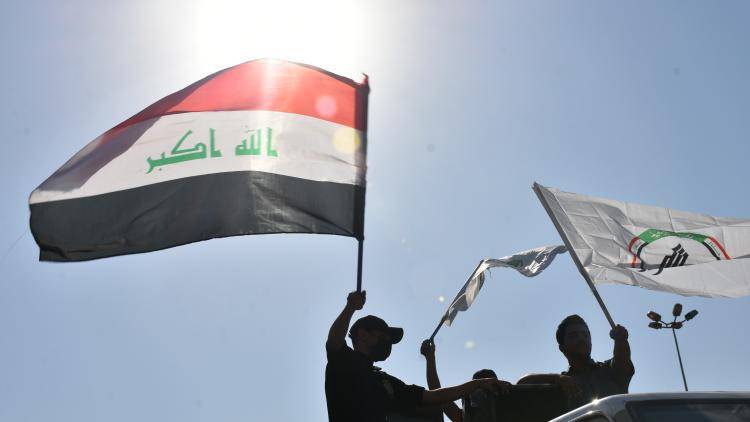
The Iraqi federal budget averaged over $100 billion annually in the past three years. The incentive to preserve access to these resources has encouraged a more pragmatic, less confrontational approach. These groups are not mere proxies of Iran. For them, instability is bad for business.
The instinct of restraint is also born from experience. In 2020, the US assassinated IRGC General Qassem Soleimani and Abu Mahdi al-Muhandis, the de facto leader of the PMF. These killings exposed the stark reality of Iraq’s limited control over its airspace and sovereignty. And that lesson continues to shape the strategic calculus of Iraqi actors today, reinforcing a preference for restraint over confrontation.
These groups recognize that they have little influence over the shifting regional order. They prioritize survival, focusing on preserving their local power.
Dragged back into conflict
However, ongoing regional turmoil may soon challenge Iraq’s posture of strategic restraint. Several possible trajectories could reshape the calculus in Baghdad.
One scenario is that of a protracted war between Iran and Israel, supported by the US. In this context, Iraq could gradually be drawn in as Iran pressures its allied armed groups to carry out attacks against Americans in the region or in Israel. Given the fragility of ceasefires since 7 October and the current level of regional instability, this scenario appears plausible.
Tehran has long suspected Mossad operatives may have infiltrated its territory through Iraq. That may stir tensions between the two states, potentially prompting further cross-border strikes, particularly in the Kurdistan Region. Iran has previously targeted the area under the pretext of dismantling alleged Mossad outposts. Even in the absence of direct involvement, the risk of spillover would increase, making Iraq once again a potential battleground.
