
The Russian economy has proven much more durable through three and half years of full-scale war in Ukraine, and a decade of Western sanctions, than many would have expected.
Expectations of a collapse in the Russian economy were widespread in 2022, as the West initially rolled out extensive sanctions in the aftermath of the full-scale invasion. That collapse did not transpire. The Russian economy has continued to function, even prosper. While suffering a 1.4 per cent real GDP contraction in 2022, it grew in real terms by over 4 per cent per annum over the next two years.
Explanations for the durability of the Russian economy are numerous. But a number of important factors have contributed.
Why has Russia’s economy survived?
First, Russian President Vladimir Putin had long planned for the full-scale invasion and likely resulting sanctions. Indeed, since the annexation of Crimea in 2014, Russia ran tighter fiscal and monetary policies than might have seemed appropriate, given its balance sheet. This enabled Russia to deleverage and build buffers – ready for this war.
By February 2022, the Central Bank of the Russian Federation (CBR) had accumulated over $600 billion in foreign exchange reserves, with around 10 per cent of GDP in assets in its National Wealth Fund. Its public sector debt to GDP ratio was held below 20 per cent, and it repaid external debts. This ‘Fortress Russia’ economic policy meant that when sanctions hit, the economy was less reliant on foreign financing than it had been a decade earlier. It had ample foreign exchange reserve buffers and was running current account surpluses.
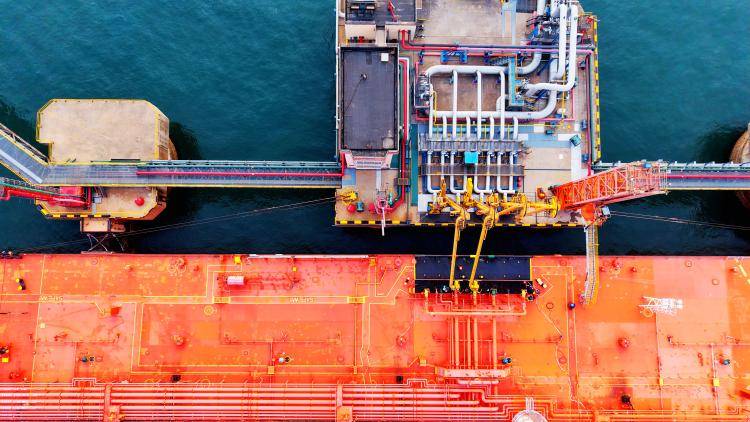
Second, Western sanctions were slow to roll out, well telegraphed, and filled with carve-outs and contradictions. Russia was quick to circumvent them. According to IMF data, Russia has run a current account surplus of around $375 billion for the period since the full-scale invasion, around 50 per cent higher than the comparable period before the invasion. Remarkably, Russia has been able to accumulate more foreign exchange earnings than it did before the full-scale invasion.
Third, secondary sanctions have been too weak and ineffectual. There remain few real financial penalties for helping Russia circumvent sanctions, while there are ample financial rewards. The result has been that plenty of countries, companies, banks, and individuals have been willing to help Russia circumvent the sanctions.
Fourth, Russia has been adept at moving to a war economy by diverting production and finding substitutes for its imports.
The costs to Russia
It would be wrong, however, to suggest the Fortress Russia economic policy settings, war, and sanctions have been cost free on the Russian economy.
I estimate that real GDP growth has been around 1 per cent lower per annum for Russia over the past decade, at least, as a result of Putin’s policy settings. As a result, by 2025, real GDP is around 12 per cent lower than what it might have been. And the cumulative US dollar GDP loss is well in excess of $1.6 trillion, according to my estimates using IMF World Economic Outlook data.
Add the loss of close to $400 billion in CBR and oligarch assets immobilized in the West, and additional capital flight of many hundreds of billions of dollars through this period, and the costs are serious indeed. The $100 billion in additional annual defence spending and the losses to the Russian economy are likely to combine to many trillions of US dollars.
Fortress Russia economic policy settings have made Russians poorer, alongside leaving hundreds of thousands of dead and injured. And looking forward, the social cost of higher disability and social security payments to veterans will be a huge long-term drag on the economy.
Whatever the scale of the economic losses, they have not been enough to encourage an about turn by Putin, or a decisive turn in domestic sentiment against the war. The power of propaganda and Putin’s control of the domestic media cannot be under-estimated.
A turn for the worse
However, the buffers Putin deployed before the war are beginning to be worn down. And there is much to suggest that the Russian macro-outlook is turning more challenging.
Inflation has consistently run at more than double the CBR’s 4 per cent inflation target since the full-scale invasion, as a result of sanctions boosting import costs, and rouble weakness. Inflation eats away at real standards of living, hitting the poorest hardest, who often bear the largest human cost of the war and more often than not are located in Russia’s regions.
The CBR responded by hiking its main policy rate in the aftermath of the full-scale invasion to 21 per cent, the highest amongst its emerging market peers. The real economy is now struggling. Household and corporate lending has moderated sharply – the former to a near standstill. Economic activity has slowed too. Real GDP growth slowed to just 1.1 per cent YOY in the second quarter of 2025, after growing 1.4 per cent YOY in the first quarter, and less than one quarter the year earlier level.
Services and manufacturing PMIs have also dropped sharpy and are now in contractionary territory. Full year real GDP growth forecasts are being revised down to less than 1 per cent for 2025, but inflation expectations remain elevated. That suggests there is no end in sight for the current stagflationary macro situation.
