

The BRICS summit in Rio on 6-7 July was notable for the absence of high-level representation, in particular Russia’s Vladimir Putin and China’s Xi Jinping. Putin avoided travel due to the ICC arrest warrant, instead delivering a brief and rather uninspired video address. Xi missed the summit for the first time since taking power in 2012, citing a scheduling conflict.
In the absence of Putin and Xi, the summit was dominated by Brazil’s Lula and India’s Modi, the leaders of the two largest BRICS democracies – and the least interested in turning the grouping into an anti-Western alliance. Antagonizing the United States was not on the agenda.

Instead, the summit agenda focused on reforming global governance, advancing the green transition and boosting South–South cooperation, leaving little room for anti-Western posturing – possibly why Russia and China prioritized other engagements. The meeting also took place against the backdrop of Trump’s threat to impose an additional 10 per cent tariff on all BRICS countries if they pursue anti-American policies.
The Rio summit revealed two inherent weaknesses of this increasingly diverse grouping: its lack of a clear geopolitical identity and the limits of purely transactional multilateralism.
Russia’s vision for BRICS
The Rio summit differed markedly in spirit and content from the 2024 Kazan summit hosted by Russia, which was used to showcase the failure of Western sanctions and efforts to isolate Moscow. The Kazan summit welcomed new members and partners, adding geopolitical weight to BRICS with the goal of mounting a stronger challenge to Western hegemony and announcing the onset of a multipolar global order. It was full of anti-Western and anti-colonial rhetoric, calls for de-dollarization, and plans to sanction-proof its members.
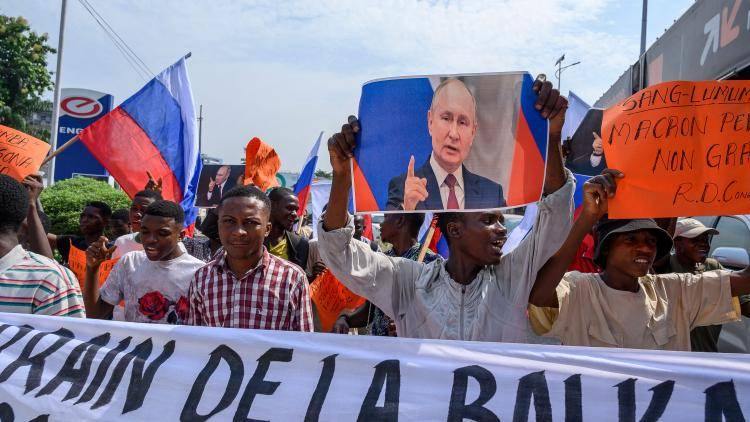
Russia views the countries of the Global South – what it calls the ’world majority’ – as a key tool to help it reshape the international environment and boost its global standing. From Moscow’s perspective, BRICS is fundamentally an anti-Western project: a platform to mobilize the Global South against Western hegemony.
It is presented as an example of multipolar multilateralism – theoretically inclusive, democratic, respectful of all governance models, and based on sovereign equality and non-intervention. In practice, however, BRICS is designed to suit autocracies, built on limited commitments and self-interest, and used by authoritarian powers like China and Russia to promote an alternative world order.
The case of Iran highlights the limits of the BRICS brand of multilateralism. Iran attended the Rio summit, its first as a full member, seeking diplomatic solidarity and a strong condemnation of Israel and the US for strikes against its nuclear facilities that caused civilian casualties. Although the 30-page final declaration did condemn the attacks on Iran as unprovoked and a ‘violation of international law’, it did not name the culprits.
Meanwhile, Russia’s restrained support for Iran, both within the BRICS framework and bilaterally, is a prime example of a strategic partnership without real obligations.
While Moscow hypocritically condemned the attacks on Iran as unprovoked and illegitimate, it offered no concrete assistance or security assurances. Russia is in no hurry to antagonize Trump over Iran, instead prioritizing potential concessions on Ukraine. Russia’s offer to mediate an Iran–Israel peace agreement was an attempt to rebrand itself as a constructive global actor and regain influence in the Middle East after Assad’s decline – while benfitting from the higher oil prices and temporary distraction from Ukraine. Iran’s utility to Russia may also be waning, as Moscow now produces its own Shahed drones.
Growing rift over the future of BRICS
There are signs of a growing rift between Russia and China on one side and other members on the other regarding the future role and direction of BRICS. The Rio summit showed that not all members are interested in taking sides in a global power confrontation or turning BRICS into a tool to help reshape the global order. If anything, it showed that the expansion of BRICS membership has brought increased strategic divergences, making it difficult for BRICS+ to develop a clear geopolitical identity.
Its main promise has rested on inclusivity and sovereign equality. However, balancing expansion with coherence and effective decision-making has led to the emergence of two or even three tiers of membership: the core five; the four new members; and partner countries with no voting rights. The rhetorical commitment to sovereign equality and the democratization of international affairs increasingly clash with the reality of dominant powers pursuing their own interests.