

As G7 leaders restated their united support for Ukraine and vowed to increase economic pressure on Russia, President Vladimir Putin was hosting leaders from the Association of Southeast Asian Nations (ASEAN) at the ASEAN-Russia Commemorative Summit in Kazan. There, Putin could point to a very different diplomatic reality: none of the leaders present had severed ties with Russia or joined the West in treating it as an international pariah.
This symbolic contrast is important. More than four years after the full-scale invasion of Ukraine, Russia has not been isolated in the way many Western governments expected or hoped. Large parts of Asia, the Middle East, Africa and Latin America have continued to engage with Moscow.
This is often out of strategic interest rather than sympathy: Russia remains a nuclear power, a permanent member of the United Nations (UN) Security Council, a major energy exporter and a useful partner for states that do not want the West to define their strategic choices.
But the more important issue is whether Putin’s renewed diplomatic visibility represents a real comeback – or rather an attempt to compensate for Russia’s lack of progress in gaining international support for its position on Ukraine.
The Kremlin’s challenge is not that Russia has no partners. Putin’s visit to Beijing last month and the Kazan summit, which concluded on a commitment to deepen ASEAN-Russia cooperation, gave Putin political platforms and opportunities to bolster his status. But these partnerships cannot deliver Putin’s priority goal: a political settlement on Ukraine on Russia’s terms.
Ukraine remains stuck
Putin’s failure to respond meaningfully to Ukraine’s President Volodymyr Zelenskyy’s open letter and invitation to meet is revealing. The Kremlin still appears to believe its ‘strategy’ of endurance will deliver its war aims: hold the line, grind forward where possible, wait out political cycles in the West, and reserve the option of diplomacy for only once the terms have shifted decisively in Russia’s favour.
There is a brutal logic to this. Russia has shown that it can sustain a long war. Western support for Ukraine remains politically fragile and the US is increasingly unpredictable. European military production is improving, but not yet at the scale required to transform the war quickly.
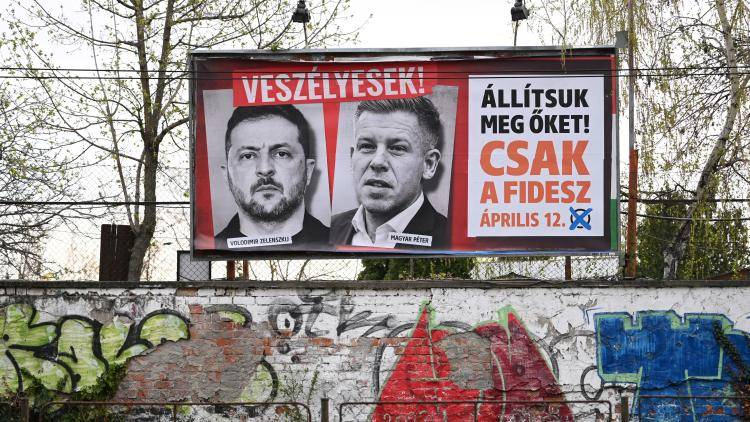
However, Russia’s endurance has not produced a diplomatic breakthrough. It has so far failed at forcing Ukraine to accept its territorial claims. It has not split the G7 either. And it has not persuaded China, India or ASEAN states to endorse its preferred endgame. The result is that while Russia looks less isolated globally, it has not been able to persuade others to support its position on Ukraine, its most important – if not existential – issue.
This is why the recent European debate over opening communication channels with the Kremlin matters. These discussions do not amount to reconciliation. Instead, they show that Europeans are preparing for the diplomatic phase of a long war – even if they disagree between themselves over who should conduct this diplomacy and on what basis.
For Moscow, such debate can usefully be presented domestically and internationally as evidence that Europe is slowly realizing it can’t isolate Russia forever. But, in reality, Europe is not preparing to go back to business as usual. It is trying to avoid being excluded from any eventual negotiation while simultaneously rearming, hardening its eastern flank and reducing long-term dependence on Russia.
China’s role
Putin’s visit to Beijing in May confirmed China’s central importance to Russia’s wartime resilience. China has become Russia’s indispensable economic partner: a buyer of Russian oil and gas, a supplier of industrial goods and a channel through which Moscow can blunt the impact of Western sanctions.
But the Russia–China relationship is not a coalition for victory in Ukraine. Beijing has every interest in Russia distracting the US, weakening Western unity and accelerating the transition towards a more fragmented international order. It has far less interest in being dragged into Russia’s war or absorbing the costs of a direct confrontation with the West over Ukraine.
This distinction is crucial. China helps Russia to endure. But it does not help Russia win diplomatically.
In fact, the war has made Russia more dependent on China at precisely the moment when Moscow wants to present itself as an independent pole in a multipolar world. The Kremlin can speak of strategic partnership, but the asymmetry is obvious. Russia needs China economically. China values Russia as a useful partner, but not as an equal strategic centre.
This limits what Putin’s Beijing diplomacy can achieve. It demonstrates that Russia cannot be excluded from Eurasian politics. It does not demonstrate that Moscow can shape the terms of peace in Europe.
The Kazan summit
The ASEAN summit offered a broader test of Russia’s influence in Asia. It shows neither a Russian collapse nor a comeback.
For countries seeking to avoid binary choices between Washington and Beijing, maintaining relations with Russia still has value. Russia has long-standing defence ties with several Asian states, important energy roles, and diplomatic weight at the UN. Some governments may also value Moscow as a partner that does not attach liberal political conditions to cooperation.
But the quality of Russia’s influence has changed. Before 2022, Moscow could claim to be an autonomous great power in Asia: a third pole alternative to the US and China with military, diplomatic, cultural, political and technological influence.
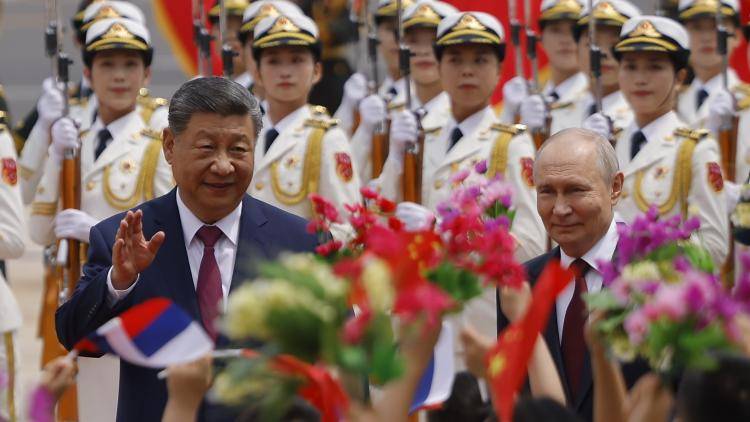
The war has weakened that claim. Russia’s defence industry is consumed by Ukraine. Sanctions complicate payments, logistics and technology transfers. Its diplomatic bandwidth is heavily absorbed by the war.
Most importantly, its growing dependence on China makes it harder for Asian states to see Moscow as a true counterweight to Beijing. This is especially important in Southeast Asia. ASEAN states do not want to choose between the US and China.
But nor are they looking to join a Russian camp. They will trade with Moscow, buy from Moscow where useful, and engage Moscow when it serves their interests. This engagement shows Russia is not isolated, but it does not reflect Russian leadership.
Russia collecting herself?
Putin’s Asian diplomacy should be taken seriously, but it has its limits.
The West’s failure to isolate Russia globally is a real achievement for Moscow. But while Russia’s partners may reject the Western pressure to isolate Moscow, most of them have not endorsed Russia’s war aims. They are preserving options, not joining a project. They are engaging Russia because it is useful, not because they want Russia to define the future of European security.