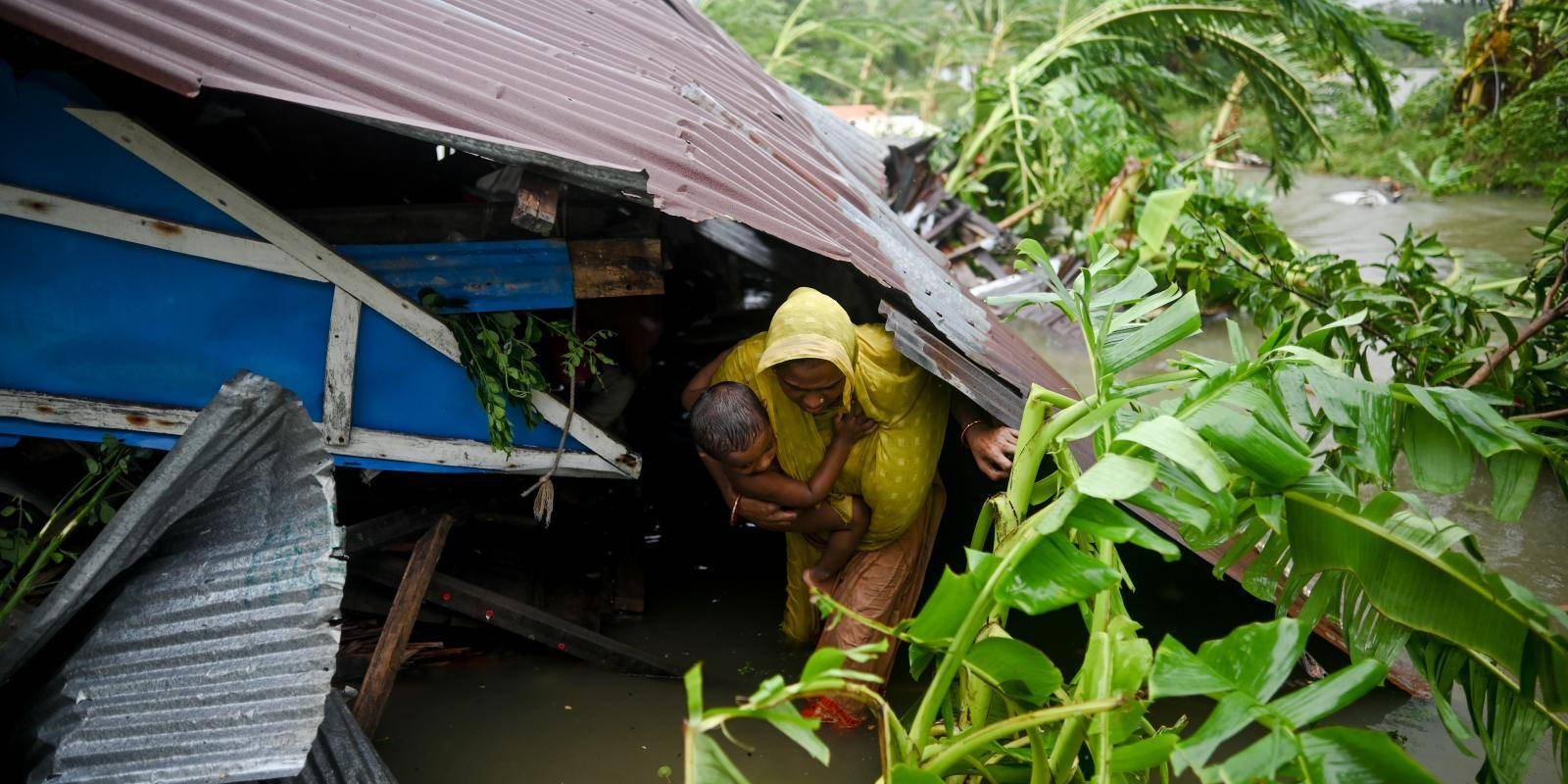
As natural disasters and climate change increasingly threaten global food security, the humanitarian system is struggling to cope. Existing early-warning systems are ill equipped for the complex, cascading effects of these crises, leaving communities unprepared and at greater risk.
Sustainable Development Goal 2, which aims to end hunger, achieve food security and improve nutrition by 2030 remains a distant global ambition. According to the latest available figures, one in 12 people faced hunger in 2024. This figure has declined only slightly since 2021, having increased significantly during the COVID-19 pandemic. The global prevalence of food insecurity (the state of not having regular access to food) is also only gradually declining since the pandemic, with 28 per cent of the world population – 2.3 billion people – moderately or severely food insecure in 2024.
In addition to deep-seated structural issues such as poverty and inequality, food security is increasingly under threat from disasters – both slow- and rapid-onset – that are resulting in unprecedented levels of agricultural damage and losses across the world. The UN Food and Agriculture Organization (FAO) estimates that the value of crop and livestock production lost due to disasters equates to more than 5 per cent of global agricultural GDP every year. Disasters – including the impacts of natural hazards, which may be exacerbated by climate change, pandemics, epidemics and armed conflict – affect food security by disrupting the functioning and sustainability of agricultural production, as well as by threatening the livelihoods of millions of people reliant on agri-food systems. While the first-order risks from such hazards to communities’ food security are important, societies are increasingly exposed and vulnerable to other complex, compound and cascading effects on global, regional, national and local food systems, such as food price inflation and disruptions to food availability when logistics infrastructure is harmed by conflict or extreme weather events. These impacts on people’s food security are transmitted through system components such as globalized physical supply chains and commodity markets. Impacts on food security can also, in turn, lead to political protests, destabilization, conflict and other forms of societal breakdown; such factors contributed, albeit unevenly and alongside other causal factors, to the 2011 Arab Spring.
The early-warning approach accounts for a fraction of the spending required on disaster response and recovery, and it can contribute towards addressing underlying drivers and providing proactive interventions to prevent predictable hazards from becoming humanitarian emergencies.
The humanitarian system is unable to cope with the trend of these increasing impacts on people’s lives and livelihoods (both in terms of food security and other effects). Consequently, the sector is shifting to strengthen anticipatory action by increasingly using early-warning systems to prepare for and reduce risks in advance of hazards occurring. These range from systems that provide vital hours of warning to at-risk populations in advance of a tsunami to those that alert humanitarians of unfolding famine risk over the course of many months. This early-warning approach accounts for a fraction of the spending required on disaster response and recovery, and it can contribute towards addressing underlying drivers and providing proactive interventions to prevent predictable hazards from becoming humanitarian emergencies. Such investments should be funded through broader disaster risk management funding rather than drawing from dedicated operational anticipatory action resources. However, there are gaps in current early-warning systems, meaning that people at risk do not receive sufficiently complete information in appropriate ways to be able to take early action in advance of impending, complex crises.
Recent reductions in official development assistance commitments and disbursements by many donors have made the outlook even more challenging. Most notably for food security, the US-funded and administered Famine Early Warning Systems Network (FEWS NET), which has been a leading famine-monitoring system providing long-term risk assessment since its establishment in 1985, was shut down in January 2025 by the Department of Government Efficiency, under President Donald Trump’s second administration. At the time of writing, FEWS NET is now partially back online but is facing an uncertain future.
One of the reasons that actionable information is not comprehensive is that current early-warning systems are highly fragmented and siloed by risk types, owners and geographies. They are often focused on responding to specific natural hazards, such as floods, landslides or cyclones, and there is little integration with other types of risk-response mechanisms (such as those relating to conflict, disease or food insecurity).
In 2021, the UN Food Systems Summit Scientific Group highlighted the growing role for science in developing a common language for addressing food-related risks, allowing multiple knowledge systems to converge around the shared goals of better understanding emerging risks and uncertainties, and developing improved means of preparing for and managing them. It recognized the increasing frequency and magnitude of impact from extreme weather events, and the additional volatility and uncertainty related to market and inflationary shocks, widespread disease outbreaks, as well as political or governance disruptions among others.
Existing food security early-warning systems, even those taking a multi-hazard approach, focus on different components of the global food system (such as agricultural production or market prices). They fall short of the level of coordination needed given the complexity of the cascading risks that threaten communities, assets, public infrastructure and nation states more broadly. Accounting for these interrelated effects is essential when seeking to bolster food security through disaster risk management approaches.
While specific early-warning systems for food security exist, they were not designed to respond to the increasingly interconnected hazards and risks for which they are now used. Instead, each of these systems has traditionally been focused on one or two hazards due to complexities and differences in data, expertise and institutional mandates. While monitoring of multiple hazards is increasingly integrated into early-warning systems for food security, greater attention needs to be paid to transboundary risk transmission, whereby connections such as trade or financial flows propagate risks from one area of the world to another, exposing individuals and communities to potentially unforeseen risks.
In an increasingly complex risk landscape, this paper explores early warning and food security communities of practice and assesses the challenges in, and opportunities for, integrating cascading risks to global food systems into existing early-warning systems – with an aim to strengthen approaches to disaster-risk reduction. It considers specific communities in Bangladesh and Senegal, two of the world’s most climate-vulnerable countries, as well as global institutions and governance approaches. After providing a conceptual evaluation of early-warning systems and early actions in response to cascading risks to food security (Chapter 2), our analysis in Chapter 3 is organized to reflect four crucial components (often referred to as pillars) of multi-hazard early-warning systems: risk knowledge; detection, monitoring and forecasting risks; disseminating and communicating warnings; and addressing preparedness and response capabilities. Financing challenges are considered in Chapter 4, and recommendations in Chapter 5 aim to improve global early warning and anticipatory actions and reduce the impacts of hazards on local food systems and all aspects of food security.
The insights are based on joint work by Chatham House and Practical Action. Our analysis included global and regional semi-structured interviews with mid- and senior-level experts who are working in and on food security and early-warnings systems across UN and humanitarian agencies, academia and think-tanks. It is further supplemented by Practical Action’s work with Bangladeshi and Senegalese communities. Key findings were tested in a virtual workshop in February 2025.