
COP30, the UN’s climate change conference, is taking place this November in Brazil. It comes as the world faces the increasingly devastating impacts of climate change and amid intense geopolitical turmoil.
A key task facing governments ahead of the conference is to submit new national climate plans, known as ‘Nationally Determined Contributions’ or ‘NDCs’. COP30 will likely also centre around money, climate change adaptation and the energy transition.
With the US leaving the landmark Paris Agreement (for a second time), the conference will inevitably serve as moment to take stock of how global climate efforts are proceeding in a highly challenging geopolitical context.
What is a COP?
The ‘COP’ is the UN’s annual climate change conference. It brings together nearly all countries in the world to negotiate the multilateral response to climate change and monitor progress made.
The word ‘COP’ is shorthand for ‘Conference of the Parties’, with the ‘Parties’ being the signatory governments to the UN Framework Convention on Climate Change (UNFCCC).
The first COP (COP1) took place in Berlin, Germany, in 1995. The 30th COP (COP30) will be held in Belém, Brazil, from 10 to 21 November 2025.
The ‘Presidency’ of the COP rotates on an annual basis. Brazil will preside over this year’s conference and André Aranha Corrêa do Lago, a Brazilian veteran climate diplomat, has been appointed COP30 President.
Brazil will formally assume the COP presidency from Azerbaijan (host of COP29) at the opening of the conference.
Why is COP30 important?
Climate change is already causing severe devastation globally and, as temperatures continue to rise, the risks are increasing too.
In the 2015 Paris Agreement, governments committed to limit the rise in the global average temperature to ‘well below’ 2°C above pre-industrial levels, ideally 1.5°C. Progress towards these goals is, however, way off track.
Every five years, the signatory governments to the Paris Agreement are requested to submit new national climate plans (Nationally Determined Contributions, NDCs).
These generally include a numerical target for how much a country should have reduced its emissions by a certain year (e.g 2030 or 2035). Some NDCs also contain adaptation measures and/or outline policies, strategies and actions to promote low-emission development.
The idea is that, when put together, the NDCs should collectively be ambitious enough to keep warming in line with the goals of the Paris Agreement.
In 2025, a new round of NDCs is due. Submitting these plans is arguably the most important task facing governments ahead of COP30, and the level of ambition of the NDCs will undoubtably be one of the measures against which the success of the conference will be judged.
Will countries’ NDCs be ambitious enough?
The formal deadline for submitting new NDCs was 10 February 2025, but 95 per cent of governments missed it.
Since then, a handful of additional governments have submitted, but most have yet to do so – including major economies such as China and the EU.
Brazil is encouraging governments to publish their plans by September 2025, so that they can be incorporated into a stocktaking report that will be released ahead of COP30.
The last such report was published in October 2024. It estimated that full implementation of the NDCs available at that point would lead to a 5.9 per cent reduction in emissions by 2030, compared to the 2019 level.
For comparison, the UN’s Intergovernmental Panel on Climate Change (IPCC) estimates global emissions would need to fall by 43 per cent by 2030 to be in line with the 1.5°C target. There is therefore a large discrepancy between the targets needed and those that exist.
The NDCs submitted in the run-up to COP30 are unlikely to close this gap. It will therefore be important for the conference to respond by setting out a pathway for accelerating climate action in the years ahead.
What are the other key topics at COP30?
The money issue
Developing countries need finance to reduce their emissions, adapt to the impacts of climate change and deal with the devastation it is causing (known as ‘loss and damage’). The provision of ‘climate finance’ therefore plays a critical role in the climate talks.
At COP29 in 2024, it was agreed developed countries would ‘take the lead’ in mobilizing USD 300 billion per year by 2035 to support climate action in developing countries. In addition, ‘all actors’ would work together to enable finance of at least USD 1.3 trillion annually – from all public and private sources – to flow to developing countries by that same year.
Azerbaijan and Brazil have been tasked with developing a roadmap to guide efforts to reach the USD 1.3 trillion. This ‘Baku to Belém Roadmap’ will be released in October 2025 and discussed at a high-level event at COP30.

The roadmap is not subject to negotiation by governments and the measures it identifies will not be legally binding. It does, however, have the potential to inject positive momentum into the climate talks and facilitate the delivery of the USD 1.3 trillion.
To be useful, the roadmap will need to be relatively detailed and speak to stakeholders within, as well as outside, the formal remit of the UNFCCC. It will also be necessary to build confidence around its implementation.
Promoting adaptation
As temperatures rise, it grows ever more important to enhance resilience and adapt to the impacts of climate change. The Paris Agreement established a ‘global goal’ on adaptation (GGA), but it was relatively vaguely defined, which limited its usefulness.
To address this, governments adopted a framework at COP28 to guide the implementation of the GGA. At COP30, they will need to agree on indicators to track progress made.
Some governments and civil-society organizations are also pushing for a new ‘adaptation finance goal’ to be set at COP30, as the current one (agreed at COP26) expires this year.
Finally, the incoming COP30 Presidency is encouraging governments to submit ‘National Adaptation Plans’, to be used as ‘strategic roadmaps to build resilience in the years ahead’.
What about transitioning away from fossil fuels?
Two years ago at COP28 in the United Arab Emirates, governments agreed to ‘transition away from fossil fuels in energy systems’ which was to be done ‘in a just, orderly and equitable manner … to achieve net zero by 2050 in keeping with the science’.
This commitment was made as part of the outcome of the first ‘Global Stocktake’ (GST) and was widely regarded as an important breakthrough.
At COP28, governments also committed to tripling renewable energy by 2030 and doubling the average annual rate of energy efficiency improvements globally within the same timeframe.
A key question since then has been how to advance and monitor the implementation of these goals, which has caused major controversy due to diverging national interests.
The topic will once again be on the table at COP30, but it remains unclear to what extent progress can be made. Brazil has indicated the conference could result in a roadmap to guide a ‘planned and just transition to end fossil fuels’.
It has also communicated the ‘Action Agenda’ (which brings together sub-national governments, civil society organizations, businesses and other sub-national actors) should support the implementation of the GST, including its commitments on the energy transition.
There is, moreover, an opportunity to use negotiation tracks like the ‘UAE dialogue on implementing the GST outcomes’, the ‘Just Transition Work Programme’ and/or a possible COP30 ‘cover decision’ to advance the goals.
All that said, arguably the most important thing is that governments include concrete and ambitious measures to further the energy transition in their own new NDCs.
How is Trump affecting international climate diplomacy?
On his first day in office in January 2025, President Donald Trump initiated the process of withdrawing the US from the Paris Agreement, which he described as a ‘rip-off’ while pledging to ‘drill, baby, drill.’ Since then, the administration has undertaken further measures with significant bearing on climate change.
These include gutting substantial parts of the ‘Inflation Reduction Act’ and rescinding other environmental regulations; withdrawing the US from climate-related organizations and initiatives; propping up the coal industry; undermining and censoring climate science; and dismantling the USAID.
The US is also using, or threatening to use, various tools to discourage other nations from pursuing climate action.
The withdrawal of the world’s second largest emitter – and its largest economy – from global climate efforts has consequences. US emissions are now projected to fall much more slowly than what had previously been the case.
The US stepping back could also reduce pressure on other countries, not least in the Global South, to submit ambitious NDCs.
And then there is the financing aspect. The US has cut its aid budget dramatically and several other rich countries, such as the UK, France and Germany, have announced they are making reductions too.
Lower levels of climate and development finance, along with higher US tariffs, affects the ability of developing countries to pursue ambitious climate action. It could also undermine trust among countries and make it more difficult to reach agreements at COP30.
However, so far no other country has followed the US in withdrawing from the Paris Agreement.
What about the Advisory Opinion from the ICJ – what impact might that have?
On 23 July 2025, the International Court of Justice (ICJ) issued its highly anticipated ‘Advisory Opinion’ on the obligations of states in respect to climate change.
The court found that states have far-reaching obligations under international law to protect the climate system and that the legal consequences of breaching such obligations could include making reparations.
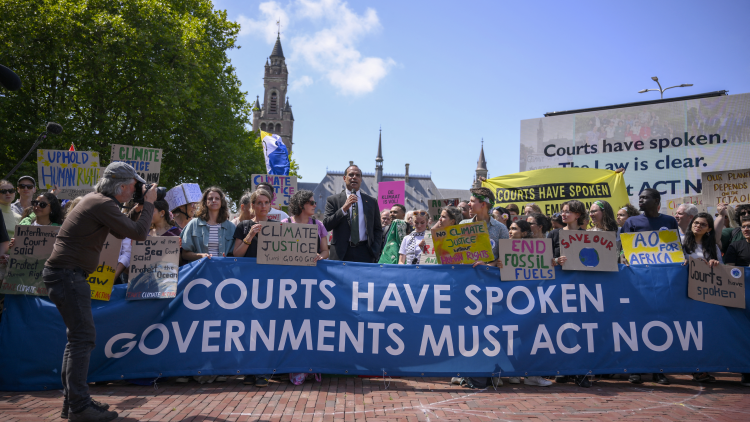
The ICJ’s advisory opinions are not legally binding but they have great legal weight and moral authority. It is too early to know precisely what impact the recent ruling will have on the COP process, but it could be substantial.
For example, the ICJ found that the Parties to the Paris Agreement have a legal obligation to submit NDCs capable of making an ‘adequate contribution’ to the achievement of the 1.5-degree target, and that they must also put in place measures to enable the implementation of these plans.
This could impact NDC ambition in the run-up to COP30.
Is there too much focus on the COPs?
Even before President Trump returned to the White House, the implementation of the Paris Agreement was way off track. In light of this, wide-ranging discussions are taking place over how to reform the COP process to make it more effective.
Proposals range from introducing voting rules to putting in place criteria for selecting COP hosts to streamlining negotiation agendas.
Brazil has communicated that COP30 should constitute the moment the world transitions to a ‘post-negotiation’ phase, and that efforts must focus on ‘action’ and ‘implementation’ (of commitments made) going forward.

In an interview on Chatham House’s The Climate Briefing podcast, the CEO of COP30, Ana Toni, commented that the COPs only constitute a ‘moment in the year.’ She said what matters most is what governments, businesses and citizens do during the rest of the time.
In this vein, Brazil has placed the concept of a global ‘mutirão’ – a global mobilization – at the heart of its diplomatic strategy. The idea is to stimulate bottom-up global climate action across a range of actors, such as citizens and businesses.