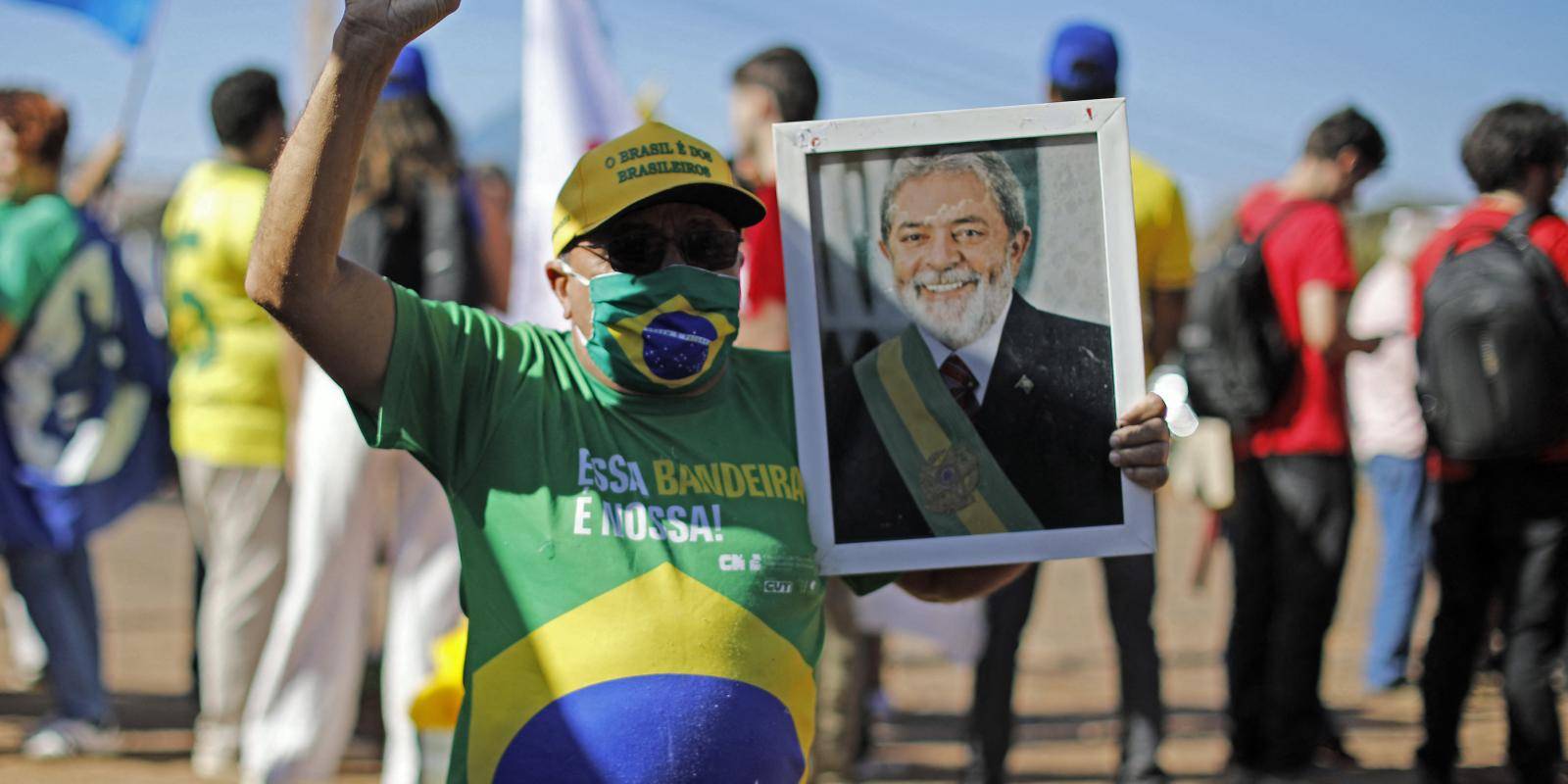

The US Trump administration has launched an unprecedented attack on Brazil’s government and judicial system. Alongside 50 per cent tariffs on Brazilian imports, the US has imposed sanctions on Supreme Court Justice Alexandre de Moraes who is prosecuting former Brazilian president Jair Bolsonaro for plotting to overturn the 2022 election result.
This attack on Brazil is partly linked to Trump’s Make America Great Again (MAGA) agenda through which the US has built relationships with many anti-democratic leaders. But it is also a clumsy reaction to the global trend towards reforming the international system for which the US wants to punish BRICS countries like Brazil.
However, Trump’s plan could backfire. It risks undermining the global economy, increasing international delegitimization of the US and could strengthen Brazil’s alliances with China, Europe and the Global South.
Why Brazil?
Washington is using Brazil to send a warning to other countries – particularly other BRICS countries like South Africa and India – on issues such as controlling digital communications, using alternative currencies to the US dollar in trade transactions, and relations with China.
On Brazil, Trump is following a familiar pattern of using trade tariffs to coerce allies by restricting their access to the US market, defending the interests of US companies in foreign countries – and Trump’s private interests – and promoting the MAGA ideology at home.
But there is also an attempt to undermine the Brazilian judicial system. On 30 July, US officials announced sanctions on Justice Moraes, accusing him of authorizing ‘arbitrary pre-trial detentions’ and suppressing ‘freedom of expression’. Shortly after, Trump signed an executive order declaring ‘a new national emergency’ and establishing the tariffs to address the Brazilian government’s policies and actions which it claims is ‘harming US companies, the free speech rights of US persons, US foreign policy, and the US economy’.
In the executive order, Trump also comes to the defence of Bolsonaro who is currently on trial for an attempted coup following his 2022 election loss. Trump too has attempted to subvert an election result that went against him and share many of Bolsonaro’s anti-democratic policies. The executive order accuses the Brazilian government of ‘politically motivated persecution, intimidation, harassment, censorship, and prosecution’ of Bolsonaro and his supporters, claiming these are ‘serious human rights abuses that have undermined the rule of law in Brazil’. Brazil has rejected these accusations.
Brazil – and Moraes – are also being targeted because of Trump’s and Silicon Valley’s strong opposition to any regulation of digital communications. Here too, Moraes has drawn the ire of Trump and those around him. In 2024, Moraes banned Elon Musk’s X for refusing to remove accounts disseminating far-right misinformation and for failing to appoint a local representative in Brazil. X refused to comply with court orders and Musk filed a lawsuit.

Eventually, faced with the risk of losing access to one of the world’s largest markets, Musk relented and paid the $5 million fine but accused Moraes of ‘censoring’ X. Trump’s media company (the parent company of Truth Social) has also filed an earlier lawsuit against Moraes for banning a US-based account holder.
Alongside the sanctions against Moraes, the Trump administration has imposed 50 per cent trade tariffs on Brazilian products – despite the US running a trade surplus with Brazil.
The US accounts for around 13 per cent of Brazilian exports. Of these, 43 per cent have been exempted from the tariffs, such as orange juice, iron ore and aircrafts. However, key items like coffee and beef have not been exempted. The Brazilian National Congress has authorized retaliation measures, including relating to intellectual property, and the country is considering appealing to the WTO.
BRICS and the China factor
The clash between the US and Brazil exemplifies the growing tensions between the US and assertive middle powers. Trump is pressuring countries in the Global South that are strengthening their economic, commercial and technological ties with China. China is Brazil’s number one trading partner, accounting for 26 per cent of Brazil’s exports – double that of the US. Following the new US tariffs, China has also signalled its readiness to increase its imports of Brazilian coffee.
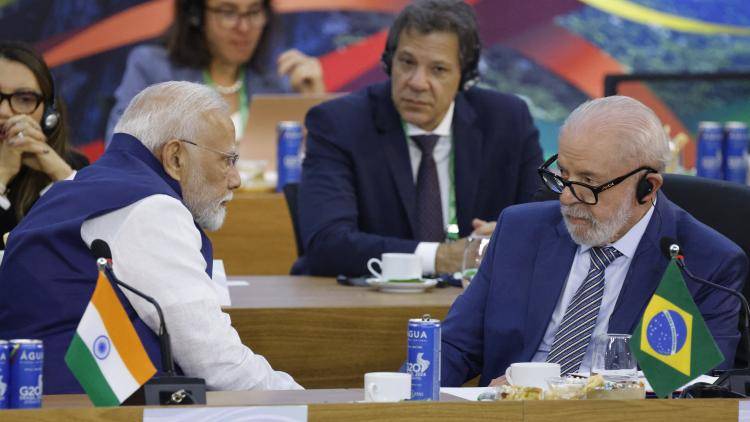
In July, Brazil’s President Lula da Silva told The New York Times, ‘We have an extraordinary trade relationship with China. If the United States and China want to have a Cold War, we won’t accept it. I have no preference. I am interested in selling to anyone who wants to buy from me – to whoever pays more’.
During the G20 summit in Brazil in November 2024, Lula’s administration signed 15 cooperation agreements with China, as well as a memorandum of understanding between the Brazilian telecommunications company Telebras and the Chinese satellite telecommunications service provider SpaceSail. This could provide an alternative to Musk’s Starlink, which currently dominates almost half of the Brazilian satellite internet market.