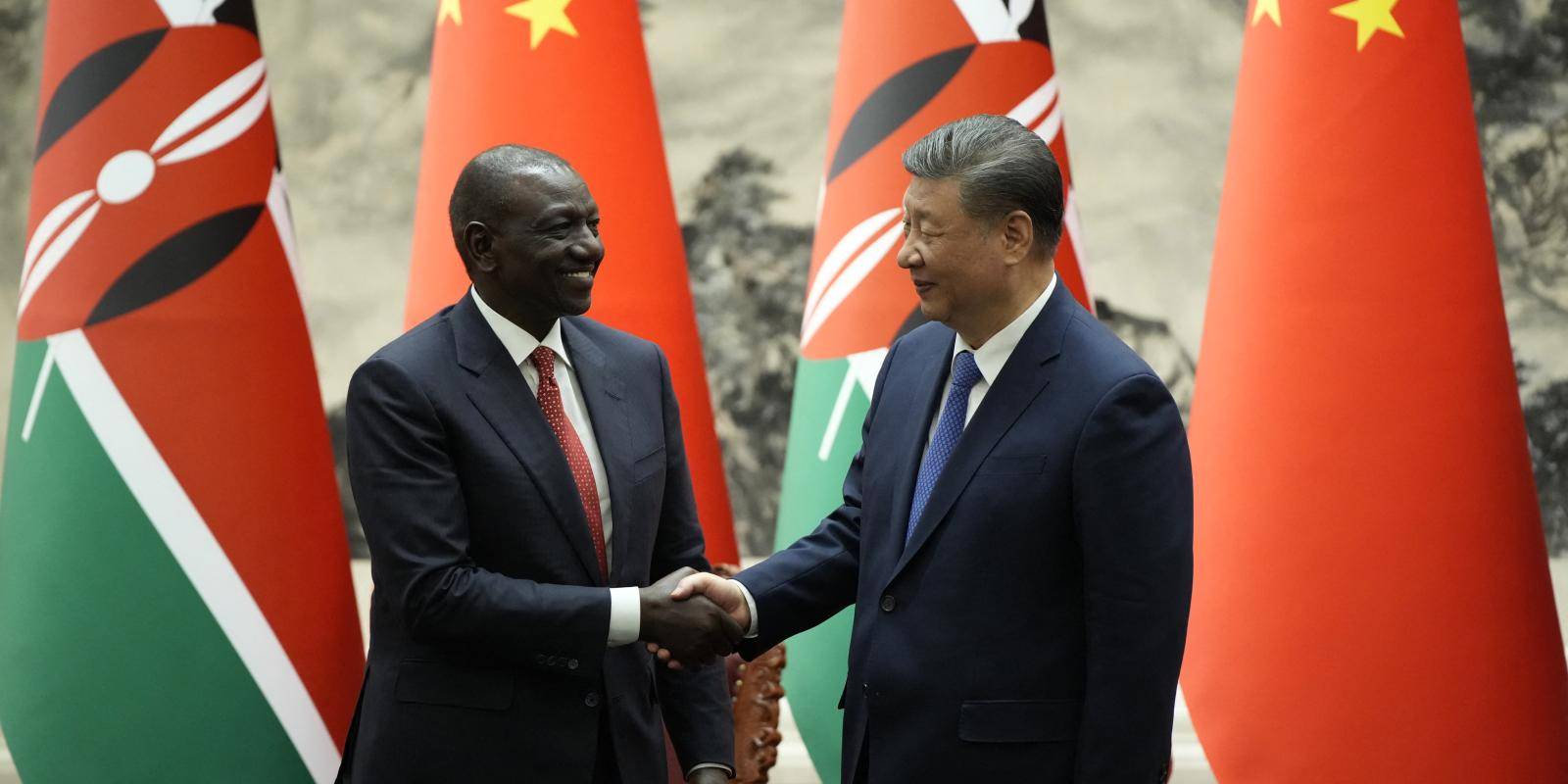

Last month, Kenya’s treasury secretary John Mbadi announced that the country had converted three major Chinese loans from US dollars into renminbi.
The original dollar loans were collectively worth $5 billion when agreed with China EXIM Bank in 2014–15. Their funds were used to pay Chinese contractors for construction of Kenya’s standard gauge railway connecting Mombasa with Nairobi and beyond. They remain Kenya’s largest ever chunk of loan financing for a single project.
While this is the first time that China has agreed such a currency conversion with an African country, Ethiopia’s move to initiate talks with Beijing on converting part of its debt suggests others may soon follow.
The loan conversion will likely be seen both as a sign of a Kenyan pivot towards China and as a milestone for Chinese efforts to internationalize its currency. The move comes as JD Vance reportedly plans to visit Kenya in late November – the first US vice president to do so since 2010 – and could be seen as exacerbating already-strained US-Kenya relations.
Such narratives, however, are too quick to attach wider geopolitical intentions to Kenya’s economic pragmatism, as well as premature in forecasting the dollar’s decline.
Kenyan president William Ruto is pursuing interlinked goals of economic stability and political survival ahead of elections in 2027. With Kenya hit by the wider withdrawal of US initiatives in Africa, closer Kenya-China relations are primarily a reflection of the Kenyan government’s economic goals rather than a rejection of the US dollar.
Kenya’s debt struggles
The conversion of the outstanding loan principal of $3.5 billion is above all else a pragmatic move to reduce the pressure of Kenya’s debt burden, which nearly doubled as a share of GDP between 2013 and 2023.
China is by far Kenya’s largest bilateral creditor and is often portrayed as the main cause of these debt struggles, but commercial borrowing and multilateral loans each account for a higher overall share of Kenyan debt.
However, China’s railway loans have proven to be far more costly than first envisaged because their interest rates have skyrocketed. Two of the loans were set at 3 and 3.6 per cent above the US market rate: when their five-year grace periods first expired in 2019–20 this meant a total interest cost of around 4 per cent, but by 2023 this had more than doubled.
The conversion into renminbi now shifts them onto China’s lower interest rate of 3 per cent. Together with reprofiled maturities, it is projected to save Kenya $215 million per year in servicing costs.

Kenya’s fiscal challenges, which led the government to attempt to impose higher taxes under IMF conditions, were a catalyst for a major youth-led protest movement in mid-2024. President Ruto’s government remains acutely aware of similar triggers and has scrambled to reduce liquidity pressures, which has also lessened the urgency to agree to a new IMF programme.
Savings on interest costs with China are therefore just one element of Kenya’s strategy to manage its debt, which draws upon diverse international partnerships. Equally critical have been two $1.5 billion Eurobond issuances this year and a UAE-backed commercial loan facility.