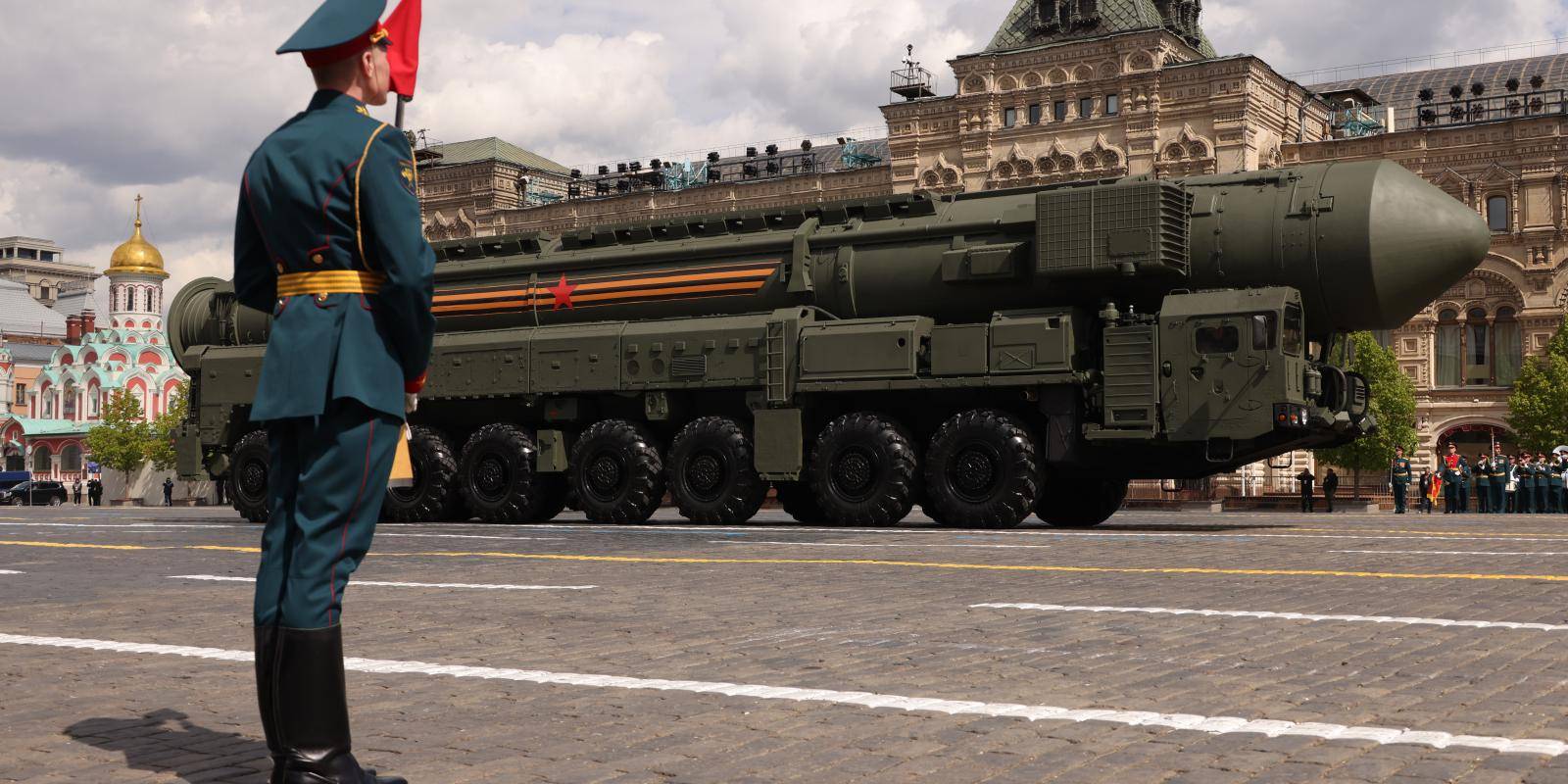

Last week, Russia claimed to have successfully tested two nuclear-powered and nuclear-capable weapons: the Burevestnik cruise missile and the Poseidon underwater drone. The announcement comes only months before the last remaining nuclear arms control treaty between Russia and the US is due to expire.
The New Strategic Arms Reduction Treaty (New START) places binding limits on the number of deployed strategic nuclear warheads and delivery systems by the world’s two largest nuclear powers. It is due to expire in February 2026, risking the removal of the final guardrail restraining the size and visibility of their arsenals – and increasing the risk of a new nuclear arms race.
In a time of deep geopolitical mistrust and diminished diplomatic capacity, preventing escalation and preserving even minimal restraint is an urgent priority.
Threats of nuclear testing
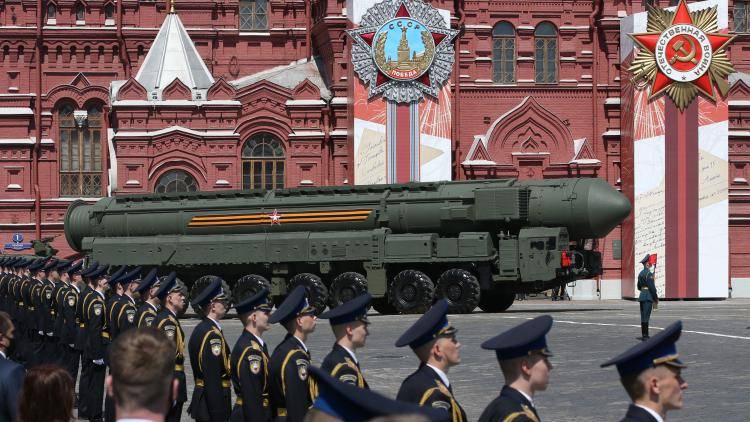
Moscow’s announcement has been widely interpreted in the West as evidence of rapid Russian nuclear modernization and has caused alarm among policymakers and media outlets. Moscow has further stated that these new weapons are difficult to detect and capable of evading missile defences.
However, there is no independent verification of these tests or the operational readiness of either system. Both have been under development for years and have faced repeated setbacks. The systems are based on old Soviet designs that could never be made operational due to technical challenges, raising significant questions about the authenticity of Moscow’s statements. The claims should therefore be understood, at least in part, as strategic signalling amid heightened nuclear posturing.
The US response has further escalated tensions. After Russia’s announcement, President Trump instructed the State Department to restart US nuclear testing ‘on an equal basis’ to other countries. This statement has created confusion: no nuclear-armed state other than North Korea has conducted a nuclear explosive test since the 1990s. The US Department of Energy has since clarified that the US will conduct ‘non-critical explosions’ that are not nuclear detonations, and legislation has been introduced to prevent any president from authorizing such tests unilaterally. However, this ambiguity has already had consequences. Putin has ordered officials to draft proposals for resuming Russian nuclear testing, citing uncertainty over US intentions.
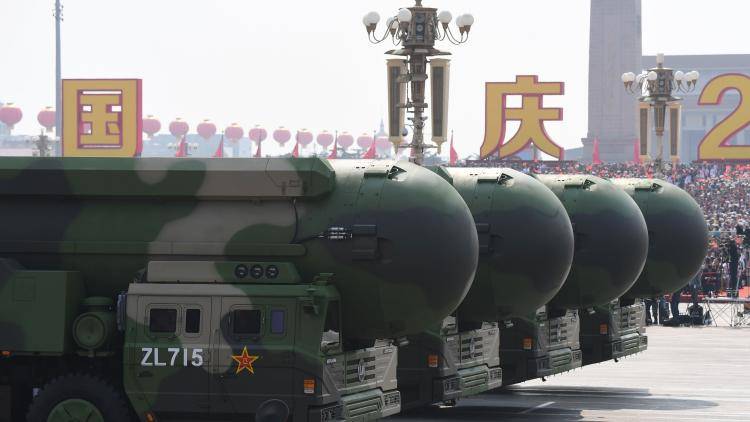
These developments threaten to collapse the three-decade long moratorium on nuclear tests. While a return to nuclear testing would not benefit the US – it already has the world’s largest archive of historical test data – other nuclear weapons states, particularly Russia and China, would stand to benefit more.
But the danger is not simply that nuclear testing might resume. It is the escalation of nuclear threats and messaging at a time when trust is at its lowest point in decades, eroding the fragile foundation that post-Cold War arms control has been built upon. This highlights how nuclear rhetoric is increasingly deployed as a tool of political coercion – and how quickly restraint can unravel.
The uncertain future of New START
In this climate, the impending expiration of New START is of particular concern as it cannot legally be extended again under its existing terms. Although Russia suspended its participation in the treaty in 2023, both Moscow and Washington have continued to observe the central numerical limits on deployed strategic warheads and delivery systems.
Russia has proposed a voluntary one-year extension whereby both countries mutually commit to continuing to observe these limits. Trump has signalled openness to this idea, but no substantive progress has been made. Importantly, Russia’s claimed new delivery systems (if operational) would already fall under existing New START warhead and launcher limits.
During his first term, Trump pushed for trilateral nuclear arms control negotiations with China, rather than advancing bilateral agreements. But involving China in negotiations around a New START extension should be avoided as it would risk stalling or sacrificing any progress altogether. Although China now has the world’s third largest nuclear arsenal, it remains significantly smaller than those of the US and Russia. China therefore has little incentive to accept constraints on its nuclear programme, meaning fruitful negotiations would be unlikely in the short term.
If New START expires without even a symbolic extension, the consequences could be significant. The absence of mutually agreed constraints could fuel an arms race in which Russia and the US expand deployed nuclear arsenals, undermining strategic stability.
This would weaken the credibility of the Nuclear Non-Proliferation Treaty (NPT), the main international treaty governing nuclear weapons. Many states already view nuclear weapons states as backsliding on their disarmament obligations. Abandoning the last bilateral nuclear arms control framework would reinforce that perception.
While a one-year voluntary extension is not a long-term solution, it is likely the best available option in the current environment. Negotiating a new or more comprehensive treaty is unrealistic given geopolitical tensions, domestic political uncertainty in the US, and a weakened diplomatic and technical capacity within the US government, where key arms control posts remain unfilled.
A strategy for stabilization
What is needed now is not an ambitious new treaty framework, but a focused effort to preserve the minimum conditions needed for future progress. The first step should be for the US and Russia to agree to a one-year voluntary extension of New START’s central limits. Although this would not restore trust between the countries or halt nuclear modernization programmes already underway, it would prevent immediate further deterioration of the global arms control architecture and lower the risk of miscalculations. It would also signal shared recognition that unconstrained nuclear competition benefits no one.