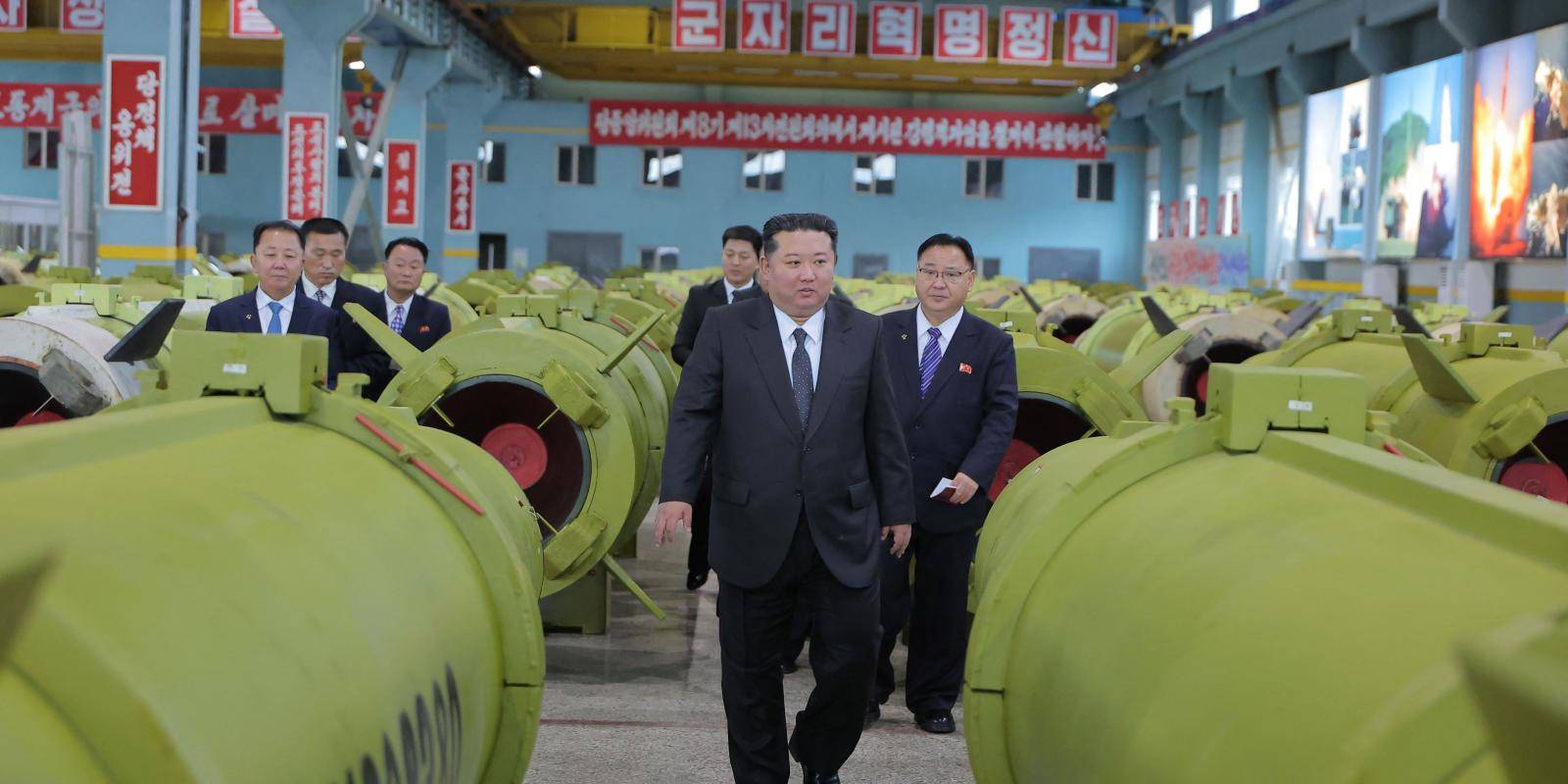

Kim Jong Un’s New Year’s address on 31 December revealed few details of North Korea’s policy priorities for 2026. Unusually, neither South Korea nor the United States featured in the speech. Instead, the North Korean Supreme Leader focused on the importance of domestic patriotism and loyalty, and the need to further economic development.
With the Ninth Party Congress of the ruling Workers’ Party of Korea expected to take place early this year, Kim will likely wait until then to outline his country’s domestic and foreign policy objectives in greater detail.
What is clear, however, is that 2026 will see a growing focus on two key questions.
The first is who will succeed Kim Jong Un, especially given the increasing public appearances of his 13-year-old daughter, Kim Ju Ae. Her growing public visibility has fuelled speculation she will succeed her father, but it remains too early to draw any such conclusions.
The second is whether North Korea will revive dialogue with South Korea and the US. Over the past year, South Korea’s President Lee Jae-myung and US President Donald Trump have affirmed their desire to revive dialogue with North Korea. Yet, Kim has made it clear he would refuse to come to the negotiating table unless the US abandons its ‘obsession with denuclearization’.
The likelihood of talks between Washington and Pyongyang are significantly lower than during the first Trump administration. Pyongyang also shows far less interest in engaging in dialogue with Seoul than with Washington, not least because the peaceful reunification of the Korean peninsula was removed as a policy goal in December 2023.
A changing landscape of US–Korean relations
The new US national security strategy, released in December 2025, was notable for its lack of focus on the Korean peninsula. This is in stark contrast to the national security strategy of the first Trump administration in 2017, which emphasized both the threat posed by North Korea as well as the US’s strong alliance with South Korea.
North Korea does not feature at all in the new strategy, while China is mentioned 21 times. In line with Washington’s calls for greater burden-sharing on the part of its allies, the document outlines how South Korea and Japan must increase their defence spending ‘to deter adversaries and protect the First Island Chain’, which comprises the Pacific archipelagos of Japan, Taiwan, the Philippines and Borneo.
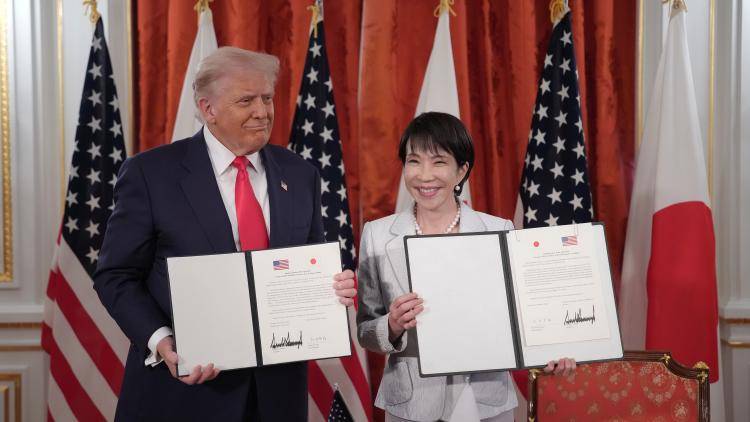
Although the US is not seeking to disengage from East Asia completely, the new strategy reveals that Washington’s main priority in the region is to deter Beijing – particularly economically – not Pyongyang. The lack of mention of North Korea could also signal a possible attempt by the US to avoid alienating Kim, given Trump’s desire to resume dialogue.
The omission of North Korea did not go unnoticed in Pyongyang. A pro-North Korean newspaper in Japan with close ties to the Kim regime argued that ‘mentioning North Korea would mean the US is admitting a complete failure in its policy to denuclearize the Korean peninsula’.
North Korea’s strategic calculus towards the US has also shifted since the first Trump administration, not least due to Pyongyang’s ongoing rapprochement with Moscow. Since the failure of the 2019 Hanoi summit between Trump and Kim, North Korea’s interest in engaging in talks with the US (let alone South Korea) has declined, while the country’s nuclear programme has expanded. At the end of December 2025, North Korean state media reported that Kim had inspected a new 8,700 tonne nuclear-powered submarine, which constitutes an ‘epoch-making crucial change’ in strengthening North Korea’s deterrence against enemy threats. Although few details are known about this latest weapon, it underscores that Pyongyang has no intention to lessen its commitment to nuclear and missile development.
North Korea’s announcement followed a meeting in November between presidents Lee and Trump where the US gave approval for South Korea to build nuclear-powered submarines. On 19 December, Seoul and Washington agreed to pursue a standalone agreement to advance cooperation on this front. This agreement will see South Korea enrich low-enriched uranium to fuel the submarines and allow the US to transfer nuclear materials to South Korea for military use, akin to the pact signed between the US and Australia under the AUKUS security partnership.
Responding to this news, Kim said that North Korea would view any future cooperation between the US and South Korea as ‘an aggressive act’ and a ‘security threat that must be countered’. China, meanwhile, has urged Seoul to ‘handle the matter with prudence’.
Deterring an emboldened North Korea requires cooperation
Although cooperation on nuclear-powered submarines is a positive step for the US–South Korea alliance and emphasizes that the security of South Korea is inherently tied to that of the US, questions remain about US commitment to its northeast Asian allies.

Permitting South Korea to develop and eventually deploy nuclear-powered submarines could be seen as part of a US strategy to shift the onus of deterring Pyongyang onto Seoul. As such, Washington can devote greater resources towards addressing what it deems to be its main threat – Beijing.
President Lee is currently in Beijing for a four-day state visit. In his recent talks with Chinese president, Xi Jinping, Lee hailed a ‘new phase’ in Seoul’s relations with Beijing. The two leaders pledged closer coordination towards restarting dialogue with North Korea. Lee stated he had asked Xi to play the role of a mediator on the Korean peninsula, including on the North Korean nuclear issue.
Although the South Korean president is eager to resurrect talks with North Korea, Pyongyang has shown little interest in reciprocating. Ahead of Lee’s arrival in Beijing, North Korea test-fired several missiles, including hypersonic missiles, in response to what it called the ‘recent geopolitical crisis’, an apparent reference to the US attack on Venezuela.