

Traditionally, American business has relied on the relative stability and predictability of the nation’s governance – despite the turbulence of domestic politics – and on US support for the institutions and norms underpinning the rules-based international order.
That stability is now being upended by the policies and actions of the Trump administration. This not only poses severe challenges to the US, international security and global economy but also to US multinational corporations and institutional investors.

President Trump’s economic policies, including much higher and deeply uncertain trade tariffs, are beginning to undermine confidence in the US as a financial ‘safe haven’. An inward-looking, protectionist US is not in the long-term interest of American companies, investors, consumers or workers – nor is a global order in which normative rules are trumped by transactional deals.
The erosion of the rule of law in the US and arbitrary use of executive power is further weakening the predictability and transparency valued by companies and investors.
Despite this, US multinational corporations and investors are underestimating these challenges and the risks they pose to their interests. Instead of fighting to safeguard the structural bedrock of their success, most are sidestepping their responsibility. Why?
Risks to corporate America and the US economy
Even before last year’s presidential election, apprehensions were widely shared – but rarely voiced – by US business leaders. Former Merck CEO Ken Frazier warned of an existential threat to the ‘basic norms, values and respect for the rule of law that has made the American economy what it is’ and former American Express CEO Ken Chenault cautioned that ‘business requires stability’.
But uncertainty over the election outcome – and anxiety over retribution after a Trump victory – prevented corporate America’s major policy organizations from speaking clearly about the stakes for business, the US and the world. The prospect of lower corporate taxation and regulation also provided tangible short-term prizes that outweighed hypothetical long-term risks.
Yet the response from US business has continued to be muted even as many of those risks have crystallized.
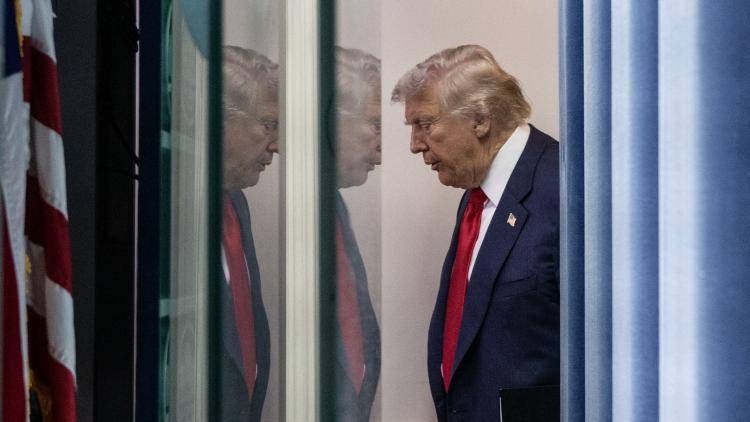
At home, the direction towards democratic backsliding is consistent. Abroad, the direction of the US government has been consistently ‘America First’ in tone but unpredictable in substance.
Perhaps the greatest damage to American multinationals has been the crippling of US engagement in the international community, its diplomatic capacity and soft power with the elimination of USAID and the restructuring of the State Department. The weakening of US support for multilateral institutions and agreements complicates the ability of American multinationals to follow standards and regulations across different jurisdictions. Meanwhile, the elimination of most humanitarian and development assistance programs may heighten risks of instability and conflict in many countries and regions where American and other multinationals operate.
Moreover, the degradation of initiatives to counter corruption and to protect labour and human rights undermines responsible business conduct that remains essential to business stability. As a result, US companies may become more exposed to legal challenges, operational disruptions and brand boycotts.
Fear of speaking out
Corporate America is currently in no mood to openly challenge the Trump administration, despite private worries over ‘state capitalism’, pressure on the Fed, high new tariffs and restrictions on immigration. Indeed, American CEOs are unlikely to spark an anti-Trump rebellion anytime soon, especially with the intimidation and implied threat of retribution posed by the reported White House ’loyalty rating’ of over 500 companies and trade associations.
Corporate America’s primary public policy organization of CEOs, the Business Roundtable, remains very cautious. While it made a careful statement welcoming trade deals to lower tariffs – along with the National Association of Manufacturers and the US Chamber of Commerce – it has otherwise refrained from the kind of critical and/or constructive statements that were common during previous administrations of both parties.
Indeed, neither such organizations nor the broader US business community – most conspicuously the tech industry – have spoken out or acted to counter trends that may further corrode the pillars of the US and global economy.
But some individual business leaders are beginning to speak out, including major US investors like Bridgewater hedge fund founder Ray Dalio. Citadel CEO (and Republican megadonor) Ken Griffen criticized Trump’s attempts to undermine the independence of the Fed.
Legal scholars and jurists have also been influential, such as the Republican former federal judge Michael Luttig. In June, the American Bar Association (ABA) sued the Trump administration over the executive orders targeting law firms. In September, the ad hoc bipartisan group (of prominent legal scholars, public servants and literary figures) We Hold These Truths took out ads in major media outlets supporting personal freedoms, separation of powers, the rule of law, equality, democracy and elections.
A realistic and responsible approach for business
But these actions, though significant, are insufficient. Despite their concerns, US multinationals and investors can and should go further to protect their interests and the core values that are currently under threat.