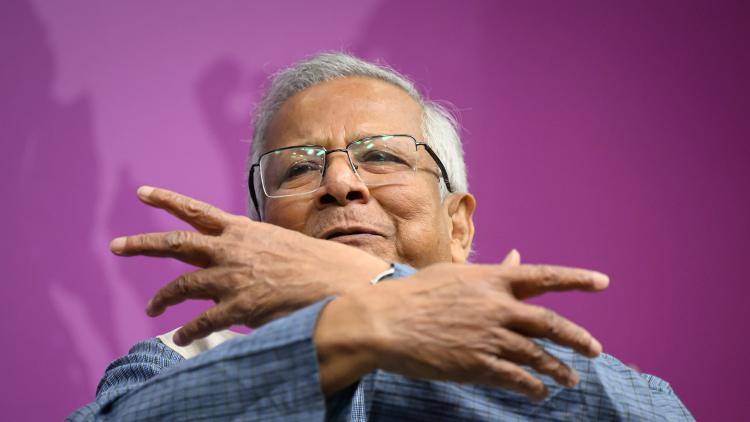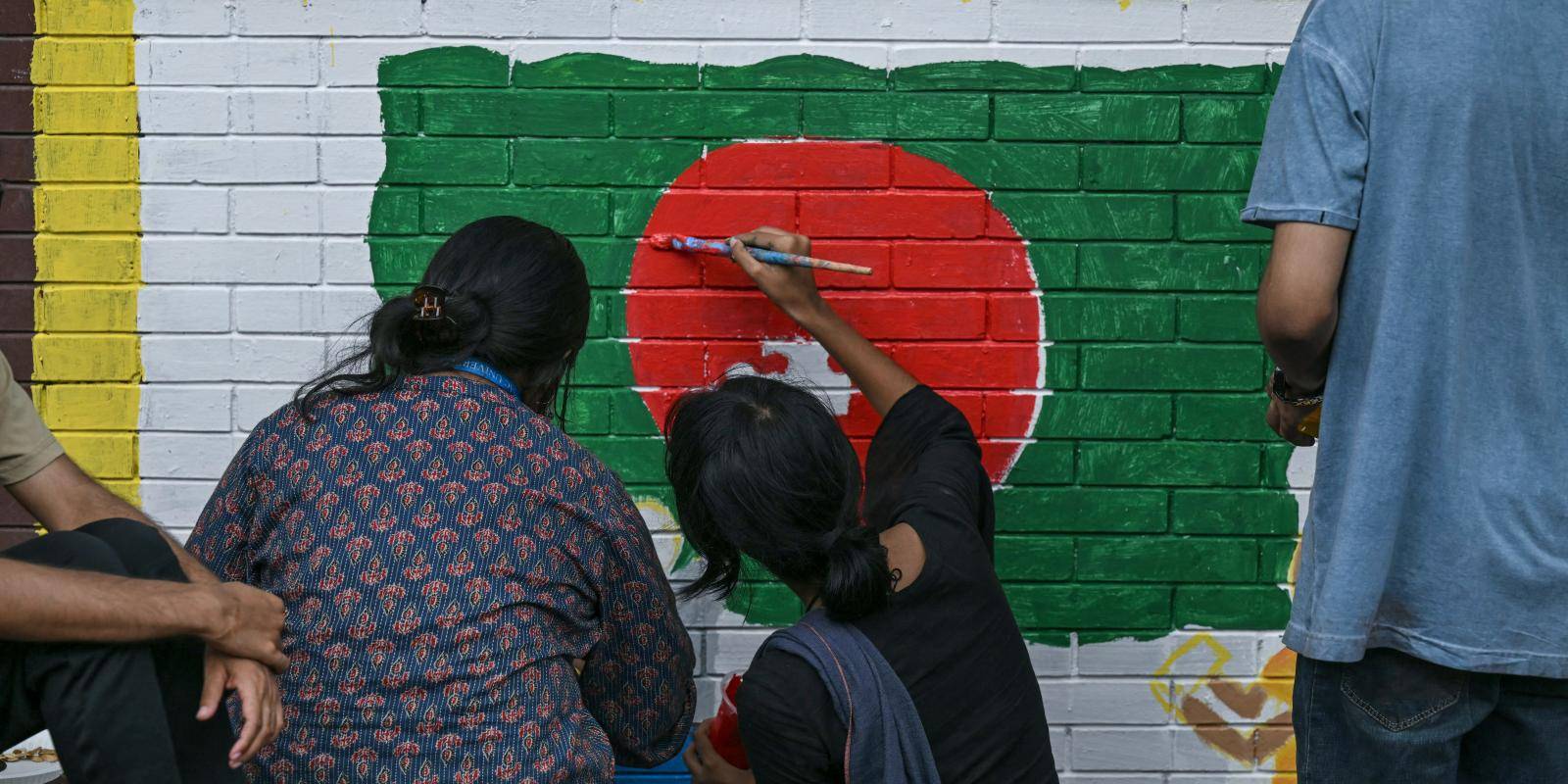

Bangladesh is set to hold its long-anticipated national election on 12 February 2026. The election follows 18 months of an interim government, led by Muhammad Yunus, after the government of Sheikh Hasina was ousted in 2024 by the Gen Z- led ‘Monsoon Revolution’.
This election is a potential turning point towards democratic transition. It is also consequential due to two broader dynamics at play: the emergence of new political actors and the intensification of information warfare. But with so much at stake, political violence and unrest is rife. Since the election was announced in December, at least 16 political activists have been killed.
New political forces and a changing opposition landscape
One of the most significant developments in this election is the emergence of new political coalitions that challenge the long-standing dominance of two parties: Hasina’s Awami League party and the main opposition party, the BNP.
The Awami League has been banned under the Anti-Terrorism Act and will not be taking part in the election. The new chairman of the BNP, Tarique Rahman, has recently returned to Bangladesh after 17 years in exile following the death of his mother and longtime BNP leader, Khaleda Zia. Rahman is one of the frontrunners to be prime minister – if the BNP performs well in the election.
A notable new political coalition is the 11-party alliance led by Bangladesh Jamaat-e-Islami and the National Citizen Party (NCP). This marks a major reconfiguration of the opposition landscape – one which aims to disrupt Bangladesh’s dynastic political system.
The NCP was born from the 2024 student uprising. Its unexpected electoral alliance with the more conservative Bangladesh Jamaat-e-Islami reflects strategic compromise rather than ideological alignment. The decision to join forces followed the murder of Sharif Osman Hadi, a prominent student leader, independent MP candidate and vocal critic of India and the Awami League.
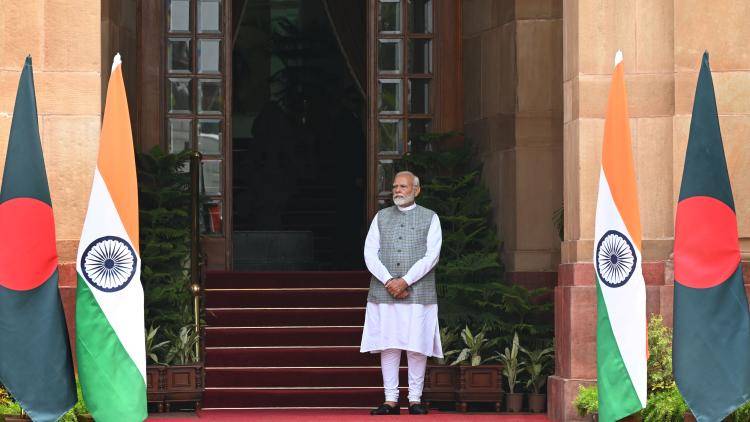
Bangladeshi investigators have charged 17 people in connection to Hadi’s murder, some of whom they say have links to the Awami League. Hadi’s supporters allege an Indian connection to the murder – an allegation New Delhi denies. NCP leaders argue the killing highlights threats from ‘hegemonic forces’, making independent political participation risky.
Some NCP leaders and founding members have strongly opposed the alliance with Bangladesh Jamaat and even resigned in protest, citing Jamaat’s controversial past and stance on women within the party. The majority, however, view it as a pragmatic step. NCP convener Nahid Islam stated that the party has not abandoned its reform agenda, emphasizing that the NCP’s separate election manifesto underscores its commitment to democracy and equality. Moreover, although Jamaat is the only party with a strong opposition to women in political leadership roles, all the participating parties have fallen short of the 5 per cent pledge for women’s representation.
This alliance between two seemingly very different parties has also gained momentum because of their shared opposition to Indian influence. Both parties demand Hasina’s extradition from India and justice for Hadi. By contrast, senior BNP leaders have openly invited ‘disillusioned’ Awami League members with ‘clean records’ to join the party, although individuals involved in corruption, extortion or violence will be barred. Their outreach appears to have worked. Opinion polls show nearly 48 per cent of Awami League voters are shifting to BNP.
A pre-election survey shows a tight race between the BNP and Jamaat-e-Islami, with limited support for others. Survey evidence shows clear demographic and motivational differences: Jamaat attracts younger and more educated voters for its perceived discipline and integrity; BNP draws mainly working-age voters, farmers and labourers for its past governance record; while NCP supporters cite its role in the 2024 revolution. Young voters (18–37) make up 44 per cent of the electorate and may decide the outcome, along with undecided voters.
The new 11-party coalition has received mixed reactions from citizens – and seems to illustrate of the tension between political survival and ideological principle in Bangladesh’s increasingly volatile political landscape. Although joining the coalition expands the NCP’s reach, it risks weakening its identity as a genuine political alternative if voters become unsure what the party really stands for.
The BNP, meanwhile, will benefit from the absence of the Awami League, but the party must deal with internal divisions exposed by the death of Khaleda Zia.
Information warfare
The run-up to this election has been heavily shaped by an information war. As political parties and independent candidates use social media to run their campaigns and simultaneously challenge each other’s narratives, the widespread use of bot-generated comments and emojis to influence voter opinion is evident. Serious concerns have also been raised by misinformation and disinformation campaigns, as well as AI-generated deepfakes. Social media has seen a surge of short, decontextualized video clips of political leaders’ remarks on religion, which are being used to provoke outrage and manipulate voter sentiment.
There is also a growing wave of disinformation from abroad. In January, Yunus reportedly warned of a ‘flood’ of foreign disinformation in the run up to the election, during a call to the UN. Rumor Scanner Bangladesh claims that last year 73 Indian news outlets, and the ousted Awami League, published 140 reports containing false or misleading information about Bangladesh. Yunus’s press secretary also recently claimed that Indian media was responsible for spreading ‘alarming false narratives’ about Bangladesh.
A misogynistic post from Jamaat chief Shafiqur Rahman’s verified X account sparked widespread outrage and campus protests, with BNP critics saying it demeaned women’s leadership. But Jamaat claims that the accounts of its top leaders, including Rahman, were hacked using India-origin malware sent via emails linked to the president’s office and the Bangladesh Computer Council as part of a coordinated cyberattack aimed at undermining national sovereignty and the election process.