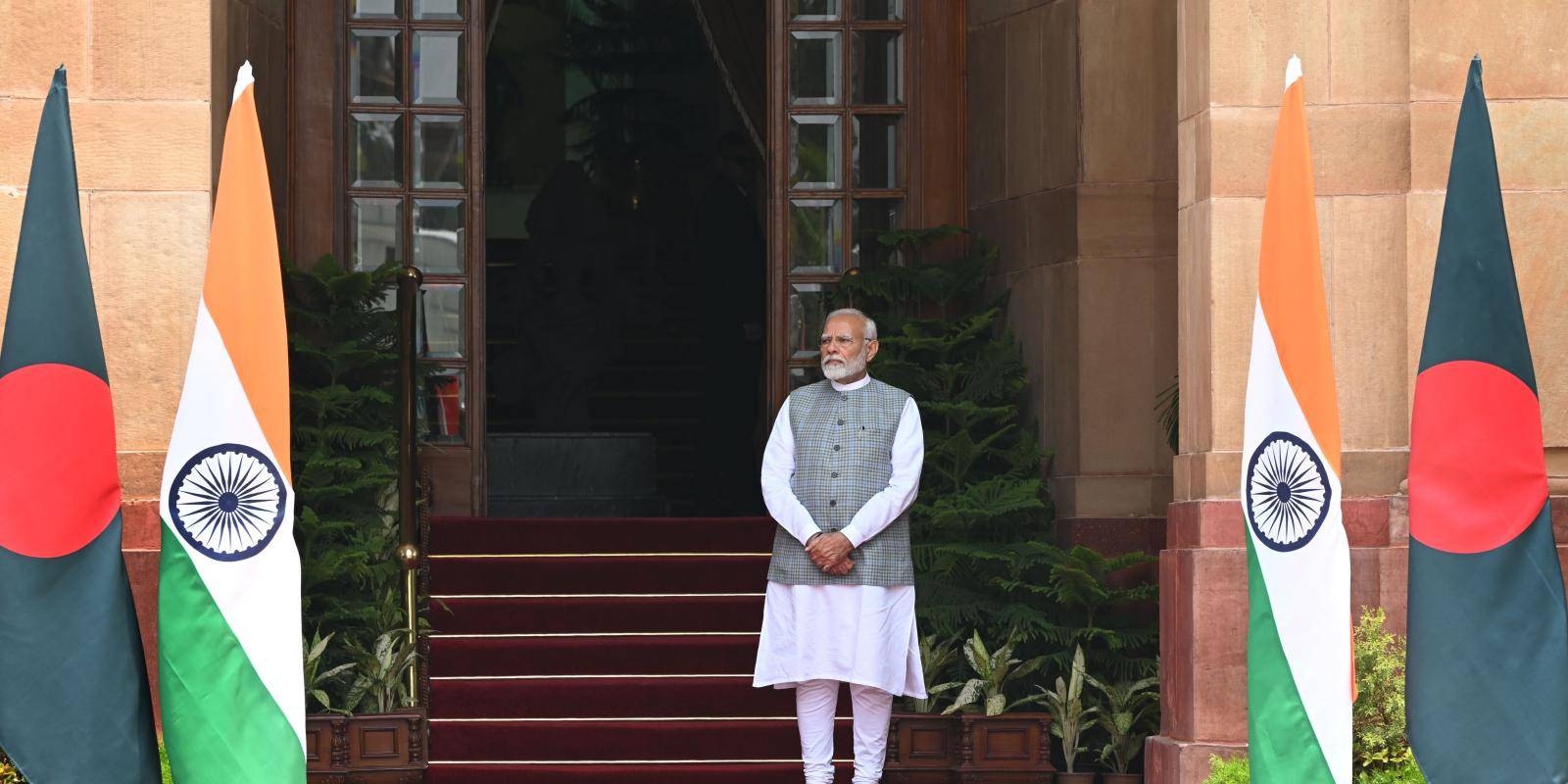

As Bangladesh prepares to hold elections on 12 February – after almost 18 months under an unelected interim government – India is seeking a reset in bilateral relations. The relationship between Dhaka and New Delhi has deteriorated after the government of Prime Minister Sheikh Hasina was ousted in August 2024 following large-scale unrest in which some 1,400 people were killed. India’s historically close relations with Hasina’s party – the Awami League – fuelled allegations that New Delhi empowered her government’s increasingly autocratic tendencies.
The fact that Hasina fled to India and has continued to make statements from there has added to the bad blood, as has the verdict issued in November which found her guilty of crimes against humanity and sentenced her to death. Bangladesh and India maintain an extradition treaty, but New Delhi has so far refused to extradite Hasina on the grounds that it has the right to refuse requests if the offence is of a ‘political character’.
New Delhi fears that Hasina’s removal from power has created space for groups that are hostile towards India, amid growing anti-India rhetoric and violence in Bangladesh. Attacks on minorities – including Bangladesh’s 13 million-strong Hindu population – have exacerbated tensions. The Bangladeshi government claims that such attacks have been exaggerated and are largely politically motivated, not about religious affiliation. The murder in December of a Bangladeshi youth activist who had been critical of India triggered further unrest, including the lynching of a Hindu man. Claims that the suspects fled to India worsened relations between the two countries.
Reflecting the poor state of bilateral relations, India halved its financial assistance to Bangladesh in its latest budget.
Geopolitical faultlines
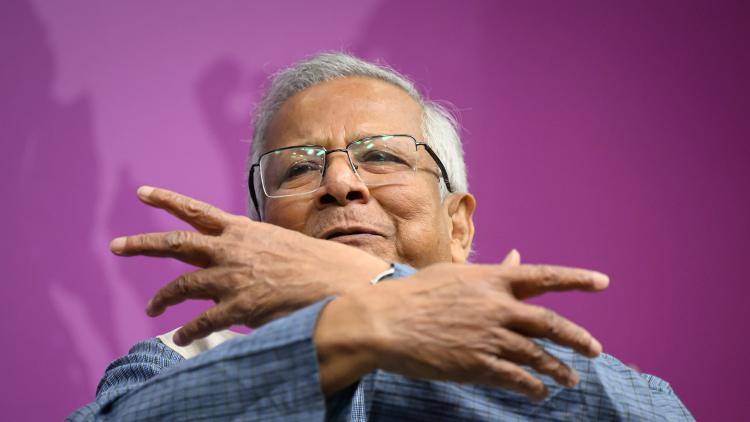
Adding insult to injury is the Bangladeshi government’s outreach to countries that have historically difficult relations with India, including China and Pakistan. But close ties with China are not new. Beijing has been a longstanding trade, investment and defence partner for Bangladesh – more than 70 per cent of the country’s arms imports came from China in the 2019-23 period for example. Nonetheless, India fears that China is seeking to exploit its deteriorating relations with Bangladesh. In June, Bangladesh, China and Pakistan held the inaugural meeting of a foreign secretary/vice foreign minister dialogue. This parallels a similar initiative between Afghanistan, China and Pakistan. New Delhi views this as an effort to marginalize India in its own neighbourhood.
During a visit to China in March 2025, Bangladesh’s Chief Adviser Muhammed Yunus referred to India’s ‘landlocked’ northeastern states and said Bangladesh is the ‘only guardian of the ocean’ that could serve as an ‘extension of the Chinese economy’. This did not go down well in New Delhi. China is involved in several high-profile infrastructure projects in Bangladesh, including modernization of the Mongla Port – its second-largest seaport – and a water management project along the Teesta River. The latter is of particular concern to New Delhi as Bangladesh and India have been engaged in stalled negotiations on sharing the river waters.
Dhaka’s engagement with Islamabad have seen a more notable shift. The two countries have had historically strained relations following Bangladesh’s secession from Pakistan in 1971 following a violent independence struggle. Improved relations have seen a relaxation of visa rules and trade restrictions, the establishment of direct sea links between Chittagong and Karachi and several senior-level interactions. Dhaka and Islamabad have also discussed deepening defence cooperation. For example, Bangladesh is considering procuring the JF-17 fighter aircraft, which is jointly produced by China and Pakistan.
Identity politics could derail a reset
India is hoping the return to democratic rule in Bangladesh will help reset relations. In preparation, New Delhi has sought to deepen and diversify its political engagement with Bangladesh, to dispel allegations surrounding its historic ties with the Awami League. India’s Prime Minister Narendra Modi and Yunus met on the sidelines of a conference in Bangkok in April and Modi sent a condolence letter following the death of Khaleda Zia – leader of the Bangladesh Nationalist Party (BNP) – in December. Indian External Affairs Minister S. Jaishankar also attended Zia’s funeral where he met her son, Tarique Rahman. Rahman has recently returned to Bangladesh after 17 years in exile and is widely tipped to be the next prime minister if the BNP performs well in the election.
However, identity politics in both countries threatens to derail progress. A new government in Dhaka that is overtly hostile towards India, for example one that includes Islamic hardliners, will make rapprochement difficult. Even a BNP-led government does not guarantee improved relations. In an interview, Rahman stated that ‘the people of Bangladesh have decided that relations will remain cool. So, I have to stand with my country’s people’. When the BNP ruled Bangladesh in 2001-06 relations with India deteriorated amid growing instability along the border and a surge in terrorist activity.
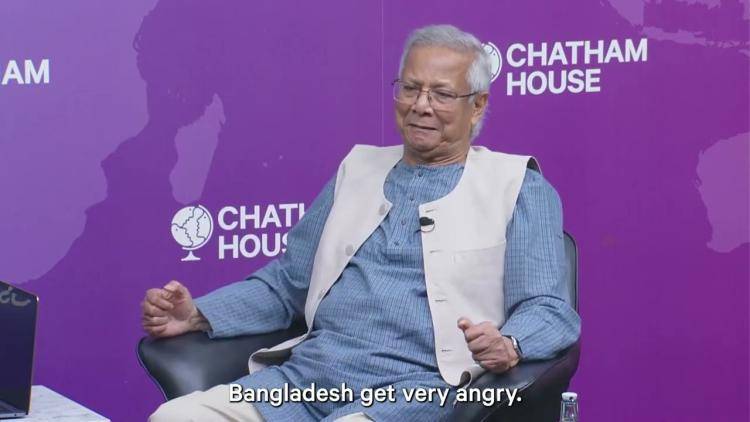
Bangladesh’s Muhammad Yunus on how India’s Modi could help
A shift in mindset towards India will be dictated in part by the issue of Hasina’s extradition. Publicly, New Delhi will remain averse to extraditing her. Privately, however, the Indian government will be looking to make the issue go away, for example by Hasina moving onto a third country.
In India, meanwhile, attacks on Bangladeshi Hindus have become a prominent issue in public and media discourse. India will be holding elections this year in two states that border Bangladesh – Assam and West Bengal – which could see an increase in anti-Bangladesh rhetoric in the run-up to the polls.
The credibility of the Bangladeshi election and its outcome will also determine the trajectory of the bilateral relationship. A low voter turnout fuelled by violence could undermine the credibility of the electoral process. Supporters of the Awami League have threatened to disrupt the elections after the party has been effectively banned from standing in the election. The former foreign minister in the Hasina government, Hasan Mahmud, has said stability will not return to Bangladesh if the Awami League is excluded.