


The Trump administration has revoked the landmark endangerment finding, a 2009 scientific ruling determining that greenhouse gases endanger public health – and the legal basis underpinning US climate regulation. This will limit the Environmental Protection Agency (EPA)’s ability to regulate greenhouse gas emissions, while vehicle emission standards and energy efficiency rules are being rolled back.
The regulatory retreat will result in significantly increased greenhouse gas emissions from the US transport sector. The sector already emits roughly as much each year as the entire Russian economy. If it were treated as a standalone country, the US transport sector would rank as the world’s fifth-largest emitter. Estimates of the impact of the rollback suggest that an additional 7.9 to 15.3 billion metric tons of emissions could be added by 2055, a substantial increase with far-reaching implications.
But for the US, the negative effects of this deregulation go far beyond the climate.
While Washington deregulates…
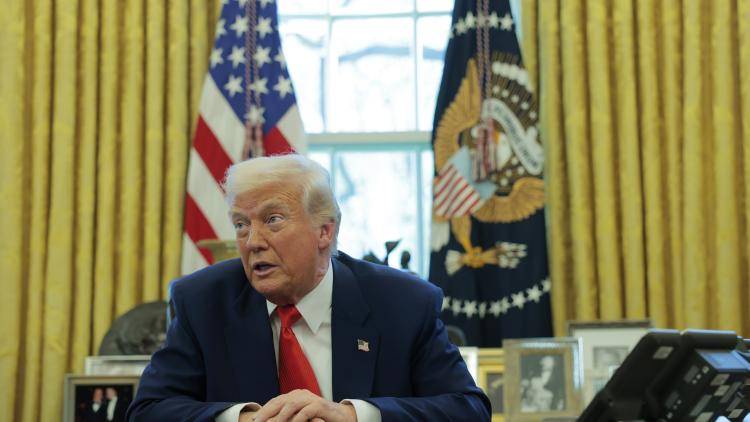
The Trump administration has framed the policy as a win for American consumers and domestic manufacturers. Fewer regulations, it argues, will reduce production costs, lower vehicle prices and improve affordability for consumers, and protect US car manufacturers from bureaucratic overreach.
It might look like this on the surface, but the opposite is true. Deregulation will not reverse the transition to electric transport that is accelerating globally. By attempting to dismantle policies that have been in place for over 15 years and throttle technological progress, President Trump risks postponing, rather than preventing, the ‘Kodak moment’ for traditional automakers unwilling or unable to adapt.
By removing standards, the Trump administration risks locking the US automotive sector into legacy internal combustion technologies just as the global market accelerates towards electrification. Ford shutting down its battery factory in Kentucky shows how the large car manufacturers are struggling with the shift to new technologies. Ford’s decision followed the July 2025 revocation of Biden-era consumer tax credits of $7,500 for electric vehicles (EVs) – which naturally caused a significant, immediate drop in consumer demand.
US companies like Tesla, which became one of the most valuable companies in the world by manufacturing innovative EVs, will be hit by the deregulation. In September 2025, Elon Musk urged the EPA under the Trump administration to preserve key Biden-era tailpipe emissions rules, which required over 50 per cent of US cars to be electric by 2032. Musk also defended the endangerment finding, arguing that the legal foundation for regulating greenhouse gases should be preserved.
The Trump administration claims that removing efficiency and emissions standards reduces upfront vehicle costs. But it overlooks the total cost of ownership. Outside China, EVs tend to have higher purchase prices, but they generally have lower operating and maintenance costs due to electricity’s relative price advantage over fuel, and fewer moving parts. Multiple studies and consumer surveys show that driving an EV is cheaper than driving a combustion engine vehicle. In the US, for example, driving 100 miles can cost as little as $5 for an EV when charging at home, compared to $13 for a conventional car.
But the central question is technological primacy. If the objective is to ‘make America great again’, that primacy will not come from doubling down on legacy technologies, but from leading in the industries that are beginning to define the 21st century, especially batteries, electric mobility, advanced manufacturing and clean energy systems. Retreating from innovation and jettisoning environmental standards does not strengthen American industry, it weakens its competitive position in the global race.
…Beijing innovates
While deregulation may provide short-term relief to incumbent US automakers, it ultimately entrenches China’s strategic, technological and industrial advantage. Vehicle efficiency and emissions rules are not simply environmental measures – they are industrial policy. They drive innovation in batteries, power electronics, lightweight materials and software-defined vehicles.
China continues to scale EV production, dominate battery supply chains and invest heavily in next-generation mobility. The result: while Washington deregulates, Beijing innovates and builds its competitive advantage. A recent example of cutting-edge Chinese innovation is bringing sodium-ion batteries to the mass-produced passenger car market, as announced by CATL in January 2026. As sodium is abundant and commonplace, such battery chemistries have the potential to lower costs, ease supply chain tensions and reduce environmental impacts.
US car makers also risk losing export markets to Chinese brands in Europe and Asia, where emissions standards and EV policies will remain in place. In effect, US manufacturers may save on compliance costs today, only to abandon the global market tomorrow.
An economic and strategic mistake
There are potential strategic implications for national economic security. This policy reversal is not just about the US sidestepping its responsibility to tackle climate change, but also about geopolitical industrial competition. By slowing domestic electrification, the US risks further weakening its position in clean-tech supply chains and undermining its long-term competitiveness in advanced manufacturing.
The current US administration views low-carbon technologies with suspicion and contempt, dismissing solar panels, wind turbines and EVs as inferior and unnecessary, a means of ‘virtue-signalling’. However, it is a global outlier in this respect. Governments, businesses and consumers around the world are increasingly investing in clean technology for non-climate reasons. Renewables have become the cheapest and fastest way of generating electricity in most countries. EVs are growing in technical sophistication while falling in cost. As the global automotive market continues to go electric – EV sales reached 20.7 million units in 2025, a 20 per cent year-on-year increase – and Chinese EVs and investments in EV manufacturing are being welcomed in many key markets, the US retreat from climate-aligned industrial policy will prove strategically costly.
The global EV and clean energy transition is not slowing down, therefore US companies competing internationally cannot afford to retreat technologically. They should continue investing in battery innovation, electrification and cost reductions. To access international markets – especially more stringent European and Asian markets – US manufacturers must continue designing vehicles to meet future global standards.