


Drastic changes to the hydrological cycle and longstanding water management problems continue to create havoc around the world this year. In January a UN report declared an era of global water bankruptcy. A prolonged drought has contributed to unprecedented water shortages in Iran. And in Mozambique, the worst floods in recent memory have created a humanitarian crisis, destroying crops, livelihoods and infrastructure and displacing 650,000 people.
The global economy’s thirst for water – the world’s most finite, but underpriced and undervalued resource – is growing, as water-intensive products cross borders in ever greater volumes. The water use associated with trade in food and agricultural products nearly trebled between 1986 and 2022.
Yet, as recent events demonstrate, this dependence is increasingly precarious. As more water bodies retreat and aquifers decline, the health and wellbeing of the global population will be impacted, while multiple economic sectors and supply chains run the risk of continuous disruption. At the same time, institutions like the UN, that have enabled some faltering progress on global environmental crises, are under strain.
In a febrile geopolitical environment, what value can a UN-led process provide? And can a global response adequately address a problem that is very distinctly local in impact?
The UN’s strained efforts
The severity of the global water crisis is beginning to gain some traction. In December 2026, the UN will convene its third global water conference in the United Arab Emirates (UAE), one of the most water-scarce countries on Earth.
These conferences are happening with increasing frequency: the first was held in 1977, the second not until 2023. But the third is happening this year and a fourth is already planned for 2028. This new urgency reflects the fact that two initiatives designed to galvanize global action on water are set to expire soon.
First, the UN Water Decade comes to a close in 2028. This was intended to generate the political commitment and momentum required to transform how the world manages water. But progress has been limited.
Meanwhile the sixth UN Sustainable Development Goal (SDG) which aims to ‘Ensure availability and sustainable management of water and sanitation for all’ by 2030, is severely off track.
A UNICEF/WHO report released last week has shown that 2.1 billion people still lack safely managed drinking water and 3.4 billion lack access to sanitation.
These uncertain efforts in part reflect a lack of connection to a political process. There is no multilateral governance mechanism for water, no binding targets (unlike for climate change), and no clear global institution with a strong mandate to oversee water governance.
Addressing that will be crucial to driving water governance efforts towards a post 2030 agenda.
Action for 2026
The outlook for better international collaboration is only getting harder. In a speech at Davos on 20 January, Canada’s Prime Minister Mark Carney called attention to the ‘rupture’ in the rules-based international order. On 30 January, Secretary General António Guterres said the UN was at risk of ‘financial collapse’.
Nonetheless, opportunities still exist for countries to come together for critical issues based on common values and interests. Properly harnessed, the UN’s December Water Conference could galvanize a period of ambitious action this year, catalysing accelerated investment and progress and reinvigorating the UN Water Decade’s goals.
That will require pragmatic approaches and well-coordinated regional consultations, engaging inclusively with all relevant stakeholders. The conference needs to be responsive to emerging water challenges. And water action needs to be discussed as critical to economic activity, recognizing its centrality to climate-resilient development and the circular economy.
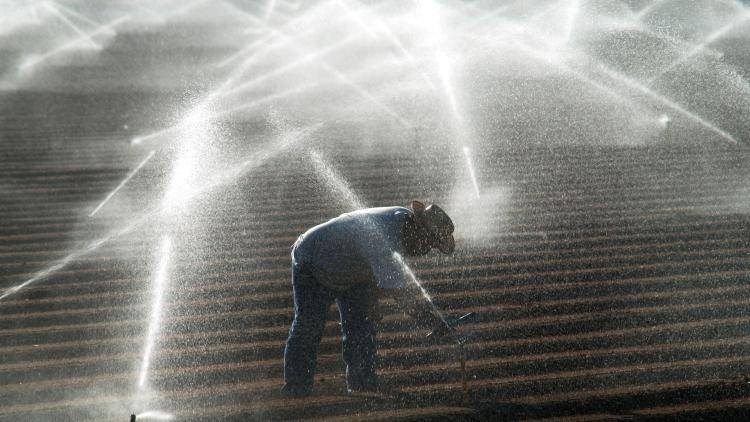
One criticism of water’s treatment in the current SDG framework is that it is insufficient to capture these emerging imperatives and does not sufficiently enable cross-sectoral coordination.
Mozambique is a case in point – its water challenges are not one dimensional. The country is a climate risk hotspot, and is highly vulnerable to multiple shocks from conflict and natural disasters. These factors place enormous pressures on a population where only 28 per cent use a safely managed drinking water source.
New frameworks should better address the complex and connected tensions between accelerating progress on access to water and sanitation, and addressing water’s role in agriculture, energy production, climate change adaptation and natural disasters.
Think local, act global
Part of the challenge in addressing global water governance is that water availability, use and pollution inherently vary by locale. Differences in climate, topography, hydrology and soil characteristics all influence water availability and pollution capacity. That means global volumetric targets to reduce water use and pollution tend to be unhelpful.
Nonetheless, impacts within the hydrological cycle are not wholly local. Solutions must rely heavily on cooperation within water catchment areas, across national borders and throughout international supply chains.
Previous global processes tackling water use have ranged widely, touching on everything from boosting access to water, sanitation and hygiene (WASH) for the world’s poorest, to transboundary water cooperation. And water is governed by a fragmented patchwork of national or local policies, that vary in effectiveness. Environmental standards are also disjointed, and too often sidelined. Transparency is scarce.
Taking decades of dialogue to the next level: how can it be done?
The previous UN Water Conference in 2023 was criticized for requiring only voluntary commitments from governments, corporations and civil society, and for its vague outcomes.