Last week, President Donald Trump announced that the US Department of Defense (DoD) – now known as the Department of War – would no longer work with the ‘radical left, woke’ AI company Anthropic, one of the leading AI laboratories in the world. The dispute was sparked over the company’s supposed ‘red lines’ over what its technology could not be used for; in this case, the use of AI for mass surveillance of Americans and for lethal autonomous weapons.
Leaving the very public histrionics to one side, this might be chalked up to a simple contractual dispute. Usage restrictions on a technology are extremely common, limiting its use in certain geographies or industries, for instance, or its use by children. Should a contract not be agreeable, the buyer can find one that is. This seems to be exactly what has happened here. Anthropic’s rival OpenAI swooped in to sign a new contract with the Pentagon after Secretary of War Pete Hegseth called for a ‘better and more patriotic’ service in a statement on X.
But Hegseth went even further. He not only threatened to label Anthropic a ‘supply chain risk’ (one of a number of designations historically reserved for Chinese- or Russian-owned companies like Huawei, Hytera and Kaspersky) but also appeared to threaten to prevent any current provider of technology or services to the Department of War from having ‘any commercial relations’ with Anthropic. This would be a death sentence for a company – any company – that is reliant on Amazon for its cloud storage, NVIDIA for its chips and Microsoft Windows for its operating system, to name but a few examples. It is an extraordinary threat to a business from any government, but as Dean Ball writes, it is a move that is both distinctly un-American and one that threatens the viability of US AI at the exact moment it was looking to broaden its customer base.
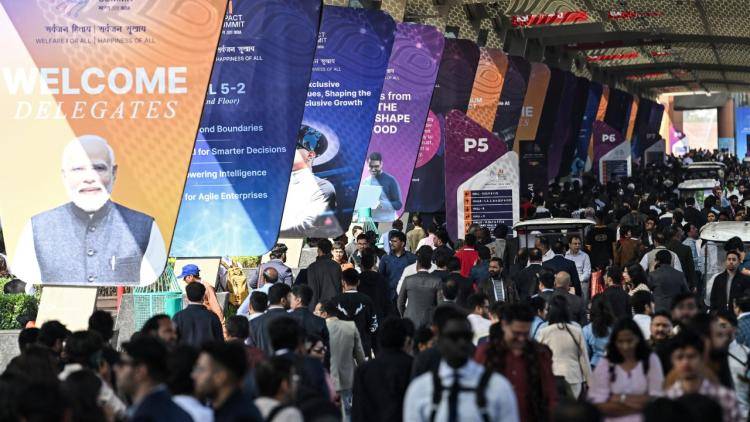
The US delegation to the recent AI summit in Delhi arrived banging the drum for the ‘American AI Stack’ – its semiconductors, models and applications – with a White House adviser emphasizing their aim for the US to be ‘amazing and easy to do business with’. But the fact that Anthropic – one of the jewels in the crown of US AI – can be served notice in this way is a hammer blow to the trustworthiness of US technology at a time when many countries feel exposed by their deep US tech dependencies and are looking for alternatives.
Anthropic CEO Dario Amodei has been praised for appearing to stand on principle and its AI assistant Claude has seen an increase in user downloads. But despite the fact that its $200m contract with the Pentagon is now coming to an end, the decision reportedly came too late to prevent the US military from using Anthropic models in its strikes on Iran over the weekend.
Meanwhile, the speed at which OpenAI swooped in to fill the gap has raised eyebrows. Its CEO Sam Altman is now looking to amend the last-minute deal he describes as looking ‘opportunistic and sloppy’ after the company faced backlash.