

On Tuesday, the United States Department of Commerce removed restrictions on two of Anthropic’s new advanced AI models that have prompted security concerns: Mythos 5 and Fable 5. This is a major change in the way the US controls frontier AI and comes after recurring flip-flopping on the issue.
The move, described in a letter by Commerce Secretary Howard Lutnik to Anthropic, lifts the export control directive issued by the Trump administration less than three weeks ago. That 12 June directive banned non-US nationals from accessing the two models. This ban included foreign employees at US companies and cyber defenders from international partners. In response, Anthropic suspended access to Mythos and Fable for all users a day later.
The administration then partially changed its approach. On 26 June, Anthropic said the US government had allowed it to release Mythos 5 but had reserved access to the model to only a select group of ‘trusted’ big companies and agencies: all of them, unsurprisingly, from the US.
Now, Anthropic says it is coordinating with the government to expand Mythos access to a broader group including international partners. As of 1 July, Fable 5 – which Anthropic says has stronger safeguards than Mythos 5 – is available to public users globally.
A volatile approach
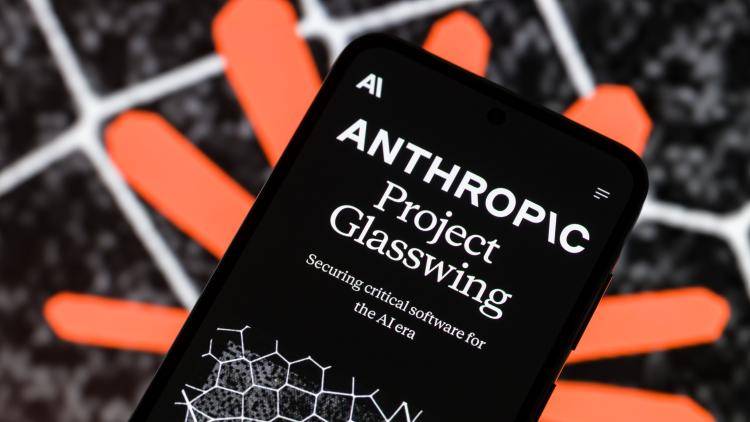
Since Anthropic’s initial limited release of Mythos in April, the model’s apparently powerful cyber hacking capabilities have led to concerns over who has access. Initially, Anthropic had limited access to trusted partners in ‘Project Glasswing’: a select group of companies and agencies that were granted access in order to fix vulnerabilities in their systems and browsers. Since then, the question of access has remained contentious.
Many companies and allies will applaud the US administration’s latest policy reversal. Access to models like Mythos can be helpful for cyber defenders the world over. Information about model capabilities is critical for regulators and officials.
This latest U-turn on Mythos aside, the bigger picture is that the US government is regulating powerful AI in a way that it previously indicated it wouldn’t. OpenAI’s latest models – GPT-5.6 Sol, Terra and Luna – have also recently come under government pressure due to security concerns, and will be initially released to only ‘a small group of trusted partners’.
However, the government’s changeable approach is not a win for security. The policy volatility is concerning. Its unpredictability sends confusing signals to markets and is bad for investors.
It also represents competing dynamics at the heart of the US’s frontier AI strategy, each with global consequences. These include anxiety about China’s access to cutting-edge capabilities, a lack of clarity over what the technology can actually do and how transformative it really is, and distrust in the partnerships required to develop and deploy it.
Deregulation, re-regulation?
This flip-flopping on Mythos is just the latest chapter in the dispute between the Trump administration and Anthropic. Earlier this year, the Department of War (DoW) labelled the company a ‘supply chain risk’ to national security: the first US company ever to receive this designation. The DoW and Anthropic remain in a legal battle. Regardless, Anthropic engineers reportedly help the National Security Agency to use Mythos in cyber operations targeting adversaries.
The administration’s turbulent relationship with Anthropic has global consequences, including for US allies. In early June, Anthropic offered the EU access to Mythos after weeks of negotiations, only for the EU to lose it days later following the export control directive (and now, presumably, regain it). The G7 also saw attempts to re-negotiate a ‘trusted partners’ scheme for access to cutting-edge AI capabilities.
This turbulence also highlights the unstraightforward relationship between US political leaders and the country’s most powerful technology companies, two of which are on the cusp of IPOs. Generally, the Trump administration has been in favour of deregulation. It fears stifling innovation, preventing adoption and losing the US’s competitive edge over China.
But the US government’s recent turn towards a more proactive but volatile regulatory approach is a significant change; the Anthropic saga is just one part of this recent shift towards ad hoc government control.

On 2 June, an executive order called for AI companies to voluntarily submit their models for safety testing for 30 days before general release. The order was reportedly watered down from a 90-day period after lobbying. On 5 June, a national security directive instructed government agencies to end contracts with AI companies that limit how the government uses their tech. (Some policy experts consider this a response to the Pentagon-Anthropic legal battle.) And OpenAI’s limited release of its GPT-5.6 models last week reportedly came at the request of the US government.
This approach has its flaws. First, Chatham House experts have previously argued that tightening restrictions around valuable technology – so-called ‘golden eggs’, whether software (like models) or hardware (like chips) – will not fully prevent their proliferation.
Second, clamping down on models immediately pre-release doesn’t control or slow down the frontier of development. And clamping down on ‘foreign access’ to AI cyber capabilities – which includes restricting access for non-US AI safety institutes and allies – does not improve US readiness for an AI-enabled global crisis, like a global financial crash. It weakens the evidence base and trusted cooperation needed to navigate a shared shock.
Not-so-global governance
Next week’s inaugural United Nations meeting on AI – the UN Global Dialogue on AI Governance – faces an impossible balancing act. This is because AI risks are shared, whether to global health, nuclear security or financial systems. They demand a minimum level of global governance to regulate them. This includes monitoring and information-sharing, technical measures like model ‘kill switches’, or decision-making pathways like emergency backchannels.
This is a non-starter without the US and its powerful AI companies. But the unpredictability and protectionism of US frontier AI governance creates barriers to these types of international cooperation. This is complicated by the dynamics of the US-China AI race, which makes it hard to get Beijing and Washington to reach a consensus on safety, despite promising signs of future intergovernmental talks.