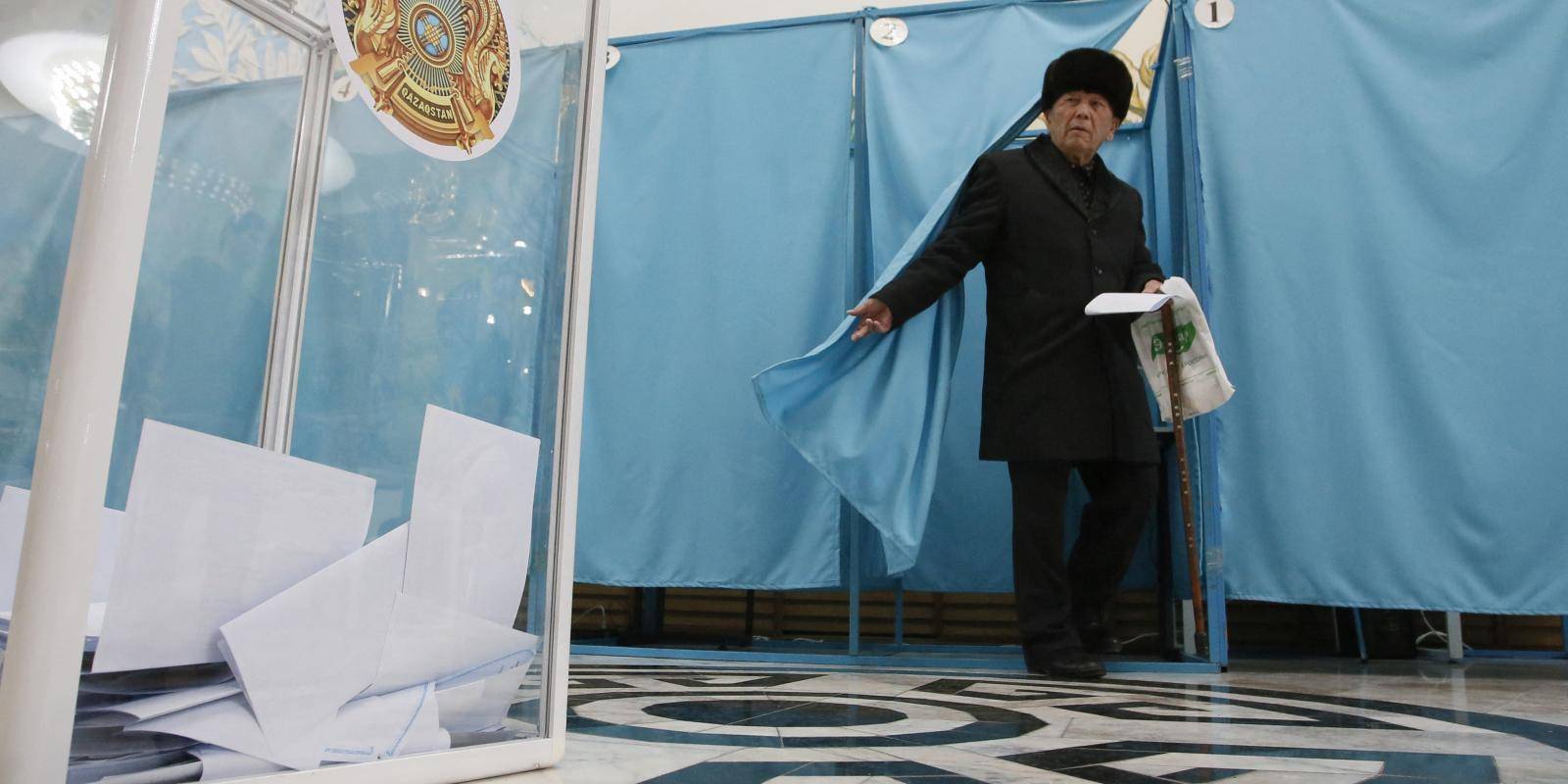

On 15 March, voters in Kazakhstan approved the most comprehensive overhaul of its constitution since its adoption in 1995 under former president Nursultan Nazarbayev. This radical revamp of 80 per cent of the constitution will lay out the future trajectory for Kazakhstan – and provide a legacy for President Kassym Zhomart Tokayev. Now in the seventh year of his presidency, he has successfully navigated a series of crises, including the COVID-19 pandemic, the 2022 protests and coup attempt, and the ongoing war in Ukraine. However, Tokayev has struggled to define his presidency and move away from the personalist rule of his predecessor and the political system that he established.
Alongside structural change to the political system, Tokayev wishes to imprint some key themes from his presidency on the political culture of Kazakhstan. These include a strong, legalistic state focused on social stability, secularism, environmental protection and digital progress. The government claims that the new constitution will modernize and streamline the political system. But this brand of modernization, which is already in process, entails a move away from Western-led liberal economic models which emphasize privatization, deregulation and foreign investment. Instead, it will move Kazakhstan towards a more institutional, less personalist authoritarian system – similar to the political economy of its neighbour, China. Tokayev appears to admire the technocratic authoritarianism of China, where he served as counsellor to the Soviet ambassador in the late 1980s. Instead of looking west, the Tokayev administration, supported by large parts of the professional class, now looks to emulate the state-led economies of China and the Gulf.
The constitutional changes include a transition to a unicameral parliament, the Kurultai, and the creation of the Halyk Kenesi, a new representative body of citizens. There will also be a redistribution of powers between the president and parliament with the president retaining significant powers while creating a more balanced system of checks and balances on paper. The president’s new powers mean he will be able to appoint all candidates for the Supreme Court, as well as members of the Constitutional Court, the Supreme Audit Chamber and the Central Election Commission, subject to Kurultai approval. These officials will also play a pivotal role in assuring Tokayev remains in power. Furthermore, constitutional amendments will now only be approved through a referendum, rather than by parliament, which the president says will prevent ‘certain political groups’ from amending the constitution.
The constitutional changes strengthen the power of the presidency and present several possible scenarios for succession. President Tokayev could use the results of the constitutional referendum as justification for a new seven-year term. Tokayev’s current – and final – mandate ends in 2029, by which time he will be 76 years old. Or he could step down early and assume the position of vice president, with his successor installed as president. The latter would enable him to manage Kazakhstan’s complex foreign affairs, without the pressure of day-to-day domestic duties.
Tokayev is likely to win extensive internal and external support for an extension of his tenure as president. Both Russia and China would favour continuity in their relations with Kazakhstan, viewing Tokayev as a productive partner. Russia, in particular, views Tokayev as a guarantor against a wave of anti-Russian popular sentiment. A veteran diplomat, Tokayev has also managed to work well with Western governments, most notably the administration of US President Donald Trump.
China is likely to welcome the transition to a more stable and institutionalized system more akin to its own. But Russia will be wary that the new constitution cements Kazakhstan’s sovereignty and territorial integrity in the face of increasing Russian attempts to assert its influence. The new constitution also proposes making Kazakh the country’s main language, while retaining Russian as another, albeit downgraded, official language.

Human rights groups, meanwhile, have raised concerns over the changes. Although the text emphasizes the importance of human rights and clarifies constitutional mechanisms, they claim that it also gives the government more leverage to crack down on freedom of expression, peaceful assembly and association. The changes include a ban on foreign financing of political parties and trade unions. In the run-up to the hastily scheduled vote, there have been instances of police intimidation and journalists criticizing the proposed changes have been arrested, hardly signs of a more open society.
The new constitution also removes a reference to international law taking precedence over domestic law. At present it is unclear whether this is directed at investors or whether it is intended to limit the application of international human rights law in Kazakhstan. But the changes could have a major impact on investors, particularly those in the extractives sectors – the largest investors in the country. The current wording could allow domestic law to supersede Kazakhstan’s treaty obligations, such as bilateral investment treaties and the Energy Charter Treaty. This will complicate the enforcement of international arbitral awards. Kazakh lawmakers would also not have to consider the nation’s treaty obligations when developing new legislation, given that domestic law would have de facto supremacy.