The analysis and recommendations in this section emerged from a Chatham House working group of 20 international and Venezuelan election experts, former and current diplomats, scholars of democratic transitions and democratization, and representatives of the Venezuelan opposition.
Discussions and preparations should begin with the steps set out below. If fully implemented, these steps will take at least a year – an indication, again, that the time to initiate the complicated negotiations required is now.
The recommendations, listed roughly in proposed chronological order of implementation, are aimed at the interim government, the opposition and civil society, and at the US and other international stakeholders. Depending on the task, various permutations of these actors will need to cooperate or coordinate on the following steps, namely to:
- Repeal restrictive laws: Any political agreement will have to commit to the restoration of constitutionally guaranteed political and civil rights. This requires the repeal of laws limiting freedom of expression, assembly and political organization. Specifically, the legislation that must be repealed includes the law against ‘delinquency and terrorism’, the law criminalizing ‘hatred’, the law of ‘social responsibility of the media’, and regulations restricting international financing of non-governmental organizations.
- Agree a political pact on the electoral process: Negotiations over preparatory reforms should begin immediately, even before election dates are set. A political agreement between the government, the opposition and civil society should cover the following: CNE reform; mechanisms for arbitration of electoral disputes; legal recognition of political parties under the constitution; and associated legal reforms. The US should press for and act as guarantor of any agreement. In this capacity, the US can be supported by other international stakeholders – including, but not limited to, Canada, European governments, the EU, and Venezuela’s Caribbean and Latin American neighbours. Many of those governments will have substantial leverage in discussions, whether over sanctions on government officials, Venezuela’s re-entry into the international financial system, or the status of Venezuelan assets currently frozen in foreign banks.
- Establish a timeline for elections: Agreement on the sequencing and timing of elections is essential, but setting dates for all of the elections Venezuela will need to hold should not be a precondition for beginning the process of reform. The first priority should be organizing the presidential election, but its date should be agreed only as the dates are set for subsequent legislative, regional and local elections. The constitution requires that elections should be announced at least six months before they are held. Such a timeline should also include at least a four-month period to allow for primaries. The timing of the other elections should be close enough to the presidential poll to reduce the risk of the executive becoming politically isolated (and thus hostage to the remnants of the Maduro regime in the National Assembly and regional and local governments); this is also necessary to ensure that democratization maintains momentum.
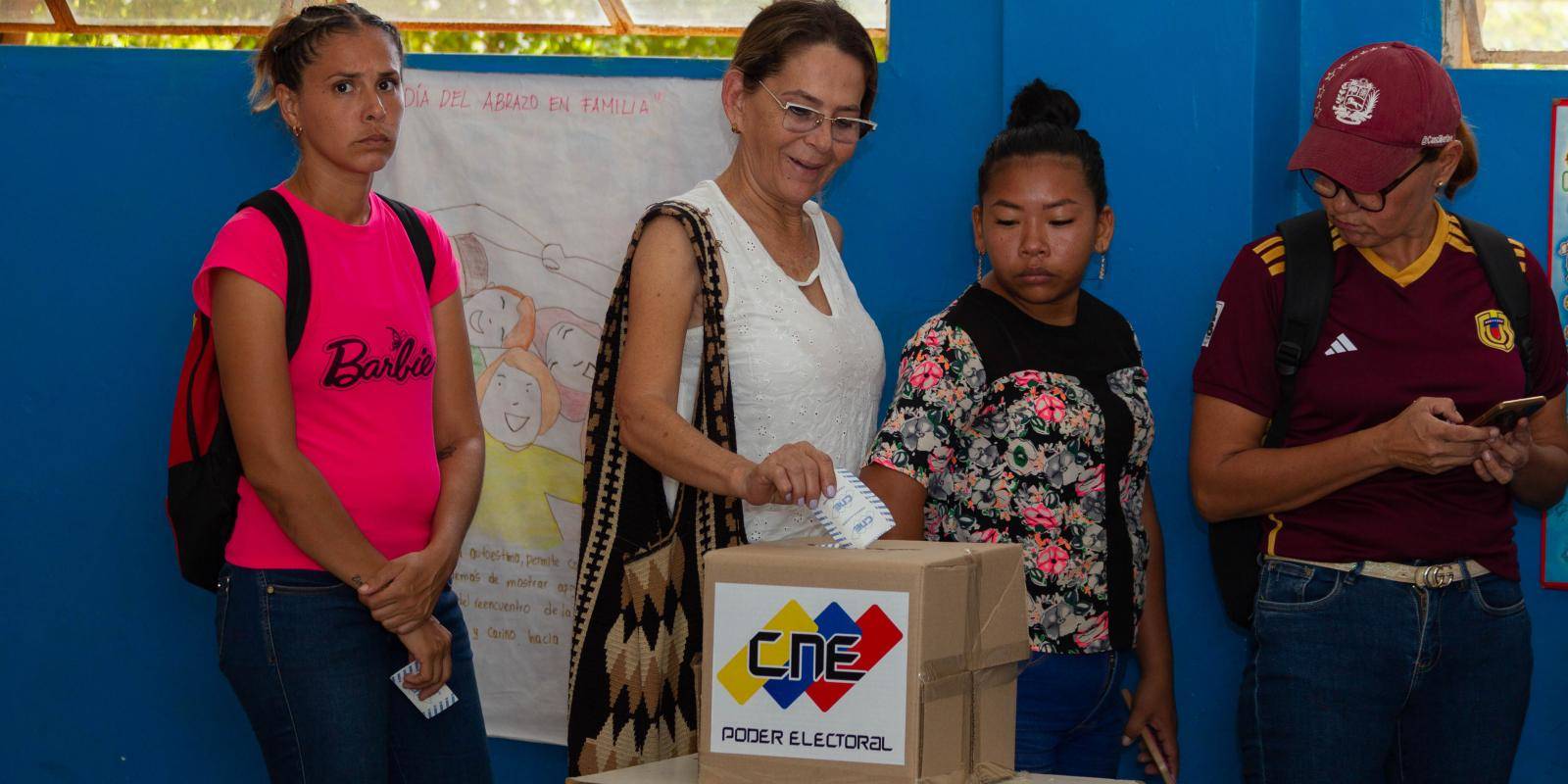
- Reform the election commission: Establishing a politically independent, credible CNE is essential. The process for appointing a new CNE board of rectors will need to be determined in negotiations. The status – whether interim or permanent – of the reformed CNE will also need to be negotiated. All rectors will need to be renominated and confirmed, via a process that guarantees balance and ensures that the current political opposition has representatives on the board. Once a new board is confirmed, the composition of CNE staff at both national and regional levels will also need to be reviewed and confirmed.
- Ensure credible, balanced mechanisms for dispute resolution: Even with a reformed CNE, Venezuela will lack sufficient independent arbitral and judicial capacity to resolve disputes credibly. Of particular importance are the electoral and constitutional chambers of the Supreme Court. While judicial reform will be necessary over the long term for establishing genuine democratization, there are interim quicker fixes. For the purposes of enabling elections, some form of commitment among the current government, the opposition and international stakeholders on creation of an interim authority that can adjudicate disputes, or on institutional rebalancing, may be sufficient.
- Address incumbents’ fears: The working group highlighted three specific conditions for helping to reduce insecurity and zero-sum electoral competition. The first is to revoke the 2009 constitutional amendment allowing for indefinite presidential re-election. The second is to eliminate any governing party’s monopoly over Venezuela’s most important economic asset, PDVSA; a political pact should include steps to diversify and rebalance the state hydrocarbon company’s board of directors. The third condition should be to agree to a truth and reconciliation framework that can balance the principles of accountability for human rights abuses against the pragmatic need for reconciliation.
- Update the voter registry: A new CNE’s task will be to update Venezuela’s voter registry. The CNE has conducted domestic updates sporadically. Voter rolls will also need to be updated for the millions of Venezuelans of voting age currently living abroad.
- Publish polling station-level results: In accordance with the law and past practice, the CNE must publish and respect polling station-level results; these must serve as the basis for official election results. To ensure public confidence in the vote, publication should conform to open election data principles, and be handled in such a way that the results are made accessible in a timely manner to all political contestants and the public. The process of publication will need to enable verification of the results for individual polling stations. It must also ensure that the overall results accurately reflect data from all polling stations and the number of ballots cast.
- Audit voting software and discuss broader reform of voting mechanisms: A new CNE will need to convene a transparent audit of the current election software. Several opposition leaders have advocated a manual voting process. Shifting from nationwide electronic voting would require broader social consultation and could delay the elections.
- Revisit the constitutional process for determining candidate/party eligibility: Administrative sanctions used in the past to invalidate candidates and parties – typically opposition parties and leaders – will need to be eliminated.
- Conduct risk assessment of Plan República: The long-standing, pre-PSUV arrangement, Plan República, whereby the armed forces manage election logistics and security on election day will need to be reviewed. This is to address concerns about the partisanship of Venezuela’s security forces. Fortunately, there is a model. Coordination among opposition parties, civil society and the armed forces in the elections of 2010, 2012 and 2015 granted a sufficient degree of confidence, and could be repeated without a complete security overhaul before elections.
- Ensure comprehensive election monitoring: Both professional international observers and non-partisan domestic (or citizen) observers must have unfettered access to monitor implementation of the pact and all aspects of the electoral process. This includes both international and national observers doing as follows: undertaking long-term observation of restoration of basic freedoms; monitoring the reform of the CNE; ensuring the ability of all parties and candidates to freely campaign; reporting on electoral preparations (including voter registration); working with technical teams to scrutinize particular aspects of the elections (auditing the voter registry and voting systems); guaranteeing systematic deployment of observers on election day (including critically independent results verification by national observers); and monitoring, post-election, the announcement of results, the resolution of electoral disputes and the taking of office by the winning candidates. All election observation efforts and invitations should be compliant with the Declaration of Principles for International Election Observation.