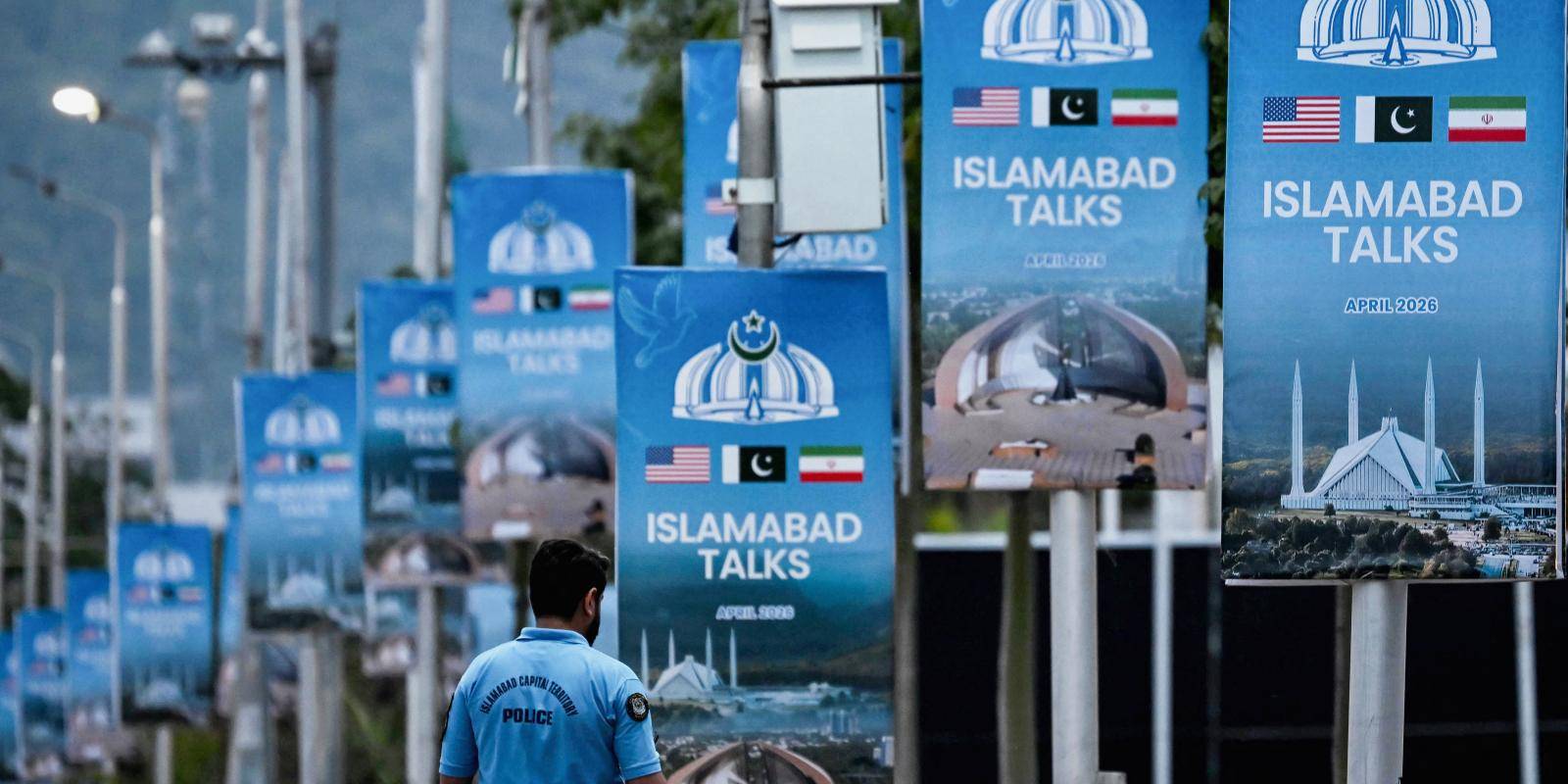

While the world waits for a peace agreement between the United States and Iran, with US President Donald Trump announcing a possible second round of talks in Islamabad, Pakistan continues to take centre stage as an indefatigable mediator claiming neutrality and the trust of all sides. For a country still mired in conflicts with its neighbours and viewed until recently by Trump as a strategic destabilizer, Pakistan’s emergence as a peacemaker is nothing short of a dazzling reinvention.
Islamabad’s achievements in securing a ceasefire between the US and Iran and bringing the two warring parties together for their first high level direct engagement since 1979 are not to be underestimated.
But Pakistan’s ongoing military campaign against Afghanistan, its historically uneasy relations with Iran, and the ambiguous terms of its yet to be ratified mutual defence agreement with Saudi Arabia do cast a shadow over its credibility as a peacemaker and neutral host.
Pakistan’s meteoric rise as a mediator is driven by a combination of necessity and structural constraints. The strong personal ties between President Trump and Pakistan’s all-powerful army chief, Field Marshal Asim Munir – who retains a tight grip over his country’s foreign policy – are also a crucial factor.
Energy, geography, demography
Pakistan’s motives to play a mediator role are clear. It is heavily reliant on energy imports, with more than 85 per cent of its oil needs and nearly all its liquified natural gas (LNG) supplied by Saudi Arabia, Qatar and neighbouring Gulf states.
As a result of the war, the government was forced to impose sweeping austerity measures, order a four-day working week for public employees, and close schools to conserve energy. Some restrictions have since been eased, but there is abiding concern that Pakistan’s near-bankrupt economy could face collapse without international bailouts.
On 17 April Saudi Arabia stepped in to provide $3 billion in additional support to Pakistan. Riyadh also extended the roll-over arrangement of a $5 billion facility for a further three years. The high stakes for Islamabad in resolving the conflict are also dictated by geography. Pakistan shares a 900km border with Iran, which places it close to the battlefield. The border is a vital trade and transit corridor and energy supply route, and is already vulnerable to instability.
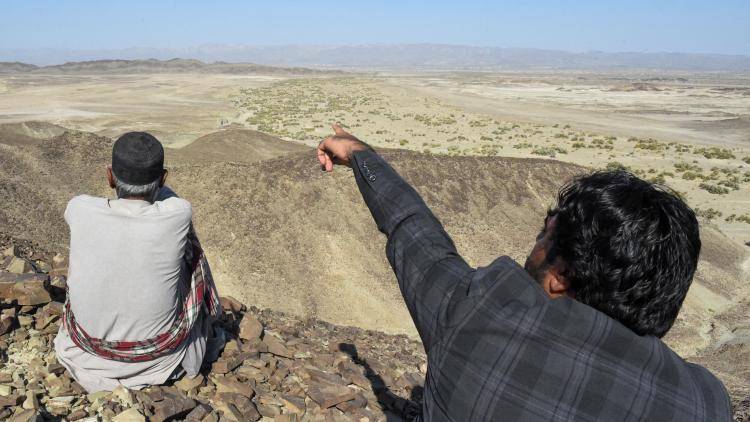
Of special concern is the region of Balochistan (known in Iran as Sistan-Balochistan), which straddles the border. There have been repeated bouts of violence by militant groups operating from bases on both sides of the border, with Pakistan’s Balochistan province in the grip of a ferocious separatist insurgency.
Pakistan’s sectarian demography lends additional impetus to its mediation. Sunnis are a majority in the country, but it is also home to the world’s second largest Shia population after Iran with estimates ranging from between 10–25 per cent of the total population.
Outbreaks of sectarian violence are relatively rare and generally contained. However, Pakistan has a long history of sectarian tension between Sunnis and Shias dating back to the 1980s. Recent violent demonstrations in Islamabad and Karachi, protesting against the killing of Iran’s Supreme Leader Ayatollah Khamenei, led to a tense exchange between Field Marshal Munir and Shia clerics in Islamabad. Munir was reported as telling his audience that ‘if you love Iran so much, then go to Iran’.
Trump-Munir relations
But arguably the greatest incentive for Pakistan’s role as a credible mediator stems from the close personal rapport between President Trump and Field Marshal Munir.
Close relations between US presidents and Pakistan’s military leaders have been a consistent feature since the 1950s. But this latest expression of warming ties follows Pakistan’s lavish praise of President Trump’s efforts for apparently brokering a ceasefire between India and Pakistan in May 2025: Pakistan formally nominated Trump for the Nobel Peace Prize the following month.
While it is unclear how far Munir was personally responsible for the nomination, there is no doubt that he has been uniquely rewarded by President Trump as the locus of real power in Pakistan.
Munir was invited to a private White House lunch by the president in June. In September he was invited back to the Oval Office with Prime Minister Shahbaz Sharif to discuss plans for US investment in Pakistan’s critical minerals sector. That came just weeks after Munir attended a retirement ceremony in August for General Michael Kurilla, chief of US Central Command (CENTCOM). Kurilla had previously praised Pakistan as a ‘phenomenal’ partner in counter-terrorism and singled out Munir for his role in extraditing the key suspect accused of the Kabul airport attack during the US withdrawal from Afghanistan in August 2021.
Munir’s keen interest in fostering partnerships between Pakistan and the US in sectors relating to cryptocurrency, critical minerals and counterterrorism – the so-called ‘3Cs’ – has fuelled speculation about Pakistan’s current calculations and the dividends it may be expecting from its role as peacemaker.
In 2023, Munir widened his remit to oversee Pakistan’s trade and foreign investment opportunities through a newly created Special Investment Facilitation Council (SIFC), chaired by the prime minister and reserving a place for the army chief.
Initial hopes of attracting investments worth $25 billion have fallen significantly short of the target, but there are indications that Pakistan could look to realize its goals by leveraging its warm ties with the Trump administration.
In September 2025 the US Strategic Metals (USSM) company signed a memorandum in Islamabad worth $500 million with the Pakistan army’s engineering unit, the Frontier Works Organization (FWO) and the army’s National Logistics Corporation (NLC) to mine and extract critical minerals in Pakistan.
In January this year, a memorandum of agreement, overseen by Munir and signed in Islamabad, formalized an arrangement between Pakistan and an ‘affiliated entity’ of the US cryptocurrency firm, World Liberty Financial to enable ‘dialogue and technical understanding around emerging digital payment architectures’, according to Reuters.
World Liberty Financial, founded in 2024, is backed by the Trump family. Among its founders are Zach Witkoff, whose father, Steve Witkoff, will reportedly be one of the lead negotiators on the US team at any second round of Iran–US talks in Islamabad.
Pakistan’s declaration in February of ‘open war’ against Afghanistan for harbouring militants belonging to the Pakistani Taliban, and its decision to escalate the war in March – including a claimed strike on the Bagram airbase – have also prompted suggestions that Pakistan may be seeking to mould its counter-terrorism efforts to the priorities of President Trump. In September 2025, Trump signalled his interest in reclaiming the airbase, which had served as a hub for US and NATO forces.
It is too early to tell if Pakistan’s current mediation efforts will yield any tangible benefits from the US, but history offers few grounds for optimism.