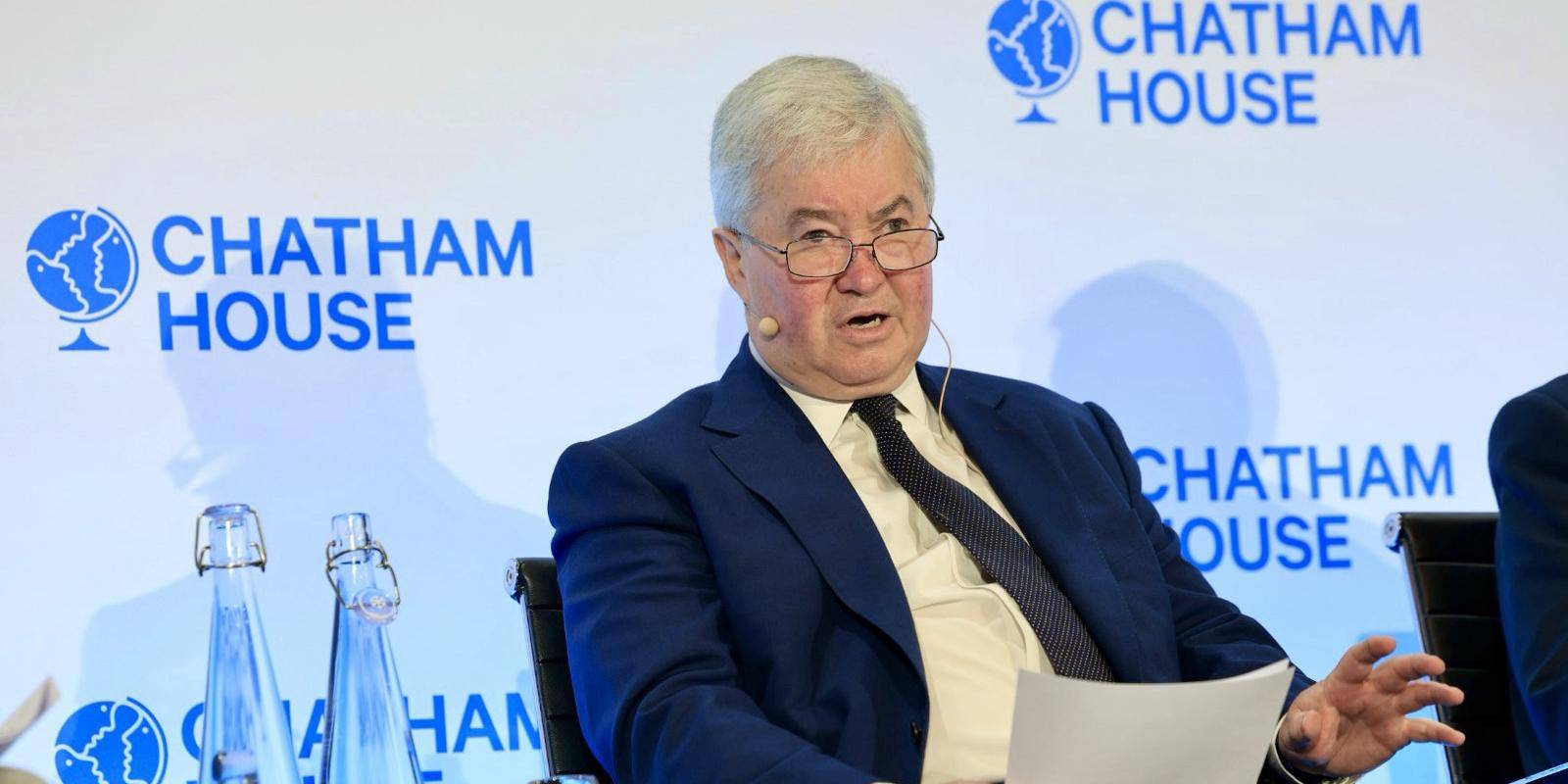

Leading voices from policymaking, business and academia gathered at Chatham House’s 2026 London Conference on 9 July under the theme of ‘a route to order in an evolving world’. The event opened with a panel discussing the issues confronting UK defence, the threat from Russia and the war in Ukraine – and strained relations within NATO, following the alliance summit this week in Ankara.
Speaking at the conference’s opening panel, General Sir Richard Barrons, a senior consulting fellow with Chatham House and a co-author of the UK’s 2025 Strategic Defence Review (SDR), said that the conversation about the US drawdown of commitment to NATO can no longer be abstract.
As a result, he argued, European NATO countries must seek to re-establish a relationship of ‘escalation dominance’ with Russia – that is ‘a certainty that you deter because you are more powerful’. This must be done, he said ‘with far less reliance on the US, inside four years.’
The UK and NATO
Speaking at the same panel, former NATO Secretary-General Lord George Robertson, another co-author of the UK’s SDR, said that the Ankara NATO summit was in many ways a great success for its ‘ironclad commitment to Article 5 and to collective security…to get all of the 32 countries, including the United States, to sign up to that is crucially important.’
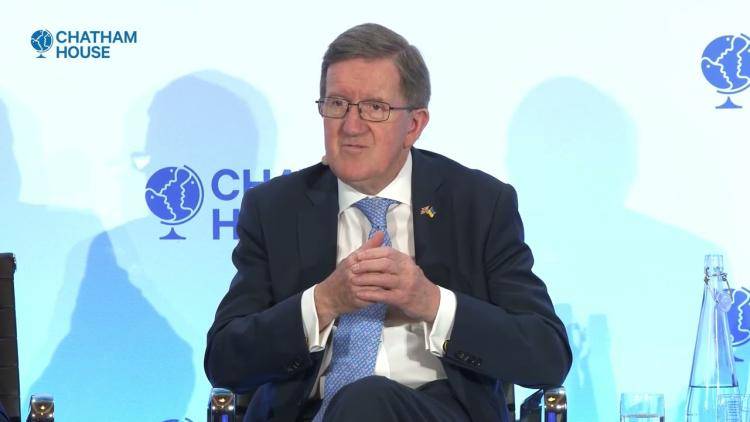
Lord Robertson discusses the UK nuclear deterrent.
He also said that agreements on armaments and support for Ukraine showed that ‘suddenly the spotlight has come back onto Ukraine and the necessity for making sure that we win that’.
Addressing the UK position within NATO, Lord Robertson said that, although the UK made good progress with the SDR it had ‘lost a year’ while the Defence Investment Plan (DIP) was created, and that the DIP had been greeted with ‘less than rapture’ by UK allies.
He also discussed the hard choices confronting the UK on defence, making the point that 25 per cent of the UK defence budget is accounted for by the independent nuclear deterrent, which crowds out funding for conventional defence.
Yet, he pointed out ‘I can assure you, as somebody who has been in the Kremlin on a number of occasions, who got to know Vladimir Putin…I can tell you that the British independent nuclear deterrent is the one thing that moves the dial inside the Kremlin.’
Gaza and the West Bank
Later in the day, during the closing keynote, UK Foreign Secretary Yvette Cooper addressed other important security issues, including policy on the 20-point plan for Gaza negotiated by the Trump administration, and Israeli settler activity in the West Bank.
‘What I fear now is that that 20-point plan is really in danger of just running into the ground,’ she said. ‘And we don’t even have the humanitarian access and support that was pledged as part of phase one of that 20-point plan.’
Addressing the West Bank, she said: ‘We’ve also seen, obviously…the expansion of the illegal settlements in the West Bank and settler violence increasing and what is effectively in many cases, settler terrorism as well. And so therefore it can feel then as if there’s a risk now that we are going backwards.’