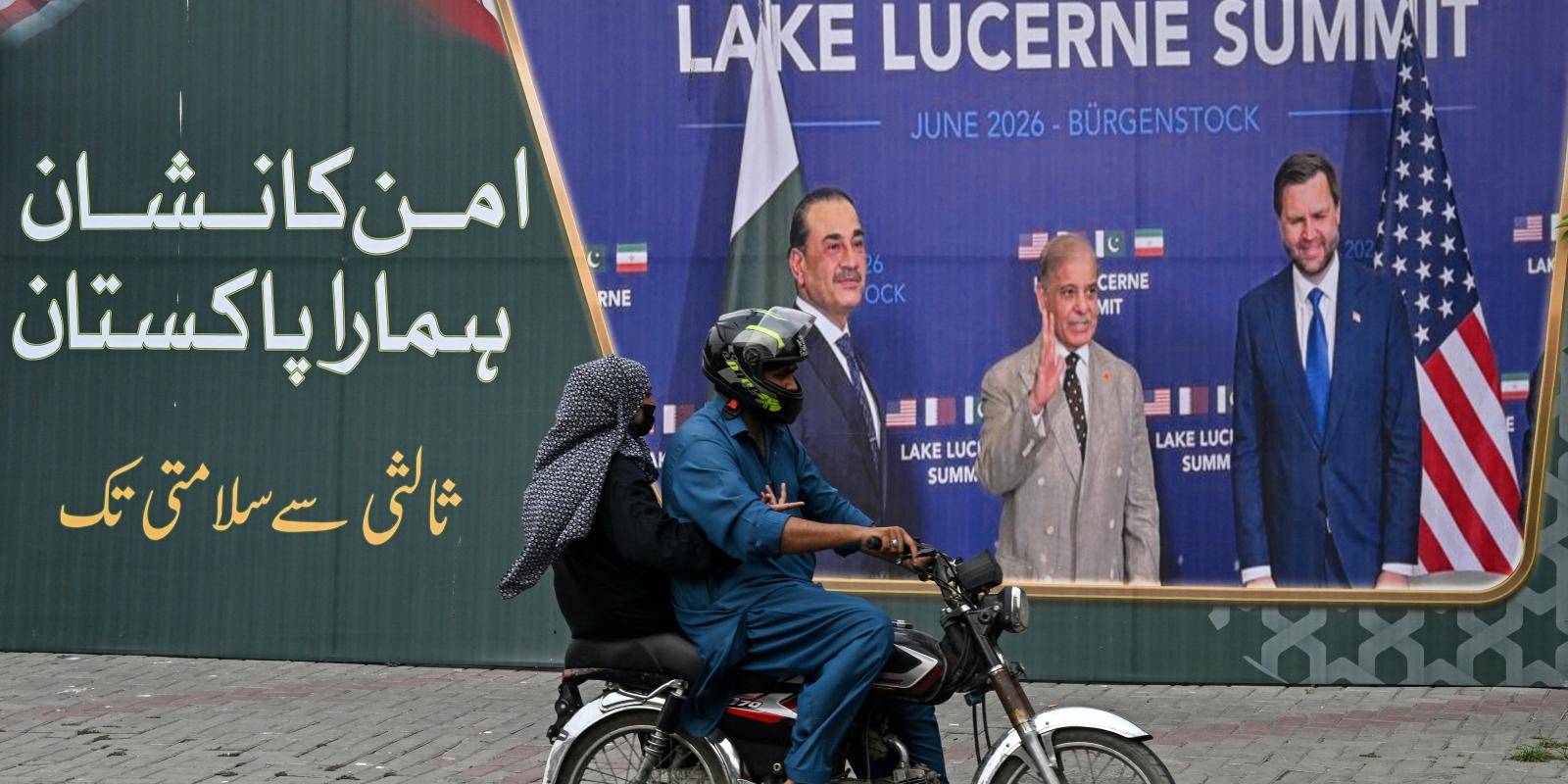

After it received international acclaim for its role in brokering the US–Iran deal that brought a temporary halt to the war, Pakistan is seeking to further boost its geopolitical clout. Galvanized by its depiction as a ‘hinge power’ with unique ties to competing power blocs and rival regional neighbours, Pakistan is attempting to leverage its diplomatic partnerships and craft a more proactive foreign policy.
Its most recent achievement was the 7 August signing of a joint defence agreement with Saudi Arabia and Turkey. Billed by some as a ‘Muslim NATO’ for stipulating that an armed attack against one would be regarded as an attack on all, the Mecca Joint Defence Agreement sets nuclear-armed Pakistan squarely on par with two of the world’s most powerful Sunni Muslim states.
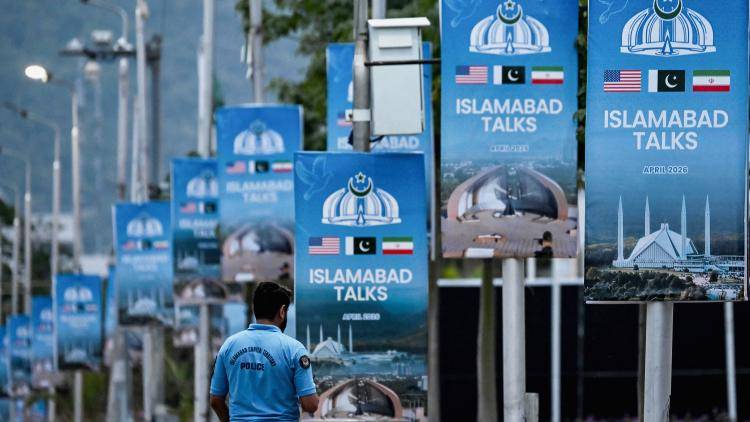
Pakistan has also sought to consolidate its international reputation as an exceptional mediator. The country’s army chief, Field Marshal Asim Munir, has emerged as a key interlocutor between the US and Iran. In August he flew to Tehran for the third time this year – apparently at the behest of US President Donald Trump – to revive the stalled peace process. He is currently involved in diplomatic efforts to soften US sanctions against Iran.
But these diplomatic gains are at risk because of Pakistan’s domestic challenges. Its failure to ensure security and stem conflict at home casts doubt on Pakistan’s credibility as a peacemaker and its ability to shape an effective foreign policy in the face of significant internal turmoil. After all, foreign policy begins at home.
A deteriorating security landscape
Violence has soared in Pakistan’s sensitive border provinces Balochistan and Khyber-Pakhtunkhwa, where ethnic and religious militants are waging a relentless campaign. According to the Pakistan Institute for Conflict and Security (PICS), at least 600 people across Pakistan were killed in terrorist attacks in July alone.
The highest death toll was recorded in Balochistan, where the numbers killed rose from 109 in June to 372 in July, making it the deadliest month in 2026. Much of the violence has been blamed on clashes between security forces and the banned separatist group, the Baloch Liberation Army (BLA). The BLA has tapped into decades of frustration in Balochistan over demands for meaningful political representation, a fairer distribution of resources and an urgent investigation into the disappearance of thousands of Baloch activists.
The response of the authorities has been anything but clear, highlighting the lack of government cohesion. On 21 August, Prime Minister Shahbaz Sharif called for a ‘grand dialogue’ to address Balochistan’s grievances. Shortly afterwards, however, Munir ruled out talks and denounced Baloch rebels as ‘foreign-sponsored proxies’ used by ‘hostile elements’ – held to be a reference to India.
In Khyber-Pakhtunkhwa, meanwhile, attacks by Islamist militants belonging to the Pakistani Taliban (TTP) have also grown in frequency and intensity. The province recorded 154 deaths in July compared with 75 in June, an increase of 105 per cent.
The TTP operates mainly along Pakistan’s border with Afghanistan and has gained traction since the return of the Afghan Taliban in 2021. This has fuelled accusations by Pakistan of Afghan complicity in providing the TTP with safe havens and mounting cross-border attacks against Pakistan – a charge denied by Afghanistan.
Deadly clashes between Pakistan and Afghanistan erupted along the border in October 2025 and a ceasefire brokered by Turkey and Qatar quickly broke down. Pakistani airstrikes against Afghanistan resumed in February and have since killed scores of Afghan civilians, including more than 260 who died in a March airstrike on a drug rehabilitation centre in Kabul, prompting strong condemnation from the United Nations.
Violence has also gripped the semi-autonomous region of Pakistan-administered Kashmir (Azad Jammu and Kashmir or AJK). In June almost 100 people were reported killed by security forces during protests, including in the capital Muzaffarabad. The unrest began in 2023 over rising electricity tariffs and wheat prices before morphing into demands for political and constitutional reform. The protests were co-ordinated by the Joint Awami Action Committee (JAAC), a grassroots civil rights movement which has since been banned as a terrorist organization, highlighting the readiness of Pakistani authorities to brand all dissent as subversive.
Elections to the AJK assembly, held in July and August, have also ended in controversy after Pakistan’s ruling party, the Pakistan Muslim League (Nawaz) was accused of ballot rigging by its ally, the Pakistan People’s Party (PPP).
Growing political tensions

Such public accusations point to cracks in the framework of Pakistan’s current ‘hybrid’ arrangement, where a civilian government shares power with a more powerful military establishment. Fears of a new ‘tug of war’ among its stakeholders have escalated since legislation to formalize Munir’s expanded powers as chief of defence forces was approved by parliament on 20 August. The PPP has criticized it for being passed with undue haste.
Plans to dismantle Pakistan’s four existing provinces and replace them with smaller units have also caused discord. Interior Minister Mohsin Naqvi – known to be close to Munir – has justified the proposals on grounds that the current system has ‘collapsed’.
While the ruling PML(N) has been broadly accommodating of these plans, the PPP has voiced strong objections. It is said to fear losing control of its stronghold in Sindh, where reforms could result in the separation of Karachi – the provincial capital and commercial hub – as a newly created unit.
Wider concerns that the military intends to use the changes to gain access to a greater share of federal financial resources by weakening the claims of existing provinces have fanned rumours of a deal between the military establishment and the jailed former prime minister, Imran Khan.
Under the terms of such a deal Khan would reportedly be allowed ‘relief’ in exchange for his Pakistan Tehreek-e-Insaf (PTI) party’s cooperation in pushing through the planned reforms. The reforms would require a constitutional amendment with a two-thirds majority, which the government at present is unlikely to secure without the help of the PPP.
Speculation of a deal intensified when, on 18 August, the Supreme Court ordered that Khan be transferred from prison in Rawalpindi to a private hospital in Islamabad. The government challenged the order and instead arranged for him to be transferred to a public hospital, citing ‘security concerns’. Within hours of his medical check-up, Khan was returned to solitary confinement in his prison cell. His PTI party has since filed a contempt of court petition against the government, naming an official serving under Naqvi but notably not the interior minister – and Munir ally – himself.
The increasingly tense domestic political climate and fast-deteriorating security landscape could jeopardize Pakistan’s hard-won geopolitical gains. The government’s tendency to crack down on dissent and its hardline approach to domestic discord risk further stoking tensions. The country’s leadership must instead use the same aptitude for dialogue and diplomacy displayed abroad to end confrontation at home and defuse conflict with Pakistan’s neighbours.
Failure to keep its own house in order could see the global influence Pakistan has fought so hard to achieve escape its grasp.