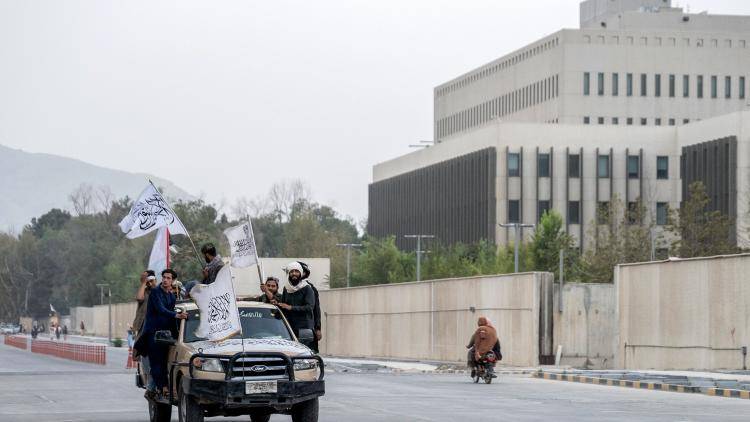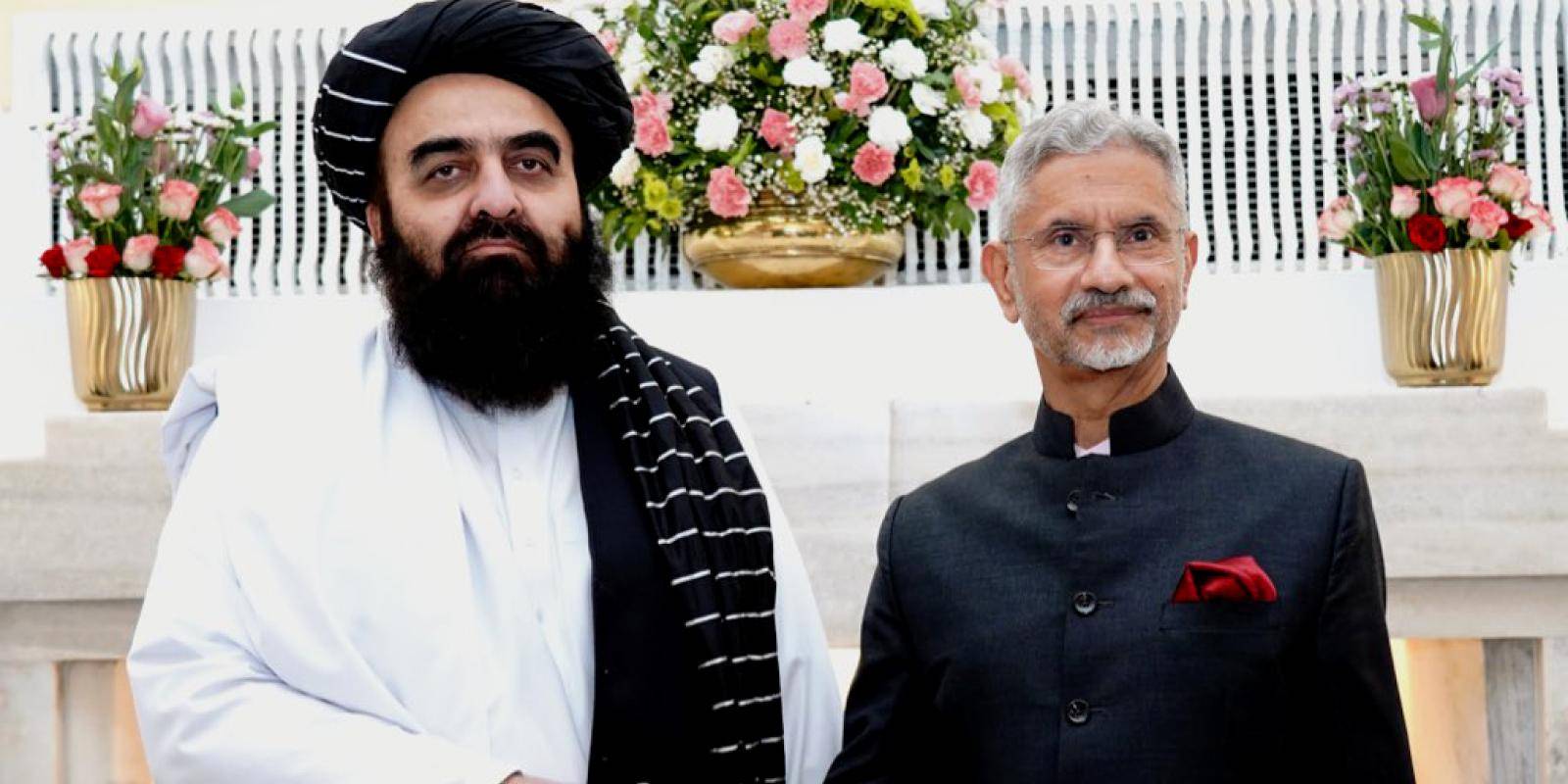

Afghan Foreign Minister Amit Khan Muttaqi visited India last week, making him the most senior Taliban official to visit the country since the group re-seized power in Afghanistan in 2021. During the visit, the Indian government announced it would upgrade its technical mission in Kabul to the status of an embassy, which it had shut four years ago.
These developments are part of New Delhi’s efforts to reset its relations with the Taliban and mark a notable shift in the region’s geopolitics. Historically, India has viewed the Taliban with hostility, given the group’s extremist ideology and its close affiliation with the Pakistani military and intelligence establishment.
India supported the Northern Alliance against the Taliban during the 1996-2001 Afghan Civil War. India was then a close partner of the Western-backed government that assumed power following the US invasion of Afghanistan in 2001. In response, the Taliban and its proxies carried out attacks on Indian nationals in Afghanistan, including on the Indian embassy in Kabul in 2009 and the Indian consulate in Herat in 2014.
Following the Taliban’s seizure of power in 2021, India closed its embassy in Afghanistan and has not formally recognized the group as the official government. However, India reopened its technical mission in Kabul in 2022 and remained engaged with Afghanistan through humanitarian assistance, including providing aid following the earthquake in August. In November last year, the Taliban appointed an envoy in New Delhi and an acting consul general for its mission in Mumbai. The next month, Muttaqi met Indian Foreign Secretary Vikram Misri for talks in Dubai.
The enemy of my enemy?
The Indian government’s shift to engaging with the Taliban is motivated by several factors. Primarily, New Delhi wants to prevent Afghanistan from re-emerging as a hub for militancy and terrorism that threatens India’s security.
The Taliban represents a ‘lesser evil’ compared to groups such as Al-Qaeda and the Islamic State Khorasan Province (IS-KP). The Taliban has reassured India that it ‘will not allow any group to use our territory against others.’ Kabul also condemned the terrorist attack in Pahalgam in Indian-administered Kashmir in April.
This rapprochement coincides with a downturn in relations between Afghanistan and Pakistan. Islamabad has historically had close relations with the Taliban. But while Islamabad once viewed Afghanistan as a source of ‘strategic depth’ in its rivalry with India, it now increasingly views its north-western neighbour as a liability.
Muttaqi’s visit to India coincided with cross-border clashes between Afghan and Pakistani forces that reportedly left dozens dead. Pakistan accuses the Afghan Taliban of hosting the Tehrik-e-Taliban Pakistan (TTP or Pakistani Taliban), a conglomerate of several insurgent groups that aims to overthrow the Pakistani state.
The TTP has stepped up its attacks inside Pakistan since the Taliban returned to power in Afghanistan in 2021. Islamabad also accuses India of stoking these tensions, allegations which it denies. These tensions are rooted in the disputed status of the 2,600km Durand Line that delineates the Afghanistan-Pakistan border.
Diplomacy and development
For the Taliban, outreach to India signals an effort to break free of its diplomatic isolation and strengthen its legitimacy. It follows Russia’s decision in July to re-establish diplomatic relations with the Taliban, making it the first (and so far only) government to do so.
The Taliban also wants India to re-emerge as an important development partner for Afghanistan. It is particularly keen on securing economic assistance as Western donor support has declined since the Taliban took over following NATO’s withdrawal in 2021.
India was a major development partner for the previous Afghan government and supported several projects in the country. During a joint press conference with his Afghan counterpart, Indian External Affairs Minister S. Jaishankar noted that India would maintain and repair completed projects in Afghanistan, as well committing to six new projects in the country.
Jaishankar also stated that India ‘deeply appreciated’ the invitation for ‘Indian companies to explore mining opportunities in Afghanistan’. Development assistance in the form of medical and food support and water resource management was also discussed during Muttaqi’s visit. Other topics included the potential for additional flights between New Delhi and Kabul, education and capacity building programmes, and expediting visas for Afghan nationals.
India also seeks to bolster its regional connectivity. It already relies on the Chabahar port in Iran for trade with Afghanistan and Central Asia. Improving relations with Kabul could lead to a further increase in trade between the two countries via this route, particularly after the closure of the Atari-Wagah border between India and Pakistan following hostilities between them in April-May.
Limits of rapprochement
Despite these moves, there remain limits to the rapprochement. The reopening of the Indian embassy in Kabul does not equate to the formal re-establishment of diplomatic relations between both countries. New Delhi remains averse to the Taliban’s extreme version of Deobandi Islam, which is shared by several groups that pursue an overtly anti-India agenda.
The gap in values between the governments of the two countries was evident in the notable absence of any female journalists during a press conference with Muttaqi. The decision drew the ire of Indian media and public opinion and prompted another press event where female journalists were present.
The Taliban has clamped down on women’s rights in Afghanistan, including banning their access to education and job opportunities in the country. In July, the International Criminal Court issued arrest warrants for two senior Taliban leaders (Supreme Leader Haibatullah Akhundzada and Chief Justice Abdul Hakim Haqqani) on charges of abuse against women and girls.