

The outcome of the first round of Brazil’s presidential election has put President Luiz Inácio Lula da Silva and his main challenger Flávio Bolsonaro – son of former president Jair Bolsonaro – into a run-off at the end of October. The result itself is not surprising. But Bolsonaro’s stronger-than-expected advantage over Lula and the consolidation of a right-leaning Congress – particularly the Senate – is. If Bolsonaro becomes president, Brazil will join the right-wing wave sweeping across Latin America.
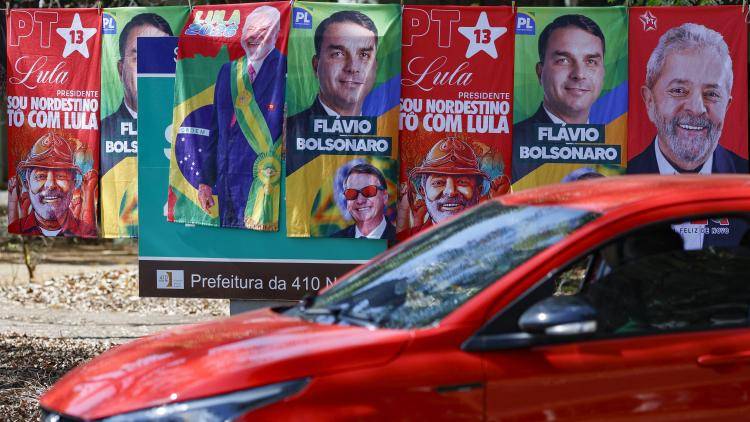
This shift to the right will impact Brazil’s climate transition plans. A Bolsonaro presidency backed by a sympathetic Congress will have considerable power to weaken existing environmental protections. But that does not mean that Brazil’s entire climate transition would go into reverse.
Brazil’s climate agenda is often presented as a contest between environmental protection and economic development. The reality is more complicated. The important question is which parts of Brazil’s climate policy a president can change, which require congressional support, and where trade, investment and private-sector interests constrain political choices.
Brazil’s president has considerable executive power over environmental outcomes. The president appoints the leadership of environmental protection agencies such as the Brazilian Institute of Environment and Renewable Natural Resources (IBAMA), determines enforcement priorities and allocates budgets that can either strengthen or weaken environmental protection within months.
But economic forces also set boundaries. Brazil is deeply dependent on agricultural and natural-resource exports, and increasingly on oil. At the same time, large flows of private and foreign investment are reinforcing renewable power, electricity transmission and distribution, electric vehicles and other low-carbon industries.
This distinction reflects Brazil’s unusual emissions profile. Unlike many large emerging economies, two thirds of the country’s greenhouse emissions are linked to land-use change. Brazil’s energy system is relatively clean; renewables already provide around 87 per cent of its electricity.
The Amazon is at risk if Bolsonaro wins
The greatest risk from a Bolsonaro victory is therefore likely to be land use and deforestation.
When Lula returned to office in 2023, his government restored environmental enforcement, agency capacity and satellite monitoring. Under environment minister Marina Silva, Amazon deforestation fell substantially. The latest annual PRODES, an official satellite monitoring system estimate put Amazon deforestation at 5,731 square kilometres in 2025, around half the 2022 level.
However, enforcement regulations are reversible by executive power if they are not complemented by policy packages that structurally change land-use practices. Transforming Brazil’s underlying land-use model requires cooperation with the country’s powerful agribusiness sector, which Marina Silva did not secure. Policy packages would have to move beyond policing towards land-tenure reform, traceability, rural-credit conditions, restoration of degraded land and incentives that make productivity gains more profitable than land clearing and expansion.
If Flávio Bolsonaro follows his father’s approach, he will likely reduce the enforcement capability and, with congressional support, further loosen environmental licensing and forest protection regulations like Brazil’s forest code.
Renewable energy transformation is harder to reverse
A Bolsonaro government would have much less room to change Brazil’s renewable-energy trajectory. Brazil has structural advantages in hydropower, wind, solar and biofuels. These sectors are supported not only by climate policies but by competitive costs, growing electricity demand, existing infrastructure, private investment and powerful domestic industries.
Biofuels, a sector that is broadly supported by Brazilian civil society and agribusiness, will continue to have a strategic role. Unlike in many European economies, Brazil’s ethanol and biodiesel industries combine climate objectives with agricultural, industrial and energy-security interests. Given the existing renewable assets, investments and private sector contracts in place – and Bolsonaro’s strong alignment with private sector interests – it would be harder for him to change policy direction in this area.
The importance of oil
Alongside its renewable energy transformation, Brazil has also become a major oil producer. The discovery and development of the offshore pre-salt oil reserves has made Brazil the 9th largest oil producer in the world and the largest in Latin America. It has attracted significant investment and is expanding production capability. In addition, the state-controlled oil company Petrobras is central in public finances at both federal and state level. In 2025, it paid R$277.6 billion in taxes, 7 per cent of Brazil’s total tax revenues.
The continuing disruption around the Strait of Hormuz strengthens the strategic value of Atlantic Basin producers like Brazil, Guyana, Canada and the US. Bolsonaro’s alignment with Washington and other right-leaning Latin American producers could reinforce the formation a new axis of oil production in the Americas. This could lock Brazil further into the position of becoming a strategic producer globally.
Although both Lula and Bolsonaro would continue to enhance Brazil’s production capability, Bolsonaro would likely push harder for faster licensing, private investment and offshore exploration. In 2025, Petrobras was granted a highly controversial exploration licence in the Equatorial Margin, along the Foz do Amazonas River basin and have since discovered oil. There are concerns Bolsonaro would accelerate the licensing for further exploratory drilling in the Amazon region.
The China factor and impact of Brazil’s trade relationships
Brazil’s trade and investment relationships will limit both Lula and Bolsonaro’s manoeuvrability on climate actions. Even if Bolsonaro is politically aligned with Trump, there are economic interests that will limit his ability to track too closely with the US administration – particularly on China.
China is Brazil’s largest export market, accounting for roughly 28 per cent of Brazil’s exports. It bought almost 80 per cent of Brazilian soybean export volumes in 2025, 45 per cent of exported crude oil and is also a major buyer of Brazilian beef and iron ore. This gives Chinese demand considerable influence over the economics of Brazilian land use and resource production.
China’s dominance limits the effectiveness of other trade partners’ environmental regulations, such as the EU Deforestation Regulation (EUDR). Although the EUDR can impose stringent traceability requirements on commodities entering the European market, it cannot by itself determine production practices across Brazilian supply chains. The regulation will only affect the portion of large Brazilian exporters, commodity traders and banks that operate across multiple markets and therefore have commercial reasons to maintain traceability even if federal enforcement weakens.
China’s importance also extends beyond trade. There are strong economic and investment interests between the two countries. The private sector in Brazil is not as suspicious of Chinese investment and technology as their American or European counterparts. In 2025, Brazil was the largest recipient of Chinese investment, with $6.1 billion invested primarily in renewable energy, clean technology and mining, further consolidating their strategic global positioning in renewable supply.
Although Brazil’s current climate ambitions would be undermined if Bolsonaro wins October’s run-off, not all would be lost. The future of the Amazon rainforest is most at risk and the most vulnerable part of the country’s climate agenda. Brazil’s energy transition, however, is likely to progress regardless of who wins.