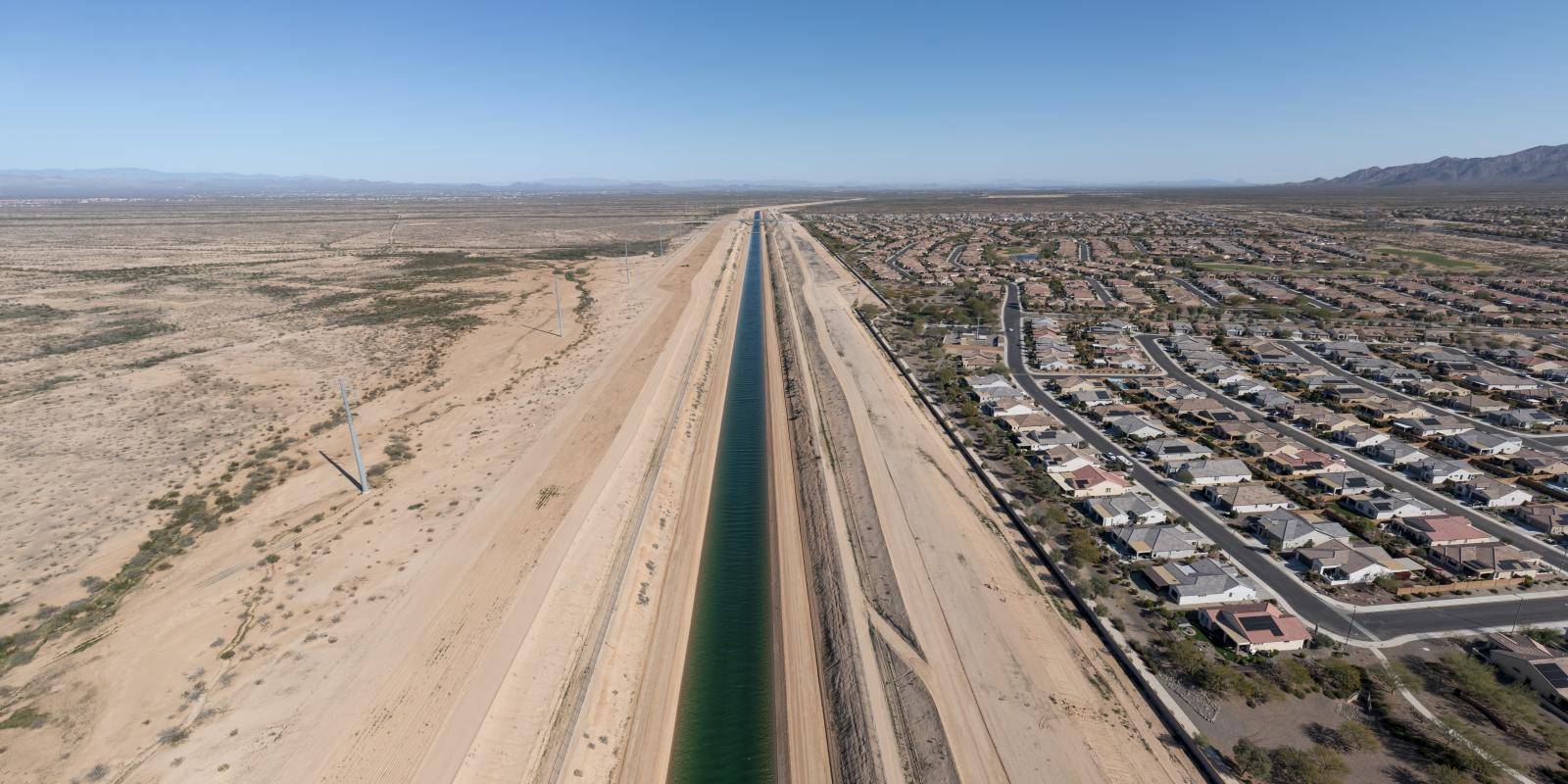

US President Donald Trump may dismiss the threat posed by climate change, but its consequences are becoming harder for US voters to ignore. Take Arizona, for example, where water has emerged as an unusually prominent issue ahead of the 2026 midterm elections. Recent polling found that long-term water supplies was the top concern for Arizona voters, after federal cuts to the state’s water supply from the drought-stricken Colorado River. Water has consequently become a prominent issue in Democratic Governor Katie Hobbs’ re-election campaign, with opponents accusing her of mismanaging Arizona’s water supply in an effort to undermine her bid for a second term.
Water is no longer just an environmental issue
Arizona is an extreme example, but the underlying dynamic is much broader.
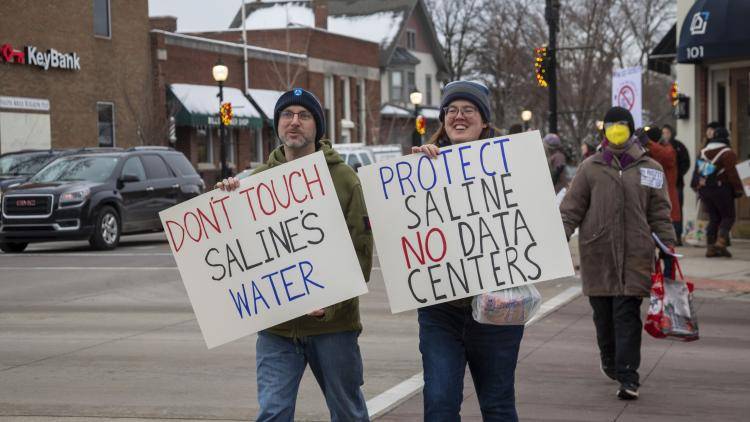
Water is fundamental not only to drinking and sanitation, but to almost every aspect of an economy. In Arizona, it underpins agriculture and urban development, while also supporting industries and amenities that can seem particularly incongruous in a desert environment, such as golf courses. Now a new source of demand is emerging: data centres, driven by the rapid growth of cloud computing and artificial intelligence. The Phoenix metropolitan area ranks second in North America for proposed data-centre development, raising questions about the impact of these energy- and water-intensive facilities on already stretched water supply – an emerging big issue in the midterms.
Arizona’s water predicament is being intensified by a changing climate. Already one of the hottest and driest states in the US, Arizona is experiencing rising temperatures that increase evaporation and water demand, while intensifying drought. This is also putting further pressure on the Colorado River, which supplies more than a third of Arizona’s population, while groundwater reserves are being depleted in parts of the state.
But climate change is only part of the story. Water crises are rarely caused by climate alone. Decades of groundwater over-abstraction, inefficient agricultural practices, pollution, poorly maintained infrastructure and allocations based on historical assumptions can turn a drought into a systemic crisis.
And this is not only an American problem. Cape Town’s 2018 ‘Day Zero’ crisis demonstrated how quickly drought, population growth and rising demand can turn water scarcity into a political emergency. Tehran offers another warning, where drought and declining rainfall have combined with groundwater depletion, and decades of water-management decisions to produce a systemic crisis. European cities like Barcelona, Madrid, Athens, Rome and even London have all faced emergency water restrictions in recent years as drought intensifies.
Companies are paying attention too. The World Economic Forum’s global risk assessments have repeatedly identified water supply shortages among the risks facing economies and businesses. Water shortages can disrupt agricultural supply chains, manufacturing, electricity generation, construction, real estate and technology infrastructure.
Water security is increasingly also about economic and political security.
When water crosses borders, scarcity becomes political
The political challenge becomes even harder when water crosses administrative boundaries.
Arizona’s position within the Colorado River system is governed by a complex web of agreements and legal arrangements, some dating back more than a century. The 1968 legislation authorizing the Central Arizona Project, for example, gave its Colorado River deliveries junior priority, meaning Arizona would face reductions before California in specified shortage circumstances.
As the river comes under increasing pressure, these historical arrangements have become politically consequential. The latest federal proposals for managing the Colorado River envisage substantial reductions in water deliveries to the three lower-basin states – Arizona, California and Nevada – with Arizona facing particularly significant cuts: 27 per cent this year and reductions could nearly double after 2028 if the drought worsens.
The underlying problem is therefore not simply that there is less water. It is that agreements and institutions designed for a different hydrological reality are being used to distribute a resource whose availability is becoming more uncertain.
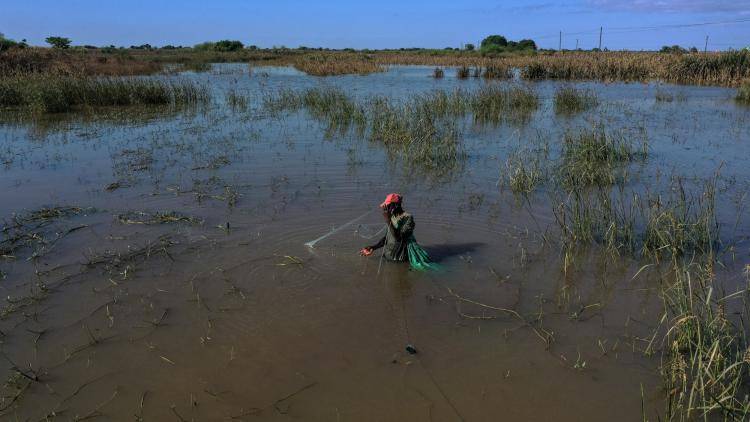
The same dynamic exists internationally. For example, Ethiopia’s plans to develop three new hydropower projects on the Blue Nile have reignited tensions with Egypt, which remains concerned about how upstream water is stored and managed, particularly during drought. The long-running dispute over the Grand Ethiopian Renaissance Dam illustrates how greater hydrological variability and more frequent drought can put existing water-sharing arrangements under growing strain.
Water can therefore become a geopolitical issue even when that is not the intention. When a river or reservoir crosses political boundaries, a reduction in supply also becomes a question of who gets less.
Policymakers must move beyond crisis management
Arizona offers a particularly vivid warning, not only to the US government but to governments around the world, because water has become a political issue before it has run out.
The first step is to stop treating water primarily as an environmental issue. It is increasingly central to decisions on infrastructure, industry, agriculture, housing and public health, and, where water crosses borders, to foreign and security policy.
Water availability needs to be considered much earlier in decisions about where and how economies grow. If a region is chronically water-stressed, governments – as well as regional, state and local authorities – should ask whether new housing, agriculture or industrial development can be supported by available water supplies over the long term.
Technology will have an important role. Wastewater recycling, leakage reduction, precision irrigation, improved groundwater monitoring, more efficient cooling systems and, in some coastal locations, desalination can help expand the options available.
But technology alone cannot change the realities of water availability. The harder question is therefore what societies choose to build – and where.
This is also where nature-based solutions come in. Restoring wetlands can improve water storage, filter pollutants and reduce flood risk. Protecting watersheds can support groundwater recharge and improve downstream water quality. Restoring degraded soils and changing agricultural practices can improve water retention and reduce irrigation requirements.
These measures can deliver several benefits simultaneously – water security, biodiversity, flood protection, carbon storage and resilience to extreme heat – often at lower cost than purely engineered alternatives.
Finally, governments need to integrate water, land use, energy, agriculture and economic planning, both domestically and with neighbouring countries that share water sources, using realistic projections of future water availability rather than historical averages. Water-sharing arrangements should also be revisited as conditions change, before scarcity turns technical disagreements into political crises.
The emergence of water as a political issue in Arizona is striking in a political environment dominated by concerns over the cost of living, immigration and the Iran war. The fact that it has become a leading concern among voters in one of America’s fastest-growing states shows that water security is crossing an important threshold: from an environmental concern that governments can defer, to a question about what kind of future is physically possible.