

Today, much of the political right in developed countries rejects efforts to combat climate change. Even leaders nominally of the centre and left are deprioritizing efforts to reduce emissions. Meanwhile many corporations are dropping their net zero targets. And fossil fuel companies are scrapping or scaling back their low-carbon divisions.
It might seem strange, then, that this year’s COP31 climate change conference in Turkey attracted more people than ever. A record 93,000 participants as well as 77 heads of state and governments registered to attend.
A COP headcount is a crude proxy for the global salience of climate policy. Nevertheless, it is worth asking: Is COP31 taking place in a bubble that is disconnected from geopolitical realities? Or does it indicate how climate change and the energy transition are simultaneously reflecting and influencing seismic geopolitical shifts?
Detached from reality?
When the first COP summit took place in Bonn in 1995, the world was vastly different. Climate-fuelled disasters were still theoretical. Practical, affordable low-carbon technology was a distant dream. The United States appeared to be the world’s only superpower, its alliances assured.
All of this has changed. Yet many negotiating positions at COP remain frozen in time. Entrenched definitions of ‘developed’ and ‘developing’ countries shape expectations of who is responsible for providing climate finance.
That is despite some of the latter group – notably the Gulf states – now being amongst the world’s wealthiest on a per capita basis. Developing countries call for knowledge and technology transfer from developed countries, even though it is China – considered a developing country – that is overwhelmingly dominant in the field.
Meanwhile the level of ambition seems at odds with the reality of an urgent, present climate crisis. For instance, the flagship electrification target proposed by hosts Australia and Turkey at COP31 will not require that the electricity generated must come from low carbon sources, despite the clear cost advantage in doing so. Such a stipulation is basically off the table in Antalya, a consequence of the continued influence of fossil fuel interests.
COPs do therefore, to some extent, take place in a bubble. But they are vital in understanding the interplay of climate change with real-world geopolitics.
‘Developed’ countries
The countries considered developed when the climate regime was established in the early 1990s are today on the back foot. In some, domestic consensus has eroded, making it more difficult for politicians and officials to negotiate climate change at the global level.
The most extreme example is the United States. The US is not represented by a delegation at COP31, with President Donald Trump having formally withdrawn the country from the Paris Agreement in 2025 and the underlying UN convention in 2026. This followed a period of energetic US reengagement on international climate policy under President Joe Biden, following the US withdrawal from Paris in 2017 during President Trump’s first term.
This whipsaw climate policy is influenced by the US’s superpower showdown with China. That competition would ideally encourage a ‘race-to-the-top’ on low-carbon technology, as it briefly did under President Biden with the Inflation Reduction Act. But policy is also influenced by the US’s newfound position as the world’s leading oil and gas producer. President Trump’s ‘energy dominance’ strategy has sought to capitalize on that position while dismissing climate science and rejecting renewable energy.
The EU, traditionally among the most ambitious of the blocs at COP, has dialled down its expectations for COP31 – in no small part due to the absence of the US. The EU’s top climate diplomat, Wopke Hoestra, called for a narrow focus on the electrification target, while dismissing any further talks on finance as ‘dead in the water’.
Europe’s political class is also distracted, not least by the Russian threat. The World Leaders’ Summit in Antalya was relatively light on European leadership, most of whom attended a security-focused European Political Community meeting in Dublin instead.
Canada and the UK, positioning themselves as responsible ‘middle powers’, issued a joint statement at COP31 affirming their commitment to climate finance goals and announcing new funding pledges. But this international positioning is paired with domestic retreat. Under Prime Minister Mark Carney, Canada has dismantled climate policies and committed public funds to new fossil fuel infrastructure. Under Prime Minister Andy Burnham, the UK has approved new drilling for gas and is considering weakening electric vehicle targets.
Burnham did attend the COP leaders’ summit. But in his address, he said that the consensus on climate had ‘gone’. This betrays a UK-centric perspective. Cross-party support for climate action has indeed collapsed in Westminster. But a record share of the global population (75 per cent) considers climate change a serious threat.
‘Developing’ countries
The countries considered developing within the international climate regime include varying economy sizes and climate vulnerabilities. But some broad trends exist among them.
First, many are treating the new low-carbon economy as a major growth and development opportunity. Countries in South-East Asia, sub-Saharan Africa, the Middle East and Latin America are rolling out renewables at a rate which will soon match or exceed that of their rich-world peers. Saudi Arabia, which has long blocked progress at COPs (and reprised this role in Antalya) used COP31 to announce a major wind and solar energy deal with hosts Turkey.
Secondly, developing countries intend to hold developed countries to their commitments, as the world experiences climate impacts with ever greater frequency and severity. Financing climate adaptation and compensating loss and damage is becoming central at the talks and were repeatedly referenced at the Leaders’ Summit.
However, very few developed countries have renewed their financial pledges after they expired in 2025. That is despite previously pledging to lead efforts to scale up climate finance to $300 billion by 2035.
China
And then there is Beijing. China is, by some distance, the country responsible for the largest share of greenhouse gas emissions (29.5 per cent in 2025). But it is also deploying low-carbon technologies at breathtaking speed and scale.
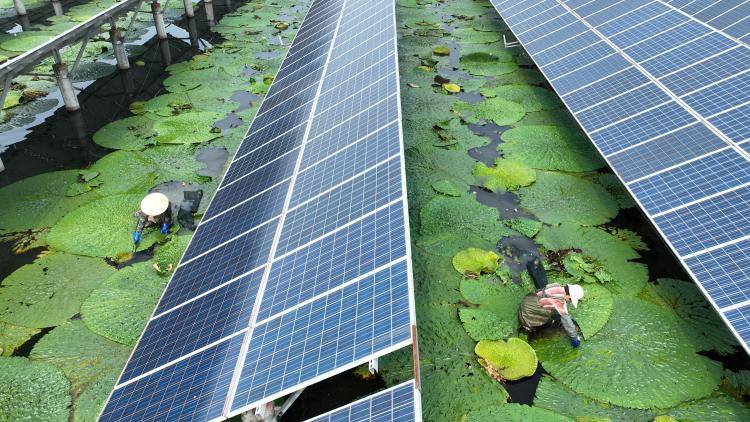
It is exporting its solar panels, batteries, EVs and more, framing this as a central part of its contribution to global climate efforts. That is not without justification: the country’s clean tech exports in 2026 will cut emissions equivalent to what Brazil emits in a year.
Here is where climate and geopolitics truly meet. Developed countries are struggling to honour their international climate finance commitments and decelerating their domestic efforts (or in the case of the US, repudiating both). Meanwhile, China, which styles itself as the leader of the developing countries, is supplying the means to transition, and providing huge investment in clean tech manufacturing abroad.
This is despite concerns that China is part of an effort, along with Saudi Arabia, Russia, India and Kenya, to delay work on crucial climate science.
Separating the signal from the noise
When the COP process began in the 1990s, the goal was simple: to fix climate change. These days, very few would argue it can manage that on its own.
When the dust settles, COP31 will have provided us with a distorted, confusing and ultimately dissatisfying representation of collective efforts to address climate change – as it always has.
But focusing on conference outcomes alone ignores real world progress on the energy transition, and how climate change continues to shape and be shaped by geopolitical shifts.
The Iran war has made low-carbon technology more attractive in many parts of the world. The traditional leaders of the Global North are seen by the Global South as reluctant to meet their commitments to tackle a climate crisis that is increasingly disruptive. China is receiving an ever-warmer reception, through its clean technology, its investments, and its relative stability as an international climate actor.
COP31 may conclude this week, but the geopolitics of climate change and the energy transition are only getting started.