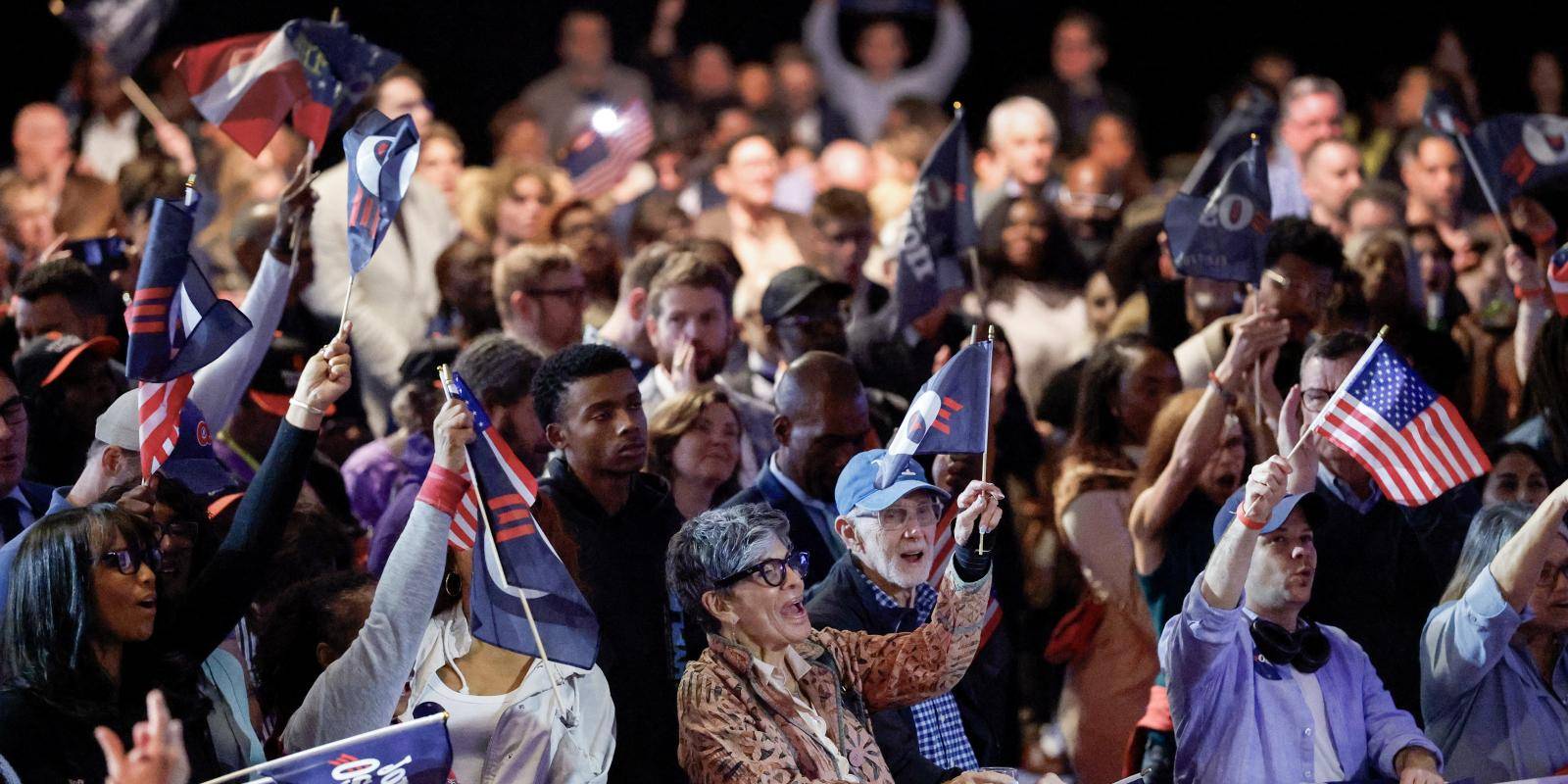

American voters delivered a resounding victory for Democrats in the 2026 midterms, the scale of their win surpassing all expectations. With control of both chambers of Congress – the House of Representatives and the Senate – Democrats will now preside over powerful tools of investigation and oversight, federal spending constraints and the ability to block Trump’s nominees, including for Supreme Court vacancies.
President Trump will remain an enduring presence into the 2028 election cycle, especially on matters of foreign policy. But attention will increasingly move to his potential successors and the parties’ respective visions for the future. How – and whether – Democrats and Republicans use the two years ahead to constrain Trump’s widely unpopular foreign policy and define a clear alternative will determine both their success in claiming the White House and in shaping the global landscape its next resident will inherit.
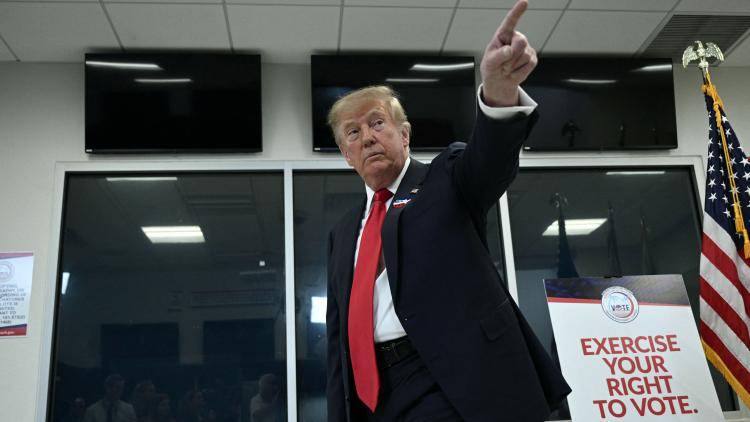
Both parties now face a reckoning, with consequential choices ahead on the key issues to prioritise, the ideological purity tests they may seek to impose and the presidential candidate they nominate for 2028.
Democrats face a competitive primary season for the first time in eight years. This offers an opportunity for genuine debate but also risks stoking significant infighting.
Moderates and conservative Democrats gained significant ground in traditionally Republican bastions. Progressives also notched key victories – from Abdul el-Sayed in Michigan to Alexandria Ocacio-Cortez’s re-election in New York City. But the incoming Democratic caucus will hold very diverse views on issues like the US relationship with Israel, use of military force, defence spending and immigration.
Republicans, meanwhile, face the massive task of revitalizing a party defined by Trump for the last decade – while also managing his likely moves to compel loyalty and cement a MAGA succession plan. The midterm results offer the clearest evidence yet that proximity to Trump will be increasingly untenable. This could open the door for greater independence – and some resistance – among the Republican Congress, particularly on the Iran war and Trump’s entreaties to Vladimir Putin.
As the Republican party looks ahead to 2028, Trump himself may be one of their biggest obstacles to forging a new platform that retires some of the more unpopular elements of Trump’s legacy – expensive wars, tariff-related economic disruption and allegations of corruption – while retaining winning elements for their base.
Democrats’ strategy worked. But foreign policy divisions will resurface
The midterms showcased the strength of the Democratic coalition built ahead of the elections, reaching into deep red states and districts like Texas, Iowa, Kansas, Ohio and South Carolina. Progressive and moderate wins showed that an inclusive, ‘big tent’ strategy can succeed. Economic populism, labour rights and affordable housing featured across progressive campaigns, while centrist candidates emphasized pragmatic governance, national security and economic competitiveness. Most candidates spoke about lowering the cost of living, ending the Iran war, expanding access to healthcare, and managing AI risks and data centre buildouts. Democrats will now seek to coalesce around an agenda in the House and Senate, stressing party unity.
But the foreign policy fissures that emerged in the midterm primary races have not gone away. After conceding the Congressional losses, President Trump told Fox News he could imagine working with Democrats on immigration – one of the Democratic party’s most persistent fault lines. Reductions in US military spending will also divide the caucus, with many progressives in favour of redirecting overseas funds to domestic revitalization. The US relationship with Israel will be one of the most contested discussions, with a growing number of centrist Democrats pushing for huge foreign assistance cuts for Israel and greater conditionality – if not outright suspension – of arms sales. The rancour in the Michigan Senate race – where Israel featured prominently – offered a preview of fights to come.
The left will continue to be unified in their opposition to Trump. But he will soon be gone. Shaping an affirmative governance agenda in the face of deep intra-party divisions will be the big test into 2028.
A competitive primary season that fosters open debate among the Democratic presidential candidates will expose these divisions. But the anointing of Biden/Harris in 2024 denied the party the chance to grapple with genuine differences and work to shape an inclusive, representative platform. This process will be painful, but also necessary, as the party shapes its next act on the crest of a blue wave.
Republicans must forge a post-Trump future

The Republican party has suffered one of its worst defeats in years, if not decades. It now turns to the sobering reality of navigating both the future of the party and the end of the Trump era. Their vision for the future will need to resonate not only with MAGA voters, but also centrist Republicans and Independents whose absence in the midterms cost the party dearly. Although candidates’ messaging around illegal immigration and violent crime align with Republican voter concerns, they failed to break through.
Trump’s record disapproval ratings was a further drag on Republican and Independent turnout. Loyalty tests meant candidates had to run on Trump’s record, a tricky proposition as voters connected the war in Iran with affordability. Republicans were also saddled with several troubled, scandal-marred candidates like Texas Senate candidate Ken Paxton and Ohio House incumbent Max Miller. Trump himself is unlikely to do much soul searching, exclaiming on Truth Social ‘I wasn’t on the ballot, and if I was, we would have won IN A LANDSLIDE!’. But the Republican party will be forced to reckon with these results as they forge their post-Trump future.
Trump’s relationship with the party will be biggest fissure on the right. As 2028 approaches, Republican candidates may see greater peril in sticking with Trump than beginning to distance themselves. Republicans may also struggle to hold the caucus together and avoid backstabbing and defections, particularly if Democrats’ investigations succeed in unseating senior officials.
On substance, Republicans may be increasingly divided on whether to change course on some of Trump’s unpopular foreign policy moves. Some Republican officials have publicly criticized Trump on Greenland and the Iran war, but more may see political value in critiquing wider swaths of his foreign policy – beginning with Trump’s interest in a trade deal with China or an accommodation with Putin. This will be particularly challenging for the anticipated Republican nominees, Vice President JD Vance and Secretary of State/National Security Advisor Marco Rubio, who will remain closely associated with Trump’s unpopular policies. Vance has publicly blamed the Iran war for the midterms defeat, saying ‘everyone knows why we lost.’
Trump will soon be departing after a decade as darling of the right and foil for the left. This leaves both parties facing difficult choices. Whether Democrats can unite around a broad coalition or Republicans can wrest their political fate from Trump remains to be seen. Two years from now, a new president may still inherit many of problems created or exacerbated by Trump, including a global tariff regime, a protracted war in Iran and fractured alliances. The central challenge for both Republicans and Democrats will be not simply to reconstitute what has been broken, drawing on what worked in the past. Each will need a new vision.