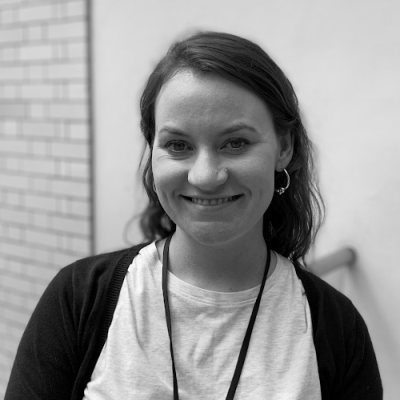
Olivia O’Sullivan
Good afternoon, everybody, and a very warm welcome to this discussion on, “How can crisis-affected countries survive in the ‘New World Disorder’?” My name is Olivia O’Sullivan. I direct the UK in the World Research Programme here at Chatham House, and in that programme, we focus on a few things, there’s a lot going on in the world. We look at how the UK navigates between Europe, the US, and China, we look at questions around defence, but we also look at the UK’s strategic relationships with countries in the Global South and the future of the UK’s aid and development policy.
So, we’re especially delighted to have David Miliband, President and CEO of the International Rescue Committee, and of course, former UK Foreign Secretary, here with us today, to discuss very aptly, given the past few months, particularly how countries, and I note in your report, how people affected by crisis and conflict in this more disordered world that we’re seeing, how they can survive. And the role that humanitarian agencies, like, the International Rescue Committee can play, but also the role that governments, states, Diplomats, new actors, new donors, should play.
We’re talking today in particular because you’ve launched your “Emergency Watchlist” report, and I’d love to start by diving in and talking about that, but before I do, I must say a brief word about how the event will run, just so we’ve got the housekeeping out of the way. Just a reminder, this event is on the record, being recorded, will be livestreamed. I will put a few opening questions to David, we’ll have some discussion, but then we will open up to Q&A. I’m hoping we’ll have plenty of time for that. So, do be thinking now about the questions that you would like to ask.
When it comes to questions, I’ll come to people in the room, I’ll come to questions online. If you’re comfortable, please do say your name, the organisation you’re from, so we know where you’re coming from, and please do ask a question, rather than make a comment, if you’d be so kind. That will keep us on track and enable that everybody gets their chance to put questions to David. Thank you again for joining us today on this very wet Tuesday. We really appreciate you all coming out for this important discussion.
David, I think it’s a critical time to cover these issues. I think probably best to start with the report. IRC produces the Emergency Watchlist every year, have done so for a decade, looking particularly at the top 20 conflict-affected countries that you’re most concerned about, so perhaps we can start there. Tell us what’s in the report.
David Miliband
Yeah, I meant to come onto the stage bearing a copy of this, and I – to be fair…
Olivia O’Sullivan
Perhaps somebody could brandish it.
David Miliband
…and I hoped that there would be a copy on all of your seats, or at least a summary on all of your seats. It’s an absolute must-read. That’s the most important message to get across, and I’ll try and explain why. It’s the – it’s a data-informed assessment of the greatest crises of 2026, or of the year ahead. It’s 74 different quantitative and qualitative indicators drawn from our own teams around the world, as well as our Conflict Analysis Team, George is here, who leads that work from London.
It’s – just to give you a lot of statistics, to throw them at you and try and get them into the conversation, about 240 million people in humanitarian need around the world. About 89% of those people live in just the top 20 countries facing humanitarian crisis. Our own – you might ask, “How good are your predictions?” About 85 to 95% of the humanitarian crises that have happened over the last ten years are actually foreshadowed in the reports that we’ve done over the last ten years. It was originally a internal management tool for getting our house in order about where we were positioning our resources, how we were ready for crisis. It’s now become a much more important public advocacy tool, as well as an internal management tool.
It highlights some really astonishing regressions, really, in the global system. Such levels of displacement, 120 million people displaced by conflict and disaster, about 60% of them internally displaced within their own countries, about 40% of them refugees in neighbouring states. Just to give you a sense of this, ten years ago it was about 40 million/45 million. So, a significant number of peop – rise in the number of people fleeing as a result of conflict. 50,000 civilians killed in conflict last year. You’re more likely to be killed in a conflict if you’re a civilian than if you’re a Soldier. 617 Aid Workers killed as well last year, so a rise in impunity.
A staggering number, someone maybe remind me from the front row of the number of people in acute malnutrition, IPC level 5, just slightly just dropped out of my mind, but this heavy concentration. And one other point that’s I think really important for our conversation, conflict overlapping with climate. About 18 month ago, I – climate crisis, about 18 months ago I did a talk here about how we were seeing the impact of climate stress on resource stress and thereby, on conflict. About 15 or 16 of the top 20 countries for humanitarian crisis are also at the top of the league for climate stress vulnerability in something called the “Notre Dame Index.”
So, just to finish on the report, people often ask me, “What’s the difference between being a Government Minister and being the head of an NGO?” If you’re a Government Minister, you can see the big picture, but the danger is that you lose sight of the people. If you’re running an NGO, we helped 36 million people in 2024, you see the people every day, the danger is you lose sight of the big picture. And what the Emergency Watchlist tries to do is combine real granular insight about what’s happening around the world, our teams, our staff, Sudan is top of the list, we’ve got 500 people working there but join it to the bigger geopolitical themes that you explore so well in your programme.
And I think we’re not the first to use the idea of the “New World Disorder,” but what I want to try and plant in your minds for the discussion we’re going to have today is that what’s happening in the world’s conflict zones is a symptom of disorder, as well as a driver of disorder. It’s a symptom of a world where there’s less co-operation, it’s a symptom of a world where there is profit-making from conflict. It’s a symptom of a world where the rights of civilians, legal as well as moral rights of civilians in conflict, are being trampled in a quite horrific way.
And those are themselves symptoms of bigger global changes that we can get into, but obviously, from our point of view as a agency that’s trying to respond to these crises, the fact that there’s this very, very high level of crisis, combined with a pretty catastrophic cut in the aid budget, means you’ve got this very, very difficult scissors effect. Where even some of the most vulnerable people in the world are being really targeted for the most atrocious cuts in the services on which they depend.
Olivia O’Sullivan
I wonder if we could stay on – I want to come to the cuts in funding, but I wanted to ask you about some of those drivers you identified. ‘Cause it struck me that the report – you’re a humanitarian agency, but it’s – it talks about the “drivers of conflict,” it talks about the “politics of conflict,” it talks about “conflict economies,” it points out that conflicts are lasting longer, they’re becoming harder to resolve. From that perspective, the answer is not just funding, it’s that governments…
David Miliband
Yeah.
Olivia O’Sullivan
…states…
David Miliband
Yeah.
Olivia O’Sullivan
…Diplomats act to resolve conflicts and do so better. What would you as IRC…
David Miliband
Well, I think…
Olivia O’Sullivan
…like to see from that?
David Miliband
…the first thing to say is that every humanitarian emergency is a political emergency, and the second thing to say is that there’s a crisis of peacemaking, and there’s probably a crisis of peacekeeping, as well, but there’s a crisis of peacemaking. 61 conflicts around the world last year, despite the peacemaking in the eight conflicts that have got quite a lot of attention in various speeches, the ceasefires that have been achieved in…
Olivia O’Sullivan
Hmmm.
David Miliband
…some cases. So, a crisis of diplomacy that I think itself is linked to something that we highlight and really is a change. The phrase ‘civil war’ conjures up the idea of competing factions within a country, fighting it out for the resources of that country. What’s most significant today is the internationalisation of civ – of a “civil conflict.” These conflicts are completely uncivil, so it’s not a good word, but the fact that every neighbour of Sudan, plus countries across the Middle East, are players in supporting actors in the conflict is not an exception to the rule, it’s part of the story.
We’ve been highlighting this more and more over the last decade, and it makes the diplomacy more difficult, never mind the aid access more difficult. I think it contributes to the impunity that exists, ‘cause it’s, if you like, it’s not your own citizens who are on the receiving end, it’s – you’re supporting others who are killing other people’s citizens or attacking them, and I think that is part of this diplomatic gridlock. Now there’s also obviously the bigger politics. The most vetoes are about Syria, they’re about Gaza. You’ve got US and Russia using their veto regularly. You’ve got China occasionally using its vid – its veto. We haven’t used our – the UK hasn’t used its veto since 1989 in the Security Council.
And so, I think it’s very important that we recognise that we can treat the symptoms of humanitarian crisis, but it takes politics to stop the killing, if you like. And we can draw attention to it, we can talk about the enablers, like, the war economy point you made. We can make suggestions; we say that the veto in – that we support the French-Mexican proposal that the veto should be suspended in the Security Council in cases of mass atrocity. That’s something which obviously, the French have supported, we haven’t yet supported, the UK hasn’t yet supported. So, I think that there’s a responsibility on us to bring the people back into the story, in that dualism between seeing the big picture and seeing the people on the ground. We’ve got a responsibility both to tell the stories and allow people to tell their own stories but also draw attention to the bigger drivers and bigger questions.
Olivia O’Sullivan
Staying on that question of drivers and bigger questions, I mean, Sudan, you’ve mentioned a few times and is – it’s on your Watchlist. You were speaking about Sudan…
David Miliband
Top of the Watchlist.
Olivia O’Sullivan
…top of the Watchlist. You were speaking about Sudan at Davos. Chatham House has done a lot of work on the internationalisation of that conflict too. Which states do you think need to come to the table and what – how does their behaviour need to change…
David Miliband
Well, there’s…
Olivia O’Sullivan
…to make progress?
David Miliband
…an obvious clue in the Quad that the US have set up. Alex de Waal has done brilliant work, and it’s – I don’t know if he’s done it with you or separate from you, or whether he’s affiliated with a rival think tank, I don’t know, but the – God forbid. But, you know, he pointed out that the Quad was created by the Trump administration, it involved Egypt, it involved Saudi Arabia, it involved United Arab Emirates. They are absolutely key players, especially the UAE and Saudi Arabia, absolutely key players in this. They’re not the only players, because there’s a wider range there, but this is not a US-China standoff.
Olivia O’Sullivan
Hmmm.
David Miliband
It’s not even a US-Russia standoff, although Russia is involved, previously on one side – on the RSF side, now seemingly having swapped sides. You’ve got a lot of other players in there. The statement that came out in September was, I think, actually a step forward, but there’s no implementation mechanism. And one of the dangers – I mean, I think we’ll come onto this, but I’m very supportive of Mark Carney’s argument that “We’re going to need to build Coalitions of the Willing,” notwithstanding the heritage or the history of that phrase, but the notion, I think is an important one. Those who are willing to prioritise, bear burden, need to do so, but the implementation mechanisms for its work are very much less clear, and I think that’s a big question…
Olivia O’Sullivan
Yeah.
David Miliband
…to be resolved.
Olivia O’Sullivan
Hmmm. Perhaps we could move onto questions of money, because as you rightly point out in the report, these trends, longer running conflicts, many, many people living in conflict-affected states, in fragile states, are all happening at a time when international aid funding has cratered. USAID funding cuts, but European donors have cut funding too. IRC itself, $400 million, I believe, funding cut this year. What do you think is the future of international aid funding? Are there any bright spots? Are there any new actors? Where do we go from here?
David Miliband
Yeah, I think, first of all, I want to call out that – the horror of the fact that at a time when the world is more connected than ever before, the – that empathy seems to be less connected than before. There’s this phrase, “the tribalisation of pain,” if it’s my tribe, if it’s my region, my nationality, I’m interested, otherwise I’m not. I think that’s very dangerous. We’re a humanitarian organisation that asserts common humanity, and so, I don’t want to diminish at all the significance of what’s happened.
Overall, there’s been a 50% cut in the total funding for humanitarian aid, which is actually the most popular part of the aid budget. And here’s – this is why I don’t want to pretend this is a happy story, at all, but I gave a speech at the University of Notre Dame pointing out that 89% of the American public support 1% of the federal budget going on overseas aid. 89%, 94% of Democrats, 84% of Republicans. The trouble is 55% think that 20% of the federal budget goes on overseas aid. So, the actual truth is that more or less 1% has been the figure. There’s a common sense, sort of, view, well, if we’re spending $99 at home, why not spend a dollar abroad? Health and humanitarian funding is the most popular, that’s only 25% of the total ODA budget.
So, I think that there’s a real – I don’t myself feel we’re pursuing a lost cause, if you like. What we’ve got to do is align the cause behind the impact that people want to see, which is in the health and humanitarian areas. Just 25% goes on health and humanitarian together, 25% of the aid budget goes to fragile and conflict states. And the confusion between development, which is what countries do to improve their economies, which might need concessional loans, and what people need in terms of aid to stay alive or recover from crisis, that’s become very confused, I think, over the last 30 years.
And I was thinking about this in respect of when we came into government in 1997, we created the Department for International Development, but the centrepiece of it, or – and the centrepiece of it, was aid to tackle poverty. And tackling poverty takes different instruments than promoting economic –national economic development, in a world where 60% of the world’s extreme poor live in fragile and conflict states. Where the mechanisms that we know work for economic development, good governance, markets that are fair and able to work properly, property rights that are secured, where those are broken down. And so this whole aid versus development, or aid and development, question I think is very pregnant.
From our own point of view, I think that the future – I think I said this when I was here giving my talk about the future of the aid system in April, someone asked this question. Either we end up with more focus on fragile and conflict states, with more donors aligning behind the priorities that exist there, which are around health, education, protection, probably the multilateral system having to work much more through civil society. It’s interesting, ten years ago I was told 28% of the global aid budget went through the multilaterals, now it’s 56%.
So, the multilateral system led by the World Bank has to become much more comfortable working through civil society, because they’ve historically worked through governments. But in a world where you’ve got 60% of the world’s extreme poor in fragile and conflict states, they’ve got to be comfortable working through civil society. That’s one route. The alternative is that we end up with the jam spread very thin, and there’s less jam and there’s more conflict, there’s more backlash, there’s more spreading of these conflicts, ‘cause you and I have referred to Sudan, but the first thing either of us would say is, don’t think Sudan is a local conflict inside Sudan. It’s a conflict over the whole sub-region in Northeast Africa.
So, I think that the truth is that there are two questions. What we’re pushing is focus, focus on the fragile states, focus on programmes that work, drag the multilateral system into systems that are del – that deliver cost effectively, which means working with civil society in a different way. Just finally, yes, let’s spread the aid responsibility, but there’s not much sign of it at the moment.
Olivia O’Sullivan
No.
David Miliband
The Chinese Government gave significant support, $100 million to Gaza. I’ve seen – I was in Beijing in October, I’ve seen no evidence they want to get into this – into these questions, despite the fact that even in Sudan they’ve got big economic interests, they don’t want to get into that. So, I don’t see a broadening of the aid community very far. What I think is significant is whether or not the aid community can really think what is aid – international aid for, as opposed to what are concessional loans that support private sector for economic development?
Olivia O’Sullivan
Yeah.
David Miliband
Sorry for the long answer.
Olivia O’Sullivan
No, not at all. I mean, would you support, for example – in this country for a long time, the government spent 0.7% of gross national income on a category of spending it called overseas aid, but an awful lot of things will fit into that, right? Concessional loans for economic development, direct humanitarian aid to deal with emergencies. Should we be thinking entirely differently about how we’re spending this money? Should we be allocating it differently?
David Miliband
Well, I think we should certainly be doing both. We should be thinking differently and allocating differently. Thinking differently, I, sort of, want to turn this on its head, really. Let’s frame the question, are we willing to live in a world where 87% of under-fives get no vaccinations? Are we willing to live in a world where 45 million children are acutely malnourished at any one time? Are we willing to live in a world where 200 million kids don’t go to school? If not, that’s a good opportunity for Coalitions of the Willing to start dividing up responsibility and contributing through the most effective ways of doing it. So, I think we have to think in a different way. I also think we have to focus in a different way.
I’m going to – I – there’s an argument about how much of British bilateral and multilateral aid actually goes to fragile and conflict states. So, I’m not going to make an accusation about it, but if 60% of the extreme poor live in fragile and conflict states, then our argument is 60% of the aid budget should go into fragile and conflict states. And at the moment, just to get a sense of the dangers here, I made the point that the 20 countries in humanitarian crisis, 15 or 16 of them are climate vulnerable. There’s an inverse relationship between your climate vulnerability and the amount of investment in climate resilience, climate adaptation.
So, the Somalis of this world, where I was in Septem – in December, for all of its problems and its exposure to drought and to the climate crisis, its climate resilience investment, its adaptation investment, is absolutely minimal, and that’s just completely wrong. So, the categories that you refer to, the different parts of this, it’s going to be a more grant aid solution in Somalia than it is in Ghana or Vietnam. Vietnam doesn’t need aid anymore. We’ve got to change our focus so that we’re actually remaining loyal to the point that the aid budget is first and foremost for tackling poverty, extreme poverty.
Olivia O’Sullivan
We – I raised the UK, so perhaps we can stay on the UK, and obviously, one of the countries that’s cut its aid budget pretty significantly, and some in government would say they felt they had to because of the defence and security situation that Europe faces. What would you like to see the UK prioritise in terms of spending, but also in terms of can it play a leadership role, can it rally others? The UK will be hosting the G20 shortly.
David Miliband
Yeah.
Olivia O’Sullivan
Do you think this government can, should, be acting more – be taking more of a lead in this crisis and what should it do?
David Miliband
Well, it can and should be maximising its impact. Whether you can take a leadership role when you’re in a position of cutting your aid budget, that’s a much more difficult thing. You’ve got to be – what are you leading on and how are you leading? I just want to say a couple of things. First of all, of the budget cutters don’t include the European Union. So, let’s be clear that the seven-year budget that runs to 2028 is not being cut by the EU, and the proposal from the European Commission for its 2028 to 2035 is actually for an increase. So, when we say the Europeans are cutting too, the European Union is not yet cutting.
Secondly, the UK has got to think about its own aid budget and where it goes, and there’s a – I think there’s announcements today actually about focus, we want the focus to be on the fragile and conflict states, that’s our position. The UK, not the UK Government, but the UK has real assets when it comes to financial re-engineering. This is quite a good story, actually. The UK has helped us develop a parametric insurance product for flooding in Kenya. It’s triggered when there’s a certain level of rainfall, because that’s associated with flooding later. The UK, the FCDO paid the premiums. Now the insurance has paid out, actually two weeks ago, and so kids are continuing to get their education after a flood that would otherwise have interrupted their education, they continue to get education. So, there are some quite good ways of drawing on the UK financial expertise that’s important.
And there’s one other point that I think is massively important, which is that for – I mean, I don’t want to say it was great – it was perfect in my time, but I know that from 2007 to 2010, I was Foreign Secretary at the time, Douglas Alexander was the Depar – Secretary of State for International Development, he represented the UK on the World Bank board. And he did so with huge gusto, drive and understanding that those multilateral – his – Bob Zoellick was the Chairman at the time, and one of the things that I’m encouraging, but also encouraged by what the current government are doing, they’re trying to re-establish a leadership role in World Bank thinking.
Olivia O’Sullivan
Hmmm.
David Miliband
Because in any assessment of where money’s going to come from, the World Bank is talking hundreds of billions, whereas the donor countries are talking much, much less. Just the reason I use that figure, IDA, the International Development Association, is one major part of the World Bank system, it’s $100 billion investment over the next few years. And so, a UK voice in how that is spent is actually vital for impact on global poverty, it’s the right thing to do. I think the government are alert to this. I saw Yvette Cooper yesterday, she’s very on this. I’ve seen the Executive Director in Washington, he’s very on this. And this question of, what do you do about low World Bank disbursement rates in fragile and conflict states? Well, you use civil society to deliver.
And there’s a real opportunity. We’ve got an incredibly dynamic Head of the World Bank, Ajay Banga, and two incredibly dynamic Deputies, Paschal Donohoe was the Irish Finance Minister for ten years, Anna Bjerde, a Swedish Civil Servant. That trio of people are really committed to following the numbers. They’re not hiding from the fact that 55 to 60% of the extreme poor are living in fragile and conflict states. They’re trying to align their system to tackle that problem. And I think that’s enormously significant if we’re going to be – if you remember I had the two different pathways, if we’re going to be on the first pathway, where this isn’t deeply injurious to the interests of people in poverty around the world. We’re going to need the World Bank to play an absolutely central role, to do that. They need the pressure as well as the support from countries like the UK.
Olivia O’Sullivan
I think that’s very a helpful, sort of, sense of how the UK Government, maybe other European governments, could play a role at this time, but we’re also speaking at a time – you were in Davos last week, I noticed you were speaking about Sudan.
David Miliband
I didn’t get as many people in the crowd as either Donald Trump or Mark Carney, I’m sorry…
Olivia O’Sullivan
This is…
David Miliband
…to say.
Olivia O’Sullivan
…exactly what I wanted to ask you about. Because the arguments you’re making are very compelling, the facts in the report are striking, but the current geopolitical mood is dominated by Trump, but also by the sense of increasing geopolitical rivalry between major blocs. A lot of the – I wanted to ask how many people came to your Davos session…
David Miliband
Yeah.
Olivia O’Sullivan
…and whether…
David Miliband
Half a dozen.
Olivia O’Sullivan
…you think you…
David Miliband
Yeah.
Olivia O’Sullivan
…can get purchase for these issues, for these arguments, for these long-term concerns in a geopolitical atmosphere that’s dominated by Trump and dominated by attendant ideologies?
David Miliband
And I’m sure it was a bestseller online, our Sudan session, because it was streamed. Look, I think that it was an introverted Davos, not a global Davos. It was introverted within the Western Alliance and debating its fissures and its challenges. There was very little discussion about China, very little discussion about India, very little discussion about the global system, very little discussion of global issues, like, climate and refugees. Global health didn’t really figure, despite that being a global risk. I mean, we’re five years out from a pandemic, let’s not forget it. So, I felt it was introverted.
I think that you have to give the Trump administration credit for consistency. President Trump did not hide in his campaign that economically, he was focused globally, but politically, he was focused in the Western Hemisphere. In his first year, he’s been consistent on that, as well. We’ve got to take the message of what’s written in the National Security Strategy published in December. Politically, it’s the Western Hemisphere that they’re interested in, too much of it, given the Greenland discussion, but they’re focused on their own hemisphere. And that raises a massive challenge for those governments, those people, who want to think about global risks, not just local risks.
And I’m not sure about this bloc’s banging up against each other. I don’t really see it that way. I see a much more fluid global system that isn’t ‘multipolar’ with these fixed blocks or even ‘spheres of interest’, so-called. I see something much more fluid, with different constellations on different multi-aligned world, different constellations of states and private actors. Private companies have got their own foreign policy now. I mean, we’re in a different, sort of – Pascal Lamy calls it a ‘plurilateral system’, not a multilateral system, where you’ve got different constellations of forces on different issues.
And my fear is very simple, that the global – the need for global co-operation on global issues is cratered by geopolitical fragmentation into many pieces, not just into two or three pieces. And I think that that’s bo – but that’s accelerated by the technological revolution that’s happening, but those two – that’s mismatch between growing globalisation of risk, but growing fragmentation of politics. I think that’s the essential problem that we have to overcome. I don’t think there is a solution in thinking about a single global system.
Olivia O’Sullivan
Hmmm.
David Miliband
I think if there is to be a global response to these global risks, it’s going to come from many regional, mini-multilateral efforts, that are a patchwork rather than a single answer. We’ll continue to argue that there are global rights for civilians. We’ll continue to argue for global responsibilities. Countries like Germany, in whose constitution it says that their responsibility should be exercised in proportion to their wealth, will continue to take responsibility, but we’re going to have to work very hard to find the partners for that.
Olivia O’Sullivan
In that world where you have a constellation of different partners, I mean, you – and a whole range of maybe different regional polls and multi-alignments, I’m curious that you mentioned China already, and briefly India. As you say, while we are, you know, arguing amongst ourselves about the Western Alliance, China in particular has gained a lot of influence, a lot of relationships, made a lot of investments in countries across the Global South. India, the BRICS countries are much wealthier, more influential, but as you mentioned earlier, they’re not really turning into traditional aid actors or donors. When you’re in rooms with these governments and these people, what arguments are you making for a focus on co-operation on global issues, and what are you hearing back?
David Miliband
Well, it’s not hard to make the – lots of people speak to the need for co-operation and then they explain why it’s someone else’s fault that it’s not happening. So, that’s the syndrome, I think. I think it’s not just China and India, I think Turkey’s a very significant player in the future, the Arab – the Gulf states that you’ve mentioned, across the continent of Africa, which of course, doesn’t even appear in any of the spheres of influence discussion, Africa doesn’t appear. There’s, I think, a real reassessment about who’s going to lead and how are they going to lead? But of course, there are different interests. The African Union’s split on quite a lot of issues, including on Sudan, which is a blockage. That speaks to this fragmentation that I think isn’t just bipolar or even multipolar.
So, I think we’re finding a – there’s definitely a lot more we’ve got to look after our own and take responsibility. There’s not much response to, but isn’t – when I say, “But isn’t this a regional crisis that’s going to affect you?” There’s not much on the humanitarian front. There is much more on the military and geo – and political front. And I think that there’s also a lot of questioning about how are the big UN agencies going to push them – position themselves? Tom Fletcher has probably spoken here; he’s the Emergency Response [means Relief] Co-ordinator. He’s doing an extraordinary job; he’s been in place for about a year.
Olivia O’Sullivan
Yeah, we’d love to have him so maybe have a word.
David Miliband
Okay, I’m seeing him on Friday and I’ll tell…
Olivia O’Sullivan
Great.
David Miliband
…him he’s got to – he’s missing a critical amplifier of his messaging. I think that he – the reset that he’s trying to engineer is very, very significant in this regard. So, I think there’s still a lot to play for. That’s why we’ve got this very bifurcated future ahead of us.
Olivia O’Sullivan
There’s about ten other things I’d like to ask you about, but I think people in the room would like to come in with questions. So, let’s close this portion there, and I’ll go to questions in the room. Let’s start with the lady on the front row. I’ll take questions in groups. If the – a microphone will come to you. Thank you.
Prashanie Dharmadasa
My name is Prashanie Dharmadasa. I’m Chief Executive and Founder of SORAA3. Thank you for that very interesting discussion. I have a question. So, what we’re, kind of, seeing now is humanitarian protection, refugee rights, humanitarian access, are now almost, I guess, treated a little bit like bargaining chips, in many ways. Especially when we see, kind of, you know, the blocs, like, the Board of Peace, for example, coming up. What interventions do you think that we can take to make it harder for these newer blocs that are coming up to prevent any, kind of, sabotage for humanitarian efforts?
Olivia O’Sullivan
Thank you. Let’s take a couple more, and we’ll take them in groups. Let’s go to the gentleman here with the scarf and then, we’ll come to the front. Thank you.
Frank
Mr Miliband – oh, my name is Frank, I’m a member of Chatham House. Thank you for the sterling work you’re doing at the International Rescue Committee. But words, like, “crisis affected, disorder,” and so on, to me conjure up also some of the situation in this country. Now, as an old friend, a fan of yours, I remember you when you were a Labour MP, any chance you might come back and lead the Labour Party and become Prime Minister and sort out the problems we are in now?
Olivia O’Sullivan
Okay, thank you. Let’s go here to the man at the front.
Jamil Koussa
Jamil Koussa, a member of Chatham House here. David, the question is straight with the title of the conference, can these crisis-affected countries be avoided, the crisis, I mean, can be avoided, and if not, why not?
David Miliband
I didn’t – say again?
Jamil Koussa
If they are not preventable, the crisis, why not?
David Miliband
Hmmm hmm.
Olivia O’Sullivan
Thank you. So, we have crisis prevention…
David Miliband
Hmmm hmm.
Olivia O’Sullivan
…this question about, kind of, humanitarian rights…
David Miliband
Yeah.
Olivia O’Sullivan
…and access becoming more like bargaining chips and how we avoid that cycle, and then…
David Miliband
I can’t remember…
Olivia O’Sullivan
…your involvement in…
David Miliband
…Frank’s question but the – thank you, but no, thank you, Frank. Thanks for your question, but no, thank you. The – Prashanie, I’m not sure about bargaining chips. I think that the rights of civilians and refugees are just being overrun. One of the things we cover in the report is that – we use the phrase “trampling on rights,” and I think that it’s very important not to be glib about how we will – how we can counter that trend.
I think two or three things come to my mind. First of all, I think it’s very important to win the argument that the rights that people have are basic, not expansionist or grandiose. There is the right not to be sent back to where it’s unsafe, which is the foundation of the Refugee Convention. That is a basic commitment, not a grandiose commitment that you’ll make to someone, and it’s incumbent on governments and on UN institutions, actually, to build systems that adjudicate that quickly and establish it fairly. And that’s a different set of issues from migration management; it’s about legal and moral responsibilities. And when – what we know from the US is when immigration management is not done well, all the pressure comes onto the refugee and asylum system and it can’t cope, and that’s essentially, what’s happened.
But we’ve also got a lot of experience, Sudan is one case, Gaza, other cases, where rights to aid are being limited. So, that leads to the second element of the answer I think, which is to be very public about what’s going on and measure what’s happening. We were proposing for a number of years the idea of an independent access organisation to monitor and focus on. We didn’t find many takers. The idea was to model the Chemical Weapons Convention, so you’d have Inspectors for humanitarian access in the same way that you had Inspectors for Chemical Weapons Convention breaches, but we didn’t find traction for it. And so, I think – but the transparency idea, I think, remains a very important one.
I think that there’s a third part of this, which is that when – and the UN is subject to a lot of the restrictions here, it’s in – it’s got itself into a very difficult position where it operates by consent of a government, and so, it feels it can’t criticise the government, and I think it’s going to have to find ways to address that. Then on, is it Jamal?
Jamil Koussa
Jamil.
David Miliband
Jamil, sorry. I mean, that’s the $64 million question, is about prevention of these crises. As you know, the most likely cause of a civil war is a prior civil war, so that’s how you end up in this cycle of conflict. We looked four or five years ago at whether or not an organisation like ours could do more track to mediation, diplomacy. We didn’t have the skills; it would also have prejudiced our position. But I’m – I don’t want to pretend I’ve got a quick answer for you. I think that what I would say is that the economics and the politics are both driving conflict at the moment, and the enablers come on both the economic and on the political side. And until both are addressed, we’re not going to be able to get into the prevention business, and the danger is that you have a cycle.
Olivia O’Sullivan
And the third question.
David Miliband
I answered Frank, I think.
Olivia O’Sullivan
Let’s take a few more. We’ll come to the lady in the front here, and then I’ll come over to this side. I’m not neglecting you.
David Miliband
It’s not just a lady, it’s a very…
Member
Thank you very much, David.
David Miliband
…esteemed Journalist.
Member
Very nice to see you. You mentioned the lack of mention of climate at Davos, except for it being derided, I think, in a notable Senior Politician speech. All the reports pre-COP last year are unequivocal that this is an accelerating crisis, which – and the impacts, as we know, also are accelerating. And unlike civil war or other conflict, this can only get worse. There will be no relief from climate impacts, at a time when global attention is markedly reduced and there is active hostility to mitigation and climate action from the United States. So, can you offer some way forward on this? You know, how do we bring it back to the attention? How do we get people to understand that this is a crisis of food security, of migration, of national security and of every other kind, really, which we need to get back to?
Olivia O’Sullivan
Can I suggest we just take that one, ‘cause I think…
David Miliband
Yeah, I…
Olivia O’Sullivan
…we should just…?
David Miliband
But here’s the thing, I haven’t got the figures at my fingertips, but there is clearly – I wrote down what you said, “no relief from the climate impact,” because we’re compounding the amount of greenhouse gases in the atmosphere, I get that. There’s also the second trend that you’ve referred to, which is the, sort of, backlash against climate action. But despite that backlash, the trends towards reductions in greenhouse gas emissions…
Member
Yeah.
David Miliband
…are real. So, ironically, despite the US administration’s attacks on subsidies for renewable energy, renewable energy is booming in America.
Obviously, the Chinese question is a very freighted one, but I think the last statistics I saw were about investment in renewables, which contrary to what President Trump said, actually, there’s a lot of wind power in China, never mind other forms of renewables. There may be industrial reasons for that, as well as far-sighted environmental reasons. So, I think that the argument is being won on the economics more than on the politics at the moment, and I think that’s what needs leaning into. And the trouble is you could argue, “Well, China is going to make the most of – gain out of it,” but actually, we’ll all gain by mitigating the rise. Now, I don’t want that to seem in the least bit complacent because we’re still on track, I don’t know, at 2.5 or 2.7o, which is a horror show in all sorts of ways.
I want to make one other point, though, which I think is quite a real thing, and it was – it occurred to me when – with your reference to “relief from climate impact.” When I was Secretary of State for the Environment, we published “The Stern Review,” which was the first attempt to show, or the first – not attempt, but the first demonstration that the costs of mitigating climate change were lower than the cost of living with climate change. And I keep saying to Nick every time I see him, “You should do it again, we should update the” – he did, did he? Oh, okay, I’m off the pace.
But here’s the thing. No-one’s done a Stern Review on adaptation to climate change, because I think the costs of failing to adapt to climate change are greater than the costs of just living with climate change. And so, I’m trying to say that the adaptation equation is not just a grant aid equation, it’s also a livelihoods equation. If you do climate resilience and adaptation well, there’s an economic dividend to that. In the same way, there’s an economic dividend if you do climate mitigation well. And I think that’s something – so we do quite a bit of work on climate resilience, climate resilience livelihoods, Farmer information systems, seed strengthening, these are all sorts of ways – by the way, they also probably mitigate some migration, but leave that to one side. They reduce the need for people to move from the land predominantly, but I think there’s a lot more to be done on the adaptation side, because that is a form of relief, and I think there’s an economic dividend for it.
Olivia O’Sullivan
Thank you. Let’s take a few more. We’ll go to the gentleman with glasses here, and I’ll take a few from online, as well.
David Miliband
Okay.
Vled
Hi, hello, thank you. My name’s Vled. I’m a Master’s student at international public policy at UCL. My question’s relating – well, more so on development aid, not humanitarian aid. Many Scholars, Theorists, etc., all state that one of the biggest issues with development aid is when it comes to implementation, that the idea of bottom-up versus top-down. I, kind of, wanted to hear your, kind of, response towards, I guess, more so on the practical sense, ‘cause by theory, the idea of implementing development aid and trying to approach it from a bottom-up through approach, rather than, you know, a much more trickle-down, kind of, way makes a lot of sense. Practically, is that really feasible due to the fact of the nature of the conflict, due to the natures of various different factors coming into it? So, I just want to hear your thoughts on that. Thank you.
Olivia O’Sullivan
Thank you, and let’s take there, just behind you, there. Oh, okay, yeah, that’s great, yeah.
James Taylor
James Taylor, student at the LSE. Very similar to the previous question. On the matter when you were speaking about macroeconomic concessional loans being almost confused over the last 30 years with that targeted poverty reduction, is that necessarily a problem? Are they destined to work in tandem over the long-term? Or if need of disentangling, is there a, sort of, priority in the sequence of events which one might lead or precede the other one for the, sort of, recovery of the conflict-ridden zones that you deal with?
Olivia O’Sullivan
Thank you. So, two questions about the, sort of, priorities and practicalities in aid. I also wanted to bring in a question from online. Ivan Shlivik has asked if you would talk a bit more about particularly “IRC’s work in Gaza,” and any analysis you’d like to share on helping to create peace or move forward the ceasefire in Gaza.
David Miliband
Yeah, that’s – the third one’s slightly different from the first two. I think I’ll try and comment on them, but in reverse order, the second before the first. First of all, I think that the history of the concessional loans, if you look at World Bank finances, they get repaid, that’s the – they’re good loans, not bad loans. And so, the idea that there’s a competition between the most basic forms of vaccination, nutrition, education – by the way, all of them being development initiatives, they’re not just, sort of, short-term sticking plaster, vaccination, nutrition, education all have long-term impacts on people’s lives and on communities. The idea that that’s in competition with infrastructure development is a failure of financial engineering, really, more than anything else.
And so, I think that – I guess my own view is it’s not about – it is a question of priority, rather than sequencing, and the priority for grant aid needs to be towards the extreme poor. That doesn’t mean you’re saying nothing can be done to help countries on the road to development, but that is a different financial question. It’s an investment question; it’s a blended finance question; it’s a debt question because of domestic resource mobilisation. I can’t remember the figure; 50 countries are now spending more on debt rese – debt repayments than they are on their own health services.
So, I think there’s – the development question in stable states is a financial question that involves resources from well beyond the aid sector, and so the idea that it’s in competition with the needs of people in Sudan is a failure of global financial work, I think, and that relates to the bottom-up to, is it Vled?
Vled
Yeah.
David Miliband
Yeah, your question about bottom-up or top-down. Now, my experience is relatively few top-down things work. Even the Chinese investments that have gone on around the world, they run into trouble when they’re just top-down. We’ve worked with the EBRD to provide a different example, helping do community engagement for some of their big infrastructure projects. You’ve got to build the bottom-up needs analysis in. So, I don’t know if it’s glib to say it’s got to be both, but I think that – I don’t know quite what you meant by the top-down.
And on Gaza, I’ve got a very, very committed team there. They work on nutrition, they work on water and sanitation, they work on child protection. The situation is better than before the ceasefire, so that’s a good thing. There’s more aid flow; there’s a bit more hope. The Palestinian – the Chairman of the technocratic group, he may not be called the Chairman, but the lead representative of the Palestinian technocratic group that’s been empowered there, spoke actually at Davos last week and spoke very clearly and well about what they were planning to do. I would just emphasise how far there is to go, and so the gap between gleaming pictures and current reality is very, very stark.
Indeed, we don’t believe that the full humanitarian commitment of phase one of the plan is being fulfilled at the moment. There’s not 600 trucks full of aid going into Gaza, and so, it’s a massive, massive challenge. Though obviously it’s a good thing that the last – the body of the last hostage has now been found or released, and I hope that triggers renewed pressure about where the next steps are.
Olivia O’Sullivan
Thank you. Let’s take another round of questions. Let’s go just here, and then I’ll come across the room. Thank you.
Jerome Puri
Thank you. Yeah, my name is Jerome. I work here at Chatham House. So, my question’s on ICAI. I think last week we heard Baroness Jenny Chapman, the Development Minister, talk to the IDC, and it sounds like the government is considering the future of ICAI and could potentially abolish it. And ICAI is the, yeah, Independent Commission for Aid Impact, which evaluates ODA spending against things like poverty reduction and peacebuilding, etc. So, just wanted to get your thoughts on that. What kind of impact do you think that could have on the UK’s ability to use ODA effectively and strategically? And do you think it says anything about the way the government plans on making decisions around ODA in the future? Thanks.
Olivia O’Sullivan
Thank you. Let’s take a couple more. Go here, yeah.
Lisa
Hi, my name is Lisa, and I’m a global affairs student at King’s, and my question is about the concept you mentioned earlier about the tribal violence. In your opinion, what has contributed to a difference in attitude now towards the suffering of people that’s outside of your region? Why do we have this moral degradation? Why do people not care anymore en masse? Thank you.
Olivia O’Sullivan
Thank you. Let’s take one more. The lady right at the back, there.
Jennifer Larbie
[Pause] Thank you so much and thank you for the really compelling reflections. Jennifer from Christian Aid. I was really challenged by your challenge to the humanitarian and development sector about how we treat the symptoms, but in reality, it’s the politics that matters. But of course, we’ve seen with a number of crisis context, the work – the humanitarian sector’s work, being politicised, to the point of humanitarian workers, local partners that many of our organisations work through being targeted in many of these conflicts. So, I just wanted any more reflections you had on that politicisation of humanitarian work and how we stand up and rise to that challenge. Thank you.
David Miliband
Just hold the mic for a sec. When people talk about the “politicisation of aid,” they often are talking about certain groups being allowed to access aid, other groups not. You’re talking about something different than that?
Jennifer Larbie
I’m – yeah, I’m talking about the politicisation of humani – of the humanitarian sector and the targeting of humanitarian workers in different conflicts, and Gaza is obviously the one that springs mostly to mind. So, that is a challenge to our sector, in a sense, we have been politicised, which is – yeah, just be interesting to get your, kind of, thought on that.
David Miliband
Yeah. I hadn’t heard about this question about the future of the Commission on aid effectiveness. We’re very big on impact, impact evaluation, cost effectiveness. I really – if you go onto our website, you can look at the – 20% of all impact evaluations in the humanitarian sector are done by the IRC. I’m incredibly proud of that. We have a NGO group called Dioptra, D-i-o-p-t-r-a, that does cost effectiveness and cost efficiency analysis. I don’t honestly know the extent to which our teams are working with the ICAI teams, but – so I can’t comment on the – on Jerome’s question about the future of the institution. But the basic idea that we’ve got to show – and when I tell people we’re delivering vaccine shots for $2.10 a shot in war-torn countries in East Africa, I mean, that’s a compelling argument for the work we’re doing. It’s n – we should be having that front and centre, and I can’t believe we can’t rally a coalition behind that, kind of, impact and cost-effectiveness.
On the – yeah, that’s a very good question, what’s contributed to – what do you call it, ‘moral degradation’? I mean, that’s very powerful. The late Pope talked about the “globalisation of indifference,” which is, sort of, an even more poetic way of framing the question, and I’ve always thought two things about that. One is that the change that I see is not about indifference, it’s about whether people feel they can make a difference. In other words, it’s a question of agency more than a question of conscience, or a – not degradation, but dilution. I see it more as a dilution of a sense of agency rather than a dilution of conscience.
So, that’s the first thing, and actually in a more globalised world, where it’s more – where it’s easier to see the truth, although it’s also easier to see things that aren’t true, you’re fed things that aren’t true on your social media feed, I think that – that’s why I think it’s incumbent organisations like ours to say, “No, you can make a difference. And you may think on your own you’re one person, but if you give £100, that may not seem like a lot, but if ten of your mates do, that’s £1,000. If they then get ten each, then you’re beginning to talk real money.” And I think that agency question is more important. The second thing is, the more that people feel that the upward escalator that they’ve been on in richer countries has bee – has stopped, that must be a downward pressure on a sense of global conscience, but obviously, it’s a good question.
On Jennifer’s question, I think that if you ask people in the humanitarian sector about humanitarian principles, they’ll know what they are. If you ask people outside the humanitarian sector what the humanitarian principles are, they don’t – they won’t know what they are. And I think that us being really clear what the humanitarian principles mean, independence, neutrality, impartiality, humanity, and having that lane very, very clear, is bo – is a – is much more than a – it’s sometimes treated in our sector as a, kind of, floor on which we stand, and I always describe it as a ‘shield’ for us. And it’s a shield from state and non-state actors who would do us harm. Our asset is not a military asset, it’s the confidence of the local populations over whom they govern, and I think we’ve got to really utilise the power of those humanitarian principles in a far more thoroughgoing way.
Olivia O’Sullivan
Thank you. We’re coming up on time, so I’m going to put one question from a online participant to you, and then we’ll need to wrap up. I’m very sorry to those of you who didn’t get to ask questions. But Tim Cole online says, “If you were to meet President Xi this week, what would you ask him to do to support crisis-affected countries?”
David Miliband
That’s a great question, and people in America often say, “That’s a great question,” and they generally mean that they don’t know the answer. So, I say with some feeling, that’s a great question. I think that my central point would be a simple one. China is saying that it wants to be a stabilising force, I think I quote accurately, “a stabilising force in the global system.” So, my central point would be practise what you preach. Let’s make that meaningful. Yes, you’ve supported – you’ve continued to support the WHO. The US has left the WHO, China’s in the WHO, good, but let’s see the stabilising force in the places that we’re working. You know, you’ve got big economic interests in South Sudan, where’s the contribution in Sudan? You’ve given $100 million to Gaza, where are you for the future?
So, I think it’s the same – in a way, it’s the same – it’s a point I’d make to all those in politics who say – who profess a commitment to making an international system that is co-operative and effective and impactful, we’re not doing well enough at the moment, you can’t just blame other countries, what are you going to do to make it happen? And so, I hope that – I think that would be the way – that’s the conversations that – I mean, I’ve never met President Xi, but that’s the conversation that I think is the right conversation to be having with Chinese interlocutors.
And just to finish, the world’s changed, so we can either say, “The world’s changed, but we’re not going to change,” or “The world’s changed, but we are going to change,” and I’m very much in that second category.
Olivia O’Sullivan
Thank you. We are bang on one minute left. So, all that’s left for me to say is thank you to all of you. Excellent range of questions. Really appreciate everybody’s participation, and everybody’s time today, and thank you to David Miliband for speaking to us and telling us about the Emergency Watchlist [applause].
David Miliband
Thank you. No, thanks a lot.