Dr Yu Jie
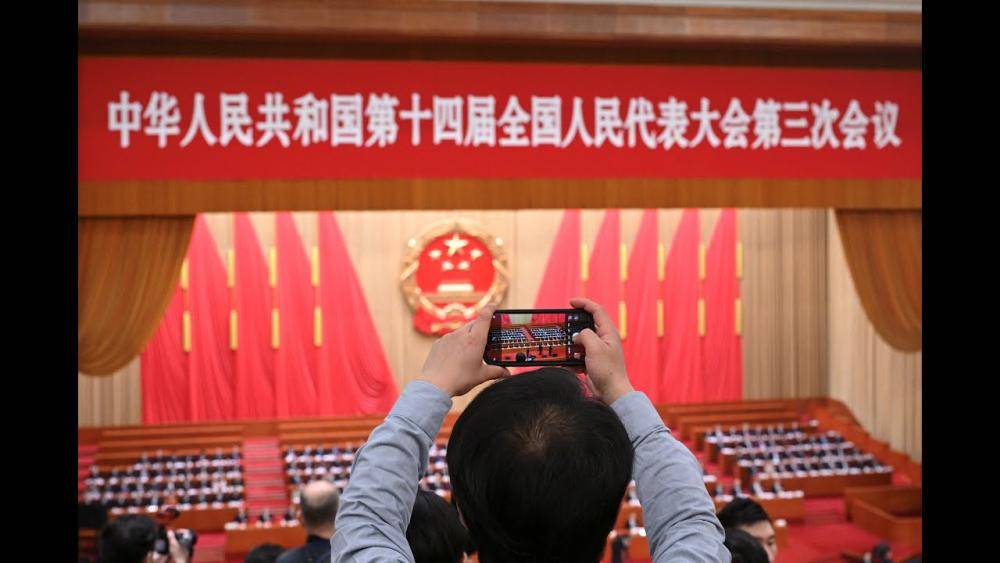
Good afternoon, ladies and gentlemen, or good evening. Depends where you are. If you’re joining us from Asia, welcome to Chatham House, or welcome back to Chatham House. I’m Dr Yu Jie, a Senior Research Fellow on China for our Asia-Pacific Programme. Now, today we’re going to discuss the “Strategic Vision or Strategic Challenge” on “China’s Leadership in a Multipolar World.” Really, judging from the two events has happened over the last weekend and earlier this week, Beijing has obviously entered its high season on diplomacy, with the two major events that potentially, decide a future of international order.
So, obviously, the – both event, itself, well, Xi Jinping send a very clear message, that is China casting itself as being the standard bearer for a multipolar world, led by non-Western countries. But really – this really setting a stark contrast on what so-called Western narrative of US-led liberal international order. So, both events are, really what I say, is a carefully planned and curated piece of political theatre, blended by diplomatic posturing, military strength and historical narrative.
Now, obviously, also in the Shanghai Cooperation Organization Summit, Xi Jinping also took the opportunity to introduce the so-called Global Governance Initiative, but the exact parameter and the contents and also, the amount of capital that would required remain unknown. I mean, really, judging from those two high-profile events, really serving as a powerful way for Xi Jinping to outline his vision of a multipolar world led by China, as Trump himself dismantled the pillars of an existing multipolar system and Beijing obviously, see a opportunity to reshape it.
But exactly how a multipolar world order led by China might look like and how both Western countries, but also non-Western countries, should respond on this? So, really, to walk us through on this very big, gigantic question, we’re much delighted to have three distinguished speakers from their own field to illuminate us today. So, I’m very much so privileged to have Professor Da Wei, and who is the Professor of International Relations and also, Director for Center for International Security and Strategy at Tsinghua University, join us from Beijing. And you might come across his writing at Foreign Affairs or The Economist magazine and he’s a leading light on – in China’s strategic community.
I’m also delighted to have been joined by my dear friend and colleague here, or Chatham House’s very own, Dr Chietigj Bajpaee, Senior Research Fellow for South Asia. A very keen watcher on China-India relations and India-Pakistan relations, at the same time. And last, but not least, as I – as far as I known, James Kynge is now stuck in the traffic, but he’ll be joining us in any second. I’m much delighted to have James Kynge, and one of the veteran Journalist who covered China in the last 35 years with the Financial Times and Reuters, return to Chatham House event. And by the way, James will formally join us next week at Chatham House, as well. So, aha, speaking of the devil, James, you just arrived on time over there.
Now, without really further delay, let me say, I will be the contributing Chair for the event today, and today’s event is not taking under the Chatham House Rule, which means it take place in the public. So, let me firstly, actually, turn to Professor Da Wei first, and obviously, given what we have and what have been presented in both in the Western media and also in the Chinese media, and also judging from the writings you recently have put forward, too, I would like to ask you, what are really China’s terms and conditions in leading a multipolar world order? I mean, will China be ready to take more responsibilities or devising more substantive diplomatic capitals in realising its global initiatives? I mean, whatever you would like to explain to us. So, Professor Da, the floor is yours.
Professor Da Wei
Yeah, thank you, thank you, Yu Jie, for having me. I also would like to thank Chatham House for having me. It’s a great pleasure. Yeah, I think we all watched the, you know, the two events you mentioned with great interest. That’s really something, I think, you know, in the process of shaping the international – multipolar international order, that’s, of course, some major events.
I will – you know, to respond your question, I will – first, I will – I want to emphasise that I don’t think China is going to lead the multipolar international world, or there will be a China-led multipolar international order, I don’t think so. I think China is one of the player who is shaping this multipolar, you know, international order. So, I think the US is doing that. I think India is doing that. I think Russia is doing that, and I think Europe could, you know, also contribute in its role in this multipolar world. So, it’s not one country – I think either – I don’t think any single country can lead that multipolar world, because this is a multipolar world.
And of course, we have seen in past several months, I think, accelerated speed, and China for decades, actually advocate for this multipolar world. And I think in recent years, the standard Chinese narrative, official narrative or rhetoric, of this is, we call it a equal and orderly multipolar world. So, that means – of course, multipolar world is – you know, China emphasise the equality. That is, you know, actually, all the sovereign country are equal. Actually, this is the point that President Xi Jinping mentioned in the Global Governance Initiative, right? This is the fourth, you know, global initiative that China has proposed and this is the latest one.
So, the first one is the equality of all the sovereignties. So, China, of course, emphasised this, you know, equal multipolarity, multipolar world. But at same time, I think it’s very important China add an orderly, you know, into this, an orderly multipolar world. So, that means, you know, if – we are all the, you know, the scholar of the IR international relations, so actually, this is IR international relations 101, that if you have a multipolar world, probably this will be a more chaotic conflict in world. So, I think China have concerned about that, so China calls for a orderly multipolar world. I think China is playing a more, you know, active role, and what we have seen from – what we can see from these two events, and in the long run, I think China will continue to do that, particularly in past six mon – half a year, I think this change has been accelerating really.
So, of course, China need to contribute more, but I have to emphasise this is a long process. Yeah, it’s not a – it’s not something we can achieve one day and it’s not – or one month, one year. I think it takes, you know, at least a few years, and also, it’s depends on other players’ attitude. So, if all the major players all believe that we are marching towards a real – a multipolar world, and also, try to behave in the multipolar, you know, way, rather than bipolar, rather than, you know, bloc politics, then we are moving towards – we will march towards this multipolar direction. But if not, if, for instance, if the US believe, or if the US and Europe believe, this is a bipolar world, the West versus the rest, or, you know, democracy versus autocracy, then probably, we will have a bipolar world. So, China cannot dictate that trend, so that’s a multipolar proc – a – yeah, a multipolar process.
With that, I think I should pause and – but I look forward for our further comments and discussions. Yeah, thank you.
Dr Yu Jie
Okay, just very – one quick question for you. I mean, I heard what you said regarding that China would prefer to play an even greater role. Does that also including that China want to realise its Global Security Initiative to become – getting more involved in the regional conflict in immediate neighbourhood?
Professor Da Wei
I think China’s worldview is very much like – oh, I – sometimes I call it a very traditional one. So, we look – I think China’s interest is, basically, focused in the, you know, cu – you know, periphery area of China. So, China is more interested in, you know, dealing with the, you know, for example, the conflicts in our neighbouring countries, like, for example, Cambodia and Thailand recently, China played a role, and China played a role in Afghanistan, right? So, China is very much interested in that and China, of course, watched the development of the situation in the Middle East and in Ukraine with interest, but I don’t think, as I argued in my Foreign Affairs article, I don’t think China is a major player in that.
And I think you asked whether China is willing to do – to play a bigger role? Yes, of course, of course, but do you have the resources, do you have the determination to really play a key role in, you know, somewhere like Ukraine or like the Middle East? In the short-run, I will say no, I will say no, but of course, in the long-run, who knows? But now, at current phase, I think in Asia-Pacific, or maybe you can say Indo-Pacific region, I think China is more active and will be even more active.
Dr Yu Jie
Okay, we’ll leave that for now. Let me turn on Chietigj. I think we have discussed this in the office endlessly, regarding are we going to see a more co-ordinated foreign policy between Beijing and New Delhi? And we – as we recently argued in the foreign policy, that we probably will see more convergence on Chinese and Indian foreign policy. Now, obviously, what I’ve noticed, there’s some sense of differences when you read the both statements posed by Beijing and by New Delhi regarding how the international order should be organised, and China obviously emphasis on the global multipolarity, whereas India has emphasised on Asian multipolarity. And are we seeing much differences in here, or are we going to see a continuous convergence between China and India on the way – on the conduct of diplomacy in this case?
Dr Chietigj Bajpaee
Thank you, Yu Jie, and it’s great to be having this discussion after several important geopolitical developments in the last few days. So, there has been a lot of discussion and analysis in recent days about the meeting between President Xi and Prime Minister Modi in Tianjin, and what it says about the state of the China-India relationship. But I think what hasn’t been discussed as much is what does it say about both countries’ worldviews? Which is what I think you’re, you know, alluding to in your question, and this is what we wrote about in the foreign policy piece that we wrote and also, the research paper that we published together earlier this year.
And the point here is that China, like India, favours a more equitable distribution of power in a multipolar global order. Both countries see themselves as leaders or voices of the Global South. Both are self-professed civilisational states and given their strong anti-colonialist or anti-imperialist sentiments, they’re both countries that are highly sensitive to any attacks on their status or sovereignty. And we’ve seen this convergence of worldviews manifest in several areas, whether it be their engagement with weak or non-democratic regimes, so whether it be development imperatives taking precedence over climate concerns, whether it be their voting patterns in the United Nations.
But so far, what we’ve seen is that both countries have really pursued these goals in parallel, rather than in co-operation with each other. And the question here that arises is whether the bilateral meeting that we just saw between President Xi and Prime Minister Modi and the SCO Summit are signs of a potential shift towards greater alignment in both countries’ worldviews. And I think there are some nascent signs of this. You know, if we look at the readout of the meeting between both leaders, they both, and I’m quoting here, “India and China both pursue strategic autonomy.” That was one point that was made. They also stated that their “relations should not be seen through a third country lens,” and that – and “the important role of both economies in stabilising world trade.”
And then the SCO Summit itself, I think made it even more clear and abundantly clear that Beijing, New Delhi and the other SCO member states have aligned interests, particularly given that – the pressure that they’re facing from the United States. And this was, of course, reflected in the Tianjin Declaration, and I’m quoting here, “Member states oppose unilateral coercive measures, including those of an economic nature that negatively affect the global economy,” which is essentially, criticising the Trump administration’s reciprocal tariff policies.
So, I think there are signs of convergence, but that being said, India doesn’t want to replace a US-led global order with a China-led regional or global order. And again, this was made abundantly clear with the readout of the Xi-Modi meeting. The Indian readout referred to a ‘multipolar world’ and a ‘multipolar Asia’ and as you said, the Chinese readout of the same reading referred to a ‘multipolar world’ but made no reference to this idea of a multipolar Asia. India, of course, does not endorse several Chinese global initiatives, most notably the Belt and Road Initiative, and I think it’s notable that Modi attended the SCO Summit in Tianjin, but not the military parade in Beijing. Which I think reflects an attempt by New Delhi to maintain the semblance of what it would call a balanced foreign policy. It wants to be – mo – it wants to move closer to China and Russia, but it doesn’t want to distance itself from the US and the West. And this is in line with its longstanding position of strategic autonomy, of being a non-Western, but not an anti-Western, power. And it wants to be an independent pole of influence in the international system, rather than some sort of swing state in a US or China-led global order.
So, I think there are limits to this convergence of their worldviews, given their differing interpretations of the multipolar global order, but let me stop there.
Dr Yu Jie
Okay, just a quick question to you, then. Obviously, I hinted what you were saying is India will continue with its sense of non-alignment movement and non-alignment foreign policy, as in the past. But what if, suddenly, Donald Trump decided to drop the tariff imposed towards India, drop that 50%? Are we going to see a re-emergence of that US-India close partners, in this case?
Dr Chietigj Bajpaee
Well, I think the India-US relationship remains sticky and what I mean by that is it’s a very well institutionalised relationship, and the US remains a key technology, strategic defence partner for India. India conducts, for instance, more joint military exercises with the US than with any other country. You know, there are ten times as many Indian students studying in the United States than there are in Russia, for example, and there are several, you know, other examples that one can note on how, you know, well, I guess, institutionalised or integrated that relationship is.
So, India is not going to abandon that relationship, but I think the shine has clearly come off that relationship. The – you know, I would perhaps refer to it as an irrational exuberance that existed in – when Trump was sworn in for a second term in January. I think India was among the most positive countries about that relationship. Modi, of course, was the fourth world leader to visit Washington after Trump’s inauguration. I think that irrational exuberance has faded. This belief that India maintains some sort of special or privileged relationship with Washington, or that Modi and Trump maintain that – some sort of special relationship, I think that has faded, but I think India still continues to see the US as a key strategic partner.
Dr Yu Jie
Thank you. Now, I’m back to home turf. Give a bit of time for James to take a breath, take a rest. Now, James, now I shall come to you. Obviously, you have covered China in the last 35 years of your journalistic career, and China’s relationship with rest of the world, and you just returned from Berlin recently. Really, after seeing Beijing’s two showpieces event from Europe, would you actually consider that European political elites would actually double down the derisking strategy against China, will continue on that path? And also, do you think that Europeans feel naturally more – even more worried that President Putin seems to feel quite pleased about this come out party, not just with China, but also with United States, back to two weeks ago?
James Kynge
Thanks very much, Yu Jie, great questions. Yes, my feeling about this, first of all, is that this event in Beijing had big repercussions throughout Europe. I rarely remember, on a personal level, being contacted by so many people. This was a big moment in – everyone watched it on TV, read about it in the newspapers, and I think the sense of China’s military might came over extremely strongly. And that is because many of the technologies being displayed are either new to China or new to the world. So, that’s the – I think that’s the first point to make.
The next one is, well, how will Europe react? Will they double down on, you know, some of the tariff policies that they’ve had? Will they double down, as you mentioned, on this ‘derisking’ idea? My sense of this is that it will be very difficult for Europe to do that, and I give a few reasons. The first is that as this military parade of Xi Jinping showed, China is moving ahead technologically at what can only be described as warp speed. This is not only in military technologies; it is pretty much across the board in civilian technologies too, with a few exceptions, such as semiconductors, but even there, China is making ground.
So, I think, you know, there is a question in the minds of many in Europe, the big companies, the policymakers and the Journalists, public opinion, and that is that to what extent is technology destiny in a world driven by geopolitical forces? My own view is that it is, to a very significant extent, going to shape the destiny between China and the rest of the world. And what I mean by that is that let’s take Europe, for example, who are the biggest power brokers in Europe? It has to be the big European multinationals, such as the big German companies and big companies from other countries across Europe. These companies all have very large lobbying power in their home countries back in Europe and they also have very major commercial interests in China. And so, therefore, they – their interests are aligned with China, not against China, and they are becoming, effectively, a bulwark for pro-China policies back in Europe.
And so, when we think about whether or not Europe will be able to derisk from China, effectively to put in policies such as increased tariffs or a, kind of, security of supply policies, then I think the answer is well, yes, of course it’ll happen to an extent, but we are very unlikely to see any kind of sharp rupture between Europe in China. Even though, looking at this military parade in Beijing, there’s no question that many European leaders and policymakers across this region are quite perturbed at the rise of China’s military strength.
So, my first, kind of, basic answer to your question is, this military parade and the show of diplomatic strength that Xi Jinping put on has certainly perturbed government opinions across Europe. But I don’t think that there will be many follow-up policies, because China as a market, particularly for Europe’s leading companies, remains absolutely crucial and those leading companies have enormous lobbying power across Europe. So, that – I think that’s my first reflection.
Dr Yu Jie
So, in a way, you mean that it can now makes triumphant over security and triumphant over ideology, to a large extent? Is that what you’re trying to say?
James Kynge
I think that is certainly the case.
Dr Yu Jie
Oh.
James Kynge
If you look at the pre-eminence of economics, you know, across Europe, you’ll see that. Obviously, every country is concerned about their economic growth. They’re also concerned about job creation at a time when AI is beginning to have an impact on job markets across the region. But much more importantly than that, they’re concerned about losing the technological lead or losing technological pre-eminence to China. Let me give you a very concrete example that I think crystalises what I’m trying to say. We all know Volkswagen is a big German company, it’s got very major operations in China, but Volkswagen’s global R&D centre for electric vehicles is not in Germany, it’s in China. So, China is becoming essential as a place where Europe’s – some of – most of Europe’s leading companies now go not only to sell stuff, but to gain the expertise through which they can, hopefully, climb the technology ladder themselves. And that’s what I mean about technology being destiny in geopolitics these days.
Dr Yu Jie
Thank you, that’s brilliant. Obviously, what we have not touched upon is the elephant in the room, that is to say the United States. Now, really, what I’ve read, when I read what Donald Trump said, “Please give my warmest regard to Vladimir Putin and Kim Jong Un, and you conspire against the United States of America.” I wonder, how does Trump think – looking to this and thinking about the military parade, thinking about the party, the so-called ‘anti-West party’ held last weekend, would actually President Trump change his isolationist foreign policy on rotation after seeing a clear message being sent from Xi Jinping that he’s really want to leading alternative international order? And then, what that would be the responses? Are we going to see a shift in Donald Trump’s foreign policy? Anyone want to give a try for this one? Da Wei, you’re on mute.
Professor Da Wei
Yes, okay. Yeah, maybe I can try to answer this. I think we don’t know – of course, President Trump is someone we can – you can – we can hardly understand sometimes. But I think he’s someone don’t want to be as weak and a loser, right? So, if – based on what we have seen on TV and based on what we have discussed, I think he may have two feelings. First is China has shown a very strong military capability, but President Trump won the war, believe that the US is the strongest military power.
Secondly, he viewed that Putin was in Tianjin – sorry, Modi was in Tianji, Putin and Kim Jong Un in Beijing, and other – you know, the 20 – more than 20, you know, state leaders, so China shows the diplomatic, you know, capability. So, while he feels that he had difficult time with India now, he had – he – I think a deal with Putin, I mean, it’s not very easy and he want to – he tweeted that he want to meet with Kim Jong Un, but so far, there’s no respond, an informal respond. So, from that regard, I – my guess is his feeling will not be very great, watching all this happen. Then what is he going to do? I guess he may show some, you know – tactically that he can do something to show is power, his strength, he’s tough, you know, he’s under control.
So, my feeling is not very good. I think probably, he will do something harsh to, I don’t know, to China or to India or to Russia or to North Korea, but he may do something to show that he is a, you know, winner, number one. But I don’t think that can change the US policy, or I mean, his policy, or MAGA’s tendency to become more isolationist, I don’t think so. That’s – I think that’s a deeply rooted, you know, belief among many, many MAGA people, including President Trump himself. So, he – I think his, you know, characteristic is he can do something in the short-run. He may want to show the US power, maybe in, you know, in one/two weeks, then after that, you know, he may, you know, shift his focus to other issues. So, I don’t think he can implement a long-term shift of the foreign policy of the MAGA people or his administration, I don’t think so. Yes, this is my…
Dr Yu Jie
Okay, let…
Professor Da Wei
So…
Dr Yu Jie
Yeah, sure. Let’s stay on China and North Korea for a second, ‘cause I know, you and I, we spoke extensively…
Professor Da Wei
Yeah.
Dr Yu Jie
…on this issue recently.
Professor Da Wei
Yeah.
Dr Yu Jie
And also, what we have seen so far, that seems, to Beijing now, become far more proactive than compared with past, after seeing Russia and North Korea some – stitch something behind its back. So, are we actually going to see a more proactive co-ordination between China and the United States on the DPRK front?
Professor Da Wei
To be honest, I doubt. That probably, well, depends on the interaction between China and the U – the United States, particularly at the presidential level. I mean, we are all waiting for the potential China-US summit, I mean presidential summit. I think the mainstream believe that it could happen maybe in late October. If so, if they have a very good summit and if the US and Chin – and particularly the US that told – that tell Chinese that maybe, “Can you help us to,” you know, “to,” kind of, “broker this relationship between China and the – between the US and DPRK?” China then could play a, maybe a active role. If that not – if that won’t happen, I don’t think so. I don’t think China will be very – of course, China will try to strengthen its relations with DPRK. I think in past few days, particularly aft – past few years, particularly after the pandemic, I think China-DPRK’s relations, I think were, how to say, were not very, very, you know, not very active, at least.
So, maybe now it’s time that China believe that we can, you know, we can strengthen these bilateral relations, but I don’t think the purpose of this strengthening of the bilateral relations is for better DPRK-US interaction. I think it’s just purely for China-DPRK. But if the US, you know, send a signal to China that this is something, really, we can – China-US can co-operate, then China may willing to play some role, to play a more important role. But it depends on how the – how well the China and the US – Chinese and American Presidents interact in the coming months.
Dr Yu Jie
Thank you. Chietigj, would like to add, how are we going to foresee US might turn into India on this?
Dr Chietigj Bajpaee
Yeah, so, I mean, you – returning to your question on how, yeah, President Trump’s – you know, if we see a change in his isolationist foreign policy after recent developments. I mean, I think Trump is – Trump’s foreign policy is, essentially, creating a self-fulfilling prophecy. So, given the – his erratic transactional value-neutral foreign policy, not drawing a distinction between allies and adversaries, Trump is, essentially, encouraging the very multipolar order which he’s seeking to discourage. So, for example, you know, he’s talked about imposing tariffs on BRICS member states if they pursue so-called “anti-American policies.” But in weaponizing trade, he’s encouraging countries to develop alternative payment systems, you know, aimed at bypassing the Western control, global financial infrastructure.
Countries are increasingly trying to settle bilateral trade in their own currencies. We see countries, including China and India, working towards diversifying their export markets to reduce their dependence on the US. We’re seeing, you know, forums like the SCO and the BRICS, working more closely together. We saw, this year with the SCO Summit, and next year when India hosts the BRICS Summit, we’re also likely to see similar momentum. So, as, you know, as I said, I think Trumpism is inadvertently encouraging multipolarity.
On whether – on your question on whether these recent developments would prompt Trump to change his foreign policy approach, well, I mean, anyone who claims to be able to read Trump’s mind is lying. So, it’s a – but I think domestic developments within the US, rather than global developments, like the SCO Summit or China’s military parade, I think that will have a far larger impact on potential shifts in foreign policy. So, I mean, if I take the example of the recent 50% tariffs which have been imposed on India last month, you know, we’ve seen a number of US Government – former Government Officials across the political ex – spectrum in Washington, come forward in the last few weeks to express concerns about what the Trump administration is doing in terms of undermining Indo-US relations. And, you know, whether Trump chooses to act on this, I think remains to be seen, but I think, ultimately, it’s going to be Trump’s approval rating, the state of the US economy and the outcome of midterm elections which is going to dictate whether we see a shift or a course correction in Trump’s foreign policy.
Dr Yu Jie
Okay, James, how does this so-called transatlantic alliances that has been emphasis so much in the past eight decades or so – are we going to see a revival if Trump suddenly decided to turn it into a more – less isolationist approach on his foreign policy?
James Kynge
Well, as the other speakers have said, it’s really very difficult to judge what Trump intends, and even if he was to espouse, you know, a less isolationist policy, could we really trust him? I feel like it would take some time before European partners would be willing to, you know, to really embed their relationship with Trump. I think at the moment, most of the focus is on damage limitation. They’re all – European leaders are trying to seek, you know, a reduction in tariffs. They’re trying to, you know, to prevent more, you know, punitive trade policies coming Europe’s way.
So, if you ask me, I think this is a, I would say, a structurally hamstrung relationship now for as long as Trump is in The White House. I think the level of trust in Europe, and as you mentioned, I’ve just spent three months in Berlin, I think the level of trust in Europe towards Trump is, you know, structurally hamstrung. That’s a polite way of putting it. So, to me, I think that we’re just going to be in this dance until the end of the Trump presidency, of trying to minimise the damage, while looking for other opportunities around the world.
Dr Yu Jie
Thank you. Now, I’m going to turn the audience for the questions. So, feel free to pose your questions in here and I will pick and choose and to see whatever it fits in the general conversation, as we go with the flow. And now, I’m having a conv – a question from Philip Entwistle. His question is largely focusing on China-India in terms of its rapprochement and its long-term relationship with Pakistan. Now, I’d like to turn that way, ‘cause obviously, China’s invested billions within the China-Pakistan economic corridor, through the Belt and Road Initiative, and also play some, kind of, semi-security role at the same time. Are we going to see a more difficult relationship between China and Pakistan, even though given that we have a temporary reset Beijing and New Delhi?
Professor Da Wei
I don’t see any reason that China and Pakistan will have more difficult time ahead. I think China need Baki – Pakistan and for different reason, Pakistan needs China, and China-India, of course, the bilateral relations is, kind of, you know, reprove – you know, improving now. But I don’t think China and India – I think our colleague, Mr Bajpaee, already pointed out we have a lot of differences still there between China and India. So, the structure, I don’t think the structure will change. I think China-Pakistan relationship is, basically, a – you know, we are close because of the structural issue. It’s a, kind of, trilateral interaction between India, Pakistan and China. So, Ind – I think, you know, India-Pakistan relationship will continue to be difficult. China-India, we’re improving, but I don’t think we can solve the structural problem overnight. I don’t think we can solve it in foreseeable future. So, I don’t think China-Pakistan, you know, will have big problem ahead.
Having said that, I do think – we have a lot of problem in our relations with Pakistan, I believe. I mean, like, security issue, I mean, terrorist issue, and I – for me, personally, I think we lack the people-to-people understanding between Pakistan and China. So, we don’t – the two government are very close, but the two peoples are not close enough. We don’t know each other, particularly, I mean, for Chinese, we don’t – well, I think ordinary Chinese, we don’t know Pakistani people very mu – very well. So, there’s – all this limits China-Pakistan relationship. I hope we can overcome those problems and, you know, improve our relations with Pakistan further, but without put the China-India-Pakista – India relationship at expense.
Dr Yu Jie
Chietigj, how does that seems from your eyes?
Dr Chietigj Bajpaee
Yeah, I think – I mean, the readout, again, from the Modi-Xi meeting that took place last weekend, I mean, it said that their re – and I’m quoting again, their “relations should not be seen through a third country lens.” And I think that was equally aimed at the China-Pakistan relationship as it was at the India-US relationship. So, I think it indicates efforts by New Delhi and Beijing to try and re-compartmentalise the bilateral relationship. So, essentially, the formula that existed from 1988 to 2019, which was we shelve contentious areas of the bilateral relationship and continue to deepen the relationship, I think there’s an attempt to try and move back towards that formula.
But I think, as we heard from Professor Da, I think it’s easier said than done. Beijing does maintain this ironclad or all-weather relationship with Pakistan, which became very evident during the most recent period of hostilities between India and Pakistan. Over 80% of, you know, Pakistan’s arms imports over the last five years have come from China, and we saw this very much in action during the hostilities, you know, the use of – Pakistan’s use of J-10 fighter jets or PL-15 air-to-air missiles in combat operations against India. There are, you know, reports that it provided real-time intelligence, Beijing provided real-time intelligence to Islamabad during the hostilities.
And so, I think it is a – that is going to remain a key – a thorn in the relationship, and it speaks to a broader point that frictions in the relationship are not merely about lines on a map, about a contentious border. It’s also about how India perceives China’s role on the Kashmir issue, which is a key issue of sovereignty for India, and how China perceives India’s role on the Tibet issue, which is, obviously, a key sovereignty issue for Beijing. So, I think, yeah, that there remain several fault lines in the bilateral relationship.
Dr Yu Jie
And obviously, interesting enough, Shanghai Cooperation Organization is the only gon – organisation, regional organisation, that both Pakistan and India are members. Right, okay, there are more questions in here. Gosh, there’s so many. Now, I’m going to angle this into more the European angle in here. I’m going to take a question from Fernbera [means Finbarr] Bermingham from South China Morning Post. Now, this question is directly to James in here. So, if you’re a European leader watching the whole events in Tianjin and Beijing this week, concern would you have? So, James, obviously, you laid out earlier very clearly on this gigantic technology development that Beijing is able to have made through the Made in China 2025 and various other initiatives. So, would actually this, also, the diplomatic pole, that the fact that Beijing is able to assemble that many countries to be on their side, be a matter of concern for Europeans as well? You’re on mute, James [pause]. James, you’re on mute.
James Kynge
Sorry for that. Sorry for that. Thanks, very much, Yu Jie, and thanks, also, to Finbarr, a very good question. To my le – my feeling about that is which is the most, kind of, impactful in the minds of European policymakers, the diplomatic strength that China is exhibiting, or the military strength? I would say the military strength is the most impactful, intrinsically because China is showing itself to be an extraordinarily powerful military power, with a whole load of new hardware. Obviously, the hypersonic missiles, but also, those new-age drones that were on display, plus all the long-range nuclear weapons. I mean, this had a really big impact, I think, not only among European policymakers and government officials, but also among ordinary people watching this parade in Europe.
But to me, the more important demonstration was not of military technology, but of technology per se, and I think this is the really undeniable source of China’s geopolitical power and strength. It is the fact that in almost all technologies now, China is either leading the world or a peer competitor to the technological leaders, and in most cases, China is able to make technology cheaper, faster, and, you know, and the supply chains that support that are pretty much unassailable. So, I think, at least when I watched the parades, that was the thought in the back of my mind, is that this military parade shows China’s military expertise, but much more than that, it shows China’s arrival as what I consider to be the world’s leading technological power. And therefore, I think this will reverberate through Europe and around the world for many years to come.
Dr Yu Jie
Thank you. Any additions on this question regarding China and Europe, if anyone would like to add in the question? Otherwise, we’ll move to something else, instead. Professor Da, would you like to add in certain things on China and Europe? I know you have your own versions of interpretation, as well.
Professor Da Wei
Yeah, I think China-Europe, I think it’s really depends on, I think, European countries need to think about that more. You know, to be honest, I think profoundly, or, you know, honestly, I think China, of course, want to – want a much better China-Europe relations, given the backdrop of the very difficult China-US relationship. But I do believe that – you know, I travel to Europe a lot and also, talk to European colleagues a lot, I do think most of my European colleagues still live in the old time. Sorry for this, you know, blandness, sorry for the frankness. I think still, kind of, you know, living in the old, as I said earlier, you know, democracy versus autocracy, this dichotomy of the worldview. The US policy has changed so dramatically and it’s not only the policy. I think it’s not about Trump. I think the country is moving towards the other direction, but I think my – many of my European colleagues still waiting for the US to return to be a normal, you know, a normal country, as it was in the past. I’m not saying the US is not normal, I’m – but I mean, they will not return to the old time.
So, we are moving towards a multipolar world, and I do believe Europe can play a key role there. But a multipolar world is not only the, you know, the more evenly distributed – distribution of power, it’s about policy agenda, it’s about the diversity of the policy agency, it’s about diversity of institutions and even values. I think if – from that perspective, I think Europe and China can have a stronger relationship, but I feel sorry that during my, you know, discussion with my European colleagues, I think a lot of them still view China from that old, you know, dichotomy of the worldview. And I think this is not very healthy, but of course, I’m biased, I’m Chinese, so – but I love to offer my honest view on this, yes.
Dr Yu Jie
Well, thank you for this candidacy. And obviously, this – so, when you mention about ‘multilateral institutions’ and when you mo – mention about ‘multipolarity’ and, you know, the ‘diversity of institutions’ in here, now, I’m going to this question by Stephen Brandon. And his question is, “With next-level emerging power seeking to return to the UN or G20 fora, for the participation of global leadership,” so, obviously, “are we going to see increasing participation from China or from other non-Western countries into the United Nations and into the G20 to shape the agenda according to their own terms and preferences?” And this time we’ll go to Chietigj first.
Dr Chietigj Bajpaee
Well, I think we’ve already seen indications of that. We very much saw that with India’s G20 presidency in 2023, where, you know, this was framed as, in some ways, as “India’s coming out party.” India tried to offer so-called, what it referred to as “Indian solutions to global problems,” so whether it be on global health, on climate, on digital public infrastructure. It, of course – it has also tried to project itself as a leader or what it refers to as a “voice of the Global South.” It facilitated the entry of the African Union into the G20. So, I think it does want to have a seat, as does China, as do other emerging countries or powers, at key rulemaking institutions.
And I also think there’s an element of status seeking as part of that. You know, India’s never-ending quest for a permanent seat on the UN Security Council, for instance. So, whether it be that or wanting to host the, I think it’s the COP Climate Change Conference in 2028, or host the Olympics in 2036, I think there is this constant quest for greater status, greater recognition, but also, as a more substantive component, that it wants to have a seat at key rulemaking institutions. I think that that is a common thread in, sort of, India’s foreign policy approach, but also that of China and other emerging powers.
Dr Yu Jie
Bring Professor Da Wei on this, because Beijing has introduced all these so-called ‘global initiatives’ and it was all the participations with the stamps of the United Nations with – you know, into it. So, are we actually going to see that United Nations be more under the – stronger and greater influenced by China or by many other non-Western countries in this sense? And that is to say the advocacy of development rights, the advocacy of the economic development, become more important than, for example, the stress of the individual rights, in this case?
Professor Da Wei
Yeah, I think that’s a tendency. I think that’s a tendency that the emergence, not only China, but other, you know, countries, like India and other Global South country, I think that’s an inevitable trend. But the question is, can you still keep UN and other – you know, those institution in which, you know, Global South country and developing country playing a bigger role, can you keep all those institution still relevant? I think this is a challenge. I mean, of course, China want developing country, including China, play a bigger role, but at the same time, you still need the UN to play a centre role, but I think one of the – I think Re-N – UN and other related agencies, their role has been declining, I mean, in recent years, and they – it has a lot of problem and I think the US is trying to marginalise many of the institutions. It withdraw – withdrew from many of those institutions. I think one of the reason, probably, is the US and the West feeling that it cannot control the institution.
So, those multilateral institution were created by the United States and by the West, at that time, I think the US can have its hegemony through these multilateral institutions. So, US – when we say the US is a, kind of, we call it ustit – ‘institutional hegemony’, right, it want to achieve its hegemony through the institutions. But now, if the institution become more, you know, more multilateral, become more representative of the developing world, so then, what about hegemony? What about the – or use another, you know, word, what is the lea – where is the leadership of the West? So, it – then it - those institutions could become more and more marginalised. So, that’s a dilemma, that’s a dilemma. If it’s not in the centre of global Governance, if those institutions cannot be at the centre of the global governance, so then, I think the – you know, more representation of the developing world will be less relevant, you know. So, this is a challenge, dilemma, I will say.
Dr Yu Jie
Thank you for this. James, any additions on this question?
James Kynge
I would very much agree with what Professor Da has said. I think what we’re moving into now is a fragmented world. Rather than the replacement of the Old World Order by a New World Order, but led by China, or to some extent, led by China, I think where we’re heading is a fragmented world in which there is significant flux and chaos between these multilateral organisations. Some of them will do well, some of them will be riven by internal divisions and divisions among their members. Some of them will be putting on a big show and pretending to be strong and pretending to be moving forward, but behind the scenes, the divisions will, ultimately, hamstring them. So, I think that’s the type of world that we’re moving into now.
And I think it’s an interesting question as to ask, okay, so if diplomacy becomes more fragmented, then what really will move the needle in terms of international relations? And here, I think we’re moving back to a world where might is right. So, obviously, military strength will be very important, but also, commercial strength, and I mean that in the sense of being able to lend to countries. We haven’t mentioned the Belt and Road Initiative yet on this call, but China has lent US $1.34 trillion to countries around the world for building infrastructure, whether they be airports, roads, bridges, dams, whatever you would like to name. That is power that really makes sense to countries around the world.
Now, I’m not suggesting that the Belt and Road Initiative has been without its problems. There are many problems, and I think the latest – one of the latest numbers given by the Rhodium Group is that about 78 billion in loans made to developing countries are now not being repaid. And that was over a three-year period between 2019 and the end of 2022. I understand from sources that the level of bad loans within the Belt and Road Initiative is rising very sharply, indeed. So, I’m not saying that the Belt and Road Initiative is without problems. What I am trying to say is that in the conditions of a fragmented diplomatic order, what really matters is a country’s ability to project power militarily and also, through meaningful economic strength. And I think that China has both of those, as we’ve seen with the parade and as we are seeing with the Belt and Road Initiative lending to build infrastructure all over the world.
So, my summary is that the US world order is really facing an El Dorado. It’s facing a pivot point, and if the Trump presidency cannot rally and start to show America’s appeal and America’s power to the world, then I think US power will continue to atrophy from now on.
Dr Yu Jie
Well, if I stay on the projection of power for one moment. Obviously, we – in panel, we’ve mentioned the economic cra – economic statecraft and the military mind. But another element in here is regarding soft power, is regarding people-to-people exchange, and earlier, Chietigj, and also, Da Wei, mentioned we got a lack of the people-to-people in China and with various South Asian countries. Now, my question, and also, this is a question from Amelia Foster, is, really, “To what extent do you see people-to-people relations impact on China’s relationship internationally? And why” – and perhaps “China may seek to improve this or not improve this?” Anyone want to give a try? Da Wei?
Professor Da Wei
Yeah, I’m – I am a long-time advocate for people-to-people tie. I think that’s very important for, you know, for a deep understanding of the two countries or, you know, different countries. And also, it’s a – something foundation of the, you know, healthy, solid, bilateral relations. Having said that, I won’t acc – exaggerate the people-to-peop – or I won’t link people-to-people tie directly to the soft power. I think sometimes you have very strong, you know, people-to-people tie. For instance, China-US, we have, you know, pretty good people-to-people tie. We have 300 – almost 300,000 Americ – Chinese students studying there, and China, a lot of, you know, tourist go to Japan every year. So, we have people-to-people tie, but the bilateral relations are very, very difficult.
But I think soft powers, the core of the soft power, I called a narrative power. The narrative, I think this is very important thing. I think it’s not a – it’s not just a we to talk to each other, then we like each other. I mean, the narrative in our mind is, I think is the key. While, in this narrative power or discourse power, I think the West has been dominated in past 500 years, the – I don’t think that can be changed very easily. I don’t think China can change it. Maybe China – some people in China want to change it, but I don’t think it’s a easy job. It – you need a very long time, you know, research and the cultivation of your philosophy and your, you know, science – political science ec – in economy – economics and other issues. You need to – a set of narrative of your belief, of your value, of your economic and political system. In that regard, I think China has long, long way to go. I don’t think any country can replace the Western dominance in that regard.
So, because you lack that kind of discourse power, because you lack the soft power, China will also be – and at the same time, you are very powerful in terms of your hard power. Then China will be always criticised for you have very strong hard power. Nobody blame the US for having hard – you know, strong hard power, because they enjoy the soft power for very long time. So, I don’t know how to change that situation, but this is my view on this, yes.
Dr Yu Jie
Well, I mean, that’s a view I long held myself, as well. Chietigj, any addition to this?
Dr Chietigj Bajpaee
Yeah, I think – I mean, the role of soft power, or maybe what we – the West and the US had called, you know, sort of, value-driven foreign policy, I think that has weakened somewhat, particularly under the Trump administration’s more transactional or value-neutral foreign policy. I mean, again, I would point to the example of the India-US relationship. I mean, one of the strong – sort of, the foundations of that relationship was this claims of a bond between the world’s largest and the world’s oldest democracy. So, that narrative has clearly faded under the Trump administration. And also, as part of that, this idea of India as some, sort of, counterbalance to the rise of China, I think that has clearly weakened. So, I think the – at least the, sort of, the value-driven component of foreign policy in US foreign policy is clearly weakened and that, obviously, gives space to other countries to perhaps fill that void.
Dr Yu Jie
Thank you. James?
James Kynge
I don’t have anything further on that.
Dr Yu Jie
Okay, well, James, staying there, there’s another question for you regarding Europe, regarding the European technology. So, essentially, this question is done by Lauren O’Shea and she asking, “What the ramifications for Europe if China wins the technology race with America? Should European countries embracing China’s technology or complying with unpredictable Trump?”
James Kynge
So, that’s a really great question and I genuinely think that we are going to be dealing with that question over the next decade and maybe for several decades to come. To me, the answer probably should include some of the following ingredients. One is to identify, first of all, where are Europe’s crucial security interests when it comes to technology? Would this be – would the definition simply be, like, basic infrastructure, such as basic telecoms, basic water, basic transport networks? Would it – or would it go further than that? So, that’s question number one. And then, I think, obviously, there has to be very significant attention paid to the security of those networks. Whether that security would be measured in terms of cybersecurity and data privacy or whether it would also include dependency, you know, dependency on China for supply. So, I think that’s the first question.
The next question is, how does Europe actually benefit from the rise of China as a technology power? We are see – starting to see some Chinese companies come into Europe and making big foreign direct investments. Notably in countries like Hungary, so far, CATL and BYD, but also in other countries, too. So, how do individual European countries, and I’m including the UK in this, try to benefit from the rise of China as the technological power in the passing lane? I think ea – all European governments should be seized with this right now.
And then, the third area I think that is important goes right back to what you asked me at the beji – at the beginning, Yu Jie, and that is, how does Europe meld a policy of derisking with China with benefitting from China’s technological emergence? And there are some early signs of how Europe intends to do this, and I think, you know, it’s interesting to look at this. For instance, Europe has come up with a Critical Raw Materials Act that was passed in May 2024, and this, basically, has a whole load of clauses related to the dependence that Europe has on foreign countries, in fact, it doesn’t mention China by name, but it’s clearly referring to China, to try to shore up its supply of crucial raw materials, such as rare earths and lithium, going forward. And what I was come…
Dr Yu Jie
James, sorry, sorry to disturb you. I like to – you to stay on the question on multipolarity. So, obviously, we were talking about technology. There’s the two strands of technology, types of technologies in here we talked about, there’s the different standards in the multipolar. So, are we going to see this going to a consta – a contestation of the two kind of technology standards together in terms – in a multipolar world?
James Kynge
I think we’re already seeing a contestation between two technology standards, or several rival technology standards. This doesn’t often come into the public because it’s – there’s a lot of money riding on the outcomes. But I think if we look at telecoms standards, let’s say, 5G, 5.5G or 5G-A or 6G telecoms, there’s a great deal happening behind the scenes, because China’s intellectual property is already dominating in those areas, and other countries, other companies, want to get a decent slice of the pie. So, I think that’s a fairly useful example of how – that, you know, from a legal perspective, the technological rivalry starts to play out.
Dr Yu Jie
Well, in that case, then, multipolar world that it is, and now, we’re still qui – not quite sure on who will actually take the lead, but instead, I think this is a conversation we must have to continue within Chatham and with what we have done on China and also things so far. So, thank you so much for all the audience and to stay online, and also thanks so much, again, for Da Wei, and – who spare your precious time with us, and together with my colleague Chietigj and James. And I look forward to see you next time at Chatham House webinar. Thank you so much.
Professor Da Wei
Thank you.