Katja Bego
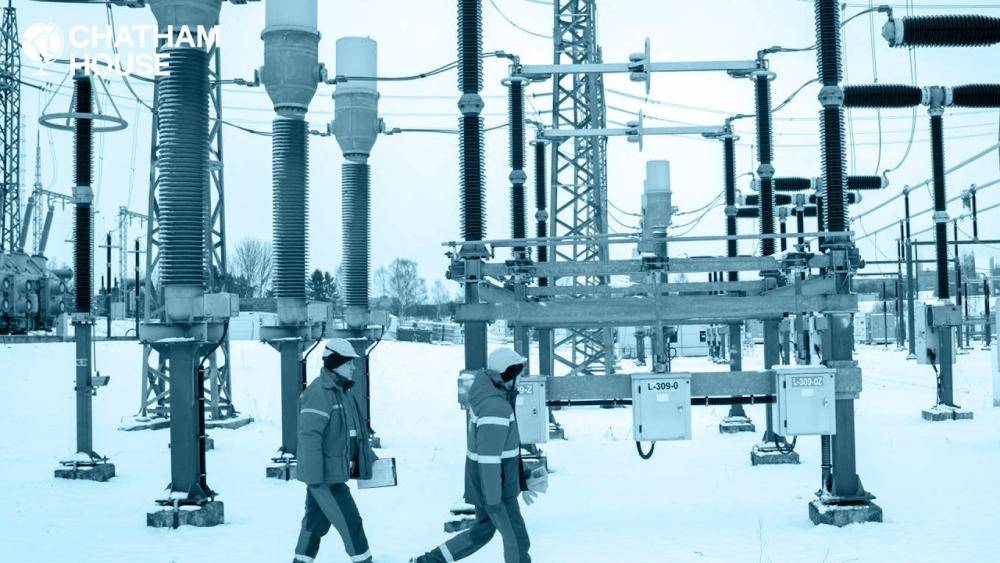
So, good afternoon, everyone. So, thank you for joining us for what’s, so far at least, the hottest day of the year so far, which I think is quite appropriate, perhaps, given the topic of today, ‘energy security’ questions, perhaps, as well, about Europe’s energy transition. Thank you very much for joining us. We have a good group in the room. As you’ve seen, we’ll also be livestreaming today’s event. In fact, I can see a really large group online, as well, so I’m imagining we’ll have some questions coming from that way, as well. So, today – so, to briefly introduce myself, I’m Katja Bego. I’m a Senior Research Fellow here in the Europe Programme at Chatham House. Joined today an excellent panel of speakers to talk about, basically, the lessons of Nord Stream and what’s happened in these, sort of like, four years since the sabotage of the gas pipelines.
So, how we’re going to run the session today is we have an hour exactly, so first, we’re going to have quick remarks from each of our speakers, then I use the Chair’s prerogative to ask some questions, as well, from the speakers, and then open up the floor to all of you and our attendees online. So, yes, without further ado, I’ll get into, sort of, the topic of today. So, I think the – we’re all familiar with the Nord Stream attacks, perhaps if you’re here now, but it was the, basically, Nord Stream pipelines, set of pipelines, that really formed, basically the Crown Jewel, right, of Europe’s and Russia’s energy engagement, or energy geopolitics in the lead-up, really, to the full-scale invasion of Ukraine.
It’s been a controversial project from the outset, that’s become quite symbolic, I think, perhaps, particularly of Western Europe’s perhaps strategic miscalculations when it came to the relationship with Russia, trustworthiness of Russia’s intentions. It’s also become, I think, beyond, after the pipelines were destroyed, about which there’s still some controversy, I guess, about who did that, but they have been out of order since, and Bojan will be speaking a little bit more about that and what we now know about who, in fact, sabotaged the pipelines, in a moment. But just some three thoughts from me to, sort of, set the scene for this debate about why this remains such an important topic beyond, sort of, the significance of the pipelines themselves.
First is, of course, this question of what this infrastructure presented, as well, for Europe’s, let’s say, kind of, strate – geopolitical position in the world and particularly Germany’s, which is, of course, one of the chief recipients of the gas went through the pipeline. Germany finding itself now in a position, perhaps, of having long been or build its economy and wider political model on being dependent on the US for security, China for production and Russia for cheap energy, and it’s now, basically, since 2022, lost all three, really, as a viable model. So, it is this, sort of, soul searching Europe needs to do and has – Nord Stream has come to symbolise that.
Second topic, a little bit that we’ll be discussing is this wider, kind of, a bit more specifics around Europe’s energy security issue since then, sort of, explain this attempt to move away, of course, from Russian energy dependence, cheap Russian gas and oil, but it’s the continent been replacing that perhaps with dependencies on other actors, right? Maybe on cheap LNG coming out of the US, Qatar, which brings its own vulnerabilities. And then, also the Nord Stream instruction, I think, this, sort of – the starting salvo in this wider debate that started since around the destruction, particularly of undersea infrastructure, energy infrastructure, data cables and the like. And we can debate who was behind Nord Stream specifically, but we know that since then, Russia, the Kremlin, has been a very active actor and potentially been involved in some of those incidents, as well. So, what do these incidents say about Europe’s ability to protect its critical infrastructure and what has it done since 2022 to strengthen that?
So, now let me introduce our excellent panel of speakers who are going to service different elements of that debate. So, I’ll start with Bojan Pancevski, who is the Chief Europe Political Correspondent for The Wall Street Journal and has recently, congratulations, published his book, ‘Nord Stream Conspiracy,’ that really digs into the specifics about what we now know, really, about who was behind the sabotage, which, of course, has been a topic of mush – much speculation for the past few years. I think a very rich analysis, as well, beyond, sort of, the specifics of Nord Stream, but also about the significance of what this attack has meant for, you know, basically, Ukraine’s position in Europe and other topics. So, I highly recommend it and congratulations.
Bojan Pancevski
Thank you very much.
Katja Bego
And next we’ll be hearing from Kalina Damianova, who is a Visiting Research Fellow at King’s College London in War Studies Department and is an expert, as well, in the, sort of, geopolitics of en – Europe’s energy security questions, Russia’s pipeline diplomacy and other very relevant topics for this discussion, who will be speaking a bit about how Europe has approached this topic since. And then finally, we’ll hear from James Black, who is the Deputy Director of Defence and Security at RAND Europe and Europe Lead at RAND Europe, who will be speaking about some of this hybrid warfare implications and the protection of critical infrastructure, particularly in the maritime domain.
So, thank you very much. So, if I can start with you, Bojan, for your introduction.
Bojan Pancevski
Thank you very much for the kind words. Nord Stream – the Nord Stream pipeline system was the largest offshore pipeline system in the world and to me, it was always interesting because it was, kind of, a embodiment in concrete and steel of a school of thought and policy in Western Europe and Germany in particular, about how to remove the possibility of conflict with Russia. And the idea was that economic entanglement and the, kind of, blessed effect of commerce would, as it did between France and Germany, sort of, abolish the mere possibility of entering another, kind of, bloody war with Russia, and Germany obviously had huge sensitivities about that, given its history.
And it’s very interesting that the authors of the attack on Nord Stream, the people who blew it up, actually held the opposite view. They felt that Nord Stream paved the way to conflict with Russia, and in my book, I explain – I try to, kind of, portray the attack on the pipeline not as a mere, kind of, singular geopolitical blip, but rather as a crescendo of a geopolitical process that took a – over two decades, I think, and ended up with the pipelines going up in smoke and with the full-scale invasion of Ukraine.
Now, who did the deed? It was an elite unit of the Ukrainian Armed Forces. The masterminds of the operation were extremely experienced Intelligence Officers who had served in various intelligence agencies and after the full-in – scale invasion, became embedded with the Armed Forces. They first participated in the Battle of Kyiv and when they successfully defended the capital, they focused on what they know best, which is special operations, fighting behind enemy lines, hybrid warfare, asymmetric warfare, economic warfare.
The motivation was very simple, they wanted to interrupt the cashflow that was feeding Vladimir Putin’s war machine against their country, and they felt, also, that breaking that geopolitical bond between Western Europe and the Kremlin and Germany and the Kremlin in particular, was essential to their struggle mid and long-term. In the short-term, they just wanted to prevent the cash from going to Moscow. And it’s worth remembering that long after the full-scale invasion and even now, the European Union is still – and individual countries, are still purchasing hydrocarbons from Russia, because, you know, hydrocarbon trade is a zero-sum gain you can’t just shift overnight.
The people who blew up Nord Stream set up a crack team of Soldiers and Intelligence Operatives and for the actual work of mining the pipelines, they had to use civilians. When services use civilians, they are called proxies. I’m sure we’ll talk about that in the context of shadow warfare and critical infrastructure. The proxy method is something that the Israelis perfected decades ago. They’ve been using Arabs and Persians in their operations in their own countries and now, increasingly, everyone’s doing it, Russia in particular, but also obviously, Ukraine and to an extent, the United States.
The proxies used were civilian divers. There were three in the operation to blow up Nord Stream. A fourth person joined three days before the end of the mission, and they are so-called deep-sea divers, or technical divers, people who can go 100m below the surface and operation it then – there, which is an extremely, kind of, hazardous and challenging endeavour, because you have to be able to breathe a mix of different gases. Oxygen becomes toxic at that level.
One interesting bit that I reveal in my book is that the Nord Stream operation was part of a larger mission to blow up Nord Stream and TurkStream at the same time. So, they launched two sabotage teams in parallel, and the idea was to really cut off the direct links, one going to Western Europe, the other one going to Southern Europe. So, it was connect – Nord Stream – sorry, TurkStream connects Turkey and Russia beneath the Black Sea and then the gas goes upward through the Balkans, into the EU. That mission was a flop, it failed and it never materialised.
The findings in my book are more or less corroborated by the German investigation. It hasn’t been yet made public, but it will soon, during a, kind of, a landmark trial, which is expected to happen this summer, latest by September/October, in the city of Hamburg. The German authorities have apprehended a suspect, a Ukrainian Officer, retired now, but at the time of the operation, he was serving in the Special Forces of Ukraine with a rank of Captain. They are accusing him of having been the commander of the sabotage team that blew up Nord Stream.
That will be an extremely interesting trial, and I think for the first time, official information will enter the public domain from the Prosecutors, via the indictment and then, also in the court hearings, there will be a panel of five Judges trying that case, which is unusual. It, kind of, underscores the significance and the gravity of the case. It’s almost like a jury of Judges. They call it the Senate in Germany, and I think that will be a very challenging time for both the government in Berlin and the government in Kyiv. And I think the German Chancellor, Friedrich Merz, and his government coalition will have an opportunity to better explain their Ukraine policy, which is being challenged by the pro-Russian nationalist opposition in Germany.
And I think as a conclusion, the Nord Stream saga is not over, by no means. I just heard recently that Steve Witkoff and Jared Kushner, President Trump’s Negotiators, have been told that reopening Nord Stream is one of the prime, sort of, conditions for any kind of settlement in Ukraine and there is a lot of work going towards that. The Russians put that on the table as soon as the talks started last year with the Trump administration. I think Sergey Lavrov, the Foreign Minister, even publicly spoke about that. He said something to the extent of, ‘We’ll reopen Nord Stream.’ I don’t expect that to be possible at all, because I don’t believe in the possibility of a good settlement in the Ukraine at the moment, but that remains to be seen. It’s important to know that this is far from over and the Russians have never abandoned the idea of reopening – fixing the pipeline and reopening. It will be expensive to fix the pipeline, but it’s perfectly feasible to do so.
Perhaps I should conclude there.
Katja Bego
No, thank you very much. A lot there to pick up on, so we’ll come back to you after, I think. So, I’ll hand over to Kalina, thank you.
Kalina K Damianova
Thank you. Thank you, Katja. In terms of energy, when we look at the Nord Stream sabotage, we have to distinguish there are some immediate consequences and some more long-term. The immediate ones, I think, are the less important ones because the Nord Stream sabotage wasn’t a turning point in the rupture between the Europe-Russia gas relationship. If you look at it before that, already Nord Stream 1 was operating under diminished capacity. Nord Stream cer – Nord Stream 2 certification was withdrawn in Germany. European countries were actively looking to diversify away from Russian gas. Russia halted unilaterally supply to countries that refused to pay in Russian rubles.
So, the rupture was already underway. It wasn’t the Nord Stream that made that – the beginning of that the turning point. But that was from an immediate perspective. Implications that are more long-term, and Bojan already hinted on that, is the return of Russian gas the way it was before. Well, if you look at the – Germany before 2022 and even after that, there was a, sort of, substantial lobby that would have liked to see a return of direct cheap gas to the Germany industry, with the destruction of the physical infrastructure that makes the process more costly. Thus, introducing more hurdles and making the incentives and way to justify the – a similar level of renewal of the relationship a bit more difficult. So, in a sense, that gave a little bit more control back into the European sites, because there is an obstruction that can be mee – that can be overseen and in various places in the process of return, if such return in an event of resolution of the conflict in Ukraine happens, that gives Europe a little bit of place to manoeuvre.
In terms of lessons learnt and missed when we talk about energy security, again, I think we should distinguish two type of threats. So, market threats, the threats stemming from the market, this is a field where Europe has been relatively more successful than the other type of threats which are stemming from infrastructure. So, those from market historically, there have been events where Russia has used energy as a tool for political pressure and in the majority of these cases, that involved prices and volume manipulation, rather than physical structure in Europe to be destruct – destroyed.
And Europe’s, sort of, learned its lessons from the threats that it used to face up to then. These were the market threats, and what it did is, like, improve the interconnectedness of the internal market so that it has a more unified purchasing power, be able to make common purchases, also to have a reverse flow of gas within the European market. Not only that, it also did, like, a regulatory infrastructure with the different energy packages and sort of, it learned the lessons and made itself more resilient to the threats that it has seen before and that where the threats coming from the market.
The threats coming from infrastructure destruction and thus, a halt of supply due to infrastructure incidents, well, this is something relatively new in – on the territory of Europe and this has become more common after the beginning of the war in Ukraine. And that’s not only Nord Stream, it’s also Baltic instinct – infrastructure that has impact on energy has been disrupted. And by looking at it, yes, the critical infrastructure protection has entered the energy security thinking, but I would say it’s more the other way round. Crit – in – energy infrastructure has entered more the conventional security domain in EU at least and in terms of critical infrastructure protection.
So, the practical measures of the protecting of the infrastructure still remain in the domains of conventional security, whereas energy security has focused more on the energy available measures. And when we talk about energy, it’s quite difficult to be protected fully from disruptions coming from infrastructure, because the energy in itself, like the value chain, the supply, is transnational by nature. Thus, a lot of the times, the threats and the problems were – occur outside of the territory of the consumer, and quite recently, we had the case with Hungary and Slovakia. Their supply of oil was halted due to infrastructure damage in the territory in Ukraine and some affiliated structure – infrastructure in Russia. So, that’s an example of how you cannot always protect physically the infrastructure, because it’s outside of the territory of the consumer.
But there are measures that can be taken from an energy perspective that can mitigate such negative – the negative impact of such external shocks and also make you more resilient to this type of supply shocks. And these are, first, to reduce consumption on important energies. Second, to ensure that there is sufficient capacity, storage capacity, and it is filled to a sufficient level. Then it’s to promote homegrown energy. In the case of the EU, that’s mostly renewable energy, and thirdly, to have a diversified supply portfolio. To what extent Europe has been able to address all of this? Well, in all of them it has made some progress. Storage is now much better regulated and there is, like, measures that look into the levels of storage in terms of gas. In terms of consumption, consumption of gas has decreased substantially, and this is something that is relatively – rarely people highlight it, but that’s one of the best issues. And then, in terms of homegrown energy, renewables have been streamlined through the REPowerEUrope [means REPowerEU] and also moved form the domain purely of climate change, more to the security domain of a solution overall to the sovereignty problem in Europe.
And the last one is diversification of supply, and in terms of diversification of supply, lessons were missed because historically, it was notoriously unsuccessful to devise – diversify away from Russia. But it now, without prior diversification, we can no longer speak about dependence on Russian gases, such as we did before. And I’m talking about Europe as a whole, because individual member states, as I mem – mentioned, still have some exposure to Russian energy, but dependence no longer as such. But if we talk about the independence, yes, on Russian gas, we independent from Russian gas, but there are other questions. If we put it independence from external suppliers, no, Europe continues to supply energy externally. If we talk about independence with – to the ability to lead autonomous energy policy, this is a much more nuanced question, and if there is time later, maybe I can touch on that.
Katja Bego
Absolutely, yeah, this is a…
Kalina K Damianova
Thank you.
Katja Bego
…have we traded one dependency for another, right, there? Thank you very much, and then James, over to you.
James Black
Yeah, good afternoon, everyone. I’ll bring us home by, I suppose, zooming out from the Nord Stream incident specifically and talking about those broader threats to our critical infrastructure in the maritime domains, of which, obviously, energy is a predominant part. Although, obviously, there’s also submarine data cables which I’m sure I will allude to.
So, I mean, why is this infrastructure important, why is it under threat and wh – the – so what? So, in terms of its importance, I mean, this is the, sort of, basic sinews of the modern digitalised transnational economy. This is – you know, the undersea cables that carry 97% of telecommunications still, so it’s the backbone of – the physical embodiment and backbone of the internet that carry ten trilli – ten billion – no, sorry, ten trillion of financial transactions. They do – they carry, obviously, oil and gas, obviously electricity interconnectors, as well, between countries, as well as bef – increasingly with offshore wind farms, obviously, it’s a vital connection back to the mainland. And they’re also becoming increasingly important as we start to think about the broader, kind of, energy transition.
So, it’s not just the investment in renewables. It’s also starting to think about things like offshore carbon capture, repurposing of oil and gas pipelines, etc., etc. All of this is – the infrastructure is growing, it’s already vast, but it’s receiving heavy investment, it’s growing at pace and it’s inherently vulnerable. But it’s partly just due to its physical characteristics. You know, it is under the sea in a very harsh environment. It is remote, it is hard to monitor. Often particularly older pipelines or cables are not designed with, sort of, regular monitoring in mind. There are natural hazards. So, there’s undersea earthquakes, mudslides, etc., etc., which can cause a number of issues. There’s also accidents and I want to emphasise that a lot of the challenges do still remain accidental. So, it’s, you know, a fishing ship dragging its anchor in a way that it shouldn’t do, for example. But though, we’ve also seen, particularly since 2022, a real spike in what appeared to be, or in some cases have been shown to be, cases of malicious damage and sabotage.
Now, why is that problematic? It’s problematic for a number of ways. Partly, it’s the immediate cost and impact of that. So, you know, if you – we around Europe have done a number of studies for European MoDs, engagement with NATO and the like. It’s quite hard to quantify the effects of some of these things, but to the extent that you can, if you look at things like air, the undersea data cables, you know, destruction of one of those can be something like €24 million/25 million a day and it takes on average, kind of, three weeks or so to repair it. So, you tot that up, that’s half a billion straightaway.
Electricity interconnectors under the sea, it’s generally a bit less expensive per day, ‘cause there is redundancy in the system, but it takes often 60 days to fix, so make 12 billion a day, roughly, times 60 million, you know, 700 million, so quite a lot. And then oil and gas pipelines, as we’ve seen, can – you know, they can take nine months or more to repair. There may be major environmental impacts, depending on the – quite the nature of what’s happened, or in some cases they may remain closed for the best part of half of a decade, as we’ve seen with Nord Stream.
So, there’s those immediate direct costs, there is – and this is an issue that immediately cuts to so many of the, sort of, advantages that Russia has in hybrid warfare below the threshold, but also many of the inherent, kind of, vulnerabilities, dependencies and challenges we have in our response. So, in terms of the advantages Russia has, this is an area where ultimately, kind of, offence is easier than defence. It is hard, it is expensive, it is time consuming and it involves a lot of cross-governmental co-ordination, as well as co-ordination with the private sector, to try and protect all of this infrastructure.
There’s a lot of initiatives underway at national level, at minilateral level, at the EU and of course, NATO, with its Baltic Sentry and Task Force X underway at the moment to try and patrol the infrastructure in the Baltic Sea, in particular, but all of those things are difficult to achieve. There are legal and regulatory barriers, as we have seen, with various countries struggling to find a low enforcement response, particularly outside of territorial waters. And there are also internal governmental co-ordination challenges, there are challenges bringing in the private sector and of course, there are challenges in terms of resourcing. So, to pick on the military response with Baltic Sentry, for example, you know, that is taking up quite a lot of time for finite numbers of naval vessels that could probably be, you know, usefully employed doing other things, and there are only so many repair vessels in the world. The infrastructure is not necessarily standardised, etc., etc., etc. So, you can see the complexity of dealing with one incident.
Now, the real challenge is what if you have multiple incidents all at once? We – and that is, I think, where we have to recognise that the threat is not just in this, kind of, hybrid subthreshold space. This is not an either/or between open and covert confrontation between the West and Russia. This is an end. By that I mean, you know, if we were – we can see this also as a shaping operation, that if we were to ever see escalation towards conflict between NATO and Russia, you know, Russia would be seeking to overwhelm and exploit those dependencies we have on this infrastructure at multiple points, overwhelming our collective ability to respond and to deal with that.
Now, that doe – that’s – I’m predominantly be talking here about the undersea infrastructure, of course. They have, you know, specialist vessels, intelligence gathering ships. They have their regional Naval Septsnaz, they have obviously, submarines and the like. They have lots of means in which they can go after these – this infrastructure, but they can also go after things like landing points. Landing points where cables and pipelines come up onto land, often are on a beach, protected by nothing more than a small fence, perhaps. Obviously, we’ve also seen a broader campaign of sabotage, arson, assassination attempts, GPS jamming, cyberattacks, all sorts of other things, over the last four years, in particular.
And I think we have to recognise it as it’s part of that broader campaign by the West to exert pressure in ways that are ambiguous or deniable, but which exploit the, kind of, the seams that connect our economies, our digital societies and our alliances. And if we were to ever see an escalation towards conflict, I think the concern would be that you would see these sorts of incidents again from the Russian side and ramping up, and seeking to ultimately, intimidate, coerce, divide and, kind of, exert pressure on the NATO alliance and stop its ability to generate a political consensus around responding to the threat and ultimately, undermine its collective will to fight.
So, that is the sort of space we’re in. I think we can talk more about what do you do about it in a moment, I’m sure, but I do want to emphasise, like, as I said, there is a lot of activity underway. I think countries have been late to recognise the vulnerability of this infrastructure. I think much of the focus is still on the maritime, the undersea element, and actually, there also needs to be a lot of attention on the vulnerability of energy infrastructure above ground.
Katja Bego
Hmmm hmm.
James Black
So, you know, we’ve seen drones flying around airports, although they shouldn’t, airbases where they shouldn’t be and things like that. Again, in a conflict, you know, or in the run-up to a conflict, we might expect to see sabotage of, you know, transformers, energy plants, etc., etc., online. And this challenge isn’t going away, not least because, you know, we are all investing in air conditioning massively for – given the heat today, but we’re all – you know, we’re all investing heavily in things like datacentres. We’ve obviously trying to transition our economies, both for more energy independence, but also for the green transition, and so, the dependence on this infrastructure is only going to increase.
So, I think my final remark would be to say that we need to try and find ways of ultimately, changing that cost calculus that I talked about. So, it’s currently easier to, sort of, be on the offence than the defence here, and obviously, NATO-Europe is a defensive alliance. Russia in not in that same, kind of, legal and ethical constraints. So, we need to find ways of switching that balance. That means partly about how we improve our resilience and harden infrastructure and the – and increase the speed of response. It’s also, though, about how we do long-term campaigning with Russia to try to deter them from doing these things in the first place.
Katja Bego
Super. Thank you very much. Yeah, I don’t know how to – I think it’s a lot to pick up on here and a lot of different themes. So, if I may, I may start just with that question around the, like, the who done it, basically, behind Nord Stream. So, it is, of course – and I can see here already from the questions online, this – you know, there have been a lot of debate over the past few years about who was behind that. Some of the theories a bit more outlandish, I would say, some of it a bit more credible, and I think it’s – in your book you point, indeed, I should just explain, to Ukraine having been behind this. There’s still people also believe that may have been Russia itself.
So, I have a bit of a double question as to when you started researching this, was there a point where you thought it may have been Russia, or how you, kind of, went through that journey yourself and rejected the Russia explanation? And perhaps a bit of a follow-up on that, because as you mentioned, you’re now going to have a big lawsuit. It’s a couple of years later. If you could speak a bit about maybe the German reticence and the changing politics around this, because I think in 2022, personally, that German could not really have been – right, this was Ukraine that they did it. Like, if – sort of, a very sensitive topics, but I feel that maybe since then, the debate has moved on a bit and perhaps you could now say this was Ukraine, if that’s what you’ve observed, as well, in that evolution over the past years.
Bojan Pancevski
Sure.
Katja Bego
Yeah.
Bojan Pancevski
Well, I started investigated this story on the second day after it happened, because the initial reports came in on the 26th of September 2022 and then the next day, the first footage, now iconic, arrived, of these, kind of, bubbling up in the middle of the ocean and that was from the Danish and Swedish Navies. I have to be honest, I immediately thought it was Ukraine, because I knew the Ukrainians intimately. I had been reporting from the frontline in – during the early stage of the war, in 2014, because we have to remember in Ukraine, the war started in 2014. For us, we, kind of, mentally think it started 2022. And I met a bunch of serv – special service operators and military people and I knew what they were capable of and how they operated.
And I, kind of, also thought maybe Poland helped them, because the Polish really hated the pipeline, but ultimately, in Europe, and in eastern Europe in particular, but also in Britain and the United States, the pipeline was a bit like, you know, the Murder on the Orient Express. You know, there’s a victim, everyone hated the victim. Everyone’s the, kind of suspect. No-one’s really sad that it’s – about the early demise of the pipeline. So, you know, and then I actually had the great luck of having met some intelligen – counterintelligence operators who I – as I found out much later, were actually involved in the operation and that was my way into that group. And then, I met the people who did it, I met the people who put the mines on the pipeline, etc.
But the German investigation which ran parallel to mine, and it obviously much more serious and so on, the Germans initially investigated the United States. That’s very interesting, because when they send a little flotilla of German Police, federal police vessels and navy vessels, they arrived at the scene of the incident, or one of the sites, and the first thing they saw there was an American Destroyer, kind of, seemingly investigating the site of the crime. And so, they were, sort of, baffled by this and they started looking into the direction of the United States, because one of the popular theories is that the CIA blew it up. And a lot of people will say, ‘Well, the CIA always used to do this’ and then President Biden said in January 2022 that if Putin marches into Ukraine, he would ‘end the pipeline’.
And that remark, it was given at a press conference at the Oval Office, is often used as Exhibit A for the people who say it was the CIA. In fact, what Biden meant by that was sanctions and I know that for a fact because prior to that speech and after that, people in the administration explained to me what kind of sanctions they are going to implement if this were to happen. And as we know, American secondary sanctions would prevent any European company from purchasing gas, so the pipeline will be dead. There’s no need to blow it up. But nonetheless, that, kind of, was perpetuated, that theory, including in reporting by, you know, someone like Hi – Sy Hersh, the celebrated Reporter, who wrote a blog post and etc.
I, personally, dismissed that very early on and the German Police dismissed it, also, very early on, but however, they did look into it and so, it’s important to say. Then they looked into the Russia theory, and they dismissed it methodically, you know, by, kind of, examining the evidence and by reaching the conclusion that this wasn’t plausible. And I, for one, never thought Russia would be a plausible culprit because I knew – I had covered Nord Stream in the years prior to the attack, and this was the flagship geopolitical project of Vladimir Putin. He spent 20 years, sort of, working on that and there was no way he would blow it up for no reason, right? And even now, you can see that he wants to reopen it.
And he – in fact, it’s an interesting remark to make for – you know, there’s a brilliant book in Germany, which will be soon translated into English, it’s called ‘The Failure.’ It’s about Germany’s policy towards Russia during the Merkel years, but basically, in the post-war era. And the book finds that on the 20th of September, six days before the pipelines exploded, Putin put a – put forward a proposal to the then Chancellor, Olaf Scholz, in confidence, to open Nord Stream 2, because he said, ‘Look, we have technical problems with Nord Stream 1, but Nord Stream 2 is perfectly fine. So, let us just shift from Nord Stream 1 to Nord Stream 2, how about that?’ And he, kind of, elaborated on that. You know, it’s typical way of Putin, sort of, blackmail, diplomacy, kind of, putting pressure on German Chancellors, etc., and there was absolutely no sign of him – you know, and then when the pipelines blew up, again he made a confidential approach to the Chancellor and said, ‘One line of the pipes remains intact. We should reopen that, at least,’ you know. So, they were never a plausible culprit.
As to whether, you know, the Germans are ready to recognise that it was Ukraine, I don’t think the prosecutors will care about the politics of this. I think they will be pretty straightforward in their indictment, you know, and the federal police, which I, kind of, accompanied in their investigation, that was the extraordinary thing about my work on this book, because I had access to the people who carried out the attack and to the Investigators who were hunting them, and I know for a fact they never cared about the politics of the case. Like I said, they did look into America, they looked into Russia and then, they arrived at the conclusion that it was Ukraine based on their evidence and they are, to this day, not really worried about the ramifications. They just want to solve the case.
And in a rule of law country like Germany, the Chancellor previous and present never really wanted to interfere with the investigation. This – they had the constitutional means. There is technically a way for the Chancellor to actually put an end to the investigation if he wants to. The previous con – Chancellor never contemplated that. This Chancellor is not contemplating that. It is embarrassing for both. I think they wanted it to go away, from what I gather from my reporting in political Berlin. They never actually wanted a news story saying Ukraine did it or a Ukrainian unit was behind this, but there was no means of stopping, and that’s how rule of law works, you know, in a liberal democracy like Germany.
So, I think when the trial, kind of, reveals the evidence, I think they will be able to contextualise this. Of course, they will be assailed by the opposition, there’s – they already are, but I think they’ll find a way – and, you know, there’s overwhelming majority in Germany still for supporting Ukraine because both the previous government and this government of Germany defines as its national interest supporting Ukraine in their war of defence against Russian aggression.
Katja Bego
Thank you, yeah, and yes, it’s very interesting, I think, quite remarkable to be – so, on the insight, I think it’s interesting, as well, that perhaps, sort of, the arc of how we’ve perceived meant – let’s say Ukrainian action in Moscow. So what we’re seeing today, these will have been things that probably in 2022 would’ve been seen as quite dangerous escalations, I would think, in the West and in the US and maybe…
Bojan Pancevski
Ab…
Katja Bego
…the permissiveness around…
Bojan Pancevski
Absolutely.
Katja Bego
…that has changed.
Bojan Pancevski
Yeah, I forgot to mention that. I – you know, the Biden administration was trying to limit the operations of the Ukrainians inside Russia proper.
Kalina K Damianova
Yes.
Bojan Pancevski
They were terrified of escalation, right? And the Ukrainians were listening to an extent, but not really, and now they’re completely – I mean, they’re now – America has no leverage anymore over Ukraine because the Trump administration’s stopped the aid, so they’re not actually sending any money or anything. They’re selling weapons to Europe, which then sends them over to Ukraine, and so, the idea behind Nord Stream to destroy the energy infrastructure geared up for exports of hydrocarbons, that’s what the Ukrainians are doing now, but they’re using drones. They don’t need actually now to resort of sabotage of that kind because their drone technology is so sophisticated that they can blow up refineries in the midst of Moscow and they’re doing that almost every week now.
They’re – they blew up the Druzhba pipeline, they blow up export terminals in the Baltic, they are attacking tankers in the Mediterranean, the Baltic and elsewhere. You know, they are – I mean, the concept is still the same, right, to, kind of, cut off the revenues that Russia is using to feed its war machine. Only now, of course, the meanings have changed because they are so advanced with the drone programme.
Katja Bego
No, no, thank you. So, a bit – a question, as well, I think, Kalina. You got into that a little bit already, but the, sort of, questions of dependencies, and one topic I’m very interested in that both has a bearing on the resilience issue, and I think a critical infrastructure protection and energy security, is this, sort of, let’s say, expedited push of the green transition. I think we see new energy behind this now, of course, after closure of Hormuz, given that Europe has become so dependent in the past couple of years on American and Qatari LNG, well, that debate.
So, I was wondering if you could speak a little bit on some of the security elements, both, kind of, from an energy security point of view and a resilience point of view, ‘cause strictly speaking, green – yeah, all, kind of, green infrastructure is a bit more diversified, just more redundancy in it and it’s like if you blow up a gas pipeline, it’s, kind of – you know, it’s as you just said, James, takes a long time to repair, versus some of these other systems we could put in place would be a lot more distributed. It’s a harder system to tackle, basically. So, I was wondering if you could both comment a bit on that new dependency issue and if you think we’ve put enough energy behind the green transition since 2022.
Kalina K Damianova
Thank you. Thank you, Katja. In terms of dependencies, I think, well, as we said, no longer talking about dependency on Russia, but how – yeah, but by replacing Russian gas, it’s worth looking in how the – how diversified is the portfolio? What’s the way it has been reconfigured and to what extent it allows the Europe and the European Union, in particular, to take autonomous decision in the field of energy? Well, one thing strikes is obviously LNG. We didn’t have that much infrastructure before, now we have much more.
On the green energy thing, this is a little bit less positive, because it – the sunk costs into the infrastructure of course, risks into some lock-ins in part – and more part dependence into continuing fossil future because of the sunk costs and the incentives to continue such a relationship. But from an energy security perspective and the independence, looking into the supplier portfolio, one thing strike is the US, it has become the biggest supplier of LNG to the EU and since 2021, I think quadrupled in terms of volumes. Not only that, interesting is to take into consideration that there are a number of long-term LNG contracts that are due to start in several years and they are going to see us – they go beyond 2040, 20 years plus.
Yeah, so that means that there is a growing exposure to US LNG and I’m using the word ‘exposure’ on purpose, because we can no longer speak about dependencies when we talk about LNG market. It’s much more flexible. It’s not the way we did this pipeline gas from Russia. So, I would avoid saying that there is a dependence on US LNG. It’s rather a reliance and future reliance, embeddedness and exposure. And in tim – in terms of this exposure why I’m mentioning it, because it’s interesting this relationship, when it first opened, when it originated, it was a completely different geopolitical assumption from the side of the EU, because that began in the aftermath of the war in 2020 and that was the Biden administration.
At the time, the goals between the EU and the US converge on many levels, so it’s protection for Ukraine, it’s support for Ukraine, but it was also in terms of climate change, it was addressing climate change and streamlining renewable energy. And these assumptions are no longer as secure as they were before, because with the second presidency of Trump in the US, the picture there has completely changed. So, we see growing climate scepticism from the US, fossil fuel promotion, the US as a fossil fuel actor on a global energy stage and also, a lot of pressure from them towards the EU to buy more fossil fuels from the US. Not only that, also criticism on EU’s regulatory measures to mitigate climate change.
So, altogether, this poses a different question. It’s no longer whether we are dependent on Russian gas. We clearly are independent from Russian gas in the way completely different from what we were before. The question is whether the EU can continue to be a leader – the global leader in climate change, in green energy transition, and conduct autonomous energy policy while it is becoming more and more embedded in a relationship with a partner that doesn’t hold the same views towards these key topics that have become part of the identity of the EU. Like Net Zero has became part of its identity. So, that’s the interesting question here, I think.
Katja Bego
No, thank you.
James Black
Yeah, I think coming at it from a, sort of, defence and security angle, it’s really positive that energy security has been recognised as not just a, sort of, a civilian concern, but as of direct concern, sort of, national security and to institutions like NATO. We obviously have, you know, now, new NATO spending targets on defence, for example, which were, you know, 3.5% on, sort of, core traditional defence capability, but also 1.5% on a slightly more amorphously defined set of, sort of, critical infrastructure, some of which can include some of the energy stuff particular – potentially, in terms of how some countries are thinking about it.
And I think, you know, all of those shifts to, yeah, wean ourselves off of hydrocarbons in general, or to least wean ourselves off a dependence on certain countries, providing them clearly have a geopolitical and, sort of, strategical co – autonomy dimension to them. It’s also something that actually, at a more, sort of, localised level, militaries are – across Europe are increasingly thinking about their own energy independence and energy security. You know, one of the big factors in losses, in casualties in Afghanistan, for example, was all of the, you know, petrol tankers that had to drive across Pakistan and get into Afghanistan and deliver, you know, deliver fuel. If you could eliminate some of that, sort of, requirement and make your own military forces more energy dependent, you can also, you know, reduce the logistics in supply chains, reduce force protection demands and so on.
So, there’s lots of positives in that sense and the green energy transition, obviously, has wider opportunities con – for the climate and economy. I think the important thing to say, though, is that we need to make that transition in a way that doesn’t swap one, sort of, dependence and vulnerability for another. An obvious example would be things like in the move into, sort of, more solar and offshore wind and indeed, onshore wind, you know, there is a growing emphasis on, sort of, connected energy systems and the like, many of which involve Chinese technologies…
Katja Bego
Yes, another risk, exactly.
James Black
…for example, which may or may not have cyber vulnerabilities in them.
Katja Bego
Yeah.
James Black
And we’ve seen the Huawei debate play out in Europe and the US in the last decade and, you know, I think there is a similar debate, probably, that’s going to be had around that level of dependency on another actor and so, sort of, supply chains for some of the green technology.
There’s also the – as I say, there’s the broader sense of resilience, not just as meaning can we deal with price shocks or supply and demand shocks? It’s also actually, can we deal with harder security threats to our infrastructure? We’ve seen, you know, the proliferation of drones, the general shortage of air defences and counter-UAS capabilities across Europe. That is an obvious threat to energy infrastructure, powerplants, etc. We’ve obviously seen power – you know, nuclear powerplants in Ukraine hit by drones and artillery. We’ve seen sabotage campaigns, you know, cyberattacks, the like.
So, we also need to think about – obviously, we can’t harden everything, but I think, you know, we need a much more – a more, sort of, securitised approach to thinking about emergency planning, preparedness, running crisis scenarios, working out what happens if we have brownouts or blackouts. How do we deal with that? How does our wider, you know, health systems, deal with that? How do our governments deal with that? How do law enforcement, the military, etc.? Because that is only going to become a bigger and bigger concern as we go into the future. In peacetime, we’re seeing that now, you know, but even, obviously, if we were to escalate to war at any poi – open war at some point, it would only get worse.
So, I think we need to try and make that transition, yes, but we need to recognise that there are going to be some new vulnerabilities and dependencies and it would be great if we could patch those early on, rather than recreating the same sort of situation we had, ultimately, vis-à-vis Russia and energy dependency, yet again.
Katja Bego
Yeah, it’s an important point, I think, to have that national security dimension…
James Black
Yeah.
Katja Bego
…be actually part of the design and not…
James Black
Exactly.
Katja Bego
…do it three decades later. I’m going to open up the floor here for questions. Yeah, I’m not surprised, here, so, you’re the first one.
James Lapushner
Hello, my name’s James Lapushner. I’m not affiliated with any organisation. One of the interesting things that you mentioned was the word ‘proxy’ and to me, everything that I see points to Ukraine just being a proxy of the United States, and there’s a couple of items that in my mind, point to that and I’d like to get your opinion on that. First, not only did Biden make a statement, but before that, Victoria Nuland and also, Jake Tapper also made similar statements that one way or anoth – or sorry, Jake Sullivan made similar statements that one way or another, the Nord Stream is going to be shut.
In addition to that, President Trump, in between presidencies, also made implied statements that the US was involved in the Nord Stream attack, and then, everything that we’ve seen since then, America has taken a kinetic approach to securing its position with regards to energy. So, so far, everything that I’ve seen since that attack really points to America maybe utilising someone else as a proxy for it, but also that America was the biggest beneficiary.
Katja Bego
Okay, wait, oh, I’m going to take two at the same time, so here, over here, and I’ll take a third online, but first, over to you.
Karen Page Bel Khadem
Thank you. Karen Page Bel Khadem, postgrad SOAS. Couple of quick questions. One is regarding UK security, has there actually been an increase in Royal Naval assets to support – you know, protect the maritime assets? So, has that already happened or was it just expected? Additionally, regarding UK self-sufficiency, as you say, there’s a governmental appetite for increasing production or opening production up in the North Sea again? Thank you.
Katja Bego
Thank you, and I’m going to take one question from online which I think is a good one. It’s a bit the Article 5 question here on some of the sabotage issues. It’s maybe something people would like to speak to is, like, do we – ‘does NATO – does Article 5 serve as a credible deterrence here?’ Like, how do our Article 4 – like, how do we – does Europe have the ingredients to, kind of, deter against some of these hybrid escalations and how do we navigate that redline question when these are delivered, sort of, subthreshold escalations? So, yes, like, it’s over to you, take one of the questions you would like. So, we – oh, maybe James first.
James Black
Shall I take the naval and the…
Katja Bego
Yes.
James Black
…Article 5 one? So, I mean, the naval one, it – the short answer is no. The slightly longer answer is a little bit, and so, the – one of – the UK was quite forward leaning on this issue. Actually, we were doing a study for the UK MoD, which it’s already in the public domain that that study is, like, becoming classified, but so, it isn’t out there in the public domain, but its existence is, and that was actually early on. That was, you know, bef – sort of, before this became the, sort of, hot topic that it is now. So, the UK has been thinking about these threats. It’s obviously a maritime nation, a sma – you know, an increasingly small and challenged, but ul – still capable, you know, naval force.
They did rush to bring in new specialist vessels to do, sort of – brought in from civilian usage to do this sort of thing, acting as motherships for small, sort of, subs and undersea – and crude undersea systems. That was really positive and it was procured in a, sort of, rac – kind of, record time for the Navy. The negative would be that it’s spent a lot of time alongside the – in port since then. There was challenges with readiness and manpower and so on, but that capability has, sort of, matured over time. The UK and then the rest of NATO has been – well, sorry, the UK first and the Joint Expeditionary Force, so, the, sort of, club of northern European countries that the UK leads, they initiated, sort of, Nordic Warden, so patrols to – maritime patrols and air patrols, to a lesser extent, to try and look after this infrastructure. That’s then, sort of, been superseded by the NATO effort in the Baltic Sea, the Baltic Sentry.
I think the crucial thing I would just finish up on is that ultimately, it can only be a sticking plaster solution to use big, expensive crude warships, of which we don’t have enough for many other tasks, to go tootling up and down bits of water that have cables and pipelines underneath. That is not an efficient use of their time long-term. It sends a deterrence signal in the short-term that we’re taking it serious, but we need to find more cost-efficient long-term solutions. Part of that is about shifting the risk onto the private sector, bluntly, ‘cause the public sector can’t fix all of this on its own.
But within the public sector response, for the military, it means – well, first of all it means co-ordin – working out who’s in charge, ‘cause initially, different bits of infrastructure were the responsibility of different departments. The Navy, technically, didn’t have a mandate, a policy mandate, to actually deal with this, but the Navy, it was the only people that had a navy, so they ended up being the ones who did it. But it’s also about using technology, so things like making better use of commercial datasets, satellite imagery, AIS data and then uncrude systems. It’s much cheaper, as we’ve seen with Task Force X, which is the NATO, sort of, uncrude initiative in the Baltic, to start rolling out cheap, uncrude systems, rather than let’s send a massive just frigate or destroyer to do something that it’s not useful for.
On the NATO Article 5 question, I mean, there’s all sorts of debates you go into and noticeably Article 5 more generally and how that works…
Katja Bego
Big topic, yes.
James Black
…and its culpability. But I think the key point is that, you know, whilst, obviously, sort of, NATO countries, as with say attacks in cyberspace or space, they reserve the right to invoke an Article 5, clearly, it’s not a, sort of, immediate guaranteed thing that if there’s one cyberattack, one coercive act in space or one coercive act [inaudible – 66:01] that it’s Article 5. Obviously, that doesn’t happen. There is some ambiguity as to where the real threshold and red lines sit and there is a danger at times, potentially, to setting a really clear red line. At the same time, I think we can say that you would know a really bad attack when you see it. Obviously, if you were to see lots of co-ordinated incidents all at once with a much larger impact, then I think you could see countries feeling legitimately that they had been the subject of armed attack.
The challenge, though, just to finish on a sentence, is that obviously, Russia is trying to exploit ambiguity in this, and I should say other countries do similar things in other parts of the world as regards the, sort of, infrastructure and that, therefore, makes it inherently hard to gather the political consensus around a response.
Katja Bego
Yeah, and I would agree that the big risk is here. Like, do you misinterpret an hybrid attack for a shaping operation in the lead-up…
James Black
Yes.
Katja Bego
…to a full-on conflict, ‘cause you would be cutting the cables, you would be destroying again…
James Black
Exactly, or even an…
Katja Bego
…such that – such you would be doing…
James Black
Yeah.
Katja Bego
…the first thing, basically, so…
James Black
Even an accident, like I say, a lot of things are actually still genuinely accidents with fishing boats and so on.
Katja Bego
Okay, thank you. Bojan.
Bojan Pancevski
Yeah, I can answer the proxy que – maybe I can just say quickly about the Article 5 thing. These things are way below the threshold and even when things happen above the threshold, I mean, for example, I was in Brussels when Turkey shot down Russian jets and NATO system was busy burning the midnight oil that night, producing legal arguments why this is not Article 5. Okay, they were not…
Katja Bego
Yeah, okay, it’s a…
Bojan Pancevski
…even waiting for the Politicians to start talking. They were just producing material to push that…
Katja Bego
Hmmm hmm.
Bojan Pancevski
…sort of, debate way away from the headquarters of the alliance, and I think that’s the mentality, you will find, that prevails.
On the issue of the proxies, so no is the short answer to that. I arran – investigated forensically in my book the relationship between the United States and the CIA, in particular, and the Ukrainian services and what actually happened during the planning of this operation. So, I established without any doubt, and this is documented, that the operation in its early phase was actually leaked to the CIA and the CIA, starting from William Burns, who was then at the helm of the organisation, through the mid-ranks, through the people who were in charge of Europe, people who were in charge of Eastern Europe, people who were in charge of Ukraine, the National Security Council, all of them tried to stop it. And that’s documented with phone calls, with correspondence, that, you know, that’s – you know, that there’s evidence of that.
Because at the time, President Biden tasked William Burns with persuading the Germans to send the so-called Leopard tanks to Ukraine. I don’t know if you remember, these things are, kind of, evaporating from memory, but there was a big debate that there’s a game changer, only if Germany had sent these tanks and everybody would be different. So, the Americans were working on the Germans to unleash this support that they have actually unleashed in subsequent years, and when Burns found out about this, I guess he thought this is a bad thing, we don’t want it. And they did their best to prevent it from happening and they warned the Germans, you know, and this is documented. There is a lot of correspondence in the German system and in the American system, which is a matter of record, where they told the Germans, ‘Look, this is happening, be vigilant.’ And even they actually contacted one of the masterminds of the Nord Stream attack and told him to cease and desist and he committed to that in writing, I have actually seen that, and he went on, did it, nonetheless.
So, the relationship between Ukraine and America in that regard has been misinterpreted in the American media. It’s a relationship of patronage, no doubt, but for the Ukrainians, they see the CIA as a piggybank. They just want the money, and they want to do whatever they like and so, they’re not very susceptible to the Americans telling them what to do. And ultimately, I also – and this is not a matter of public record, you just have to trust me on this, I met the people who did it and they told me how they came up with the idea, and it was nothing to do with the CIA. The idea originated long before the war. They had been thinking about how to get rid of the pipeline and when the war started, they, kind of, sprung into action. So, it wasn’t really related.
I’m not saying that someone like Jack Sullivan shed a tear for the pipeline. You know, don’t get me wrong, I’m sure the Americans were – I mean, actually, some of them told me they were quite happy that the pipeline was gone, and Victoria Nuland I think belongs to that camp. I think she’s pretty much on the record saying it’s a brilliant thing that the pipeline is gone. Even Antony Blinken, I think, said something like that. But, you know, the idea that Sullivan will orchestrate a hybrid attack, you know, this is the guy works with spreadsheets and things and I think that’s – that was part of the problem with the Biden administration, that President Biden had, kind of, mentally checked out and people who worked with spreadsheets were running the country.
So, I think, you know, the guy at the CIA who was in charge of Europe for a while, when that happened told me that he was busy with diversity training at the agency and, you know, he didn’t really have time to think about blowing things up. I think that has changed now, again. You know, you have people like Tom Cotton overseeing the – and he openly says, ‘We need to be more aggressive, and we need to start blowing things up.’ So, I think we’re shifting back more to, kind of, a classic CIA approach in these paramilitary matters, but certainly, during the Biden administration, that wasn’t the case.
Katja Bego
Thank you. So, we only have three minutes left, unfortunately, and about 30 questions online, so apologies for other participants, that we didn’t get to go through all of them, but I do have two short questions, one for Kalina and one combined for James and Bojan. So, for Kalina, ‘What is the single most important thing that Europe could do today to, sort of, strengthen its energy security, you would think, if we could take one intervention?’ And for Brian and James it’s actually following on from your question just now, ‘In your book you really explore how Ukraine has become far bolder and, kind of, effective at running some operations in Russia itself. We also increasingly see that it’s very hard to deter Russian hybrid action. Should Europe take some lessons from Ukraine’s approach and perhaps become bolder in, kind of, running grey-zone operations itself, perhaps even on Russian soil, and what might that look like?’ So, I’ll give it to you, Kalina, first.
Kalina K Damianova
Oh, to me. Well, it’s a difficult question, but I would say something that we already know, it’s diversification of the portfolio so that there is no over-reliance, and homegrown energy.
Katja Bego
Yeah. Do you think Nord Stream could ever be reopened after a potential war? Should it? That’s maybe better.
Kalina K Damianova
Should it be reopened? Well, the – direct exposure to that – because what made Nord Stream different from the rest of the pipelines, except from TurkStream, was that there was a direct connation – connection to the bigger – biggest market, and then the leverage, because Russia is obviously bigger than Germany, the leverage is quite high. So, that was one of the problems. So, if it should be for whatever reason, that should be part of Germany’s approach to be more diversified and not rely entirely on one line, because that exposes vulnerabilities.
Katja Bego
Right, yeah.
Kalina K Damianova
So, only in a very different context, but yet again, the idea was to promote renewables, not go back to older dependencies.
Katja Bego
Really, Nord Stream is dead forever, then yeah, that is the question, should we be turning to offensive remedies when it comes to strengthening European deterrence against hybrid actions by Russia?
James Black
So, I’m from RAND. Deterrence theory, sort of, came from RAND in the 50s and 60s. They beat it into us at the morning calisthenics. So, yeah, I mean, if you unpack what deterrence really means, it’s, deterrence by denial, i.e., making it harder for your adversary to impose costs on you, and deterrence by punishment, i.e., increasing the costs to them. I think we talk a lot in the, sort of, resilience space about, obviously, the hardening of things, the ability to bounce back, the ability to absorb. That is the deterrence by denial piece, but we also need a deterrence by punishment. Now, like, the obvious mechanisms for that are support to Ukraine, increasing that, continuing with that, sustaining it, but also developing, you know, hard military capability, deep strike, all those sorts of things.
But yeah, so I think countries need to, sort of, relearn the sorts of statecraft that actually were quite normal for most of history but perhaps we have forgotten in the last 20 or 30 years, which is how do we exert pressure on the things that others hold dear and then, how do we communicate to them that we are willing to do that can ratchet that up or down over time, depending on their actions and behaviour? I don’t think that ever deters a, sort of, single individual incident, ‘cause it’s too complicated to signal it, but I think if you have a more robust long-term strategy for deterring Russia in the subthreshold, then I think, you know, you can – you have to take risks, but you can potentially shape their behaviours.
Katja Bego
Thank you. Final word to you, Bojan.
Bojan Pancevski
Yeah, I think traditionally, the Russians don’t really take Europe seriously in terms of deterrence. They look at – overseas, in America, I mean, and that’s their, sort of, main rival and the power they fear. I think during the Biden administration, we saw deterrence didn’t really work with Putin. With Trump, it’s a little bit different because of his madman theory, you know, he’s madman theory turned flesh, but after the Iran debacle, we’ll see how that plays out.
I still have some contacts in the Russian security establishment and they – the only country they, kind of, vaguely take seriously still is Britain, interestingly enough, but I guess perhaps because of historic memory of, kind of, Perfidious Albion. When you’re in London, it doesn’t really feel like Britain can give something to Russia like that, but the Russians certainly still have this reflex. But now that the Europeans are getting accustomed to thinking that they should even create their own type of NATO deterrent, going all the way to the nuclear deterrent, I think that debate is well underway in European capitals. That once their – Americans truly, kind of, shift from that relationship, what do you do then?
I think it’s an inevitable thing that they have to do, but achieving it, I’m not quite sure how you achieve when you can’t even hold a Prime Minister for longer than a season. How do you deter Vladimir Putin, who’s there forever, you know? He’s not worried about elections or NGOs or think tanks or the media. So, you know, there’s something to be said about executive powers of Western governments in Europe, you know, government capacity, it seems to be eroding and that’s, you know, that’s not too difficult to see.
And in terms of actual specifics of what the Ukrainians are doing inside Russia, they have a pretty unique capacity. I compare that in my book with East – former East Germany and West Germany, what they could to do each other, infiltrate and so on. That’s what the Russians and Ukrainians are doing to each other, and I don’t think that a Western agency like the CIA could produce a person who would be able to infiltrate the top echelons of the security establishments and pose himself as Russian. That’s very difficult. I mean, I don’t think it’s even possible, right?
Katja Bego
Yeah, that’s a good point.
Bojan Pancevski
The Russians, on the other hand, have this, kind of, illegals programme where they send people and they live somewhere for 20 years and they become, sort of, South American and whatever. You know, there’s no patience or, you know, attention span…
Katja Bego
Yes, I know…
Bojan Pancevski
…in Western systems.
Katja Bego
…so, I can…
Bojan Pancevski
…to do stuff like that. So, I think they can use Ukraine as a proxy, as the gentleman said. Now they Ukrainians have such capacity, ranging from the drone fare – drone warfare, to the infiltration, to drone defences, that certainly there is a lot to be learned from them or even use them as proxy in exchange for whatever else they need from Europe.
Katja Bego
Yeah, thank you and it’s a very interesting note, I think, to end on, yeah. I’d like to really thank the panel very much for all their interesting insights and I apologise we didn’t get to go through more of the questions, but perhaps you can catch either three of them, still, for a moment after the panel. So, thank you very much and then, thank you for coming [applause].