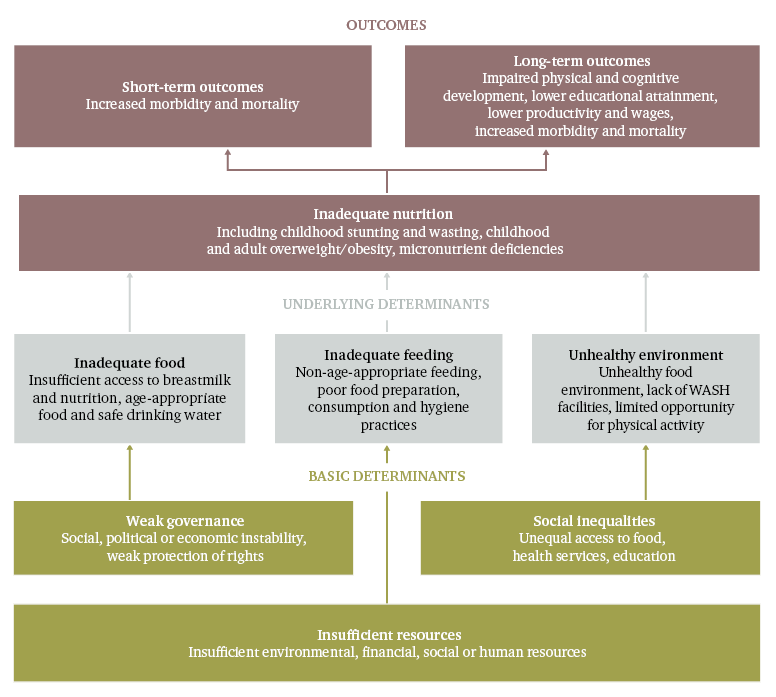
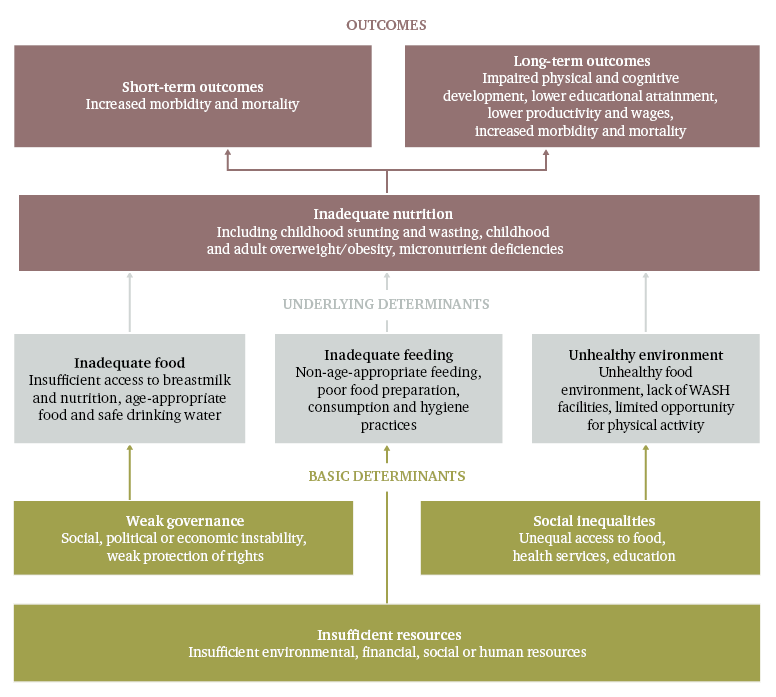
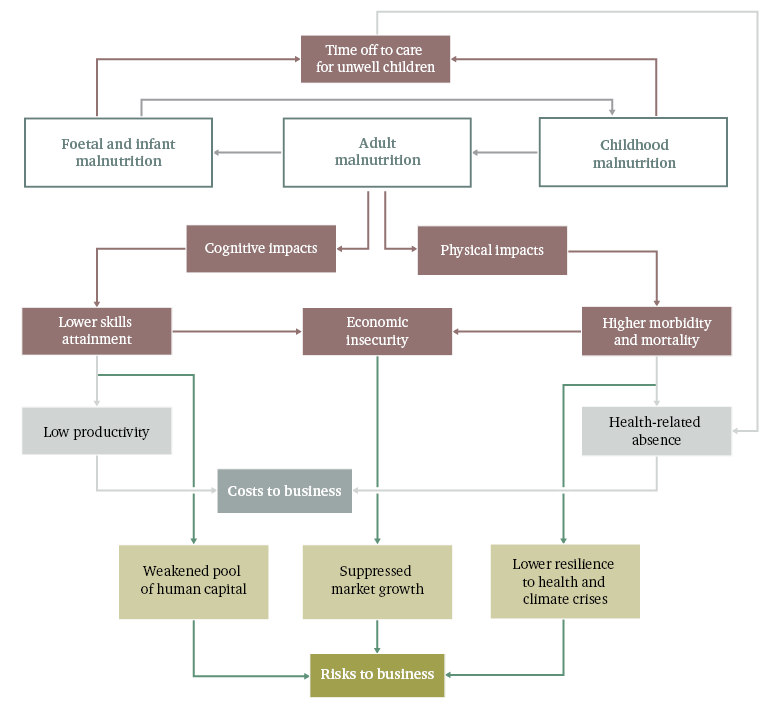
Left unchecked, malnutrition contributes to a risky operating and investment environment for the private sector. Good nutrition is key to the success of many of the Sustainable Development Goals (SDGs) (see Chapter 3), and is essential to driving inclusive and sustainable economic growth. Widespread malnutrition, on the other hand, significantly reduces the resilience of populations to external risks, including infectious disease outbreaks and extreme climate events, and is closely linked to the incidence of social unrest and armed conflict in low-income countries. As governments and businesses alike look to ‘build back better’ in the wake of the COVID-19 pandemic, improving the nutrition of vulnerable communities will be a critical step in mitigating the risk of future economic destabilization on the scale of today’s crisis.
The ability of companies to demonstrate a positive impact on the health and well-being of employees and other stakeholders is a growing concern for institutional investors and asset managers. The sustainable investment agenda is broadening, and the role of business in delivering social goods as well as capital returns is receiving increasing attention. For businesses operating in low- and middle-income countries, particularly those with a high malnutrition burden, failure to address the impact of their policies and practices on the workforce, and on the communities in which they are embedded, risks undermining the credibility of their commitments to the sustainability agenda and threatening their social licence to operate.
Despite the costs and long-term risks it creates for business, malnutrition remains an issue under the radar for companies around the world. The costs of malnutrition, in all its forms, appear to be routinely overlooked or underestimated (Chapter 2), and action to improve nutrition is often considered to be beyond the power or remit of individual companies. Private-sector engagement with the global nutrition agenda has been predominantly limited to food and beverage companies.
Companies are nevertheless in a strong position to take action to tackle malnutrition. Certain of the driving factors behind malnutrition lie within companies’ direct spheres of influence: inadequacies in the food environment in which workers spend a large share of their day, for example, or lack of access to a fair living wage. Other problems require society-wide, collaborative action: to improve dietary quality in the first 1,000 days of a child’s life, for example, or to tackle intergenerational cycles of malnutrition and poverty among informal workers. Businesses of all sizes, both small or medium-sized enterprises (SMEs) and multinational companies (MNCs), will need to bring their resources and expertise to bear to effect positive change.
While few are cognizant of the full impact of malnutrition on their business, MNCs are nevertheless implementing a range of strategies that can contribute to improved nutrition. Over 80 per cent of the 180 MNCs sampled for this report are active on nutrition to some degree, whether through alliances with international development partners to deliver nutrition programmes, nutrition-focused corporate social responsibility (CSR) programmes to support local communities, or workplace initiatives aimed at improving nutrition among employees. Some pioneering MNCs are also taking steps towards monitoring and reporting on the impact of their supply chains on nutrition security in low- and middle-income countries.
For companies that have yet to take action on nutrition, engagement and investment in a number of key areas should be a priority. Nutrition-focused CSR and workplace programmes are an important avenue for engagement, as is investment in existing programmes run by third-party organizations and financial commitments through frameworks such as the Global Nutrition for Growth Compact. Commitments to good corporate citizenry – including fair living wages and the full payment of taxes – to create the conditions under which individuals, households and societies can escape the poverty-malnutrition trap are equally important.
Now is the time for an inclusive and ambitious action agenda for business on nutrition. Five years remain to deliver on agreed international nutrition goals in support of SDG 2 (‘zero hunger’) and the wider SDG agenda (Box 2). Yet public investment in nutrition is stalling. Progress made in reducing the prevalence of childhood stunting risks being undone by a global recession resulting from the COVID-19 pandemic, while overweight and obesity are on the rise around the world. The costs of malnutrition for business and society look set to increase, exerting a drag on economic growth.
The next 18 months offer a window of opportunity for renewed corporate engagement. The upcoming Tokyo Nutrition for Growth Summit, currently scheduled for December 2020, will mark a milestone in international efforts to accelerate progress in tackling malnutrition. The UN Food Systems Summit, the UN Framework Convention on Climate Change summit, and the Convention on Biological Diversity summit – all due to take place in 2021 – will also provide moments to champion nutrition in support of the broader sustainability agenda. An upswell of engagement and investment from the private sector – through philanthropic funding, business investments, and nutrition interventions targeting the workforce and wider communities – could help deliver substantive progress on financing and action in support of SDG 2. At the same time, failure to leverage these opportunities risks harming business prospects in low- and middle-income countries for decades to come.