The increasing number of sanctions and sanctions-imposing states raises a series of enforcement, compliance, policy and broader geopolitical issues.
Enforcement
Businesses, legal experts, governments and government bureaucracies, NGOs, and multilateral organizations confront a welter of sanctions from different entities when attempting to comply with current rules. In the UK, the government departments involved in sanctions encompass the Foreign Commonwealth and Development Office (FCDO), HM Treasury, the Department for Business and Trade, and the Department for Transport. In the US, sanctions responsibilities stretch across the Justice Department, Treasury Department and the Office of Foreign Assets Control, the Commerce Department and the State Department, to name a few. In the EU enforcement is carried out by the 27 member states. Larger member states with greater international economic activity are better set up for national sanctions implementation and have efficient systems to enforce those sanctions, while for other governments managing sanctions is more fragmented and therefore complicated for both sanctioning authorities and businesses.
Though there are current efforts underway particularly between the US and UK to streamline sanctions enforcement, the diversity, difficulty and complexity of coordinating across countries and even within national bureaucracies often creates a lack of clarity over the rules for businesses – especially financial institutions – and risks becoming a particular hindrance for small and medium-sized businesses in navigating compliance. On a positive note, though, the Dutch Ministry of Foreign Affairs has taken steps to consolidate and make more transparent its sanctions policies and regime.
Public justification and goals of sanctions
There are often competing goals of sanctions regimes, and in some cases those publicly stated goals can become hyperbolic, as policymakers, caught up in the initial excitement of announcing sanctions, make ambitious claims about regime change, defending human rights or reversing the course of a war.
Even when sanctions have demonstrated impact this is difficult to measure and such impacts often do not live up to the bold original claims, undermining perceptions of their effectiveness.
The risks of this are severalfold. First, there tend to be unrealistic expectations about the impact of sanctions, at a time when a growing body of research literature has demonstrated sanctions’ historical lack of efficacy on broad objectives like regime change. Second, even when sanctions have demonstrated impact – as in, say, the case of Russia in weakening and slowing down the government’s war machine – this is difficult to measure and such impacts often do not live up to the bold original claims, undermining perceptions of their effectiveness. Third, multiple justifications or goals for sanctions – as in the case of US sanctions on Iran, which have included in their objectives: combating terrorism, ending the country’s nuclear programme, as well as punishing regional interference and human rights abuses – complicate incentives and pathways for negotiating sanctions relief to further policy goals. Last, the layering of different objectives on sanctions also complicates the policy options for sanctioning countries regarding which goals to prioritize in negotiations, how to potentially unwind sanctions in the face of evidence showing their ineffectiveness or when and how to engage in other forms of statecraft beyond punishment and isolation. In those cases, there is a tendency towards policy and diplomatic stasis of sanctions remaining in place.
Concerns about transparency and due process (especially with individual and targeted sanctions)
As a Chatham House 2023 research paper, Human rights diplomacy: Navigating an era of polarization, argued, the increasing use of Magnitsky-type sanctions by the EU, UK, US and Canada, among others, has sparked a raft of sanctions targeting individuals. These sanctions raise concerns over the transparency of the decision-making process and the accountability of the sanctioning entity to contest sanctions. For example, the EU system relies heavily on intelligence to impose sanctions. As a result, it often cannot provide broad public evidence for its reasoning or decisions. At the same time, the bureaucratic complexity of the sanctioning decisions and their enforcement can unnecessarily complicate the process for affected individuals or entities to seek clarity or reversal if wrongly implicated. The lack of transparency ties directly into a wider issue of sanctions being seen as reactive rather than proactive.
This lack of clarity over the justification for the imposition of targeted sanctions can undermine their imputed moral authority as a punitive tool to combat human rights abuses and corruption.
In the case of targeted personal sanctions, given the opaqueness of their intended goal – beyond punishment – and the decision to impose them, there is the risk of further ambiguity related to when, why and how they can be reversed. ‘Sanctions stasis’ risks becoming the norm without clear, public declarations of their rationale or the steps for their removal or reversal. The danger is that sanctions remain in place indefinitely, causing unwarranted disruption to the target individual even if the behaviour that originally prompted the imposition of sanctions has ceased or been remedied, especially when courts and bureaucracies can be slow in evaluating cases.
It is worth underscoring a key point here. While the rationale and pathways for reversing targeted sanctions may be obscure for Western sanctioning countries or entities, in many of the targets of Western sanctions, as in say, Myanmar, North Korea, Russia or Venezuela accountability for punitive measures, national or international, is non-existent. In other words, as imperfect, slow and opaque as understanding and resolving targeted sanctions may be when applied by democratic regimes, in many of the autocratic regimes that are the target of those sanctions (and the public officials within them), similar rights or state accountability do not exist for the victims of their repression and abuse.
The collateral effects of sanctions on local populations and local economies
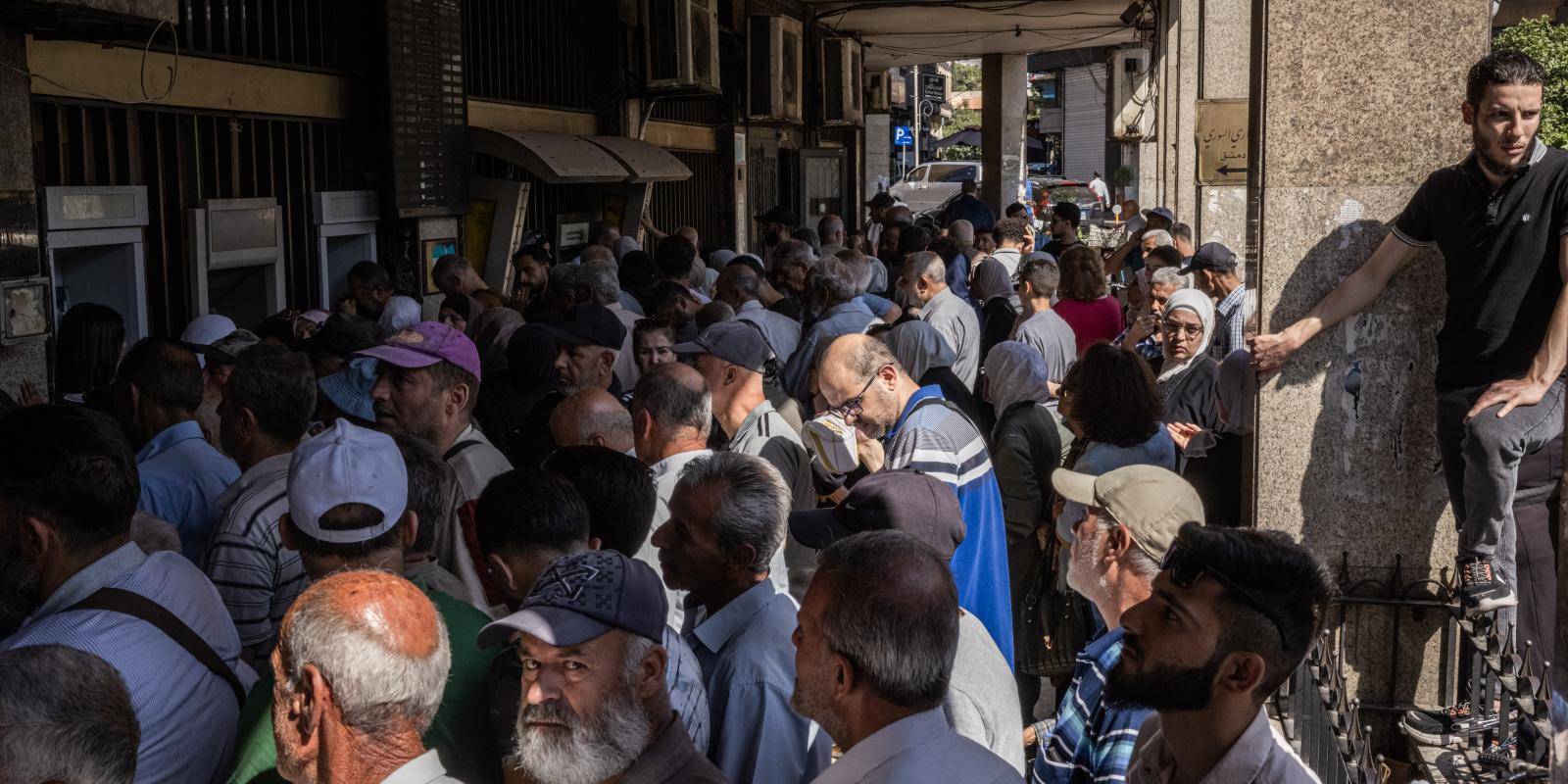
The impact of sanctions on civilians and local markets is well documented and has become an increasingly recognized risk of imposing sanctions. In some cases (Russia), it is a calculated risk. In others, the impact of sanctions on the domestic economy is often conflated with the economic failures of the target regime (Venezuela). But in cases such as the long-standing sanctions on Cuba, these so-called unintended consequences are exactly that: unintentional in ways that can undermine their efficacy and original intent. The question is what sanctioning entities can do to reduce the unintended impacts of these sanctions and provide a more rigorous way to evaluate their efficacy. This raises the question of how to address the growing narrative against sanctions, especially in the Global South.
Broad countrywide economic and financial sanctions of the sort currently on Cuba, Iran, Myanmar, North Korea, Syria and Venezuela will, by their nature and even at times by design, have negative consequences on the broader population’s economic wellbeing. By limiting government and citizens’ access to imported goods and overseas bank accounts and restricting the capacity of the targeted regime to generate export revenue and raise capital on international markets, sanctions often affect citizens’ well-being and reduce government spending. This can include on social programmes and infrastructure.
In many cases too, despite intended carveouts, non-UN, unilateral sanctions have had the effect of restricting the funding and delivery of humanitarian assistance and access to food and medicine to supposedly ameliorate the poverty-generating effects of sanctions. Often those effects are combined, or even secondary to the dysfunctional, venal economic policies of the target government. In those cases, humanitarian assistance remains essential for alleviating suffering regardless of the source. The clear humanitarian carveouts established under UN Resolution 2664 do not apply to unilateral sanctions.
Increasingly, as concerns over the effects of sanctions on economic collapse and the exodus of citizens in sanctioned countries grow, scholars, humanitarian organizations and governments have attempted to measure and take sanctions’ effects into account. How to measure those impacts on local economies, though, remains a hotly debated academic topic; one example of this is the heated, statistically driven debate over the impact of US sanctions on Venezuela.
There are examples of the failed anticipation of these consequences and their fallout. In one of the longest-standing, comprehensive sanctions regimes, the US embargo on Cuba (initiated in 1962 and codified into law in 1992 and again in 1997), has not only created a scapegoat for the Cuban regime, allowing it to blame sanctions for the failures of its communist economic system, but has also closed down economic space for independent local entrepreneurs and consolidated the economic power of the state and its allies. After more than 60 years in place, this has instilled a sense of apathy on the island, 90 miles off the coast of the US. Given the Cuban regime’s policy of repression of dissent, Cuban citizens are impotent to change their government to alleviate sanctions, and the Cuban regime remains inflexible in its commitment to a failed economic model. Rather than a citizen uprising or defection within the regime that would lead to political change, the result has been stasis and massive outward migration. In the case of Iran, the impact of sanctions has not been borne by the political establishment, but by the people suffering the impacts of inflation.
In the case of Iran, the impact of sanctions has not been borne by the political establishment, but by the people suffering the impacts of inflation.
In the case of Russia for US, EU and UK sanctions there is an implicit effort to impose costs on civilians. Citizens in Russia are being conscripted to fight and kill Ukrainians on the front lines. Will broad sanctions provoke reconsideration by citizens? Can sanctions spark a popular uprising that could force a reconsideration of the war? The history of the sanctions in Cuba, Iran and Venezuela is not encouraging.
The political economy of sanctioned countries – concentration of political and economic power, growth and consolidation of illicit economies and/or war economies
In many cases, broad sectoral sanctions have led to the concentration of economic power within the sanctioned government and among its allies, further strengthening the regime in power and reducing or even eliminating independent economic space.
In Russia, Iran and Venezuela the imposition of broad, economic sanctions has led to the re-allocation of economic assets to reward domestic supporters or in some cases to foreign governments allied with the regime. In countries such as Cuba or North Korea – collectivist regimes in which the state controls the means of production – long-standing sanctions have allowed leaders to sustain economic control, in particular, through loyalists connected to the government. In many cases, this has been through the sons and daughters of a privileged ‘communist’ elite, potentially smoothing the pathway for the governing regimes to extend power across generations.
In a fractured global system, restrictions that prevent Western companies and investors from owning or trading the assets of sanctioned countries risk allowing targeted regimes and their allies, which are opposed to Western interests and values, to acquire those assets. In the case of secondary sanctions, these can create an open field for investors – often state-linked enterprises – in Russia and Iran to scoop up assets in energy production and exploration rights, as well as retail activities and services, in countries targeted by sanctions. The same is true for sovereign and private sector debt, which non-Western banks and governments can acquire but Western banks and hedge funds are prohibited from trading or pursuing payment of. The consolidation of power of either domestic or international economic interests in favour of the regime, raises the problem of expanding the influence of non-democratic regimes and their investors in ways that build closer economic cooperation and path dependency among sanctioned countries away from the West. In the case of debt, with sanctioned regimes – often already in default – it poses the danger that in any future debt and restructuring negotiations, regimes and debt holders opposed to Western interests will have a seat at the table and a significant stake in the terms of any potential settlement.
Creating a coalition of the sanctioned
In recent years, there has emerged a global ‘coalition of the sanctioned’. Those regimes and their companies are actively seeking to counter the impact of sanctions, not just by providing the means to break Western sanctions – financial and commercial – but also attempting to erode the West’s broader and long-term economic influence. This has included immediate responses to provide export trade markets, imported goods and diplomatic support among sanctioned countries, and creating parallel currency options to the US dollar and the Western SWIFT banking system. Those efforts to take advantage of sanctions to build new markets and allies have undermined the intent and impact of Western sanctions. In a recent example of this collaboration, while in Moscow for the Second World War victory celebration in May 2025, Venezuelan president Nicolás Maduro signed a cooperation agreement with Putin’s government agreeing to cooperate in oil and gas exploration and development, within the UN and in matters of arms control, joining similar post 2022 ‘strategic agreement partnership pacts’ with China, North Korea and Iran.
At the same time, while economic, diplomatic and personal sanctions have traditionally been a tool of the West, regimes such as those in Russia and China are increasingly turning to their use, often, though, using other laws as justification. This approach risks becoming a broader trend while also complicating the coordination of sanctions among Western countries, especially among EU member countries.
With China and other non-democratic regimes positioning themselves to lead the global economy, the challenge is not just short-term advantages and surreptitious links to evade Western sanctions. There is a longer-term challenge of how to calibrate and evaluate sanctions, to ensure that in any post-sanctions scenario, the domestic and international consolidation of political-economic power by targeted regimes and sanctioned countries can be minimized and eventually reduced.
Efficacy of sanctions: Do they match their goals? How do we measure success or failure?
There is a large and growing body of academic and policy literature on when and whether sanctions accomplish their goals. As sanctions become a mainstay of the West’s diplomatic/economic toolbox, that question looms even greater. Often, though, rigorous efforts to measure sanctions’ impact have been clouded by the growing type, scope and use of sanctions. Research on the efficacy of unilateral sectoral economic sanctions, targeted personal sanctions and multilateral sanctions – as well as on the utility of combining sanctions within a broader diplomatic strategy, the impact of a shifting global order, and still nascent efforts to leverage sanctions liberalization for specific policy goals – has not kept up with the rapid rise of targeted and comprehensive unilateral sanctions.
At the same time, the growing and often changing objectives of sanction goals (described above) have complicated any intended effort to inject policy analysis into the discussion. A plan by former US treasury secretary Janet Yellen to systematically and regularly review US sanctions and their impact has fallen by the wayside given the proliferation of sanction types, targets and coordination with allies – not to mention the complexity of bureaucratic coordination, not just across departments but also across other governments in Europe that have joined the sanctions bandwagon. Staffing cuts and the dismissal of sanctions as a policy tool by the Trump administration may further cloud the channels of cooperation and limit nuanced policy collaboration among sanctioning countries in implementation, removal and evaluation.
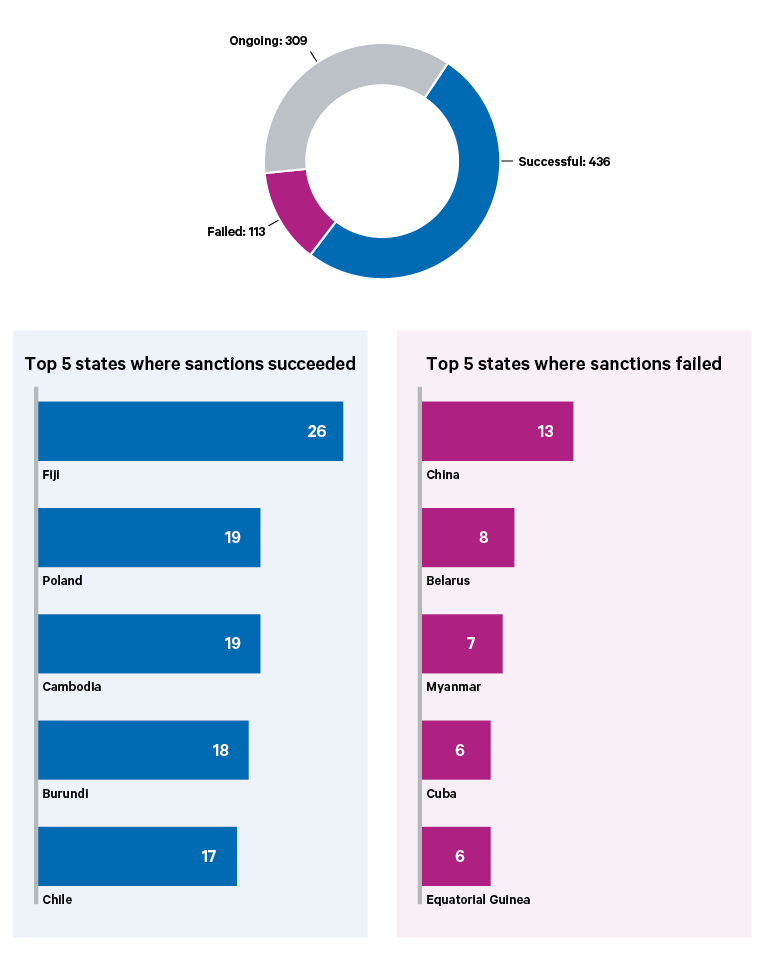
Analysis conducted by Chatham House reveals that sanctions on autocratic regimes intended to defend human rights, destabilize the target regime and promote democracy have a mixed track record, at best. Examining sanctions from 1950 to 2023 that had the stated objectives of human rights, the destabilization of a regime/regime change and/or the promotion of democracy (a total of 858) revealed that while the majority of those sanctions were successful (436) – as determined by the sanctioning countries – 113 were determined to have failed and 309 were ongoing, including US sanctions on Cuba originally imposed in 1962.
Most revealing was the impact different regime types had on the success or failure of sanctions. Sanctions intended to further human rights and democracy were more likely to succeed in countries under semi-democratic or democratic regimes where there existed mechanisms for accountability and at least a modicum of protected political space – for example, Fiji, Poland, Burundi, Cambodia and Chile (post transition). Sanctions against autocratic or even totalitarian regimes (China, Belarus, Myanmar and Cuba) were more likely to fail. The results of this analysis, while still preliminary, reinforce and add a new aspect to what scholar Dan Drezner has called the ‘sanctions paradox’: that all sanctions (not just those dedicated to democracy and human rights) are more likely to be effective against allies.