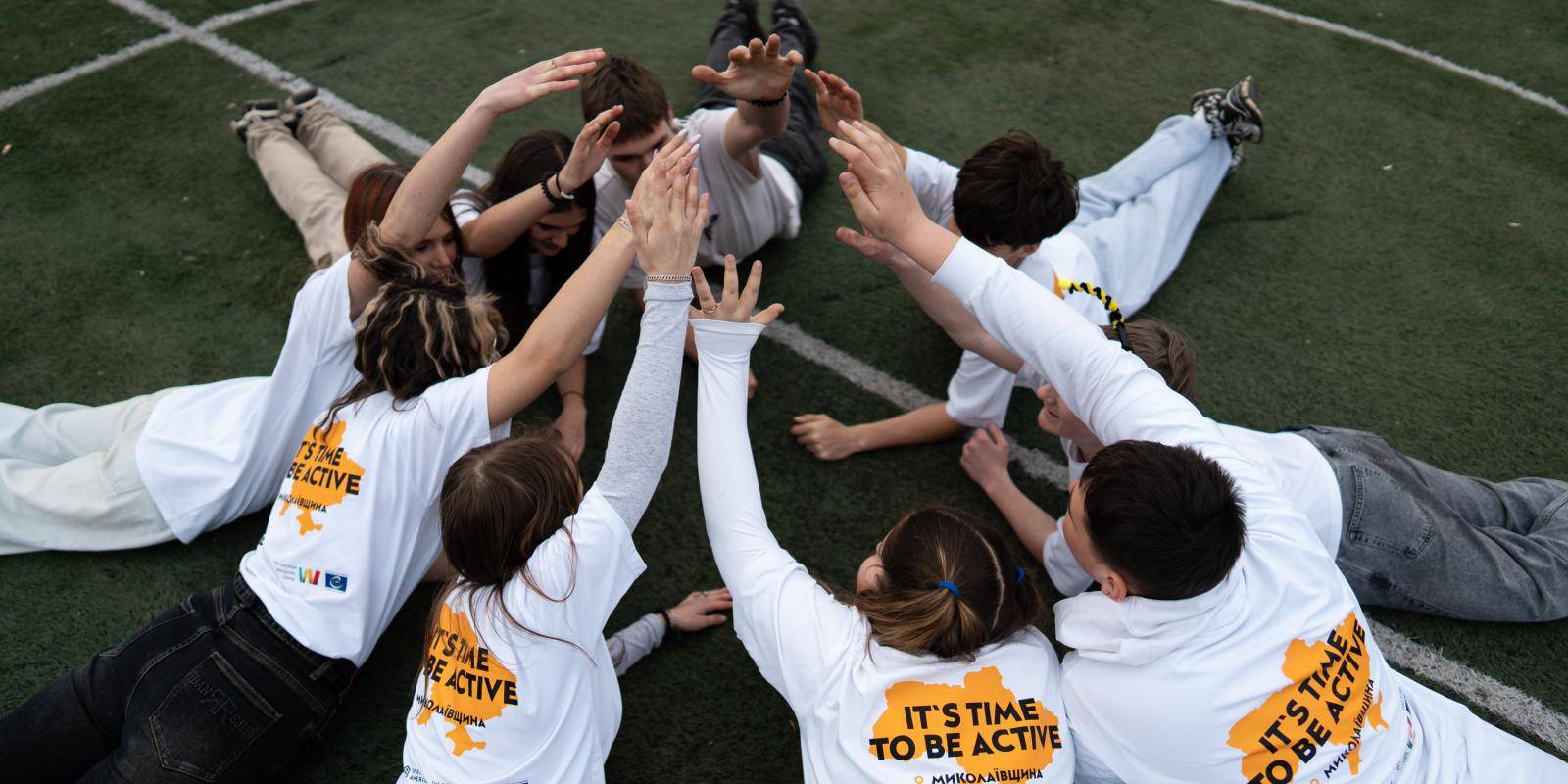
Individual well-being and community healing are crucial elements to any successful recovery. Ukrainian civil society and private sector have demonstrated their willingness to be part of the solution, and are already playing their part in burden-sharing across all regions of Ukraine.
Ukraine’s civil society has adapted to the demands of war, filling many gaps in government capacity, contributing by supporting citizens in need and assisting local self-governance in coping with many challenges. The Chatham House survey series shows that, since 2022, between 60 and 70 per cent of organizations have been involved in recovery efforts to repair the damage caused by Russia’s invasion. Many of these organizations also advocate for the integrity, transparency and reform that are key for recovery, especially around anti-corruption. Most survey respondents believe firmly that by engaging the civil society sector in delivering recovery, the needs of the most vulnerable groups will be better met. Confidence in representing the needs of their beneficiaries has risen steadily, increasing from 45 per cent in 2024 to 52 per cent in 2026 among regional CSOs in particular.
Nationwide, the 2026 results indicate that 66 per cent of respondents valued their contribution to strengthening social cohesion and resilience. The relative proportion among CSOs working exclusively with the veteran community (representing 27 per cent of total survey respondents) is even higher: 71 per cent of respondents from this group emphasize their positive contribution to social cohesion and resilience. Among all CSOs, 60 per cent see their role in providing independent civic oversight and 41 per cent of CSOs cite their ability to offer innovative solutions to social challenges (see Annex, Q20).
Responding to complex needs through partnership
Effective inclusion of Ukraine’s non-profits at various stages of recovery will be critical if the country is to harness its depleted human capital. War causes immense immediate humanitarian demands, while also requiring advance planning on how to restore social potential when active hostilities are over.
Civil society actors, in collaboration with local communities, are increasingly delivering services to support fellow citizens. Partnership with local CSOs therefore presents an opportunity to strengthen the emerging state social-support system, especially for reaching smaller, rural communities and those communities across the country that are most isolated.
It is important to look at Ukraine’s human recovery through an intersectional lens: different forms of vulnerability can overlap. For example, women often face increased risks of gender-based violence and carry a disproportionate burden of unpaid care work, which limits their ability to re-enter the workforce. IDPs often lose their social networks, professional certifications, and stable housing. In other words, a significant portion of the workforce could remain economically inactive because the barriers to entry are too high for those with multiple vulnerabilities.
CSOs are well placed to respond to this challenge. For example, a coalition of 15 Ukrainian cities is creating barrier-free routes, renovating public spaces, and training officials in universal design principles to meet the needs of war veterans, people with injuries and others. This project is supported by the United Nations Development Programme (UNDP).
Making better use of scarce resources
Financial scarcity provides another rationale for a more inclusive, diffused approach to social recovery. Ukraine’s annual immediate recovery needs are around $15 billion per year. The two-year Ukraine support loan of €90 billion from the EU will prioritize some social support via budget assistance, but the demand is huge. Over 13 million of people are currently estimated to be receiving social security payments. Around €20 billion or 21 per cent of Ukraine’s state budget for 2026 was allocated towards social protection and support, education and health (while 59 per cent was directed towards defence and security).
As the war continues, Ukraine faces mounting financial pressures to fund its armed forces, while also having to sustain large social support expenses and rebuild critical energy infrastructure ahead of the 2026–27 winter. The estimated financial needs to prepare for the next heating season are nearly €5.4 billion. Meanwhile, funding beyond 2027 has yet to be secured.
Despite the structural successes of decentralization implemented since 2015, the fiscal autonomy of local communities is also under severe pressure, as the central government absorbs more revenue to sustain the war effort. In late 2023, the central government redirected the personal income tax paid by military personnel and law enforcement officers away from local/regional budgets and into a special national budget fund for arms production and procurement.
As the war continues, Ukraine faces mounting financial pressures to fund its armed forces, while also having to sustain large social support expenses and rebuild critical energy infrastructure.
While both state and local budgets saw revenue growth in 2025, the local share of Ukraine’s total consolidated budget revenue plummeted from 24.4 per cent in 2022 to 14.6 per cent in 2025. In 2025, for the first time since the decentralization reform began in 2014, local budgets ended the year with a UAH 22.1 billion ($501.4 million) deficit. Previously, communities had typically maintained a surplus.
Local governments are legally responsible for social services, especially IDP support. But they now command the lowest share of national revenue since the decentralization reform began. The 2025 deficit was a direct consequence of wartime priorities – specifically, the centralization of resources for national defence, compounded by rising social expenditure and the urgent requirements of local territorial defence and infrastructure restoration.
All this means that the effective allocation of resources, robust partnerships with the non-government sector and a rigorous analysis of what truly delivers results must all be intentionally embedded into the design of the recovery system from the outset.
The government must promote and enable the creation of a new ‘social contract’, centred around the equitable distribution of resources and a meaningful recognition of the contribution of civil society, as well as the sacrifices made by Ukrainian veterans. As the Chatham House survey results show (see below), the reintegration of veterans into civilian life is one of the most significant social challenges and highest priorities for the recovery process. Succeeding in this task will require a committed partnership among all stakeholders.