Unresolved crises of the early 21st century indicate the need for new approaches to foreign policy, whether with regard to war, climate change, forced migration or addressing inequalities caused by colonialism.
Under its first female foreign minister, Annalena Baerbock, Germany announced its commitment to a Feminist Foreign Policy (FFP), in a major shift after 16 years of conservative-led rule. Its purpose would be to further strengthen female rights, resources and representation around the world.
We, the authors, were invited to contribute to this process by the German Federal Foreign Office. Our analysis of a feminist foreign policy identified core vulnerabilities, some of which have been reflected in vociferous public debate in Germany on the ongoing war in Ukraine. To address these shortcomings, we propose a conceptual advancement: Fair Foreign Policy, or FFP2.0.
Feminist foreign policy needs an upgrade
‘FFP2.0’ would have a less gendered focus, broader fairness and better alignment with domestic policy, say Eirliani Abdul Rahman and Jesse Bump.
The World Today
Published 29 September 2022
Updated 30 September 2022 — 3 minute READ
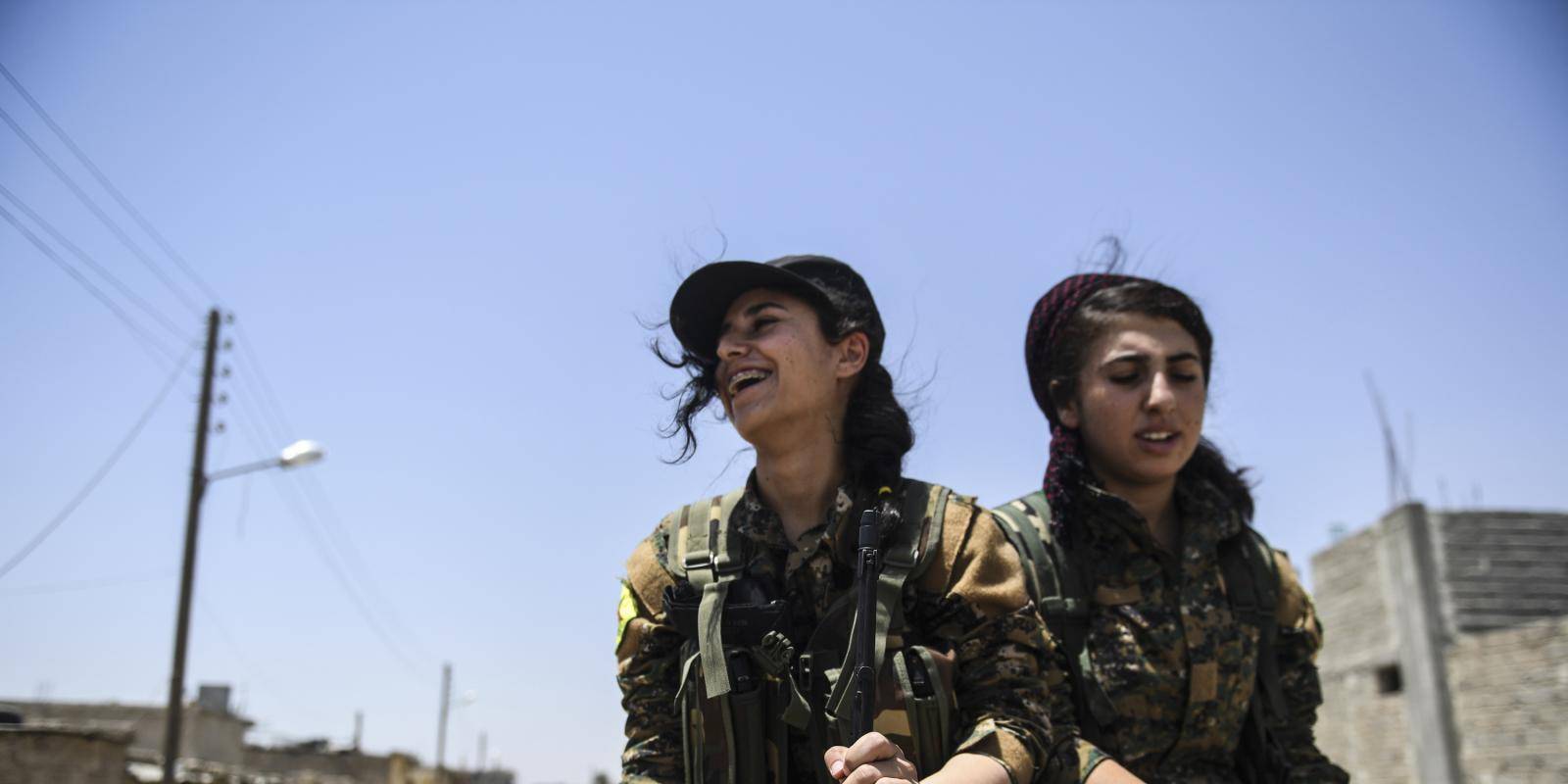
Image — Members of the Women's Protection Units (YPJ) arrive on the frontline on the eastern outskirts of Raqa in July, 2017. Image: BULENT KILIC/AFP via Getty Images.