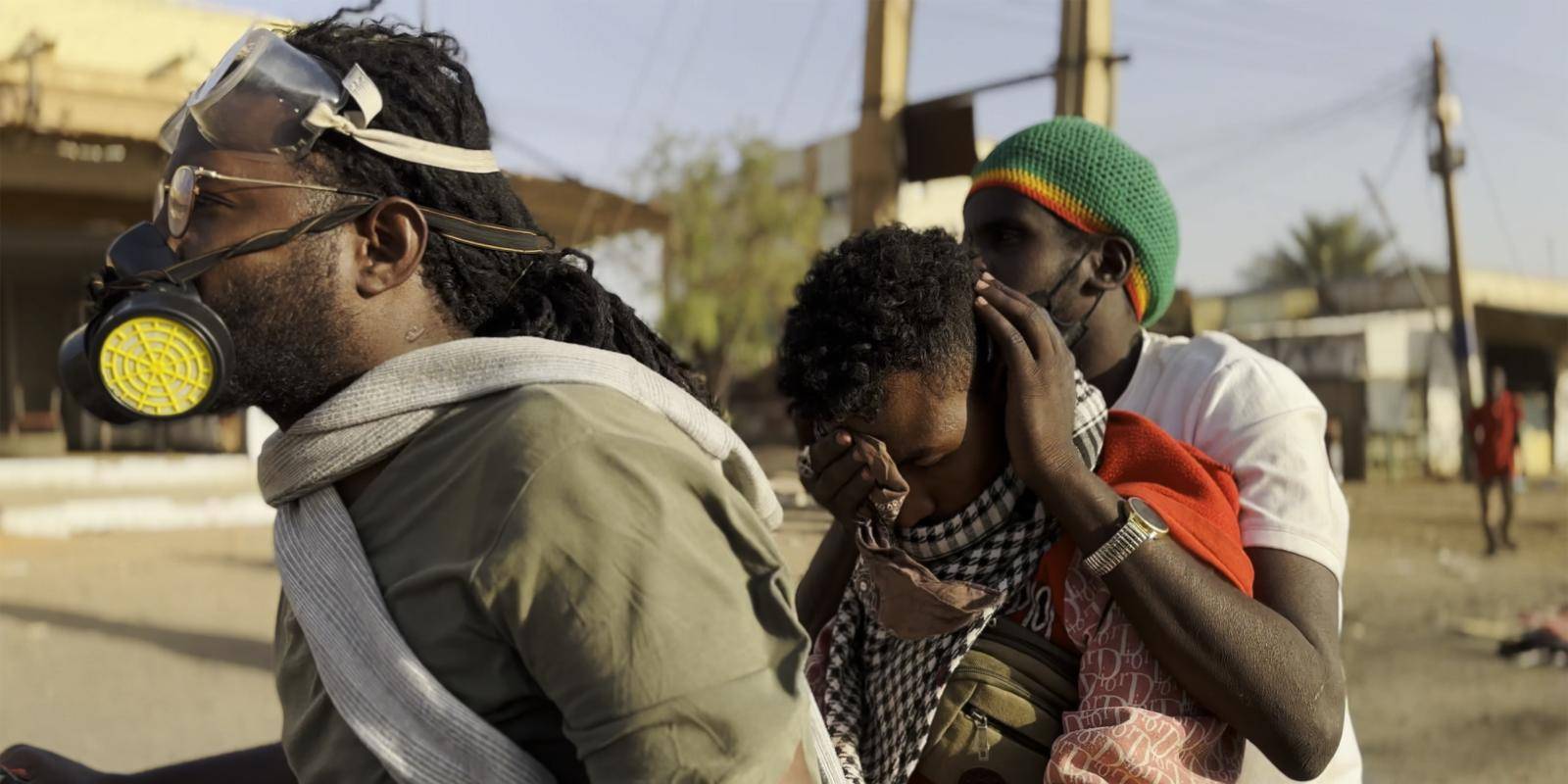


The conflict between the Sudanese army and the Rapid Support Forces paramilitary broke out in April 2023, shortly after you started filming. How did the documentary change once the war began?
We started filming towards the end of 2022. The idea was to interweave the stories of five characters in the city of Khartoum and follow them as they went about their daily lives, through the lens of different social classes.
At the beginning we had different characters, but then the war broke out [in April 2023 between the Sudanese army and the Rapid Support Forces] and everything changed. Some of the directors and characters couldn’t continue with the project, so we had to find new ones. The people who eventually appeared in the film all lived in Khartoum: Majdi, a civil servant; Khadmallah, a tea vendor and single mother; Jawad, a volunteer at the resistance committees [community-led humanitarian and pro-democracy groups]; Lokain and Wilson, two boys who would run around the city picking up empty plastic bottles.
Though the core idea stayed the same, we knew we had to include the war because it would change the lives of everyone involved – and the city itself.
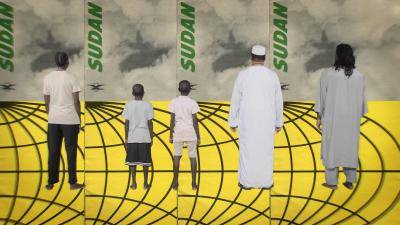
A montage of the five characters featured in the film. Co-director Ibrahim Snoopy Ahmed says he hopes the film can bring people of different social classes together. Photo: Native Voice Films.
The film combines footage from before the war with studio re-enactments of each character’s journey out of Sudan. Was that challenging to shoot?
The re-enactments were the easiest part to film because everyone really wanted to tell their story and felt they had a responsibility to do so. There isn’t enough coverage about Sudan, so they felt they had a duty to talk about what is actually happening there. We were all living together in an apartment in Nairobi when we were making the documentary, which helped everyone open up. It meant that when we were shooting the re-enactment scenes, it felt like an extension of conversations we were having over dinner or breakfast.
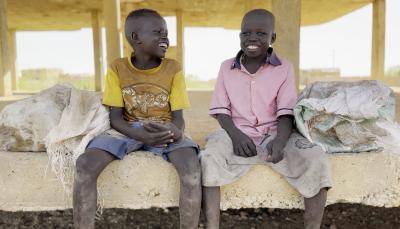
Lokain and Wilson, two young bottle collectors, take a break Khartoum. Photo: Native Voice Films.
The children – Lokain and Wilson – were the most comfortable in front of the camera. We weren’t pushing them, they wanted to tell what the RSF had done to them. But when you are immersed in a story, it can feel like you are reliving it. There were points when we had to stop in the middle of filming a scene to comfort someone who was upset and give them a hug. It was like pushing an emergency button. When we saw one of the characters get into a dark space, we would jump in to bring them back to reality.
The film seems self-reflective and personal. Was that important to you and the team who produced it?
Very much so. Most of the directors – there were five of us – are from Sudan and were living in Khartoum when the war broke out. I left after the first few days because there was heavy bombing where I was living and the fighting became so intense. Others came to Nairobi a few months later. All this lived experience was channelled into the characters.
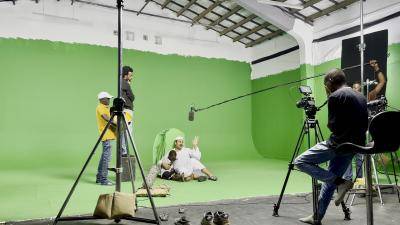
A still from one of the studio re-enactments. Co-director Snoopy Ibrahim Ahmed said the team sometimes had to stop filming to comfort characters who found it upsetting to relive their escape from Sudan. Photo: Native Voice Films.
We understood exactly what they were going through retelling their stories. We tried to reflect this experience in the film. But we didn’t want to make it too violent, leaving some space for the audience to imagine these things. It was too cruel to show everything. Some of the stories were left unfinished because we wanted people to think about the different ways they could have ended for each character.
Right now, more than 12 million people have been displaced because of the war and so many are dead, injured or have lost their families. The portraits in the film were an effort to humanize the statistics.
The film is also a story about displacement – a quarter of Sudan’s population have been displaced since the war began. Do the characters still face challenges having left Sudan?
Their lives definitely improved being away from a war zone, but it comes with disadvantages too. You’re still alive and have a livelihood, but you’re left searching for home and a sense of community. No matter how comfortable you are in exile, even if you have a stable job, a house, the internet, there is always this loss. Some things can’t be replaced unless you go back, but returning is a challenge.
A lot of returnees are posting on social media that everything is fine and life is going back to normal, people are coming back. That’s not true. There are so many things that make Khartoum uninhabitable for any human being; a lack of clean water and electricity, disease – many people look like skeletons.
What does the film say about Khartoum as a city?
One thing I wanted to do with this film was to show the beauty of everyday life in the city, to recognize this without sugar-coating it. When we were living in Khartoum before the war, it was easy to think there’s nothing unique about it. But when we were displaced, it was the simple things like Nile Street, the tea vendors, the dust, the rain that we missed most.