
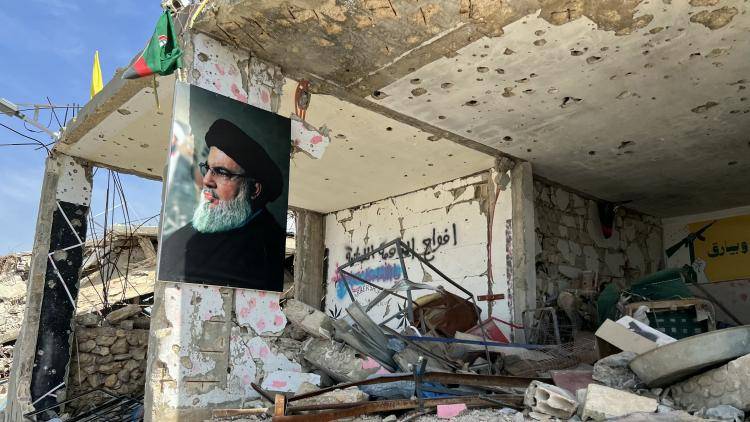
On 19 June, President Donald Trump’s Special Envoy for Syria Thomas Barrack delivered a US proposal to Lebanese officials, calling for the Lebanese state to disarm Hezbollah. Until last year, such a goal was unthinkable. But with Hezbollah badly mauled following its war with Israel, which destroyed much of its military infrastructure and decapitated its leadership, the United States sees an opportunity to work with Lebanon’s government to remove a long-standing threat to Israel’s northern border and Lebanon’s internal stability.
The deal is simple: in return for Hezbollah’s disarmament, Israel would end its periodic attacks against the group, withdraw from the five Lebanese hilltops it occupied after the November 2024 ceasefire agreement, and release Lebanese prisoners held in Israel. In addition, Washington would help reconstruct southern Lebanon and reboot the country’s debt-stricken economy.
The Lebanese government emphasized in its response that the Lebanese state is committed to regaining its monopoly over the use of force (a clause that has been in the Lebanese constitution for decades). But the government also said that further progress on Hezbollah’s disarmament requires Israel first to withdraw from all Lebanese territory and halt what it calls violations of Lebanese sovereignty.
Surprisingly, Barrack said he was ‘unbelievably satisfied’ with this response. Lebanese officials were expecting an uncompromising US position, believing that the Trump administration was losing patience with Beirut for its slow progress on disarming Hezbollah.
But despite this positive US feedback, there is still a considerable gap between the Lebanese and US positions. Although Lebanese officials are almost certainly relieved, they have hardly any reason to celebrate or think that the Trump administration has suddenly softened its position.
The gap between Washington and Beirut’s positions is also not limited to sequencing. The more fundamental problem is Hezbollah’s rigid attitude towards its weapons. Even though the Iran-backed group relinquished some of its weapons to the Lebanese army in the area south of the Litani River, it refuses to give up the rest. And its remaining arsenal is considerable, including armed drones and long-range precision-guided missiles stored north of the Litani, in the Bekaa Valley, and the southern suburbs of Beirut.
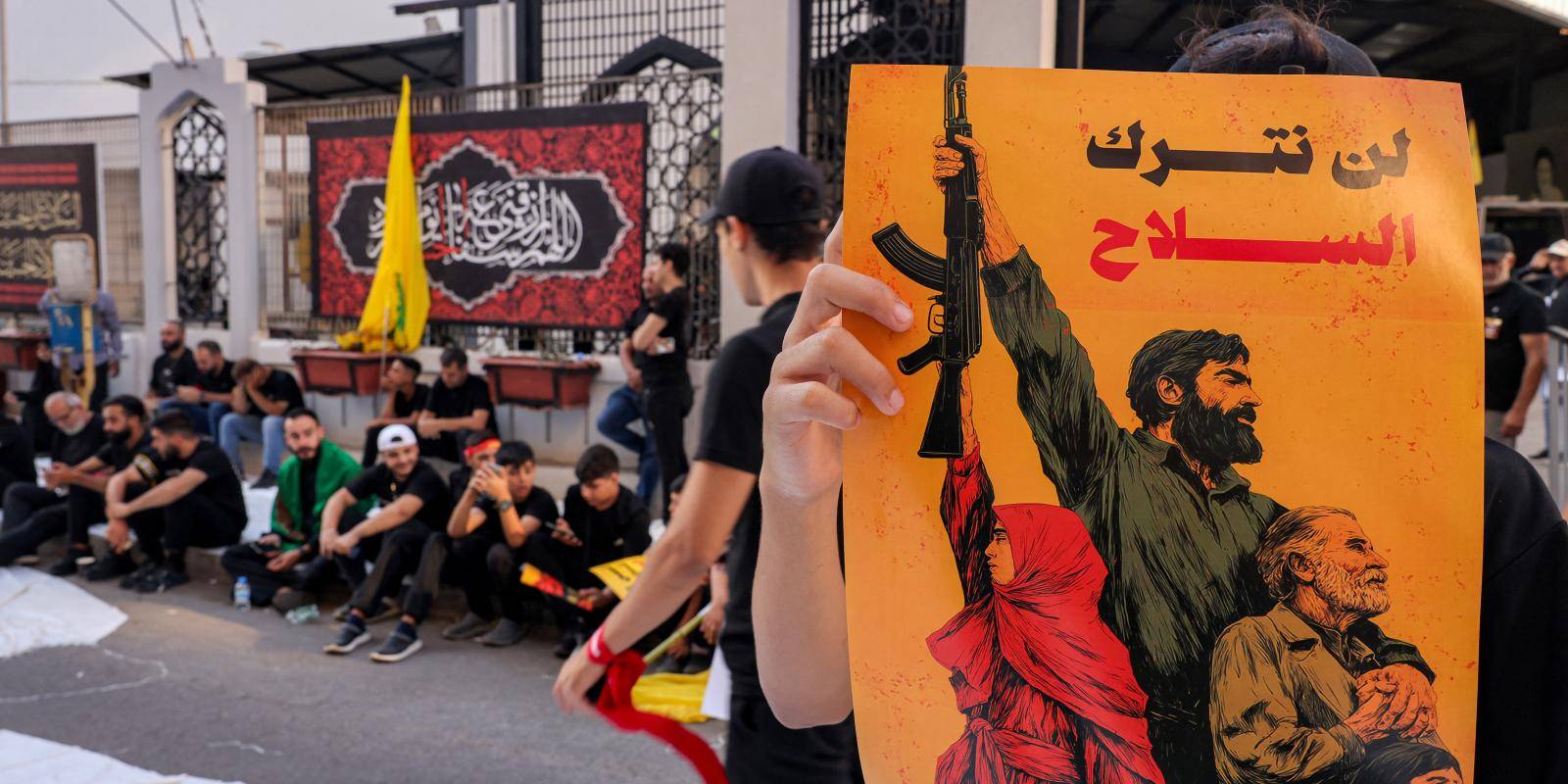
Naim Qassem, Hezbollah leader since only October 2024, reiterated the group’s position in a video speech last weekend before thousands of supporters gathered in Beirut’s southern suburbs. He also rejected any notion of potential Lebanese normalization with Israel, implying that his group, not the Lebanese state, still calls the shots on issues of war and peace.
Weapons have been integral to Hezbollah’s existence since it emerged in the early 1980s. To give them up would be tantamount to throwing in the towel, which is foreign to the group’s philosophy of struggle and martyrdom. Hezbollah would rather fight to the end than declare it is surrendering to Israel and the United States, its eternal enemies. It knows that without its guns – which it has directed several times against fellow Lebanese – it would lose most, if not all, its political clout and its appeal among its Shia base.
It is highly unlikely to transition to a ‘normal’ political party. Although it held much of its ground in May’s municipal elections, this was under the banner of armed resistance. There are also indications its support may be failing in southern Lebanon. It is therefore unclear whether an unarmed Hezbollah could compete effectively in free elections, within Lebanon’s complex political system.
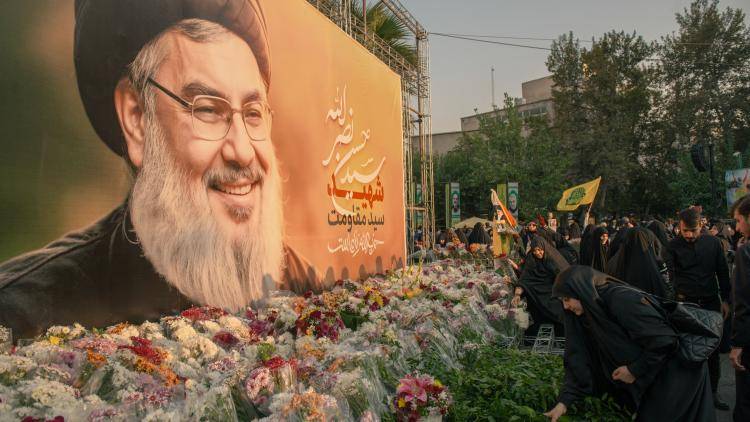
Hezbollah’s game plan is to cooperate minimally on disarmament to contain what it hopes is temporary international pressure, while gradually rebounding and staying deliberately vague about the future of its weapons. Qassem, like his predecessor Hassan Nasrallah whom Israel killed in September of last year, has tied the weapons issue to a national dialogue, which has been tried before but gone nowhere (a negotiation cannot take place with one side pointing a gun at the other’s head).
Hezbollah’s stance is the reason why the Lebanese government’s response to the US proposal lacks any formal or legal commitment to fully disarm the group or a timetable for doing so.
Lebanese President Joseph Aoun and Prime Minister Nawaf Salam, both reformist leaders with the best of intentions, have voiced two main concerns. First, forcing Hezbollah to completely disarm, especially before Israel stops its attacks and withdraws completely from southern Lebanon, could lead to domestic sectarian conflict. Second, until there is strategic clarity on the unstable relationship between Iran and the United States, making a move on Hezbollah without top cover from Washington is fraught with risks.