
The primary purpose of Indian Prime Minister Narendra Modi’s visit to the UK this week was ceremonial: to sign the free trade agreement (FTA) concluded in May. However, the visit was also the culmination of efforts to deepen bilateral relations. A more mature multi-dimensional relationship is developing, one that goes beyond the longstanding links of language, legal system and the so-called ‘living bridge’ of the Indian diaspora.
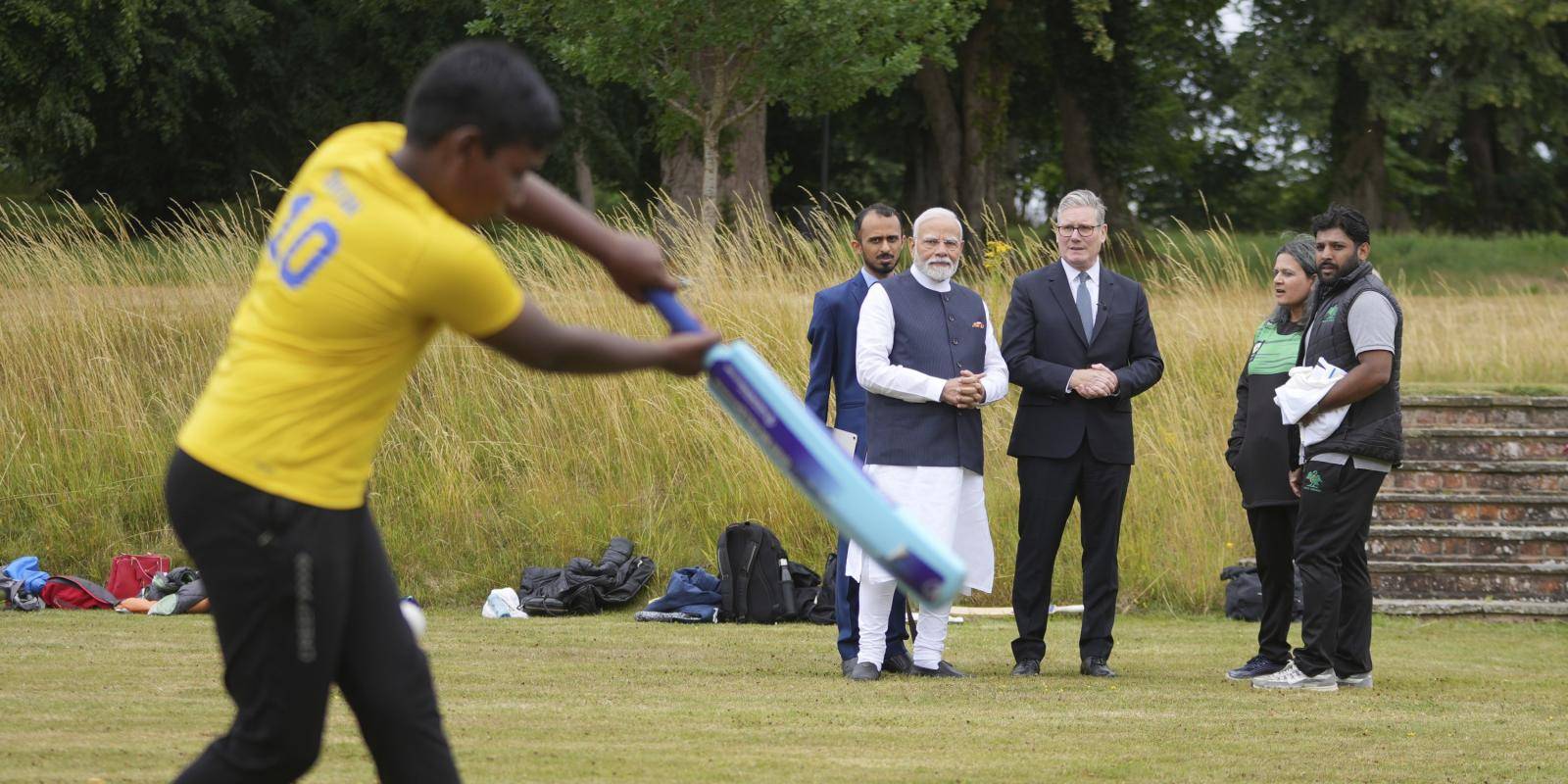
The UK’s National Security Strategy, published earlier this year, noted the deepening relationship, stating that ‘India is a country with which we seek a genuine strategic partnership’. Using a cricket metaphor, Modi referred to the two countries’ commitment to building a ‘high-scoring solid partnership’.
But significant challenges remain to developing a more strategic and lasting relationship.
From trade to beyond trade
The signing of the FTA – formally known as a Comprehensive Economic and Trade Agreement – paves the way for the ratification process to begin. Full implementation could take a year.
For India, the gains are significant. 99 per cent of its exports to the UK will face zero tariffs. India’s politically sensitive agricultural sector – which employs over 40 per cent of the workforce – has been kept out of the FTA and therefore will not face competition from UK goods.

New Delhi also secured a concession through a separate Double Contribution Convention Agreement. This will allow Indian workers temporarily living in the UK not to pay national insurance contributions for three years. The arrangement is reciprocal: British workers seconded to India who are not permanent residents also avoid double taxation on social security contributions.
The UK also makes gains, with India’s average tariffs on UK products dropping from 15 per cent to three per cent. India will cut tariffs across 90 per cent of British product lines, including automobiles (dropping from 100 per cent to 10 per cent) and whiskey and gin (from 150 per cent to 75 per cent, eventually dropping to 40 per cent).
British firms will also gain access to India’s lucrative procurement market. The tariff cuts are worth approximately £400 million to the UK, increasing to £900 million after a decade.
There are almost 1,000 Indian companies operating in the UK, employing more than 100,000 people and forecasts indicate the deal will create over 2,200 British jobs and contribute to a £2.2 billion uplift in wages of British workers each year.
Arguably, the deal is a greater importance to the UK than to India. Prime Minister Keir Starmer said as much by referring to it as the ‘biggest and the most economically significant trade deal that the UK has made since leaving the EU’. The UK has concluded a string of trade deals since leaving. But as the world’s fastest growing major economy, the deal with India holds the greatest significance.
India is negotiating deals with more consequential trade partners, including the EU and US, so the political benefits of the India–UK FTA are more limited. However, the FTA may offer some value to New Delhi as leverage in these other ongoing trade negotiations.
As India is the more protectionist of the two countries, the removal of tariff and nontariff barriers will benefit the UK more than India. Projections indicate the trade deal will boost the UK’s GDP by 0.13 per cent versus 0.06 per cent for India.
And UK exports to India are projected to increase by almost 60 per cent, while UK imports from India will increase by 25 per cent. The overall result is a 39 per cent increase in bilateral trade (equivalent to £25.5 billion) by 2040.
In addition to the FTA, both countries reinvigorated their Comprehensive Strategic Partnership into a new ‘UK–India Vision 2035’. This is intended to further deepen engagement in areas of defence and security, technology, education and people-to-people cooperation. A new Defence Industrial Roadmap was unveiled to support this initiative.
Modi also announced that six UK universities will open campuses in India after Southampton University became the first UK university to do so earlier this month. The India–UK Technology Security Initiative launched last year seeks to deepen cooperation in areas of critical and emerging technology.
Room for improvement
Despite these achievements, ambiguities remain. India is seeking exemptions from a proposed UK carbon tax, set to come into force in 2027. That has yet to be resolved. A separate bilateral investment treaty has also yet to be concluded.

More broadly, the bilateral relationship remains brittle. The shadow of Britain’s colonial history still lingers, making New Delhi – and Indians generally – sensitive to any actions that might be perceived to challenge India’s status and sovereignty.
Speaking during the visit, Modi stated that ‘forces that espouse extremist ideologies should not be allowed to misuse democratic freedoms’. While he said this in reference to recent hostilities between India and Pakistan, it can also be seen as a veiled message to the UK government.
New Delhi has raised concerns that the UK harbours anti-India groups such as the Sikh Khalistan separatists.
In the UK, concerns persist about the state of Indian democracy, human rights and the treatment of minority groups. The FTA’s 26 chapters do include sections on non-trade issues, including environmental and labour standards, gender equality and anti-corruption. But these do not fully resolve these concerns.