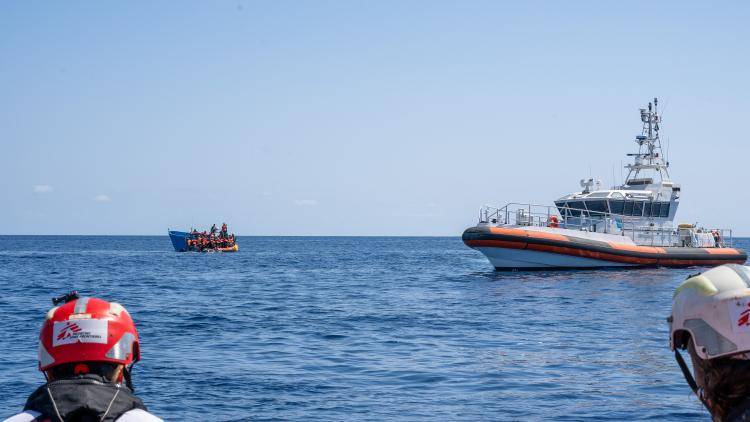
Yvette Cooper became the UK’s foreign secretary earlier this month after a cabinet reshuffle. One major domestic priority that will follow her from the Home Office to the Foreign Office is migration.
The UK government has presented its strategy for tackling irregular migration to its borders under a slogan of ‘smashing the gangs’, introducing ‘counter terror-style powers to identify, disrupt and smash people smuggling gangs’.
Tackling organized criminal groups is a policy that few oppose. But the approach throws up some distinct challenges when viewed from the Foreign Office. Prime Minister Keir Starmer has suggested that the UK should look to European – specifically Italian – approaches towards tackling the source of migration flows. However, while Italy can claim to have reduced overall sea crossings to its territory, its engagement in Libya offers a cautionary tale.
Lost leverage
The horrors suffered by migrants in Libya are well documented and indefensible. Yet the effectiveness of European-Libyan cooperation is also open to question on Europe’s own terms.
In 2017, a memorandum of understanding was signed between Italy and Libyan authorities to facilitate cooperation on combating illegal migration, human trafficking, and smuggling. That agreement included financial and technical support to train and equip the Libyan Coast Guard and other security forces, as well as detention facilities in Libya. These activities have also been supported indirectly through the EU Trust Fund for Africa.
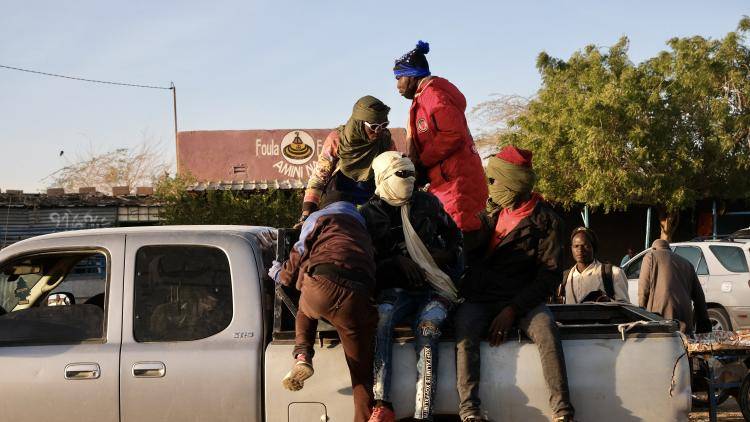
The agreement did have a significant effect. Crossings of the Mediterranean from Libya to Italy reduced from their peak of 162,895 in 2016 to 12,977 in 2018. But the numbers remain high, despite concerted European – particularly Italian – efforts. There were 42,279 crossings reported in 2024, accounting for 81 per cent of all persons arriving in Italy. While the impact of these deals on migrants’ rights is the focus of much attention, the understanding with Libya also comes at significant political cost to Italian and broader European policy.
Two separate incidents highlight this point: The first was the controversy that swirled around the arrest and release of Osama Elmasry Njeem, a commander within a Libyan state-affiliated force.
In January 2025, Njeem was arrested in Italy on the basis of a sealed ICC arrest warrant for allegedly perpetrating crimes against humanity. However an Italian court released him on the basis of a suggested procedural error. Njeem was flown back to Libya on an Italian government plane, triggering an investigation into the actions of Italian Prime Minister Georgia Meloni over the incident. Italy’s interior minister, Matteo Piantedosi, later claimed Njeem had been released because of his ‘social dangerousness’.
Libyans do not seem to treat their Italian partners with such sensitivity. Six months after Njeem was returned, Piantedosi visited Libya as part of a delegation with EU Migration Commissioner Magnus Brunner and Malta’s minister for home affairs.
The trip ended in acrimony after the delegation was held in the VIP area of Benina airport in Benghazi. While the details are unclear, it appears Khalifa Haftar, whose armed faction controls eastern Libya, wanted the delegation to meet with ministers from the eastern-based government. But the EU does not recognize the Benghazi government and had only agreed to meet with Haftar. Haftar cancelled the meeting in an incident described in one report as ‘staged’ and sent the delegation away.
The two incidents show how the leverage of European policymakers over Libyan actors has waned: Italy transported a Libyan armed group commander out of the country on a government plane; while an Italian interior minister was left on the tarmac in Benghazi, in a very public humiliation.
Complicity of state-affiliated forces in smuggling activities
Since March 2025, a significant surge of irregular migration has taken place from Haftar-controlled territory in eastern Libya. Haftar’s forces have been singled out for their role in these activities by the UN Panel of Experts and various investigative reports.
Meanwhile, last week, a video by NGO Sea Rescue appeared to show soldiers throwing refugees into the open sea. The soldiers were wearing the uniforms of the 111th Brigade, which is controlled by the deputy defence minister of the Tripoli-based, EU-recognized Libyan government. In this case, while these groups could be partially described as gangs, ‘smashing’ them has not been on the agenda.
These recent events offer further evidence of how European attempts to stem migration at the source have helped entrench some of the very actors in Libya who have frustrated mediation efforts in the country.