

The decision by Prime Minister Pedro Sánchez to call a snap election is a risky move, but he will have felt he had little choice. His decision fires the starting gun on a year of vital and polarized elections across Europe.
The announcement is not entirely unexpected. Spain was required to hold an election by August 2027 anyway. And Sánchez’s multiparty coalition has looked fragile since it formed in July 2023: it has not passed a full budget since.
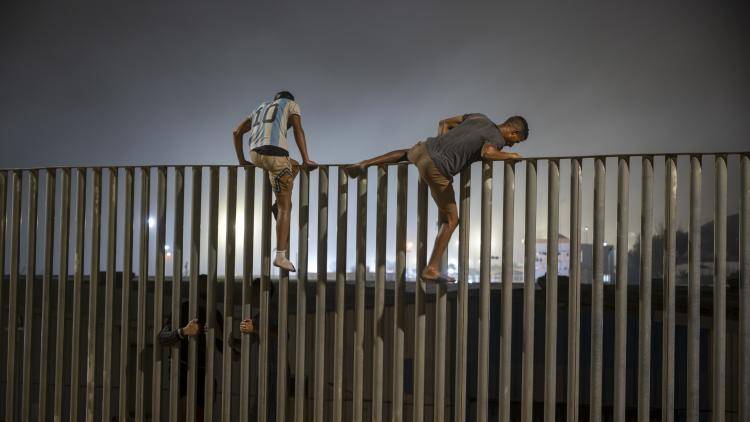
In January, the government approved a decree that regularized the status of 500,000 undocumented migrants and asylum seekers – a move unusual among EU countries generally committed to tightening migration restrictions. In July, the Spanish enclave of Ceuta was overwhelmed by a surge of tens of thousands of migrants, leading to criticism of government policy from within Spain and abroad, including US President Donald Trump.
This month, a new issue has arisen, as protests grow over housing affordability. The protests prompted the government to introduce emergency legislation, only to see the bill rejected by Spain’s Parliament late last week. This gave Sánchez his opening to call a general election, arguing that ‘to do more, we need to renew and broaden the support of the people’.
What are Sánchez’s chances?
Sánchez is a proven survivor and faced similar difficulties in 2023. But calling an election now is a gamble. The summer’s crises have given his political opponents plenty to work with, and trouble assails the prime minister and his party, the Spanish Socialist Workers’ Party (PSOE), from every side.
The opposition on the right will use the January decree and images of the Ceuta crisis to rally their vote and criticize the government’s competence. The left will point out the housing crisis has deteriorated under Sánchez. Then there are the corruption scandals that plague the prime minister. Some of his closest political allies are embroiled in the Koldo case – an investigation into corruption in health procurement contracts during the COVID-19 pandemic. In a separate case, the prime minister’s own wife has been charged with embezzlement and corruption.
To survive, Sánchez will use the same playbook that worked for him in 2023, where he characterized the contest as a choice between ‘Sanchismo’ (his brand of social democrat politics) or a ‘backward-looking’ far right.
His hope will be that opposition to the PP right wing opposition party – and far right Vox party in particular – will mobilize left wing voters in a highly polarized contest. Vox leader Santiago Abascal regularly speaks of a ‘migrant invasion’ and used Sanchez’s January decree to call for ‘Repatriations, deportations and remigration’.
Notably, Sánchez’s speech on the steps of La Moncloa (the Spanish prime minister’s residence) put international talking points at the centre of his pitch, contrasting his positions with the those of the right, and particularly US President Donald Trump and Argentinian President Javier Milei:
‘We have strived to build a better world for our fellow citizens and for the rest of humanity,’ he said, ‘supporting Ukraine, the European Union, and the United Nations in their darkest moments. Denouncing genocidal regimes when others remained silent.
‘Fighting tyrants, techno-oligarchs, and speculators who want to destroy the future of our sons and daughters to enlarge their pockets. Doubling our aid to international cooperation while others boasted of cutting it with their chainsaw or on that military altar of 5 per cent of GDP.’
Spain’s voting system
50 days of intense campaigning and negotiation between parties will now follow. These negotiations matter because of Spain’s electoral system.
Spain uses the D’Hondt method in provincial constituencies, which punishes parties polling in low single figures. Small parties can survive by running together on a joint list, but past attempts have had mixed results.
Sumar is the largest of these groupings. Despite having no leader, it has launched ‘Frente Amplio’ (the Broad Front) to try to pull support together. Much will depend on the firebrand MP Gabriel Rufián. He is seen as a potential unifier of the fragmented parties to the left of PSOE. But he is not a Sumar figure, and internal politics and personalities have a habit of wrecking electoral pacts in Spain. Podemos, PSOE’s coalition partner, joined Sumar’s list in 2023 but broke away within months.
For Sánchez, what happens to his left matters more than ever. His pitch therefore needs to be binary. Expect him to use Trump, Milei and Flávio Bolsonaro (ahead in Brazil’s presidential race after the first round) as bogeymen to focus minds even before the ballots are printed.
On the right, the Partido Popular (PP) will likely approach a ‘Ming Vase strategy’ of trying to just get through the next 50 days without any major mishaps. It is not clear that this can work. Questions about what a coalition with Vox would look like will follow their leader Alberto Feijóo. His inability to respond adequately to such questions in 2023 likely cost him victory.
Spain’s vote will now be the first in a series of crucial European elections. France chooses a new president in spring 2027. Italy, Poland, Finland and Greece are due to vote before the year is out. Many of these contests will look like Spain’s, with some seeing fragile coalitions on the left facing a confident and surging right.
The results will matter well beyond domestic politics. For instance, as the US continues to demand the continent do more for its own defence, disruptive elections will make it harder to make progress on a more coherent joint European approach to security. This campaign will be closely followed across the continent – and from across the Atlantic – as politicians seek to perfect their pitch in ever more polarized times.