

This week, a case challenging the legality of US President Donald Trump’s trade tariffs reaches the US Supreme Court. The court’s ruling could have significant consequences for presidential power and global trade – although the US policy approach is unlikely to change.
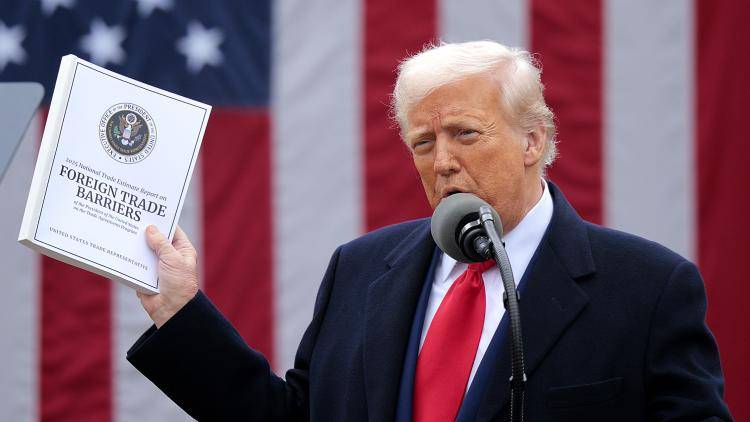
The case concerns tariffs levied under the International Emergency Economic Powers Act (IEEPA), which empowers the president to declare a national emergency over an ‘unusual and extraordinary’ foreign threat and respond with a range of actions, including sanctions and the freezing of funds. IEEPA has never before been used as a basis for tariffs nor does the statute explicitly authorize them, though President Richard Nixon relied on a similarly worded law to impose an emergency tariff on imports in 1971.
Under the US Constitution, taxation is Congress’s remit. The power to impose tariffs can be delegated to the executive under the right circumstances, including authority presidents have used across administrations to impose sectoral tariffs on national security grounds. Unlike his predecessors, however, Trump is also using IEEPA to impose tariffs, including levies on China, Mexico and Canada linked to fentanyl supply chains, ‘reciprocal tariffs’ on global trading partners in response to the US’s trade deficit, and recent measures targeting developments in Brazil and India.
The court’s ruling is expected in the months ahead. What consequences could either outcome have?
Upholding the tariffs would have significant implications for presidential power
This case goes beyond tariffs to the foundational issue of unilateral executive authority. Before the Supreme Court are two core questions: does IEEPA authorize the tariffs imposed? If so, does it unconstitutionally delegate Congress’s authority?
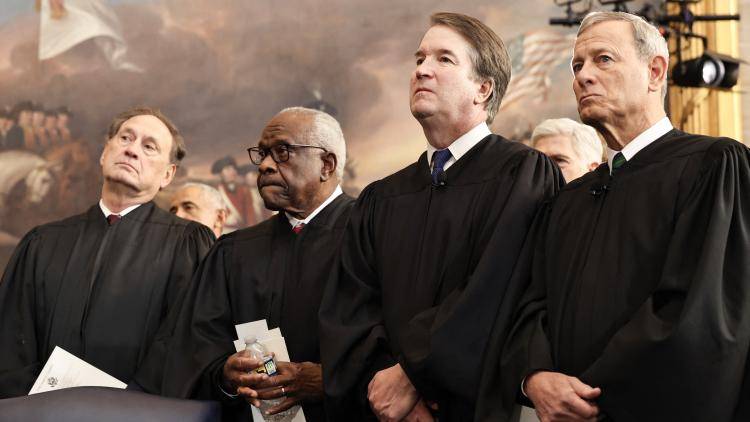
The outcome will shape Trump’s presidency – and those that follow – across executive authority, global trade, and domestic fiscal and economic concerns. It is likewise a salient moment for the Supreme Court, which has empowered Trump and showed little appetite to constrain him. Now, the justices must navigate several cases testing the boundaries of presidential power – from tariffs to control over independent agencies – that could irrevocably alter the separation of powers.
Upholding the tariffs would seemingly be the least disruptive option in the short term, despite US consumers facing, by some accounts, the highest average effective tariff rate since 1934. Existing trade agreements would endure, and markets and trading partners would have certainty in the tools available to the president. This does nothing, however, to alleviate the uncertainty stemming from his power ‘to raise or lower tariffs unbounded by any limits on geography, rates, or the types of products covered’, as highlighted by an amicus brief submitted to the court.
Such an interpretation of IEEPA could have far-reaching consequences. If the Supreme Court were to support its use for tariffs, the same statutory language could justify other unilateral and discretionary taxes involving foreign interests, such as offshored profits, the transport of goods or outbound investment.
Congress could intervene in extreme cases – a bipartisan group of Senators recently voted to end the national emergencies justifying tariffs on Brazilian and Canadian goods – but Trump’s allies in the House of Representatives would be expected to block any such measures, demonstrating the limitations of an acquiescent Congress.
More broadly, upholding the tariffs would legitimize the president’s use of an emergency declaration – even on the thinnest grounds – to circumvent Congress in matters of national importance, setting precedent well beyond trade.
Invalidating the tariffs would see them replaced quickly
If instead the Supreme Court were to invalidate the tariffs, it would create more immediate turmoil as the average effective tariff rate would be roughly halved overnight.
In this scenario, the Trump administration would replicate tariff coverage as quickly as possible using other measures. As US Trade Representative Jamieson Greer put it, ‘we’ll be able to have the same effect.’ Even absent precise replacements, other statutes can backfill IEEPA tariffs. Although required investigation and consultations would take time and resources, it is not inconceivable the administration would try to bypass process and tempt a new round of lawsuits. In the interim, Section 122 of the 1974 Trade Act could provide a bridge: a tariff of up to 15 per cent for 150 days in response to balance of payments imbalances.
