Over the past week, a spate of incidents involving drone sightings over sensitive sites in Europe’s ‘home territories’ represents a concerning innovation of grey-zone activity.
Copenhagen airport was forced to close for several hours on 22 September, affecting 20,000 passengers. Two Royal Danish Air Force bases (Aalborg and Karup) were later disrupted by Unmanned Aerial System (UAS) sightings, closing the former site twice.
Similar incidents have been reported in Sweden (over the Karlskrona Archipelago), Norway (over Ørland Air Station and near Oslo Airport), Germany (over Schleswig-Holstein), and Finland (over Valajaskoski power station’s no-fly zone). Danish Prime Minister Mette Frederiksen described the incursions as ‘the most severe attack on Danish infrastructure so far’.
The ‘capable actor’ to which the Danish incursions have been attributed has not been formally identified, yet they have readily been described as ‘hybrid’ incidents by Danish authorities.
Furthermore, Danish newspaper Ekstra Bladet alleges that Russian naval vessel Aleksandr Shabalikn had been identified off the coast of Denmark at the time, with its Automatic Identification System (AIS) disabled. Investigative journalists have also identified links between the Russian paramilitary RSB-Group and the owner of a cargo vessel which was also suspected of playing a role.
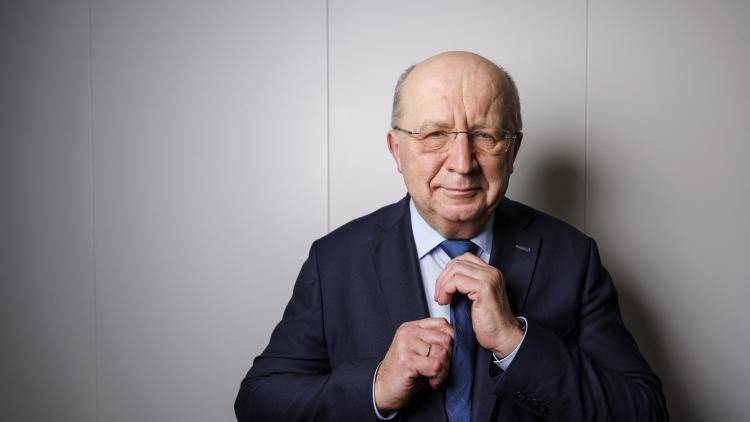
In response to the incursions, and at a commendably swift pace, the European Commission chaired a meeting of ten defence ministers on 26 September, and discussed the creation of a European ‘drone wall,’ an anti-UAS system focused on ‘detection and intervention’, according to Andrius Kubilius, the European Commissioner for Defence.
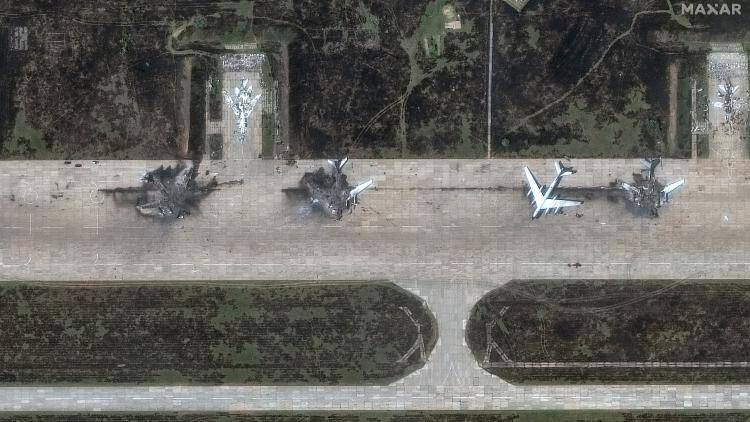
These incidents are part of a wider trend of innovation in drone use. Since 2022, UAS were (arguably) employed most spectacularly during Operation SPIDERWEB by the Security Service of Ukraine (SBU). Utilizing cheap small UAS smuggled into Russia aboard civilian trucks, guided by open-source AI systems and civilian telephone networks, Ukraine was able to wreak havoc against Moscow’s strategic bomber force, targeting valuable strategic areas deep inside Russia.
SPIDERWEB was an 18-month operation of total secrecy and tremendous complexity, conducted by the most drone-proficient state in the world in the context of an existential defensive war. The recent European incursions by ‘capable actors’ appear to be an extension of other incidences of ‘grey-zone’ harassment, intended to demonstrate capability and disrupt civilian infrastructure.
Different as they are, both incidences represent a wider trend in which the ‘near surface’ of European homelands is increasingly threatened. More concerningly still, tactics need not be confined to state actors, but could easily be co-opted by organized crime or terrorist groups. In the United Kingdom, drone incidents related to smuggling contraband into prisons have risen by 43 per cent within the last year, whilst the technology involved is developing at such a rate that the Chief Inspector for Prisons warned that prisoners could soon be ‘lifted out’ by drone.
Whether challenged by a rogue state or non-state actor, authorities must be ready to credibly respond. Given the cheap drones, open-source software and open-access control mechanisms used during SPIDERWEB, a simplistic terror attack against a city centre using a quadcopter is not difficult to conceptualize.
A complex one, using a larger UAS to destroy an aircraft, could be devastating. Whether by adversary states today, or terrorist groups tomorrow, the trend is clear: malicious drone use within Europe’s home territories is becoming more achievable, prevalent, and dangerous. To deter such a threat, European governments should implement three key measures.
Develop and deploy a wide spectrum of C-UAS options
‘We need to look into effective means of how to destroy’, stated Mr Kubilius. Detection methods such as traditional radar are circumventable by smaller UAS, and difficult to apply universally. Therefore, a wide variety of counter-UAS (C-UAS) should be deployed.
Many options at the tactical level already exist, including devices for firing nets; electro-magnetic (EM) devices which can remotely control or disable drones; counter-drones to intercept hostile drones; directed-energy weapons (i.e. lasers); and traditional munitions (i.e. shotguns).
Not every solution will be appropriate for every situation: EM measures are typically passive, blocking off areas from all drones rather than targeting specific ones, and other methods carry obvious risks to the public. However, given the sheer variety of drones, and possible scenarios, the widest possible options should be available.
Such capabilities should be integrated within frameworks that prioritize speed of response, and give effective legal protection to their users. It is easy to buy drone interception devices, position powerful lasers, and train personnel with shotguns. It is far more difficult to effectively legislate for their safe, rapid use.
Develop robust command, control, and co-ordination structures
Given the variety of UAS and actors operating them, another challenge will be effectively co-ordinating between military and civil authorities. On Saturday, Germany’s Interior Minister, Alexander Dobrindt, announced plans to establish a German UAV defence centre, bringing together police, the federal criminal office, and the German Armed Forces.
Because of the international reach of such devices, cooperation across Europe is essential. The ‘drone wall’, suggested by Mr Kubiliuis is a promising start, but estimates of up to a year until effective establishment threaten the initiative. The deployment of French and Swedish counter-UAS troops to Copenhagen on Monday, ahead of two crucial European summits, is a welcome example of what can be achieved by co-operating at pace.