

The success of US President Donald Trump’s 20-point plan to end the conflict between Israel and Hamas rests on many factors. Not least is the president’s own level of engagement with the initiative. Should he lose focus or become distracted with another international issue – possibly believing that he has already ‘solved’ the Israel–Palestine conflict – then movement towards phase two will falter. Israel and Hamas will recommence the same punishing cycle of violence that has killed so many Palestinians and Israelis. And a process toward Palestinian statehood will not progress.
The world has come to learn that President Trump’s governing style is unpredictable and intensely personal. He values being the centre of attention, enjoys the sensation of success and being seen as the world’s greatest dealmaker. He is undoubtedly a challenging president to engage. Yet some world leaders, particularly those from the Gulf and Europe, have developed the means to capture his attention. In doing so, they have become adept at managing relations with him. They have become Trump ‘whisperers’.
These include Saudi crown prince Mohammed bin Salman (MBS), UAE President Mohammed bin Zayed (MBZ), Qatari Emir Tamim Al-Thani, French President Emmanuel Macron, British Prime Minister Keir Starmer and Hungarian President Viktor Orban. All have learned to manage Trump by understanding not only what serves his interests and ego, but also what irks him.
If Gulf and European leaders can capitalize upon this privileged access to the US president and keep him feeling central to events, then the Gaza plan has a chance of advancing. If they cannot, then no doubt it will stall. What is needed is revolving door diplomacy: a steady succession of high-level visits that feed his sense of involvement and reaffirm his role as indispensable broker.
A new balance of influence
For decades, Israel was the most influential regional actor in US Middle East policy. The Gulf Arab states, whilst significant US partners, lacked the lobbying reach and policy agility to compete. Indeed, the UAE once thought that the door to influencing US policy passed through Israel – and signed up to the Abraham Accords partly on that basis.
However, the balance of influence has changed with Trump in the White House. Gulf diplomacy in Washington has strengthened considerably. Leaders such as MBS and Tamim have discovered that they can circumvent US checks and balances, as well as bureaucracy, by making a beeline for the front door. Relations are now personal, transactional and direct.
Leaders and envoys from Riyadh, Doha and Abu Dhabi have embraced transactionalism with gusto, combining investment pledges, energy partnerships and defence agreements with ceremony and highly personalized engagement. In the current White House, such currency seems to buy access and influence.
Israel’s position, by contrast, has weakened. The turning point came with Israel’s strike against Hamas negotiators in Doha on 9 September. Trump, reportedly angered by Israel’s lack of coordination, treated the incident as a personal affront. His response was swift and theatrical. An executive order extended US security assurances to Qatar. And Prime Minister Benjamin Netanyahu was compelled to make a televised apology to Emir Tamim in a call placed from the White House.
This diplomatic twist created the conditions for a broader realignment – evident during the UN General Assembly in New York later that month. France and Saudi Arabia used the occasion to convene a High-Level International Conference on the Two-State Solution. On 22 September, Paris, joined by several European states, formally recognized the State of Palestine, signalling a significant diplomatic turn.
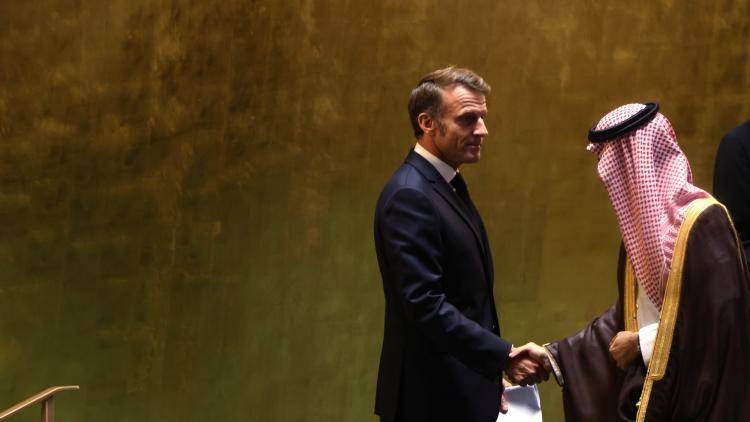
Gulf capitals seized the moment to present to Trump a coordinated ‘day after’ plan for Gaza and the West Bank, demonstrating a level of cohesion rarely seen in recent years. Saudi Arabia, Qatar and the UAE aligned their positions despite longstanding rivalries, while Turkey, Indonesia and Pakistan lent their support.
The initiative provided Trump with a single, unified Arab proposal. Frustrated by Israeli defiance and eager for a diplomatic win, Trump used it as a template for his own peace plan. The subsequent ceasefire therefore owed as much to Gulf coordination as to US pressure. Some observers say it marked a rare instance where Arab rather than Israeli input helped shape an outcome in the Oval Office.
European recognitions added momentum to this shift. France’s recognition of Palestinian statehood was followed swiftly by Andorra, Belgium, Luxembourg, Malta and Monaco. US Secretary of State Marco Rubio condemned the move as ‘reckless’. Yet Trump downplayed the issue, noting for instance that he had not discussed the UK’s recognition of Palestine with UK Prime Minister Starmer. Europe thus secured a small diplomatic victory without provoking a backlash from the White House. That reinforced the sense amongst Arab states that the balance of influence was tilting away from Israel.
Coordination
Consequently, European governments are now well placed to coordinate with Gulf Arab states, Jordan, Egypt and members of the Organization of Islamic Cooperation (OIC), including Indonesia, Turkey and Pakistan, to keep Trump continuously engaged and maintain momentum.
They should do so by underlining his relevance to the success of the 20 point plan, drawing on his frustration with Netanyahu, his ambition for a Nobel Peace Prize, and his appetite for wider normalization between Israel and regional states. Achieving this requires a steady rhythm of high-level visits, ensuring that leaders from these countries maintain a visible presence at the White House.