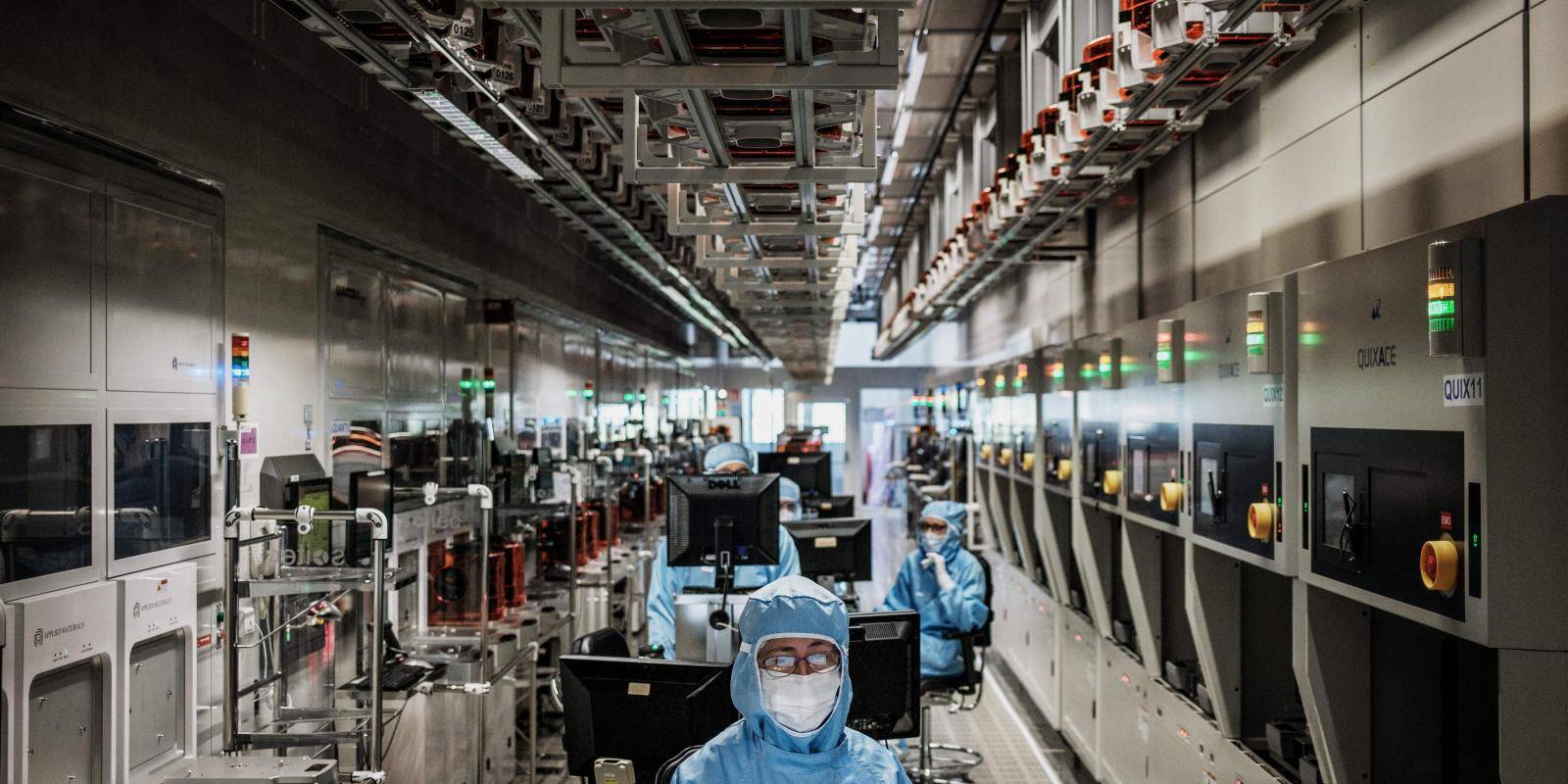

The 19th century German economist and political theorist Friedrich List once argued that ‘the power of a nation is based upon the development of its productive forces’. As Europe finds itself grappling with an identity crisis amid the most consequential geopolitical shifts since the end of Second World War, it is coming to terms with the hard truth that in great power competition, industrial might drives all other forms of power. Europe is belatedly confronting how much of its influence rested on economic gravity it can no longer take for granted – nor sustain any longer.
To assert its geopolitical relevance, defend its sovereignty and build a third way between the United States and China, Europe – more precisely the European Union (EU) – will need to radically transform its economy to become a credible competitor in the new industrial age. There will be no European power without a home-grown cutting-edge industry fit for a century driven by the twin transitions of digitization and carbon neutrality.
These transitions are reshaping global power across the world. Platform economics, AI computing, critical minerals, resilient grids and low-carbon industrial ecosystems now set the norms of strategic weight. Meanwhile, Europe’s exposure to coercive dependencies — from gas pipelines to semiconductor supply chains — has revealed how fragile a post-industrial comfort zone can become in a world reverting to hard power.
For the past two decades, the EU mistook regulatory leadership for strategic insulation. But without productive depth in energy, technology, advanced manufacturing and scale finance, even the most sophisticated rulebook cannot anchor geopolitical relevance.
Europe is now waking up to industrial reality and has begun to rethink its strategy. European Commission President Ursula von der Leyen recently warned that Europe needs a new mindset, and move its focus from regulation to capability-building. But is it too late to catch up to those leading the charge?
Europe’s strategic opportunities
Europe can achieve more than pessimists assume — if leaders act with coherenceand speed.
The recent launch of EuroStack is a step in the right direction. The initiative aims to build a secure, sovereign cloud and AI computing infrastructure for Europe, to reduce dependence on non-European platforms. The bloc also retains strengths in industrial automation, clean-tech engineering, automotive electrification, robotics and advanced materials.
The European Chips Act, though modest compared to US and Asian programmes, can consolidate Europe’s niche strengths in power electronics and industrial semiconductors — critical for electric vehicles (EVs), renewables and next-generation manufacturing. In energy, offshore wind, green hydrogen, grid modernization and solar manufacturing can anchor a cheaper, cleaner and more secure ecosystem — if permitting accelerates and scale is pursued collectively.
Three axes of political integration will be crucial to sustain the momentum and achieve substantial gains. First is capital formation, via an integrated capital markets union (CMU). Second is industrial deployment, through mission-driven innovation agencies (a European DARPA). Third is joint procurement and shared infrastructure, especially for hydrogen, semiconductors and AI computing.
Europe has the raw material for influence. What it lacks is alignment and, above all, political decisiveness.
Structural obstacles

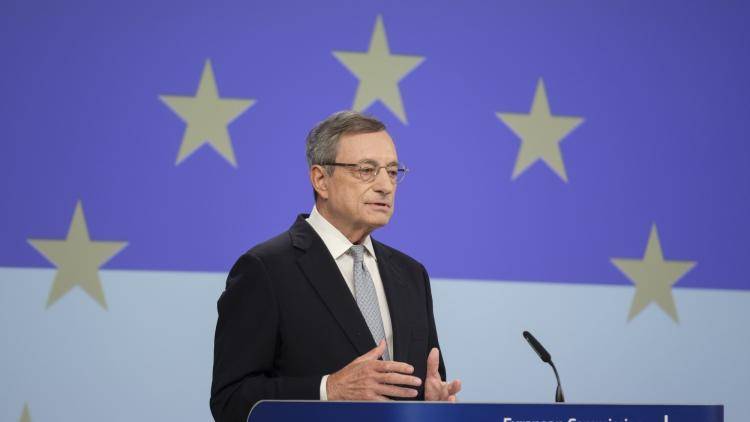
Some obvious and deeply rooted structural obstacles remain. And at a time when the continent’s shift to the hard right is accelerating, any attempt to lift them will be akin to walking through a minefield. Financial fragmentation means European savings do not translate into European investment in support of European tech scale-up. Without a functioning capital markets union, the continent cannot finance gigafactories, semiconductor fabs, hydrogen valleys or cloud-AI clusters. As the 2024 Draghi Report notes, Europe invests less not because it lacks capital, but because it cannot mobilize it — and when it can, it remains much less profitable than in the US.
Regulatory divergence weakens scale. Telecoms, data, energy and transport remain balkanized — a continental handicap in sectors defined by network effects. And then German hesitation comes into play. Berlin’s instinctive caution — fiscal orthodoxy, coalition constraints, reluctance to embrace strategic debt — acts as a major brake on Europe’s structural reform trajectory, one that could recast the single market as a pivotal source of financing for the EU’s industrial transformation. Slow progress on grids, hydrogen corridors and industrial incentives reflects a deeper unwillingness to transition from an export-driven model to a resilience-driven one.
But Germany’s reluctance is not just political, it is also structural. Its banking system is designed to protect regional lending rather than finance innovation at scale. It has long been identified as a major barrier to deeper capital-markets integration and high-growth investment in Europe, limiting cross-border financial intermediation and risk-sharing across the Eurozone.
Overstated risks, overlooked strengths

It would be a mistake, however, to only focus on Europe’s structural slowness. Some of its perceived weaknesses are less structural than the prevailing narrative suggests.
On AI: The EU’s absence of consumer platforms obscures its real strengths: industrial AI, robotics, embedded systems, autonomy and safety engineering — domains where value will accumulate as AI becomes infrastructure. Its industrial software ecosystem (SAP, Siemens, Dassault Systèmes) remains a global asset.
On batteries: The tired cliché is that ‘Europe lost the battery race’ but gigafactories are scaling across the continent, in Sweden, France, Hungary and Spain. Europe is also emerging as a frontrunner in solid-state, sodium-ion and LFP technologies.