
The Belgian painter René Magritte famously remarked that art was meant to uncover the truth by encouraging the eye to look beyond the obvious, for ‘everything we see hides another thing.’ In our times of permacrisis and geopolitical complexity, Magritte’s view might help us to look past appearances and to understand a fundamental logic of political developments: they are almost always driven by conflicting forces.
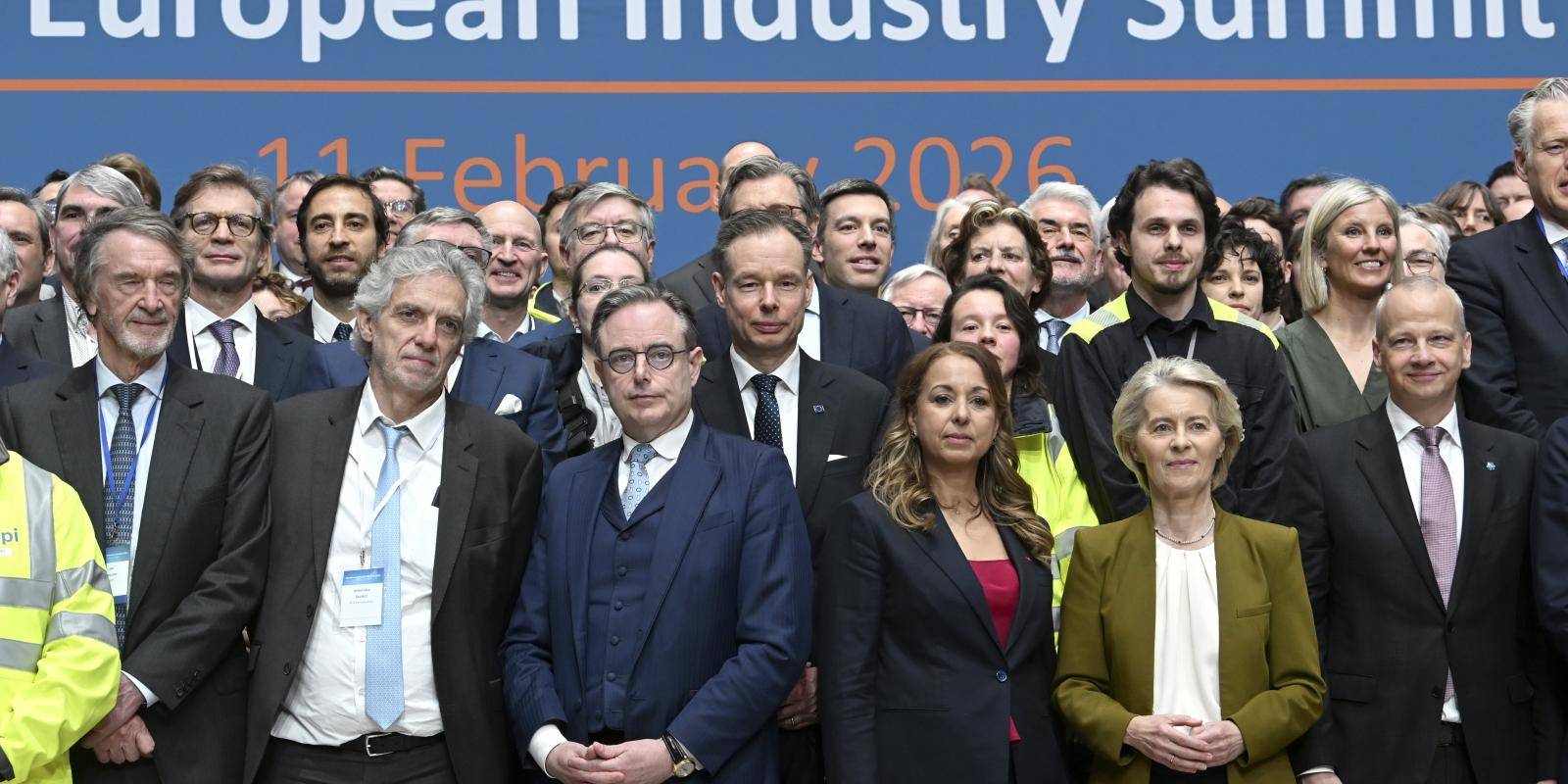
The European Industry Summit in Antwerp, which brought together hundreds of European industrialists and top government officials last week under the intellectual and political auspices of Belgian Prime Minister Bart De Wever, offered a good example.
The summit crystallized a divide that has been brewing for several years within the EU. Opinion is split on a central question: what does European strategic sovereignty actually entail – and how can it be achieved?
The integrationist camp
At first glance, the split appears binary. On one side stand those who see sovereignty as requiring deeper integration: joint industrial policy, coordinated fiscal instruments, common borrowing where necessary, and stronger EU-level regulatory capacity.
This camp includes Emmanuel Macron, whose long-standing advocacy for ‘European autonomy’ has matured into calls for sectoral champions and common financing mechanisms, and Mario Draghi, whose pragmatic federalism favours incremental but irreversible integration in key domains such as defence, energy and digital infrastructure.
The integrationist camp defines strategic sovereignty as the capacity to act collectively in a hostile world. Amid US–China rivalry, weaponized interdependence and volatile supply chains, no single EU member state – not even Germany or France – can secure technological independence, energy resilience or defence credibility alone. The response, therefore, must be transnational: pooled procurement, joint R&D funding, coordinated industrial policy and, crucially, fiscal instruments capable of matching American or Chinese scale.
This logic was visible in the Recovery and Resilience Facility during the pandemic. It is now re-emerging in debates over defence bonds and common energy infrastructure financing. For Macron and Draghi, Europe’s fragmentation is precisely what makes it vulnerable. Sovereignty, in this reading, is indivisible.
The deregulatory growth camp
On the other side, leaders such as De Wever, German Chancellor Friedrich Merz and Italy’s Giorgia Meloni argue that Europe’s malaise stems not from insufficient centralization but from overregulation and anaemic growth.
Their thesis is straightforward: reduce bureaucratic drag, restore competitiveness, unleash private investment – and autonomy will follow organically. In their view, prosperity is sovereignty’s precondition, not its consequence.
Those in this deregulatory growth camp do not necessarily reject cooperation, but they resist further institutional centralization. They see Europe’s competitiveness gap with the US and parts of Asia as self-inflicted: excessive environmental, digital and financial regulation has raised costs and dampened innovation. The answer is not more Brussels, but better Brussels – slimmer, faster, less intrusive.
De Wever argued for sovereignty through growth and deregulated industry. Merz’s rhetoric about restoring Germany’s economic dynamism, and Meloni’s emphasis on defending national industrial bases, converge on the same theme. Sovereignty is not engineered at the EU level; it is aggregated from strong, competitive member states.
The risk of fragmentation
This divergence is not a mere theoretical feud over tactics. It risks causing fragmentation in policy strategy that paralyses European decision-making at a crucial juncture.
The risk of a formal rupture in EU institutions, however, remains low. The EU has always contained diversity: from Schengen to the euro, differentiation has been the rule rather than the exception.
Yet the deeper risk is subtler. Fragmentation could occur not through formal secession or treaty rupture, but through policy incoherence: overlapping initiatives, underfunded ambitions, and divergent national strategies marketed as European sovereignty.
On defence, this might prove a hindrance that shouldn’t be underestimated. The integrationist view calls for joint procurement and possibly common debt issuance to scale up capabilities. The growth-oriented camp supports rearmament but prefers national spending within looser EU frameworks. The outcome could be duplication rather than synergy – 27 defence revivals rather than one European capability leap.
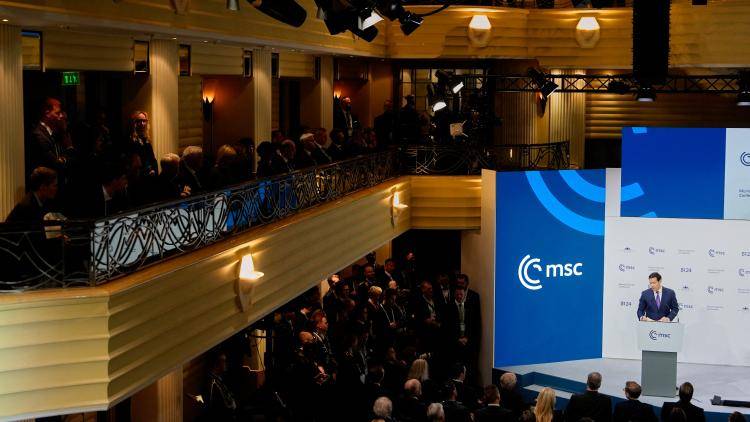
The show of relative European unity on the need for sovereignty displayed at the Munich Security Conference reinforced the sense that precedence will be given to whatever enables the EU to translate declarations into capability. From this standpoint, the deregulatory growth camp might have a head start on the integrationists. For now.
In energy policy, the tension is similar. Strategic sovereignty could mean common investment in grids, hydrogen corridors and nuclear capacity. Alternatively, it could mean easing state aid rules and letting national champions expand. Both approaches aim at resilience; they diverge on governance.
The German hinge
With France crippled by endemic public debt and parliamentary marasmus, and Macron’s presidency at its nadir, much depends on Berlin.
If Germany under Merz tilts decisively towards deregulation and fiscal orthodoxy, the Franco-German engine could sputter even further. If, however, Germany accepts selective integration – particularly in defence and technology – while pressing for regulatory simplification, a synthesis may emerge.
Germany’s economic predicament complicates matters. Its industrial model, heavily reliant on exports to China and cheap Russian gas, has been destabilized. Calls for deregulation are therefore politically resonant.
But Germany also recognizes that scale matters in semiconductors, AI and defence manufacturing. This duality could either bridge or widen the European divide.
A false dichotomy?
The apparent split is arguably overstated: strategic sovereignty is indeed multidimensional. Regulatory reform can coexist with deeper integration if both are framed within a coherent competitiveness agenda.
The EU’s challenge is therefore not choosing between federalism and deregulation; it is sequencing and calibrating both. And this precision matters more than we might think.
